- She built a hiring policy the law later made illegal, then rewrote it overnight.
- Her programmers wrote the code for Concorde's black-box flight recorder, from home.
- About 70 of her staff became millionaires when the company floated in 1996.

Who was she—and what was she like before everyone noticed?
Dame Stephanie Shirley was born Vera Buchthal on September 16, 1933, in Dortmund, to Arnold Buchthal, a Jewish judge, and Margaret Schick, a Viennese non-Jew. At five, in July 1939, she was put on a Kindertransport train with her nine-year-old sister, Renate, and raised by foster parents in Sutton Coldfield1. At 18 she took British citizenship and the name Stephanie Brook—the first of two names she'd choose for herself. She had no capital, no university place, and no inherited business. What she had was arithmetic, and an unusual reason to use it.
What did her life look like before her trek began?
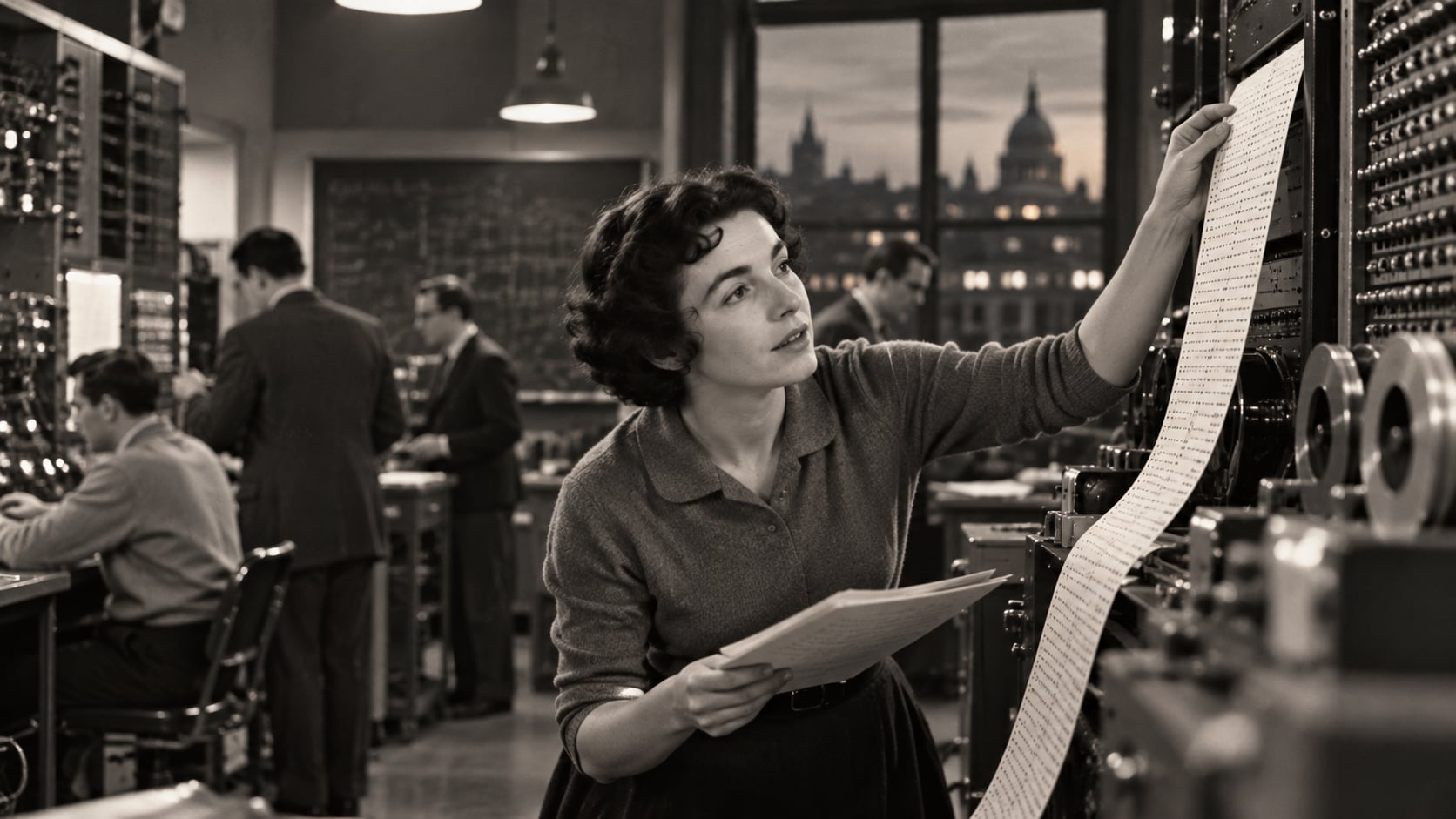
A civil servant who studied at night. She joined the Post Office Research Station at Dollis Hill in the 1950s, working on ERNIE2, the machine that draws Premium Bonds numbers, and writing in machine code. She spent six years on evening classes, earning a BSc in mathematics in 1956. In 1959 she moved to CDL Ltd, designers of the ICT 1301, and married the physicist Derek Shirley.
What did she see that other people didn't?
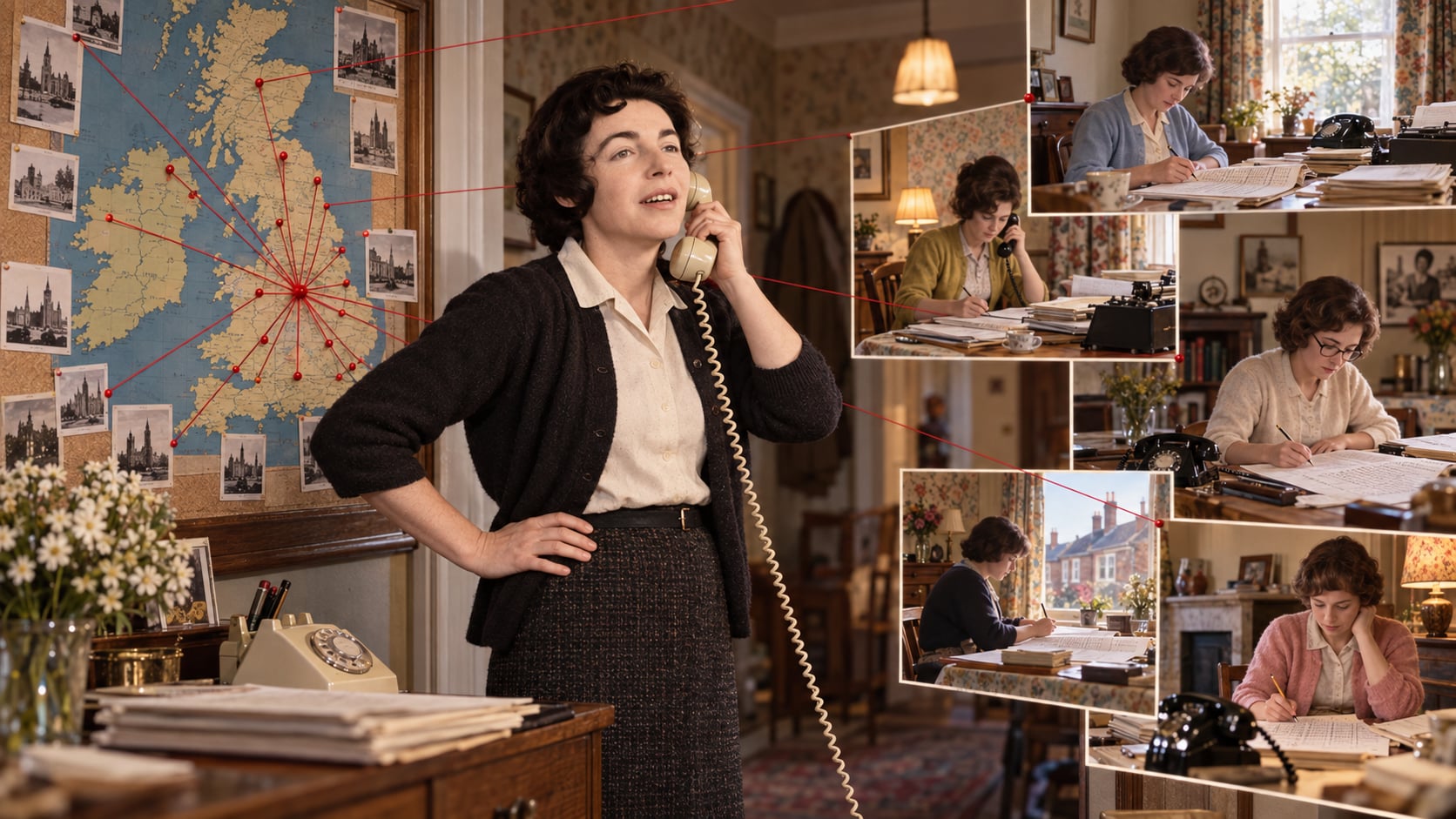
That the work could leave the building. Programming in 1962 needed a mind, paper, and a telephone far more than it needed a desk in an office—and there was a large supply of trained women who'd been pushed out of employment by marriage and children, sitting at home. Everyone else saw dependents. She saw an available workforce nobody was bidding for.
What problem became her obsession?
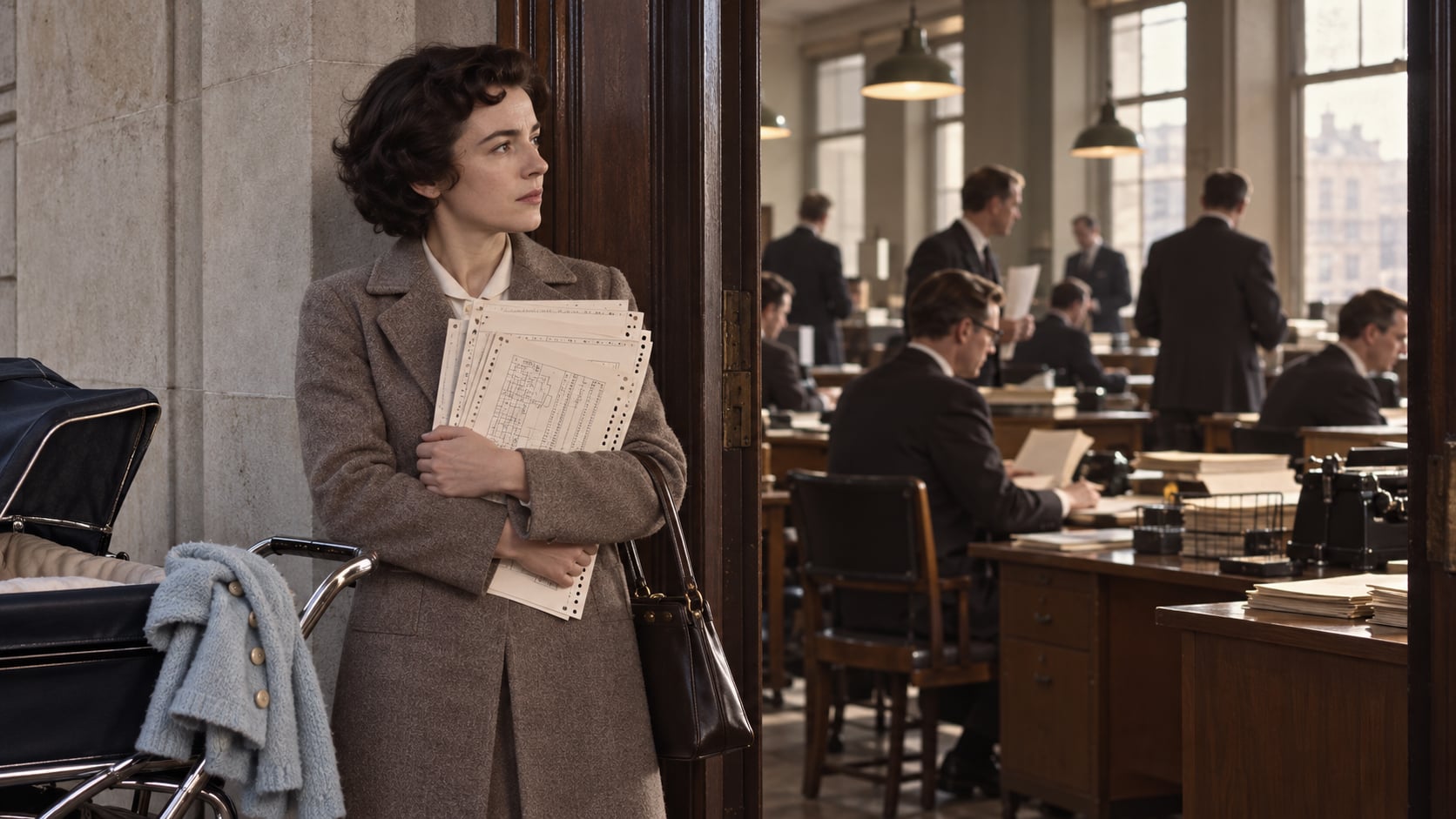
Competent women were leaving computing the moment they had a child, because the job was defined as a place rather than a task. The industry blamed the women; the building was what was actually inflexible. Shirley had met that prejudice herself, blocked at her own job no matter what she tried, which is part of why she built a company where the work counted and the desk didn't.
Why did this matter personally to her?
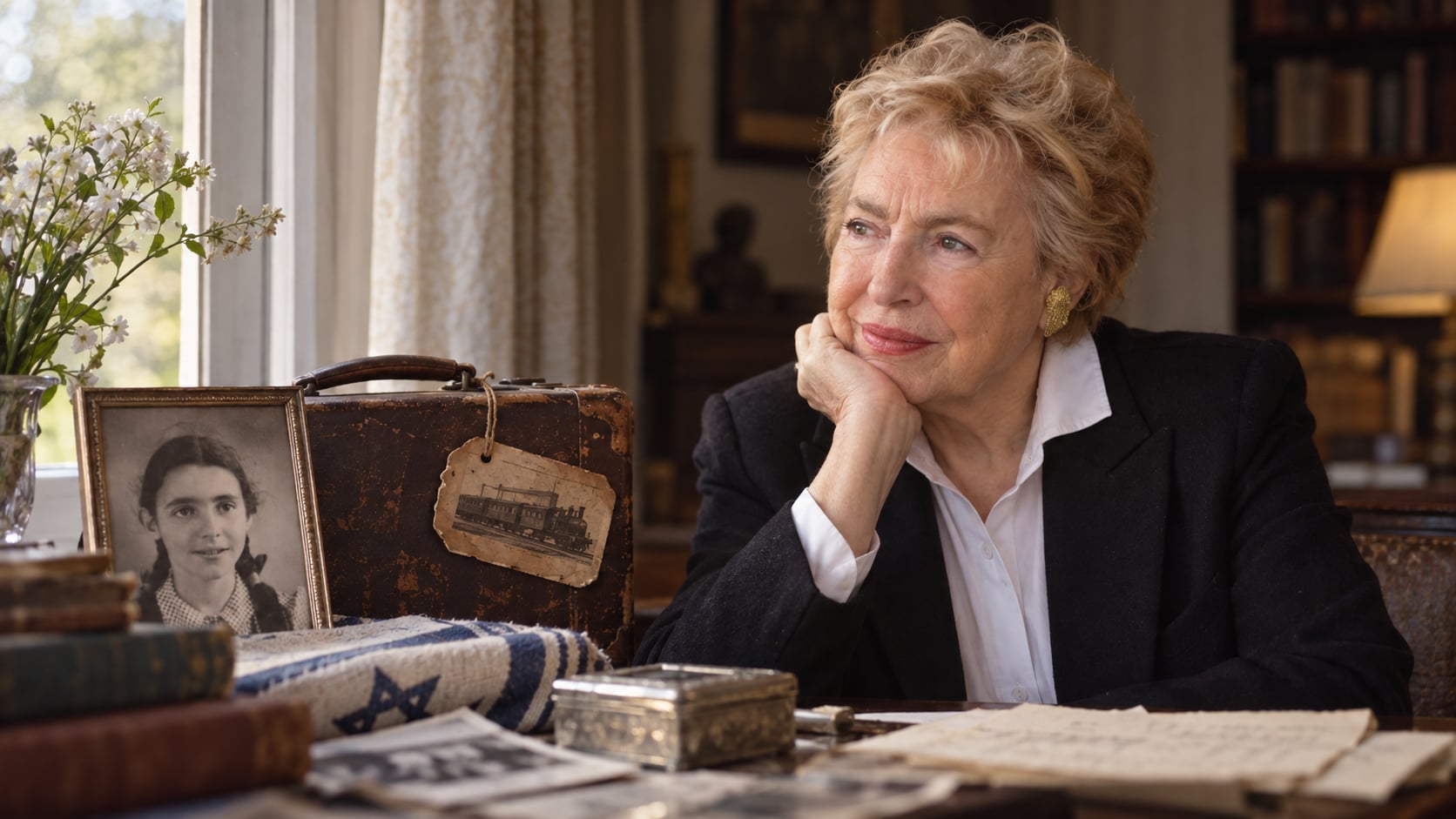
She was a refugee child who understood exactly what she'd been given. She and her sister were taken in; the parents they left behind survived the war3, but she never truly bonded with them again. Her own resolution was blunt: her life had been saved, so it had to be a life worth saving. Everything she built afterward reads as that debt being paid.
Where did the first money come from?
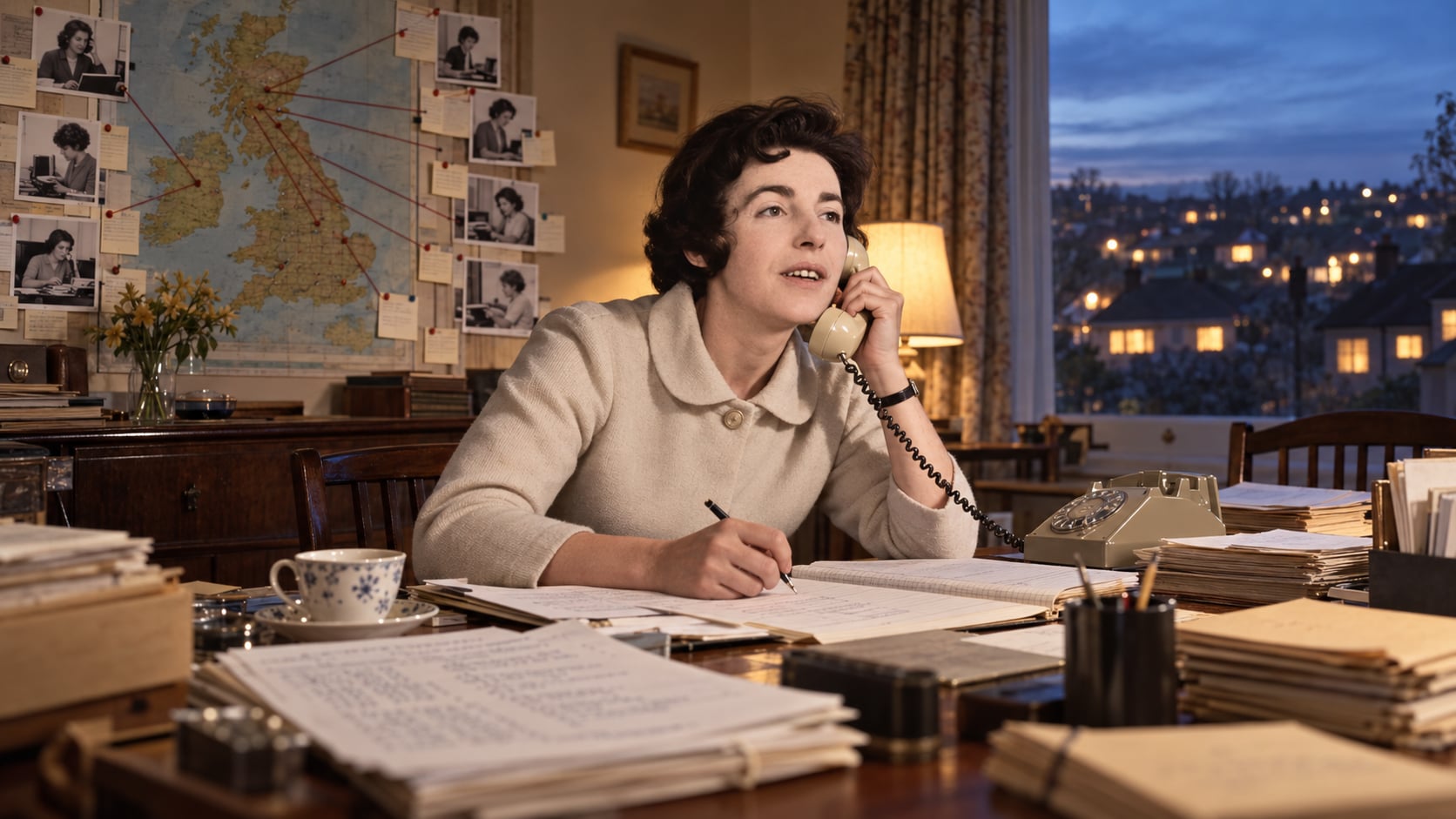
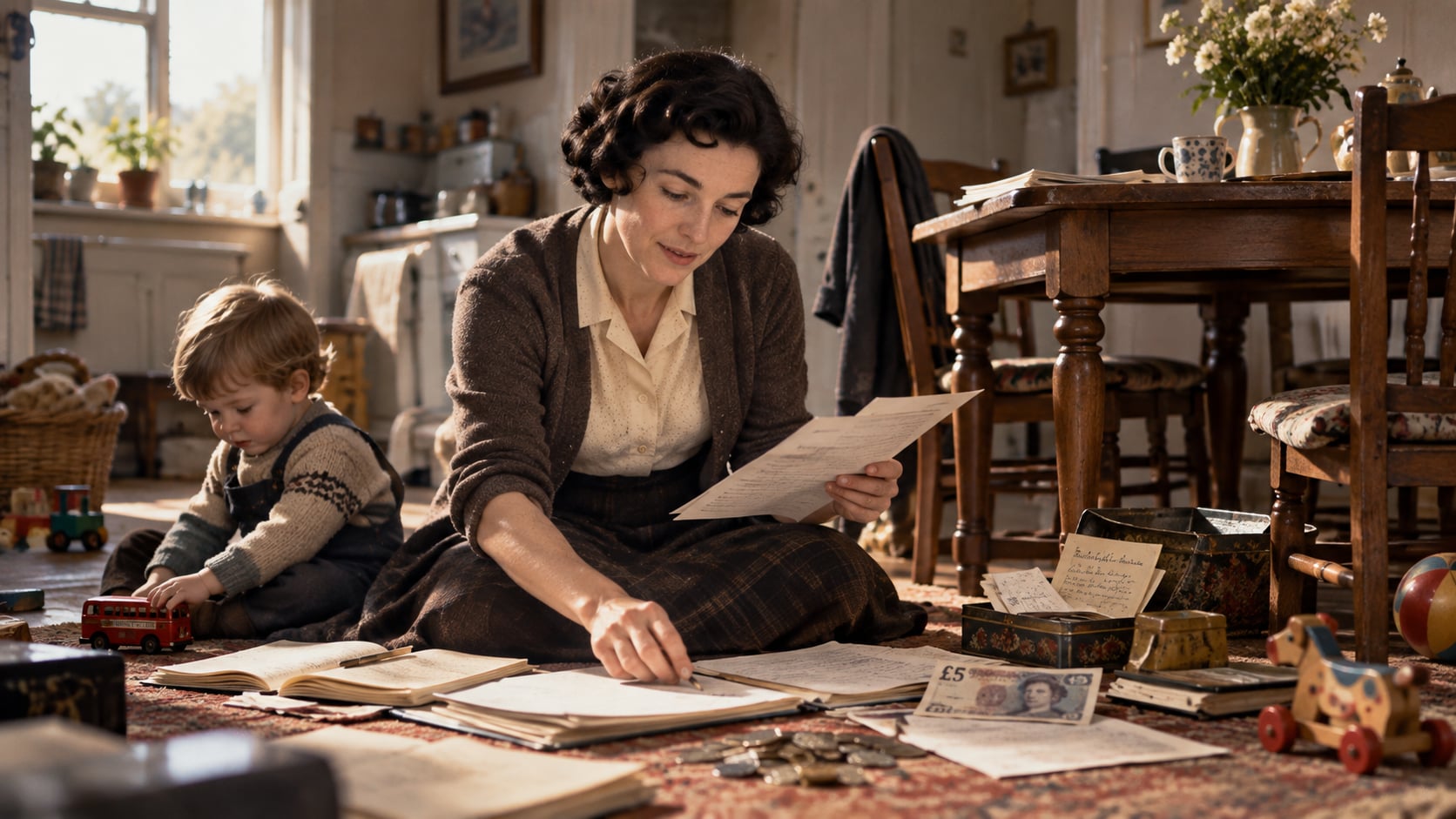
Six pounds and her own dining room table, in Chesham, in 1962, with a small child at home. The first 10-month tax year produced £1,700 in revenue. She was a married woman in an era when British law required a husband's signature before a wife could open a bank account or take out a loan on her own, so six pounds was the ceiling of what she could act on alone.

What made the economics work?
No premises, no salaries, no idle capacity. Freelance Programmers paid people by the piece for work done at their own kitchen tables, so the cost base moved with the contracts instead of sitting between them. The competition carried offices and payroll. She carried a telephone. Revenue reached £2.5 million in the 1970s, £3.4 million by 1981, and £7.6 million across 1,009 people by 1985.

What was the decision or moment after which nothing was the same?
When she started signing her business letters "Steve," on her husband's suggestion. Letters signed with her own name weren't being answered—not rejected, not read. The name got the envelope opened, and after that the work spoke for itself. It's the cheapest intervention in this whole story, and the one without which nothing else in it happens.
What nearly killed it?
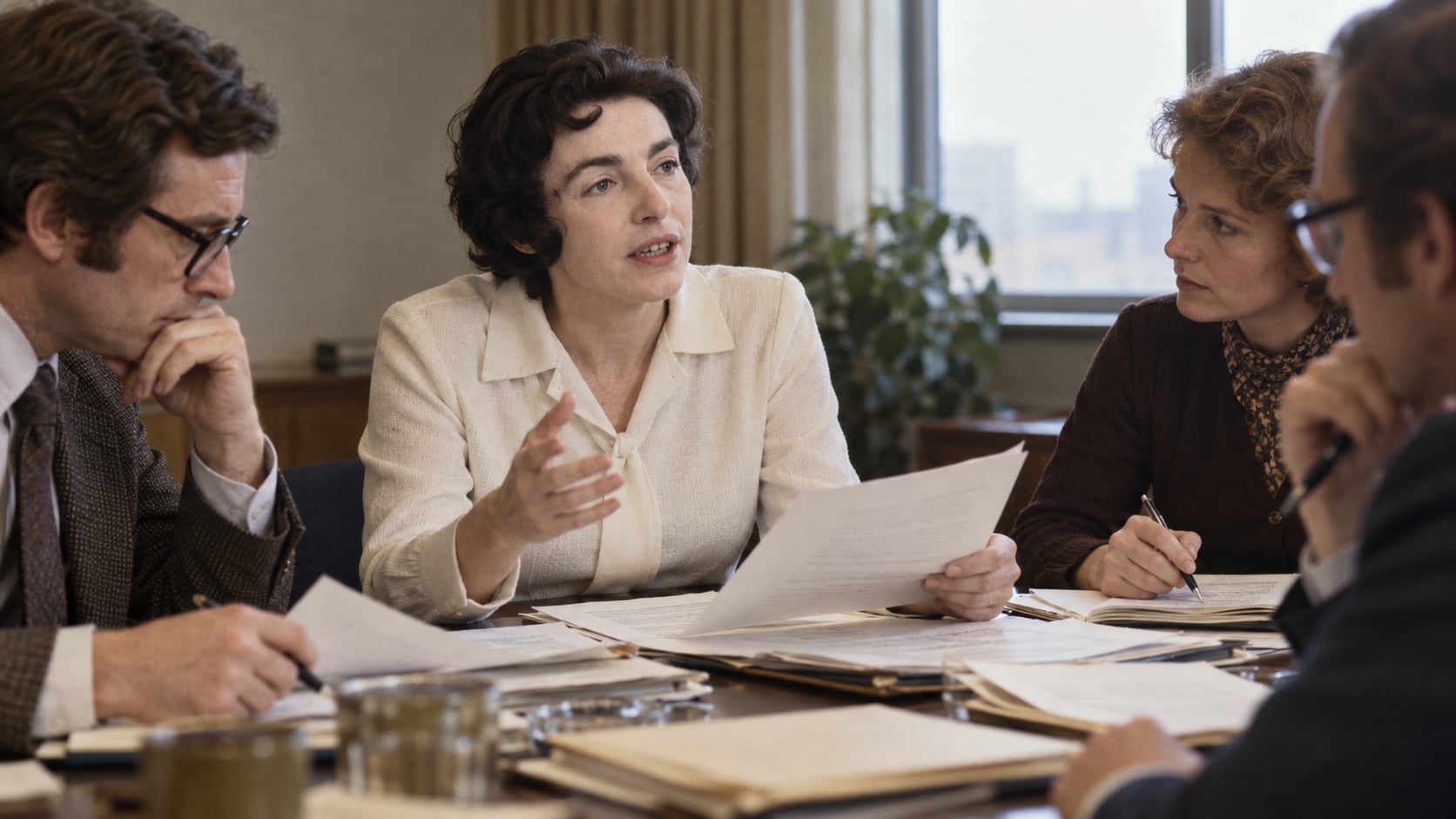
The Sex Discrimination Act 19754. The law arrived to end discrimination against women and made her women-only hiring policy illegal, forcing her to abandon the company's founding principle at the moment it was winning. She rewrote the policy rather than the mission: employment for, in her words, people with dependents unable to work in a conventional environment. The same people, described by their constraint instead of their sex.

What happened that she couldn't have planned for?
That she was building an employee-owned company. She began giving staff equity in 1981, through the F International Shareholders' Trust5, and by 1991 the workforce held 44%. When the company floated on the London Stock Exchange in March 1996, around 70 of her staff became millionaires, an outcome nobody had written into the plan in 1962 and the one the company is best remembered for.

What showed that she was human after all?
She kept crossing the road to the local boys' school to be taught mathematics, because her own school didn't offer it to girls. It's a small, physical, repeated act: a girl walking out of one building and into another, on a timetable, for years. And decades later she was still willing to laugh at the cost of it6—the disposition in miniature, and the joke about it both.

What was the change she brought about?
In 1989 the British Computer Society made her its first female president, the industry's own professional body confirming what her company had already spent 27 years proving. The larger change outlived the excuse that produced it: valuing output over a desk, invented as a workaround for women locked out of offices, is simply how much of the knowledge economy runs today. More than two decades after she'd retired, a software industry conference was still inviting her on stage to explain how she'd done it first.
What did she believe that most reasonable people around her did not?
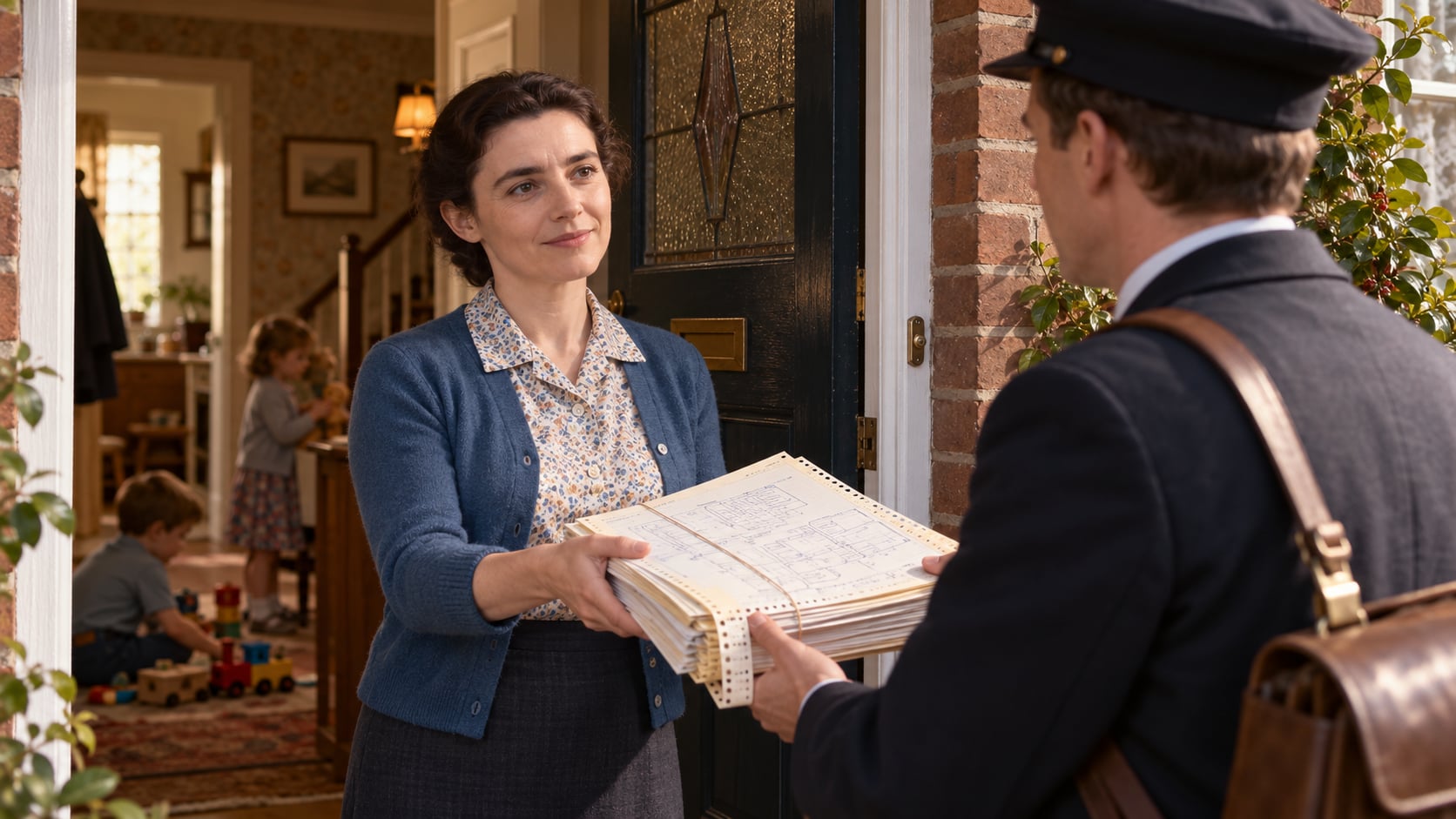
That serious technical work could be done by women, at home, part-time, for a company with no office—in 1962. Each clause of that was independently unacceptable at the time, and she asserted all four at once. The industry's model of a programmer was a man at a desk inside a building; she sold the same output with none of those three attributes, and undercut it7.
What did her trek cost her?
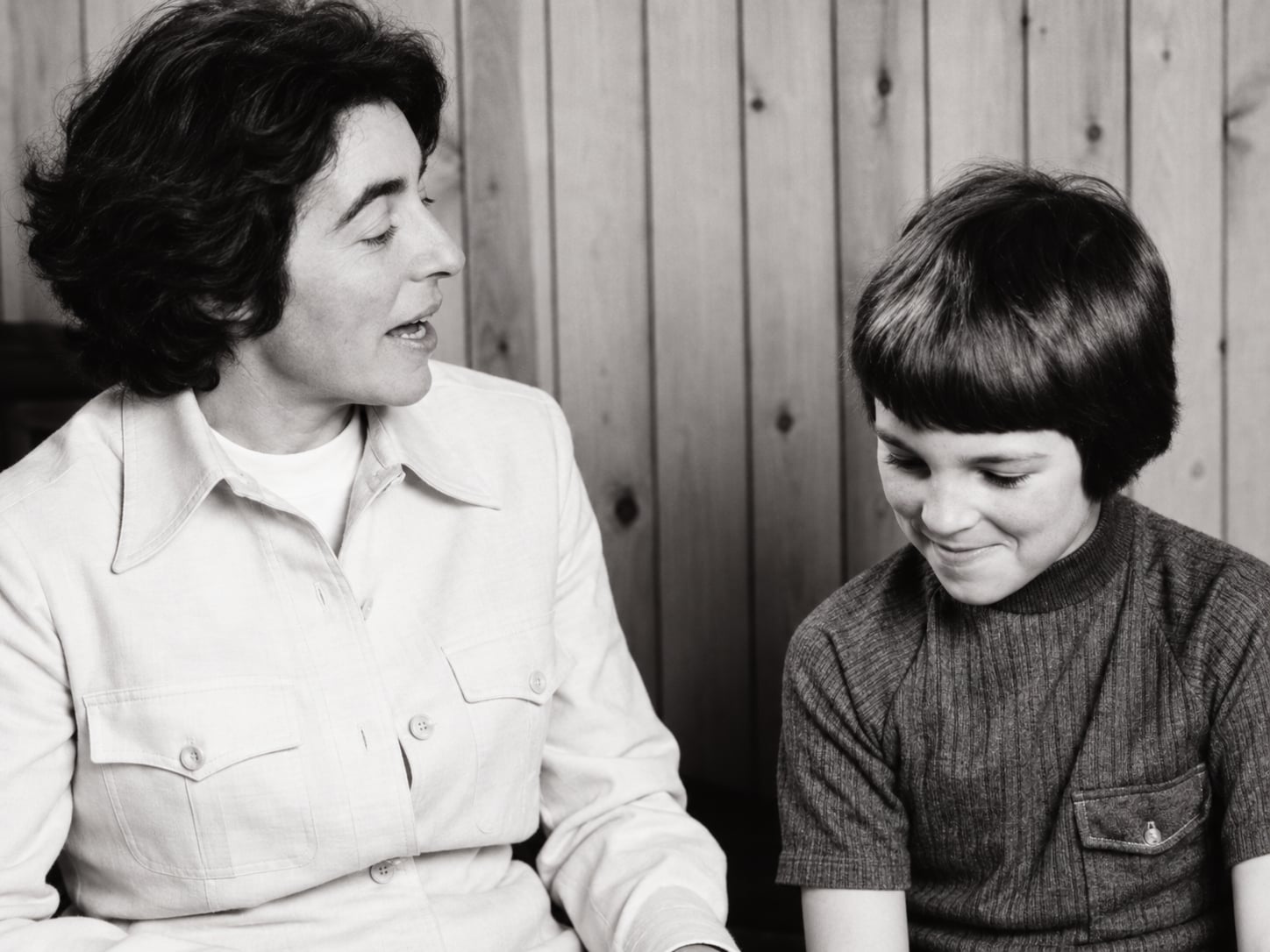
Her son Giles, born 1963, was autistic and nonverbal; he died at 35 in 1998, after an epileptic seizure. She retired at 60, in 1993, and turned to autism full-time. She has since given away more than £67 million: to Autistica8, which she founded in 2004, to Prior's Court, a residential school for around 70 autistic pupils, to Autism at Kingwood, and to the Oxford Internet Institute, where she was the founding donor. She spent out her own foundation in 2018 rather than leave it running.
What's the takeaway?
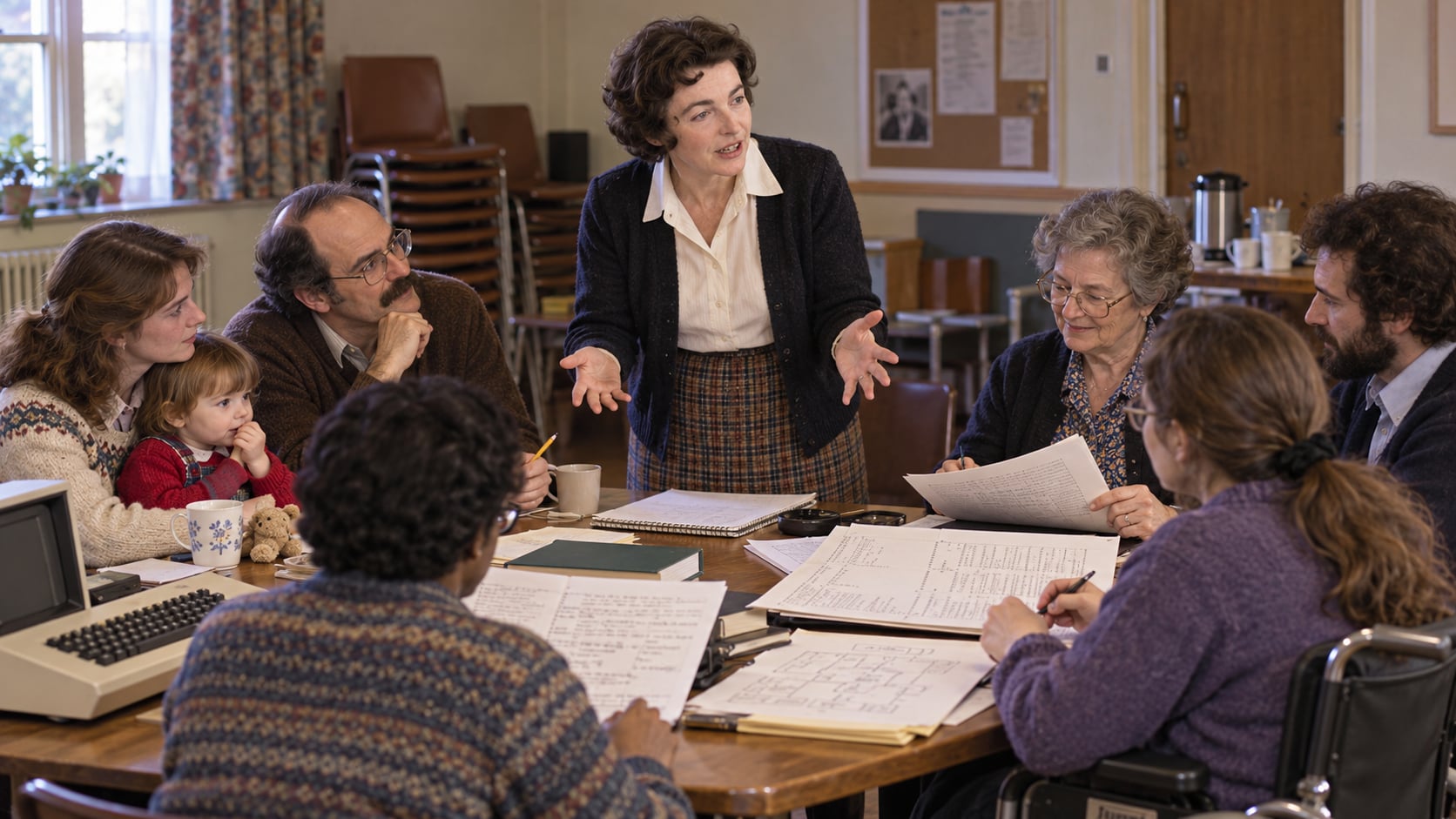
Describe the people you want by the constraint they carry, not the category they belong to. Shirley's women-only policy was outlawed; her business wasn't, because what she actually needed was people whose lives didn't fit a building. That description survived the law, kept the same workforce, and was more accurate about the opportunity than the original ever was.
Timeline
-
1933-09-16—Born Vera Buchthal in Dortmund, to a Jewish judge and a Viennese non-Jewish mother.
-
1939-07—Sent to Britain on a Kindertransport aged five, with her nine-year-old sister, Renate; fostered in Sutton Coldfield.
-
1951—Becomes a British citizen at 18 and takes the name Stephanie Brook.
-
1956—Completes a BSc in mathematics after six years of evening classes, while working at the Post Office Research Station at Dollis Hill.
-
1959—Moves to CDL Ltd, designers of the ICT 1301, and marries the physicist Derek Shirley.
-
1962—Founds Freelance Programmers with £6 at her dining room table in Chesham; registered in 1964, its first 10-month tax year produces £1,700.
-
1963—Her son Giles is born; later diagnosed as autistic and nonverbal.
-
1974–1975—Renamed F International; the Sex Discrimination Act then makes the women-only hiring policy illegal, and it's rewritten around dependents rather than sex.
-
1981–1991—Builds employee ownership through the F International Shareholders' Trust, reaching 44% of the company by 1991.
-
1989—The British Computer Society elects her its first female president.
-
1996-03—The company floats on the London Stock Exchange; around 70 staff become millionaires.
-
1998—Giles dies at 35, following an epileptic seizure.
-
2001-04—Renamed Xansa plc, with over 6,000 staff and a projected £515 million in annual sales.
-
2004—Founds Autistica, the UK's first national autism research charity.
-
2018—The Shirley Foundation, founded in 1986, spends out; total giving exceeds £67 million.
-
2025-08-09—Dies in a nursing home in Reading, aged 91.
Side notes
-
Kindertransport—Between December 1938 and September 1939, roughly 10,000 mostly Jewish children were carried from Nazi Germany, Austria, and Czechoslovakia to foster families in Britain; Shirley and her sister were among the last groups out before the war closed the route. Learn more ↩
-
ERNIE—Short for Electronic Random Number Indicator Equipment, ERNIE has drawn Britain's Premium Bond prize numbers since its first run in June 1957, built by a Post Office team led by Tommy Flowers, the wartime designer of the Colossus codebreaking computer. Learn more ↩
-
Arnold Buchthal's own war—Shirley's father was interned by British authorities as an "enemy alien" and shipped to a prison camp at Hay, New South Wales, in 1940; he survived it, worked as a translator at the Nuremberg trials, and later, as a Frankfurt prosecutor, helped investigate Nazi war criminals including Adolf Eichmann. Learn more ↩
-
The Sex Discrimination Act 1975—The same act that outlawed Shirley's hiring policy also created the Equal Opportunities Commission, a state body with statutory power to investigate and enforce sex-discrimination law nationwide, run out of Manchester under its first chair, Baroness Betty Lockwood. Learn more ↩
-
Hilary Cropper—Shirley brought in Hilary Cropper as chief executive in 1985 and stayed on as chair until her own retirement in 1993; Cropper ran the company for the next 17 years, leading it through the 1996 flotation, and was made a CBE in 1999 and a DBE in 2004 for the same flexible-working advocacy Shirley had pioneered. Learn more ↩
-
"Flat heads"—Shirley told this joke on herself decades later, in a 2015 TED talk: "You can always tell ambitious women by the shape of our heads. They're flat on top from being patted patronizingly." Learn more ↩
-
Concorde's black box—The flight recorder software was written by a team of about 30 women, working from their own homes on Freelance Programmers contracts, not at a desk inside an aerospace contractor's building. Learn more ↩
-
Autistica's names—UK charity records show Shirley's foundation was incorporated in 2004 as the National Alliance for Autism Research (UK), renamed Autism Speaks (UK) in February 2006 after the two research charities merged in America, then renamed Autistica in December 2009, years before the Shirley Foundation itself spent out. Learn more ↩