- His father stood at a spinning machine 16 hours a day, without a lunch break.
- The statute capped his own successors' pay at 10 times the average worker's. Zeiss is still owned by the same trust he created, more than a century later.
Who was he—and what was he like before everyone noticed?
Ernst Abbe was born January 23, 1840, in Eisenach, son of Georg Adam Abbe1, a foreman at a spinning mill who could barely keep a family on the wage. A physicist by training and a mill-hand's son by upbringing—and the second fact governs the story more than the first.
What did his life look like before his trek began?
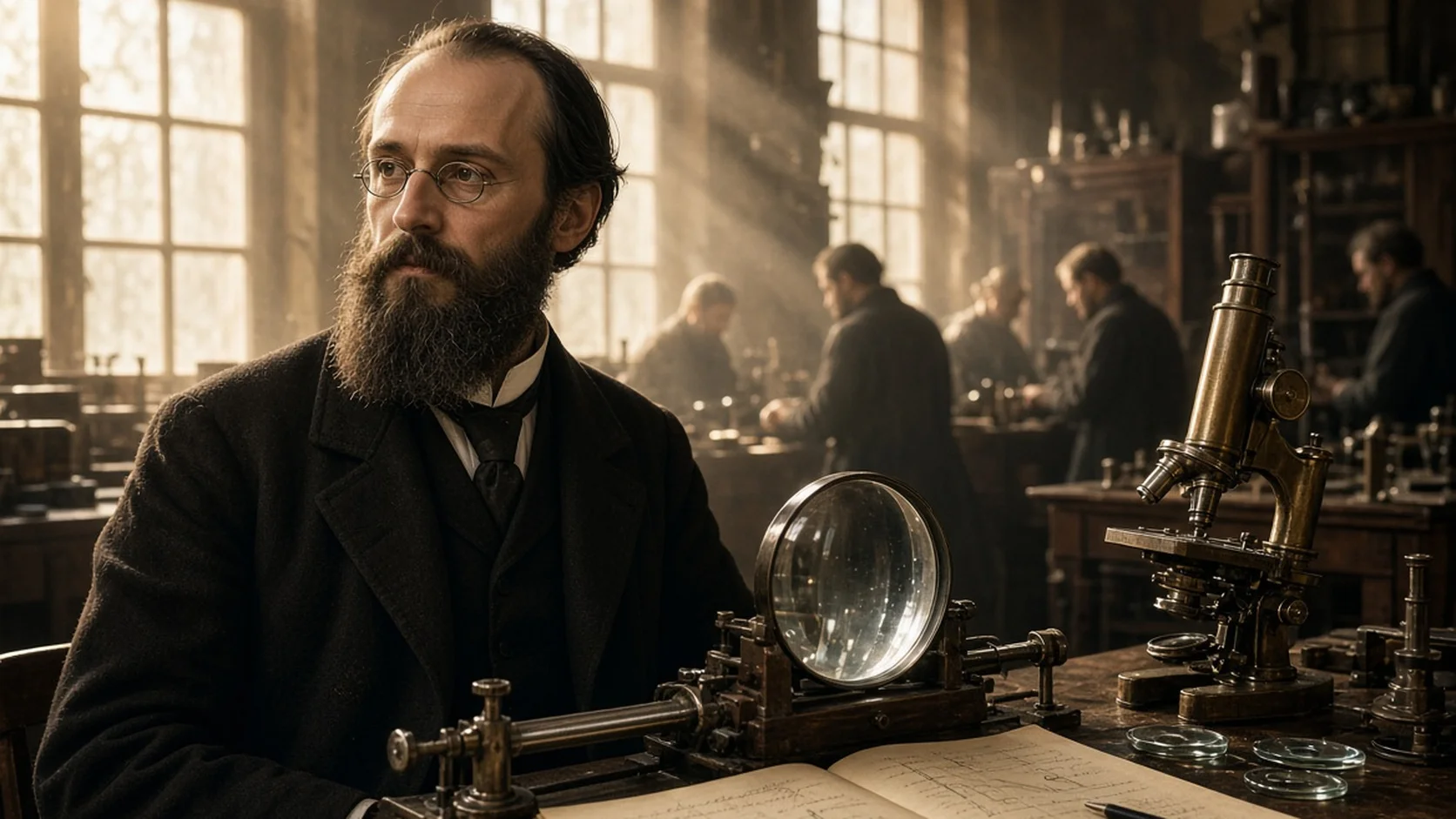
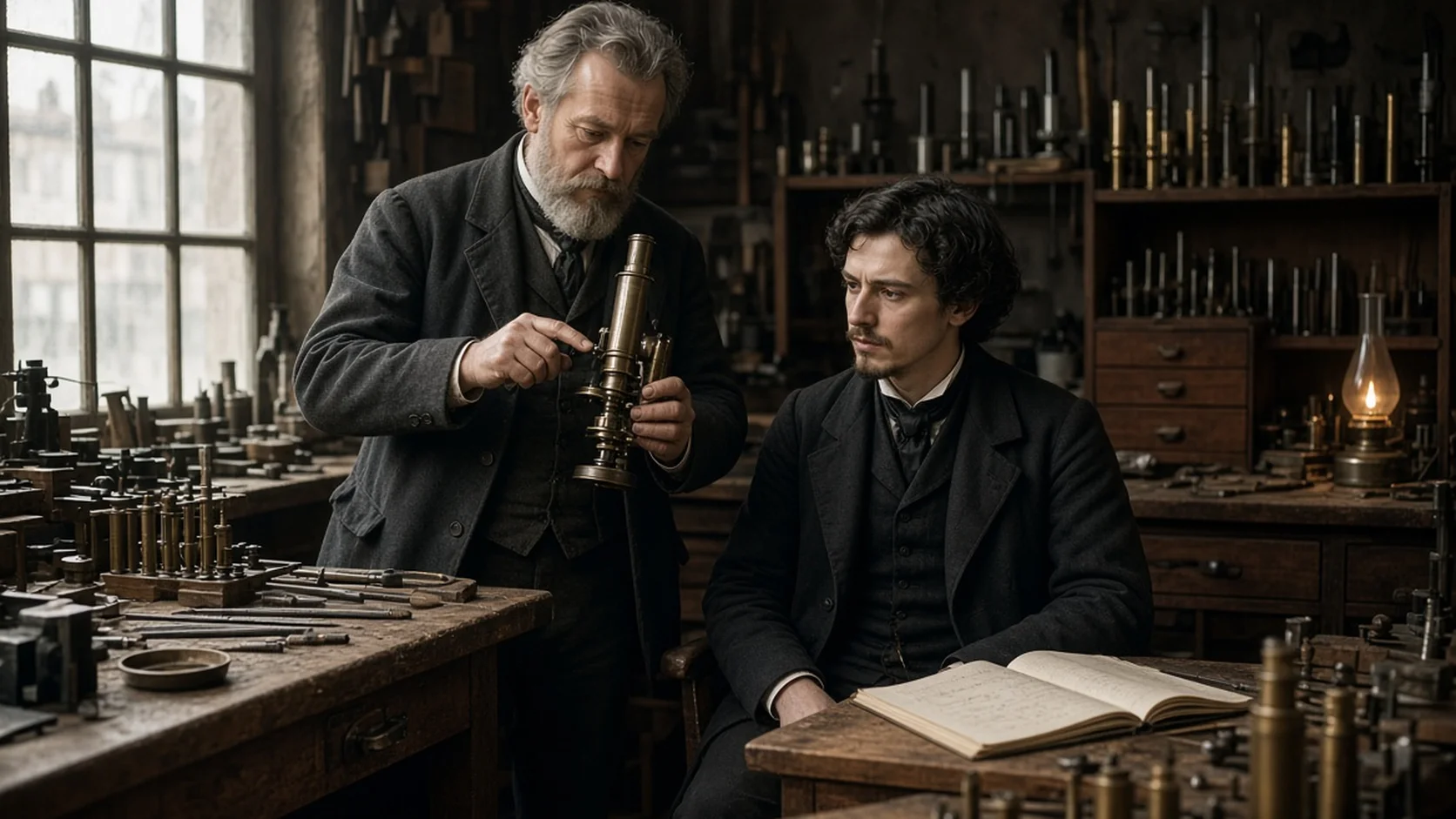
An academic. He taught physics and mathematics at Jena and had no company of his own; Carl Zeiss2, a local instrument maker, hired him in 1866 to solve a problem the workshop couldn't: how to design a microscope rather than arrive at one by filing and trying.
What did he see that other people didn't?
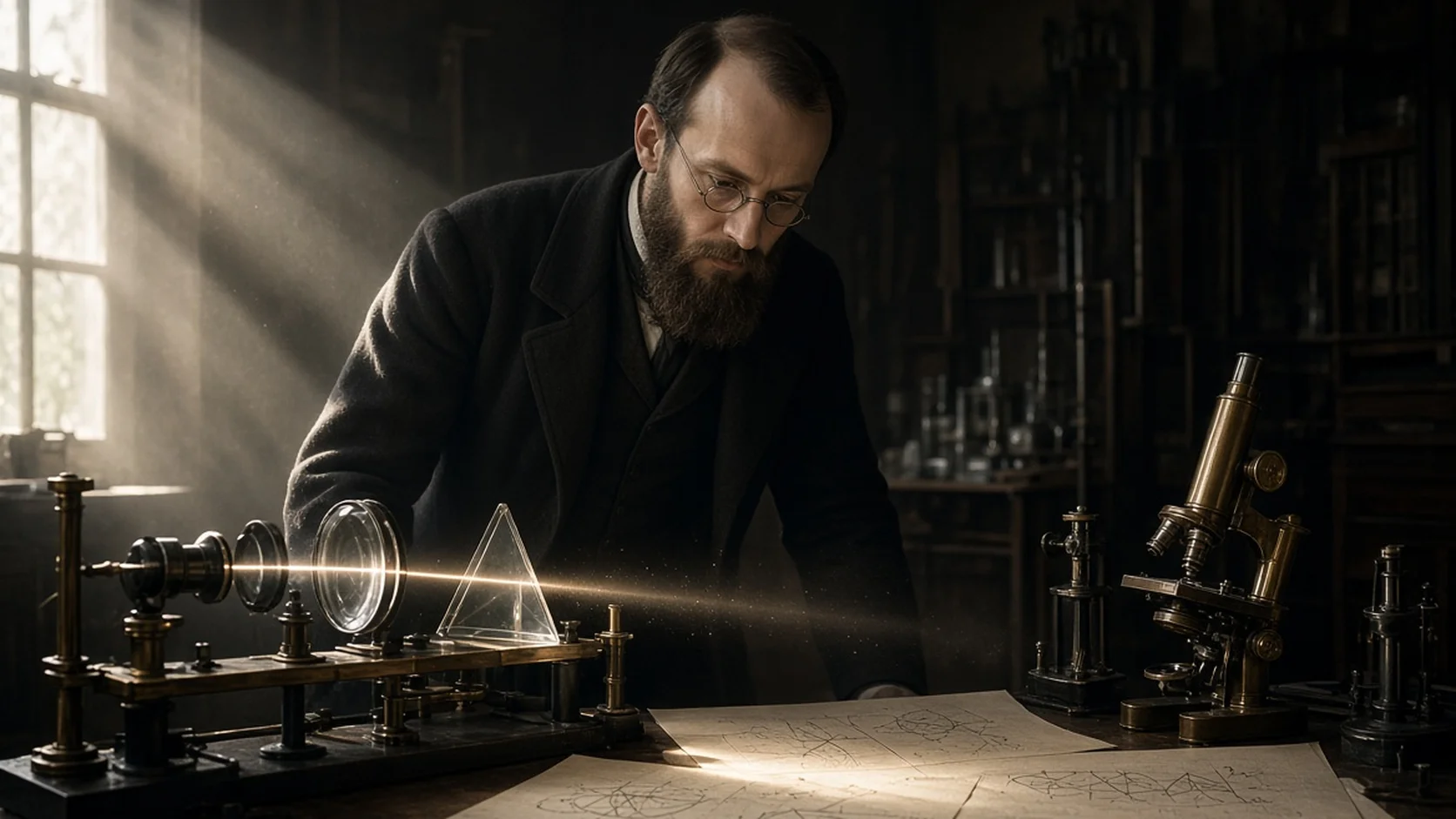
That microscope-making was a craft pretending to be finished. Lenses were made by adjustment and taste, so a good one was luck a workshop couldn't repeat. He worked out the optics instead: the sine condition, and in 1873 the diffraction limit, which says how fine a detail any lens can resolve. The result turned an instrument into something specifiable before it was built3.
What problem became his obsession?
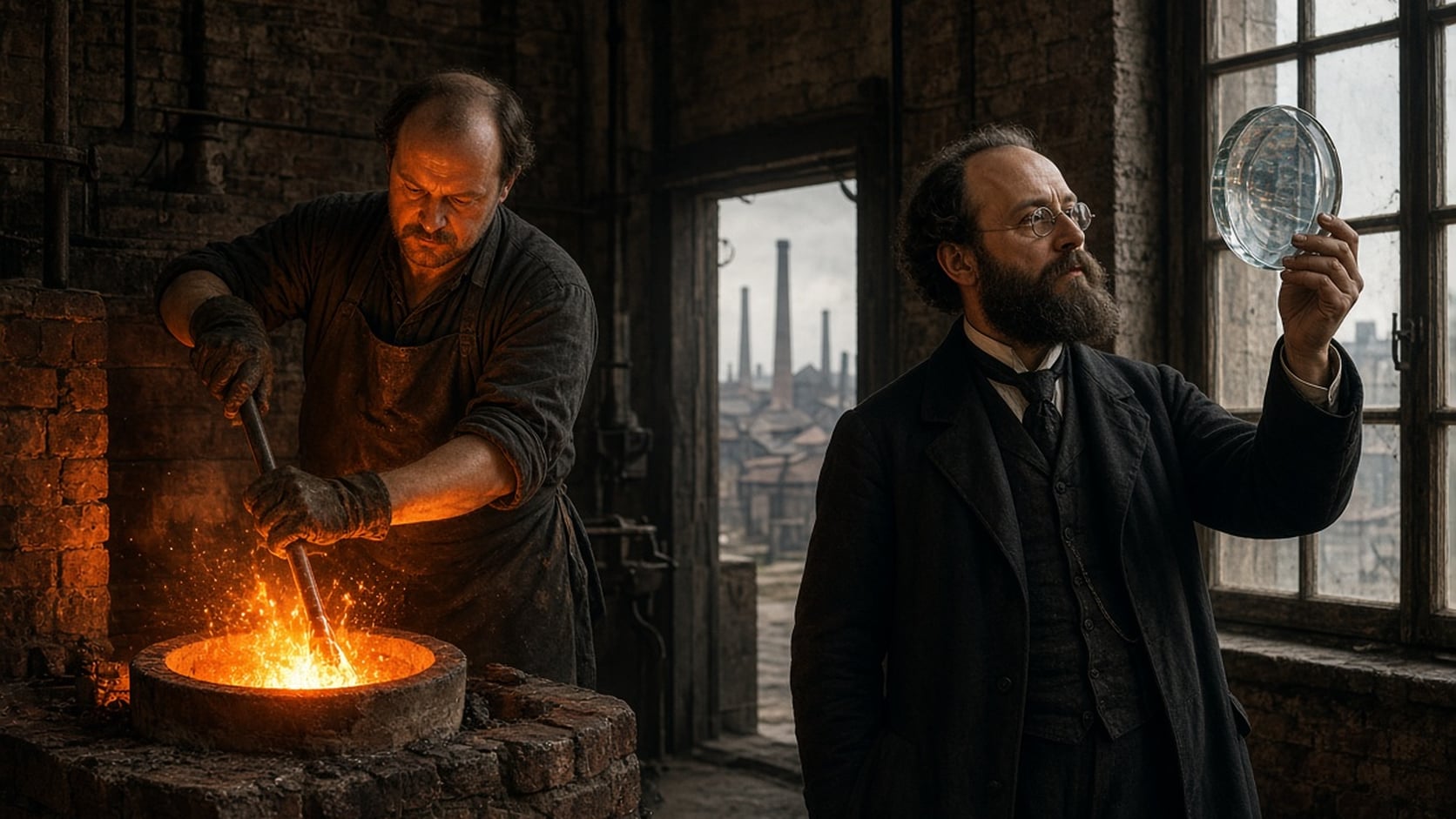
First the glass, then the ownership. Even correct designs were limited by the material available, which is why Otto Schott's glassworks4 mattered, and after that came the question of who a company belongs to, which he treated as an engineering problem with the same seriousness.
Why did this matter personally to him?
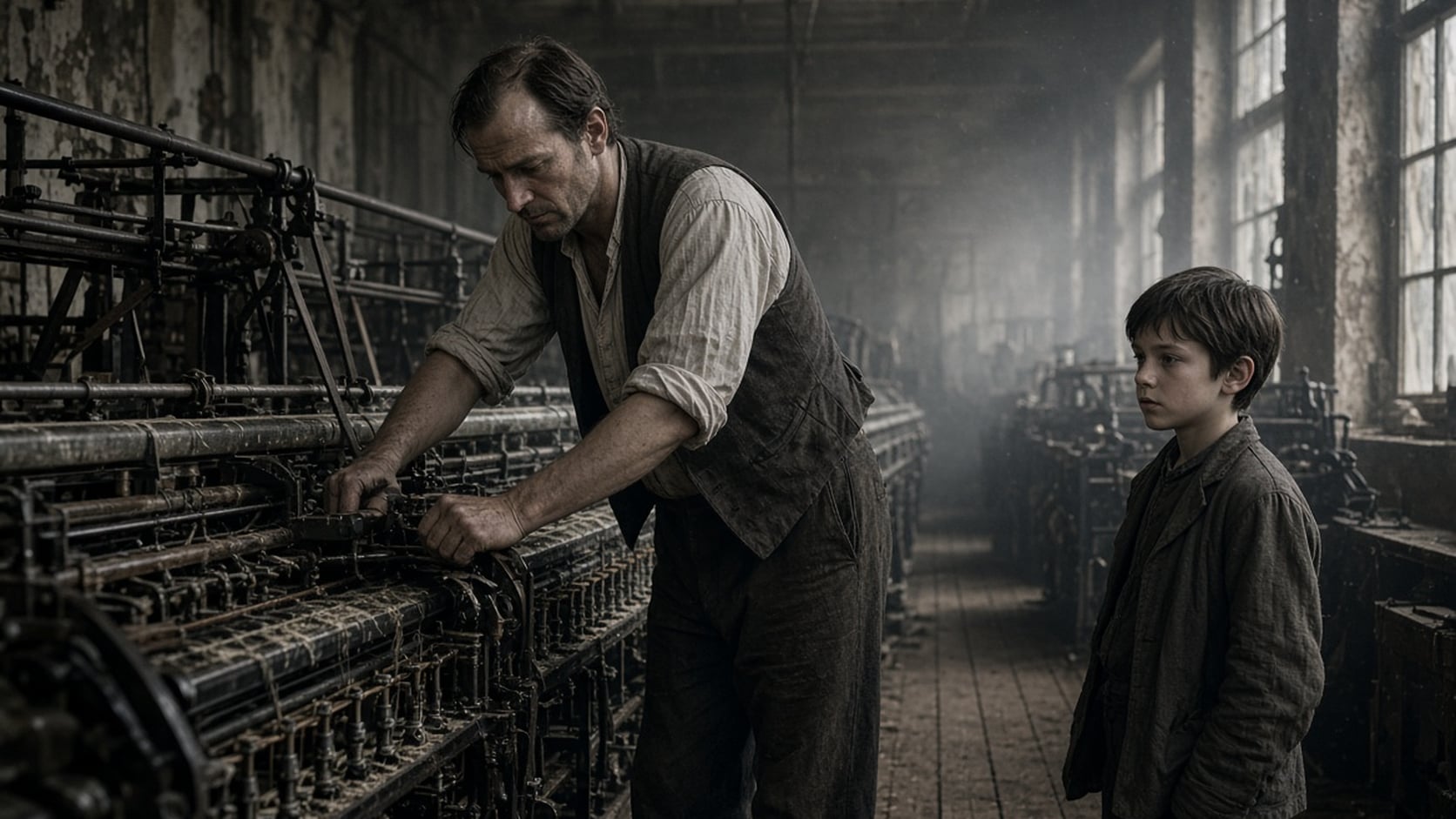
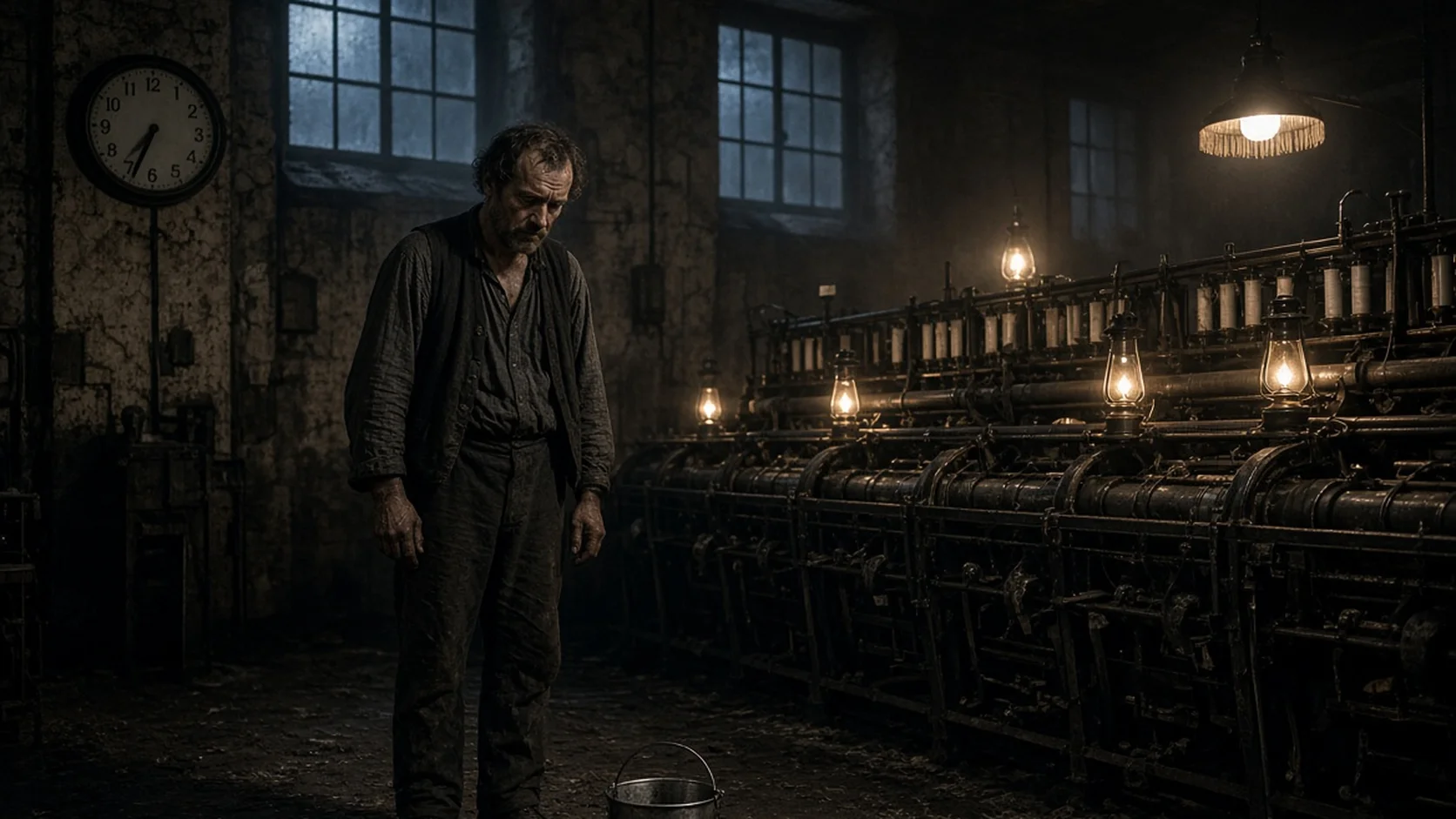
He had watched what a working life cost, close up: his father stood at the machines 14, 15, 16 hours, from five in the morning to seven at night in quiet periods, four to eight in busy ones, without so much as a lunch break. A man who has seen that doesn't write a nine-hour day as a gesture.
Where did the first money come from?
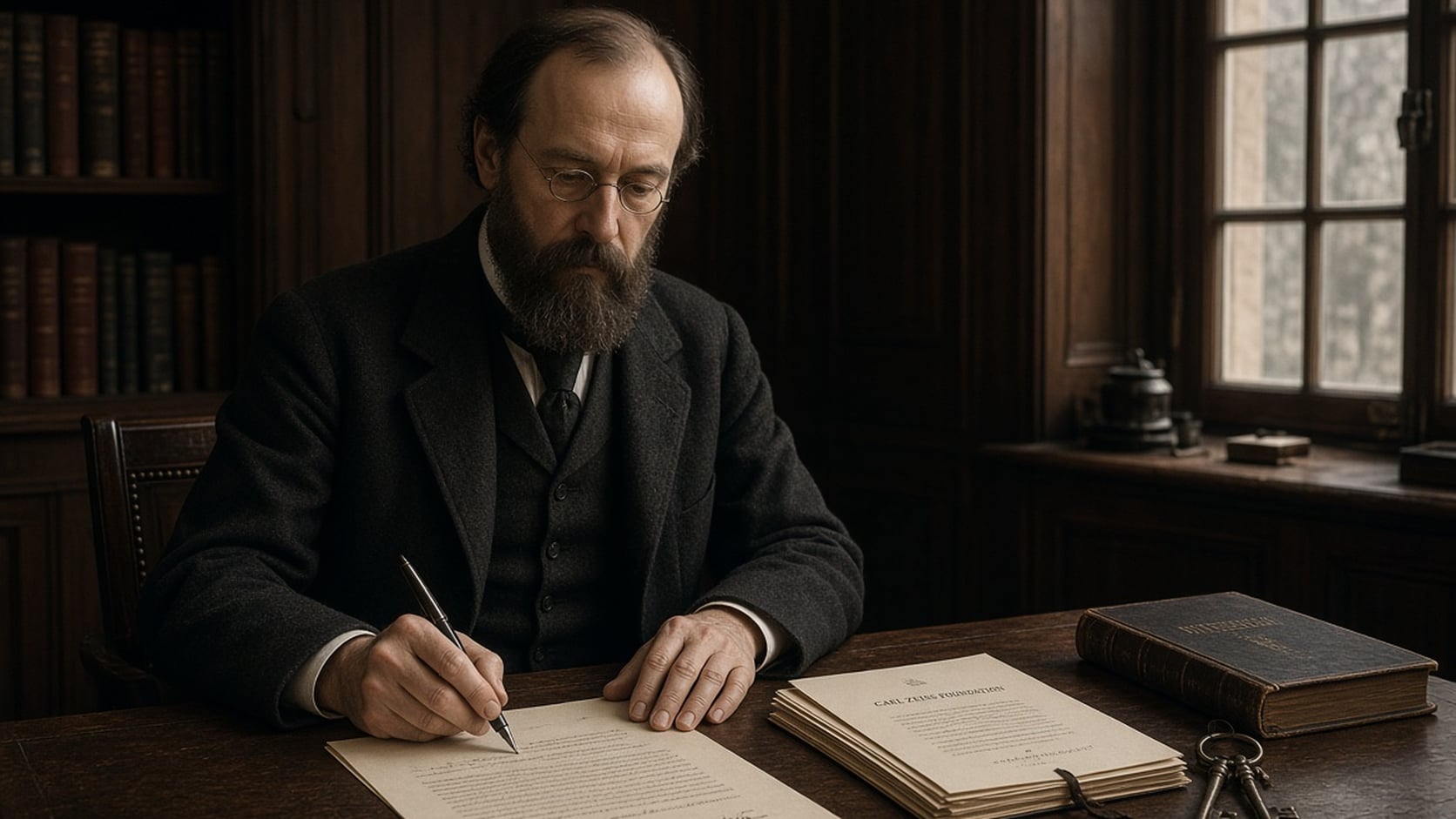
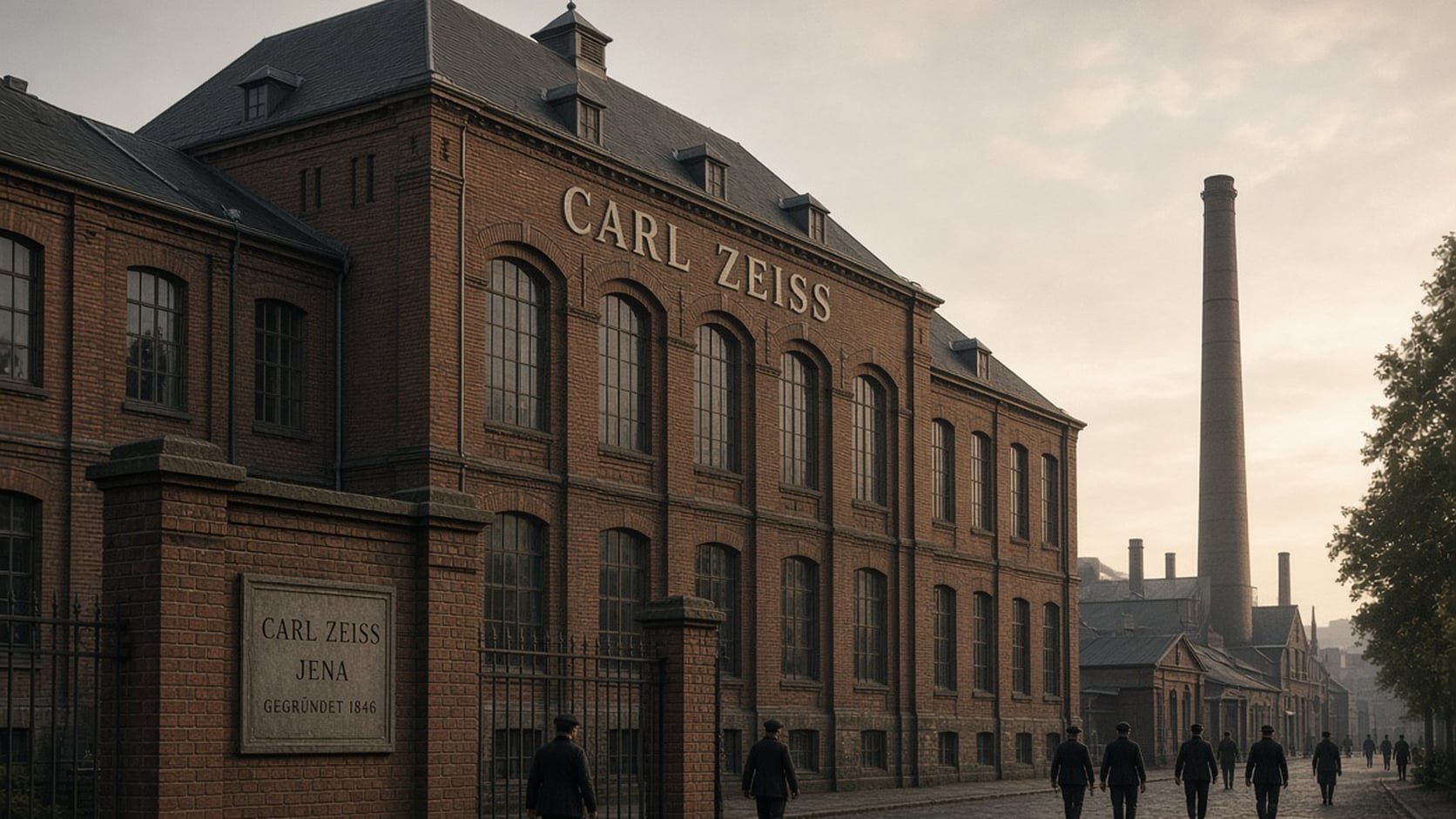
He gave away a company he had just come to own outright. Carl Zeiss died in 1888 and Abbe became sole proprietor. In 1889 he created the Carl Zeiss Foundation; in 1891 he made it the owner of the Zeiss works and a partner in Schott's. He was at the peak of a fortune and wrote himself out of it.
What made the economics work?
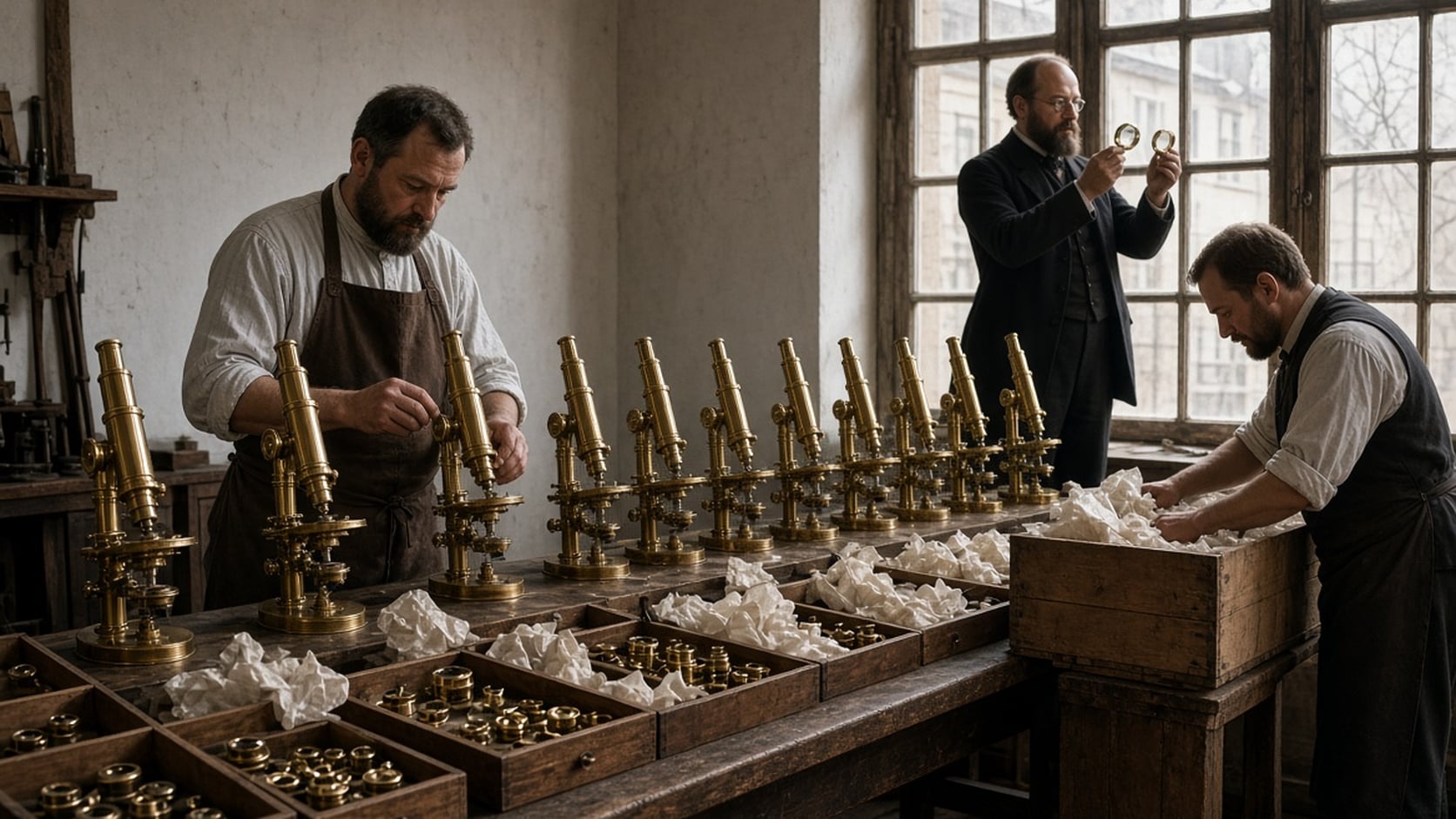
Because the optics were genuinely better and could be reproduced5, the firm could charge for precision rather than luck. That surplus funded the statute; the science's profits paid for the social provisions directly.
What was the decision or moment after which nothing was the same?
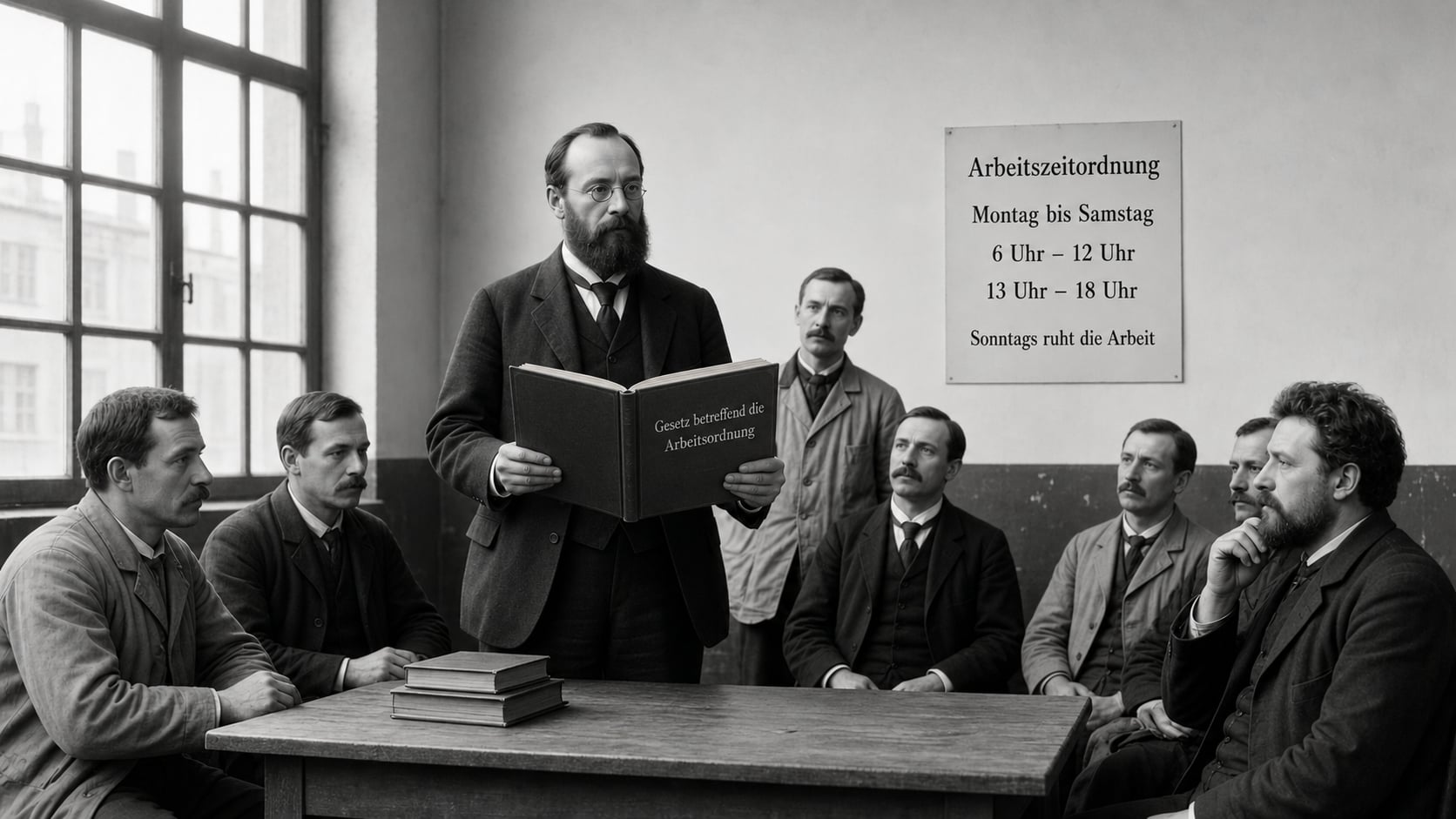
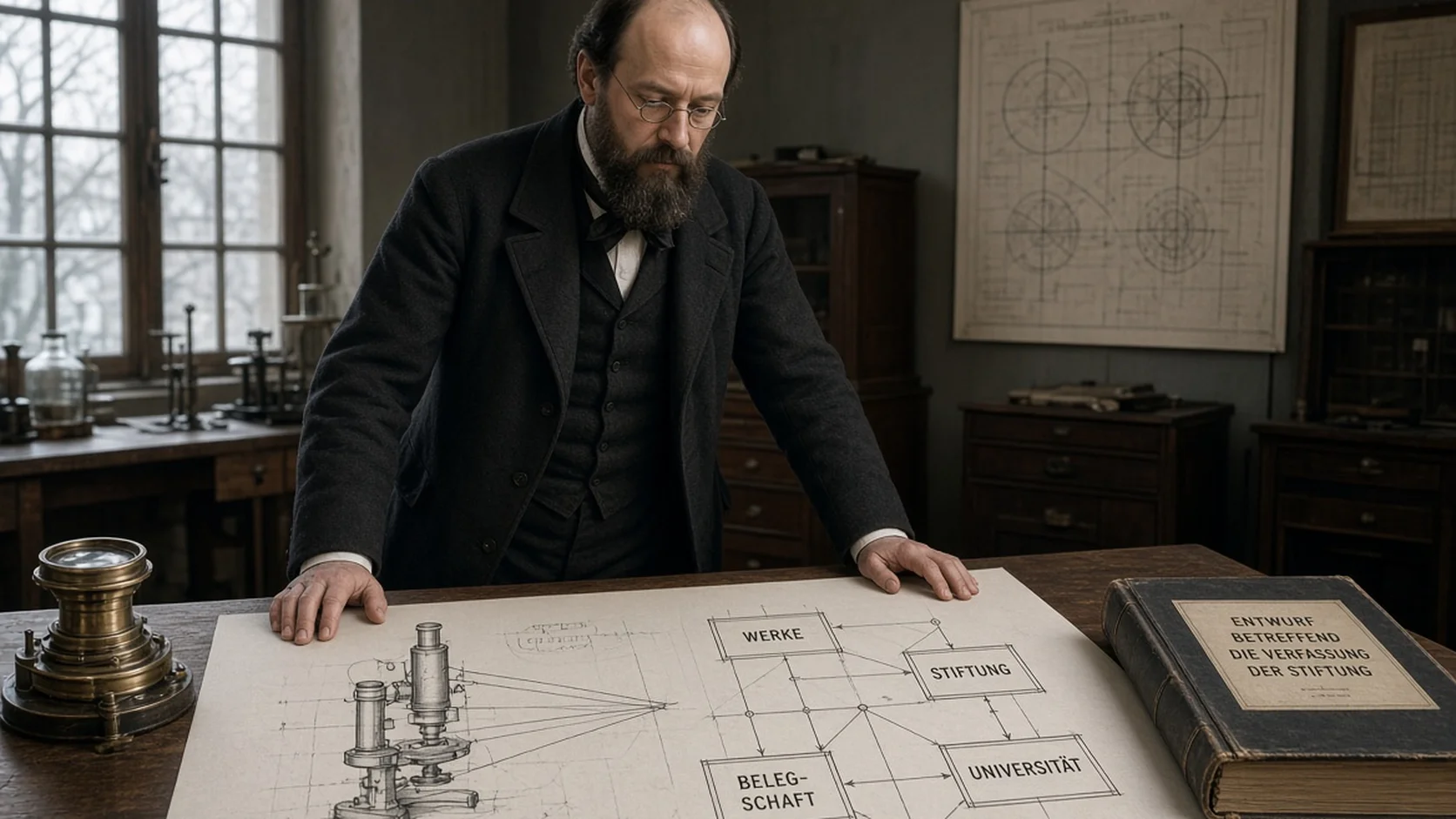
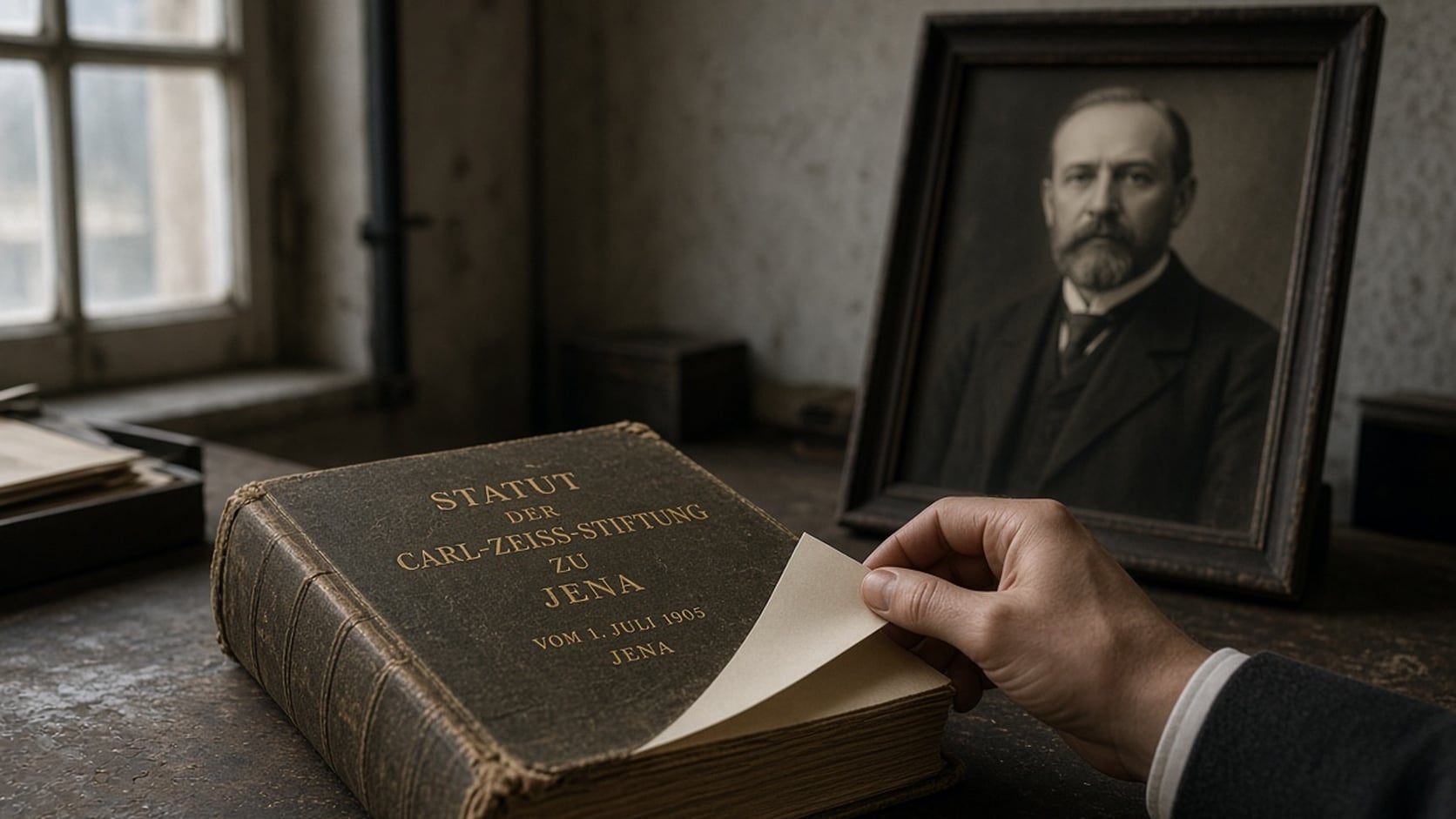
1896, and it is a document rather than a moment. The foundation statute ran to 122 paragraphs6 and fixed in law what most firms leave to the owner's mood: an elected works council, a minimum wage, paid holidays, sick pay, disability provision, pensions, profit sharing with the workforce and the University of Jena, a nine-hour day, and advancement by capability rather than origin, religion, or politics.
What nearly killed it?
Nothing in this story nearly killed the company, and pretending otherwise would be a lie. The peril he was addressing was ordinary: a good employer is only good until the owner changes his mind, or dies, or sells. The statute exists because he didn't trust his own successors, himself included.
What happened that he couldn't have planned for?
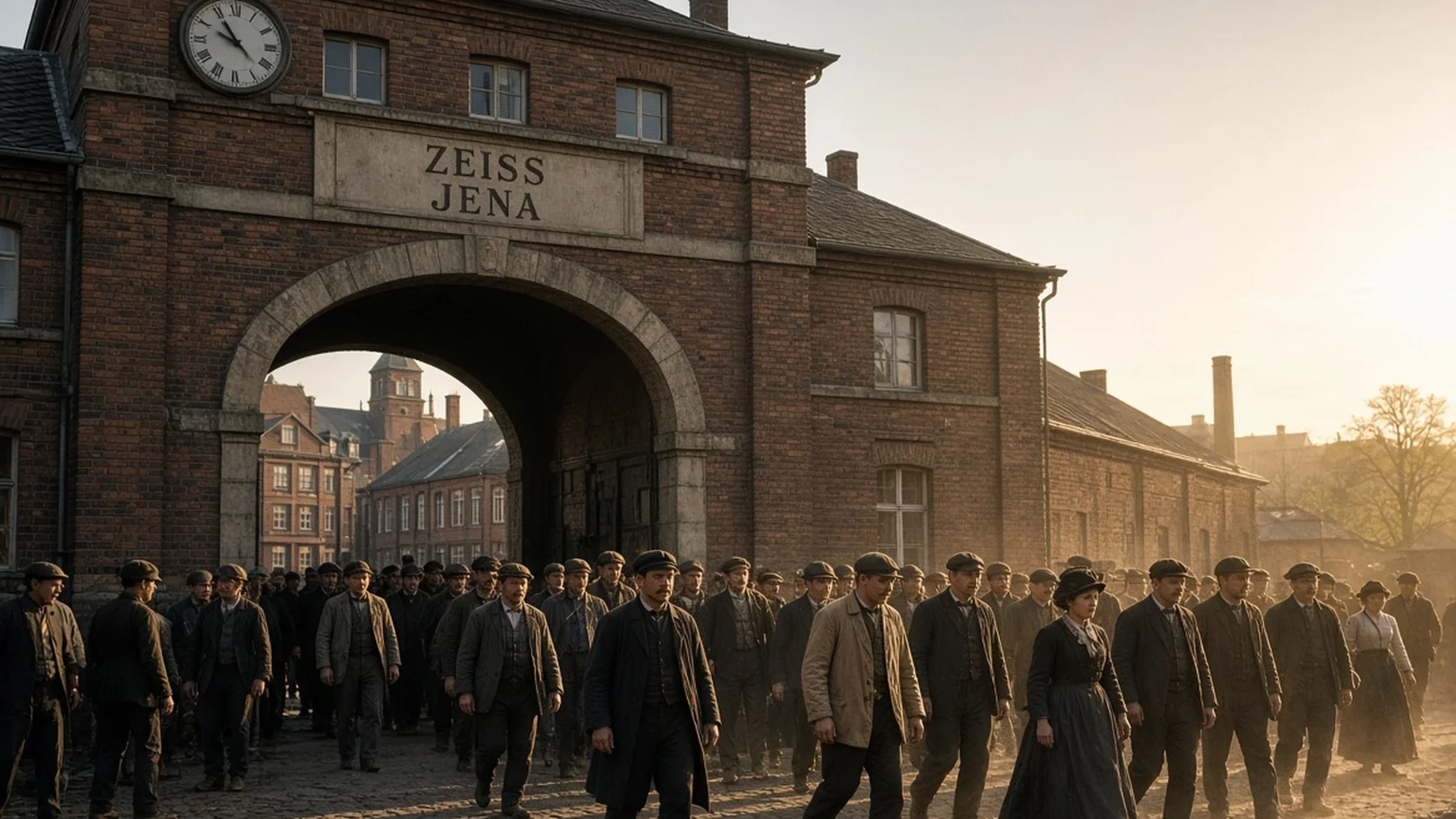
The rest of the country caught up. The nine-hour day Zeiss adopted in 1896 became an eight-hour day there in 19007, and within two decades much of what the statute guaranteed one company's workers was German law for every worker. He hadn't set out to write national policy.
What showed that he was human after all?
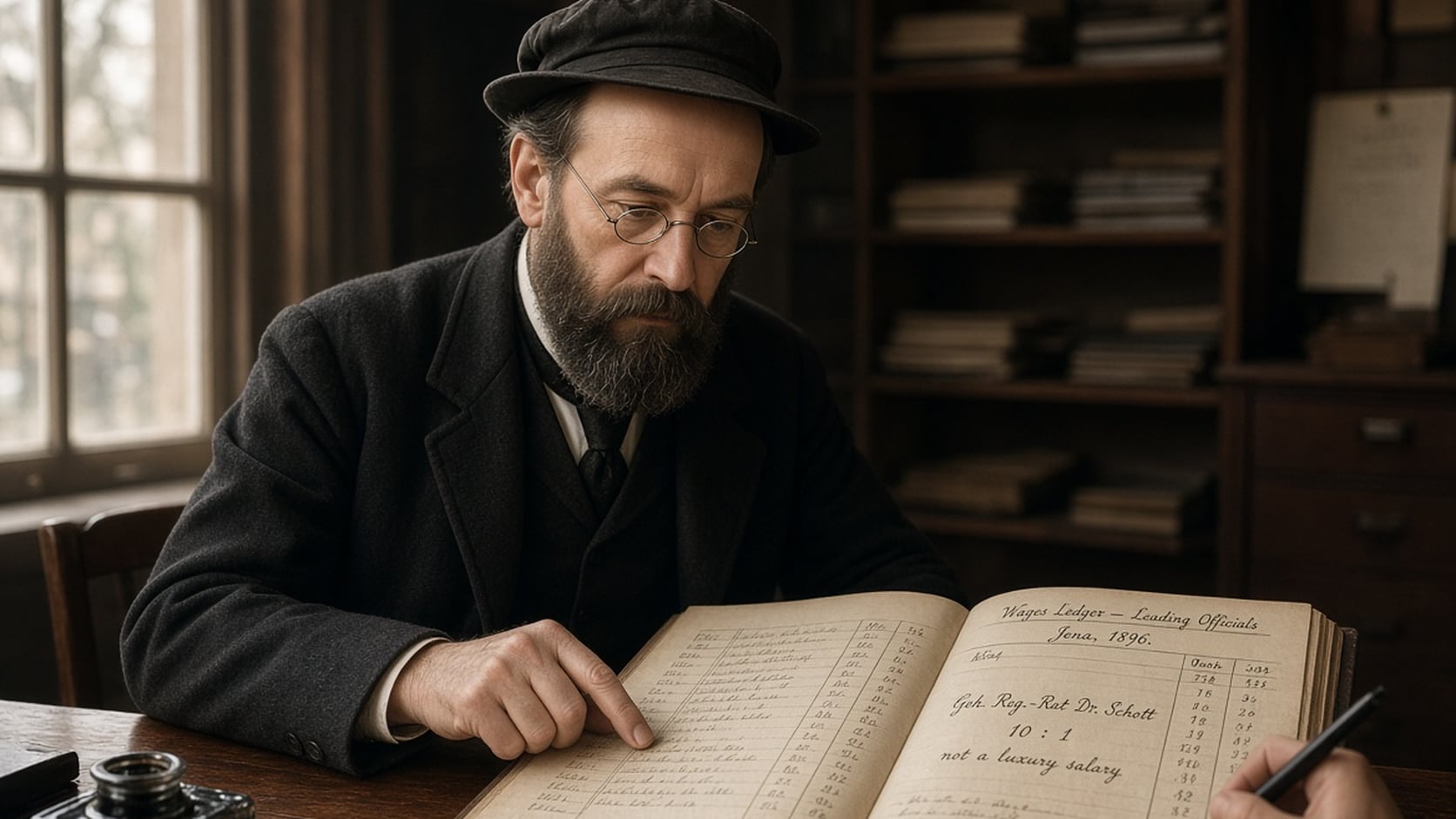
He capped his own pay. The statute says no leading official may be paid more than 10 times the average income of employees over 25 with three years' service. A ratio, not a fixed number: it rises only when everyone below rises first. Nobody imposed this on him. It targets the one failure he had grown up inside: a firm prospering while the man at the machine didn't.
What was the change he brought about?
The optics Abbe made specifiable rather than lucky are still the industry's standard: Zeiss builds the mirrors inside the extreme ultraviolet lithography machines that manufacture the world's most advanced computer chips, precision the company describes as accurate enough that, scaled to the size of Germany, the largest imperfection would measure a tenth of a millimeter8.
What did he believe that most reasonable people around him did not?
That a company's ownership is part of its design, and can be got wrong in the same way a lens can. Everyone around him treated ownership as a fact you inherit and working conditions as a matter of the owner's character. He treated both as specifications, wrote them down, and made them binding on people not yet born.
What did his trek cost him?
A fortune he chose not to have, and the ordinary risk of it: he handed control to an instrument he couldn't later overrule. He died on January 14, 1905, nine days short of 65, with the arrangement holding.
What's the takeaway?
He didn't rely on being a good owner. He had seen at first hand what an owner's discretion costs the person at the machine, so he removed the discretion, his own included, and wrote the floor into a document that outlived him. Good intentions are a person and expire with them; a statute is a structure and doesn't.
Timeline
-
1840-01-23—Born in Eisenach, son of Georg Adam Abbe, a foreman at a spinning mill.
-
1861—Earns a doctorate in thermodynamics at Göttingen.
-
1866—Carl Zeiss hires him to put microscope design on a calculable footing.
-
1870—Becomes an extraordinary professor at Jena; marries the same year.
-
1873—Publishes the sine condition and the diffraction limit, the boundary on what any lens can resolve.
-
1876—Zeiss makes him a partner in the firm.
-
1884—Founds the Glastechnisches Laboratorium with Otto Schott to develop the optical glass his designs require.
-
1886—The first apochromatic, color-corrected microscope lens.
-
1888—Carl Zeiss dies; Abbe becomes sole owner of the works.
-
1889-05-19—Founds the Carl Zeiss Foundation.
-
1891-06-30—Makes the foundation the owner of the Zeiss works and a partner in Schott's.
-
1896-10-01—The foundation statute takes effect: 122 paragraphs, a nine-hour day, and executive pay capped at 10 times the average worker's.
-
1900—The nine-hour day becomes an eight-hour day at Zeiss, 18 years before German law requires it nationally.
-
1905-01-14—Dies in Jena, nine days before his 65th birthday.
Side notes
-
Georg Adam Abbe—Beyond the mill floor, Abbe's father was a free-thinker who hid political refugees fleeing the Prussian police during the 1848 revolutions in a secret room at the mill; young Ernst helped by signaling when it was safe, and once guided a wounded revolutionary out at night. Learn more ↩
-
Carl Zeiss's own workshop—Long before Abbe's foundation, Zeiss already ran a company library for worker education and, starting in 1875, a health clinic guaranteeing six weeks of full pay and six more at half pay during illness, an employer's welfare tradition Abbe's statute would later make permanent. Learn more ↩
-
Robert Koch's tribute—In 1904, the bacteriologist Robert Koch, who had identified the tuberculosis and cholera pathogens, credited Zeiss's optics directly: "A large part of my success... I owe to your excellent microscopes." Learn more ↩
-
Otto Schott—Abbe, Carl Zeiss's son Roderich, and the glass chemist Otto Schott founded the Glastechnisches Laboratorium in Jena in 1884 specifically to develop the optical glass Abbe's designs called for but no supplier yet made. Learn more ↩
-
The 1886 apochromatic lens—The partnership's first payoff was a color-corrected "apochromatic" objective lens, the first of its kind, possible only once Schott's new glass formulas matched what Abbe's calculations called for. Learn more ↩
-
The 17-paragraph deed—Abbe's original 1889 foundation deed ran to just 17 paragraphs; the 1896 statute that replaced it, with its full slate of worker protections, ran to 122. Learn more ↩
-
Germany's own eight-hour day—Zeiss adopted the eight-hour day in 1900. Germany didn't make it national law until 1918, after the German Revolution forced the concession on industry generally. Learn more ↩
-
The machine his optics now sit inside—A single EUV lithography machine costs roughly $150 million, contains 100,000 parts, and takes 40 shipping containers, 20 trucks, and three Boeing 747s to deliver to a customer. Zeiss's mirrors replace the lenses altogether, since ordinary glass absorbs the wavelength these machines use. Learn more ↩