- Sent to America at 9, he cleaned toilets at a Kentucky reform school.
- Researchers trained a breakthrough AI network on two of his company's gaming chips.
- In 2025 his company became the first worth $5 trillion.

Who is he—and what was he like before everyone noticed?
Jensen Huang was born on February 17, 1963, in Taiwan1, the younger of two sons of Huang Hsing-tai, a chemical engineer at an oil refinery, and Lo Tsai-hsiu, a schoolteacher, who reportedly taught him English by picking 10 random words from the dictionary each day. When he was 5, his father's work took the family to Thailand, where he attended an international school in Bangkok. Before anyone had heard of him he was a 9-year-old who barely spoke English, sent to America with his older brother in 1973 to live with an aunt and uncle in Tacoma, Washington.

What did his life look like before his trek began?
Tough, then fast. His aunt and uncle enrolled the boys at the Oneida Baptist Institute in rural Kentucky, believing it was a prestigious boarding school. It turned out to be a religious academy for troubled youth, and his parents sold nearly everything they owned to pay the tuition. Every student had a job, and his was cleaning the toilets every day. He was bullied and beaten, but he also taught an illiterate roommate "covered in tattoos and knife scars" to read in exchange for lessons on the bench press2. About two years later, his parents settled in Beaverton, Oregon, and the boys joined them. He skipped two grades at Aloha High School, became a nationally ranked table tennis player, graduated at 16, and from 1978 to 1983 worked graveyard shifts at Denny's as a dishwasher, busboy and waiter.
What did he see that other people didn't?
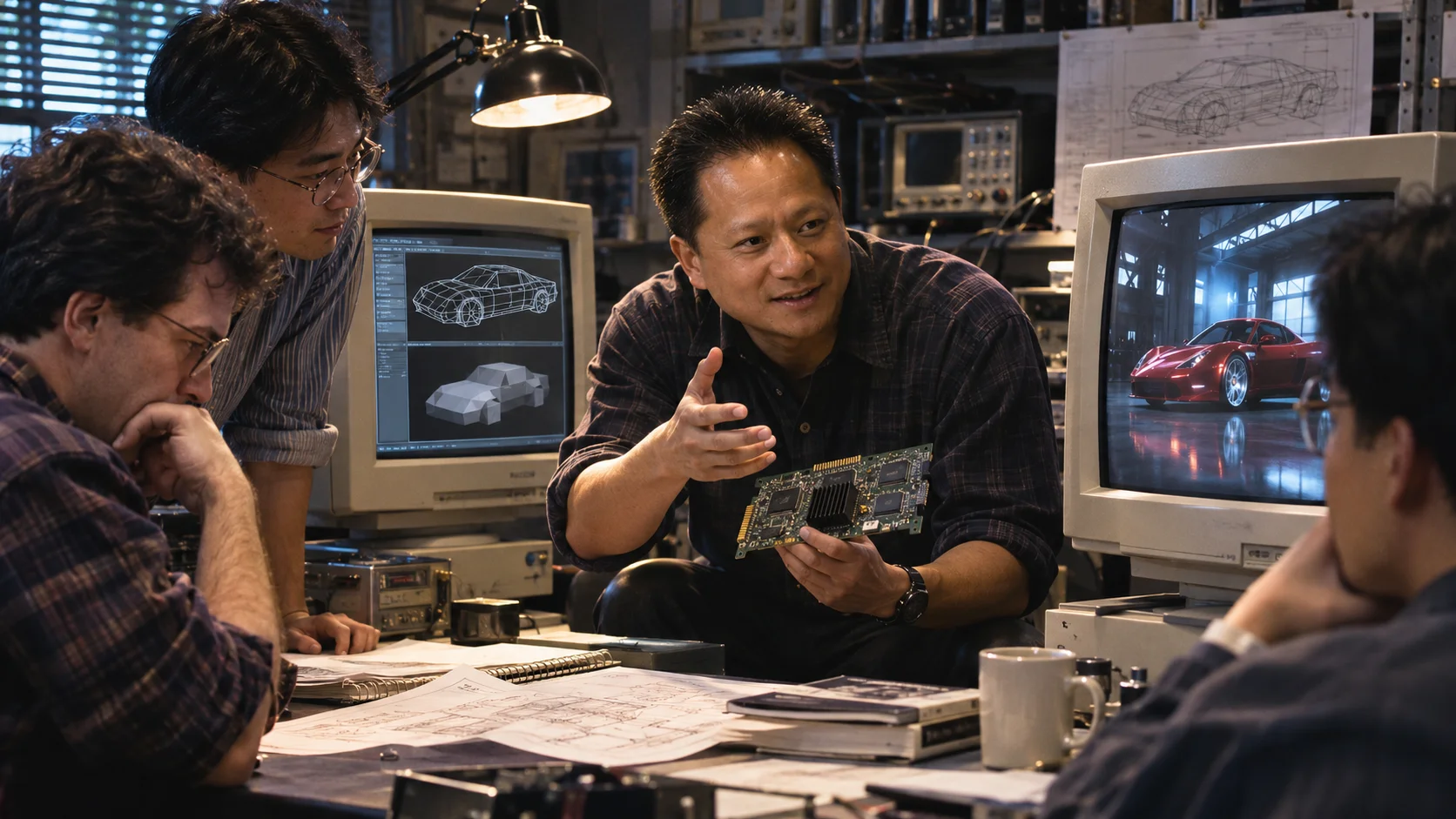
That video games would drive the future of computing. After studying electrical engineering at Oregon State, where he met his future wife, Lori Mills, as his lab partner, he designed microprocessors at AMD and then moved to the chipmaker LSI Logic. There he worked with two Sun Microsystems engineers, Chris Malachowsky and Curtis Priem, on a graphics project, and he finished a master's at Stanford by taking night classes. Games were both hugely demanding on computers and sold in huge numbers3, and the three of them saw that a chip built for graphics could serve that market far better than the general-purpose processors in PCs.
What problem became his obsession?
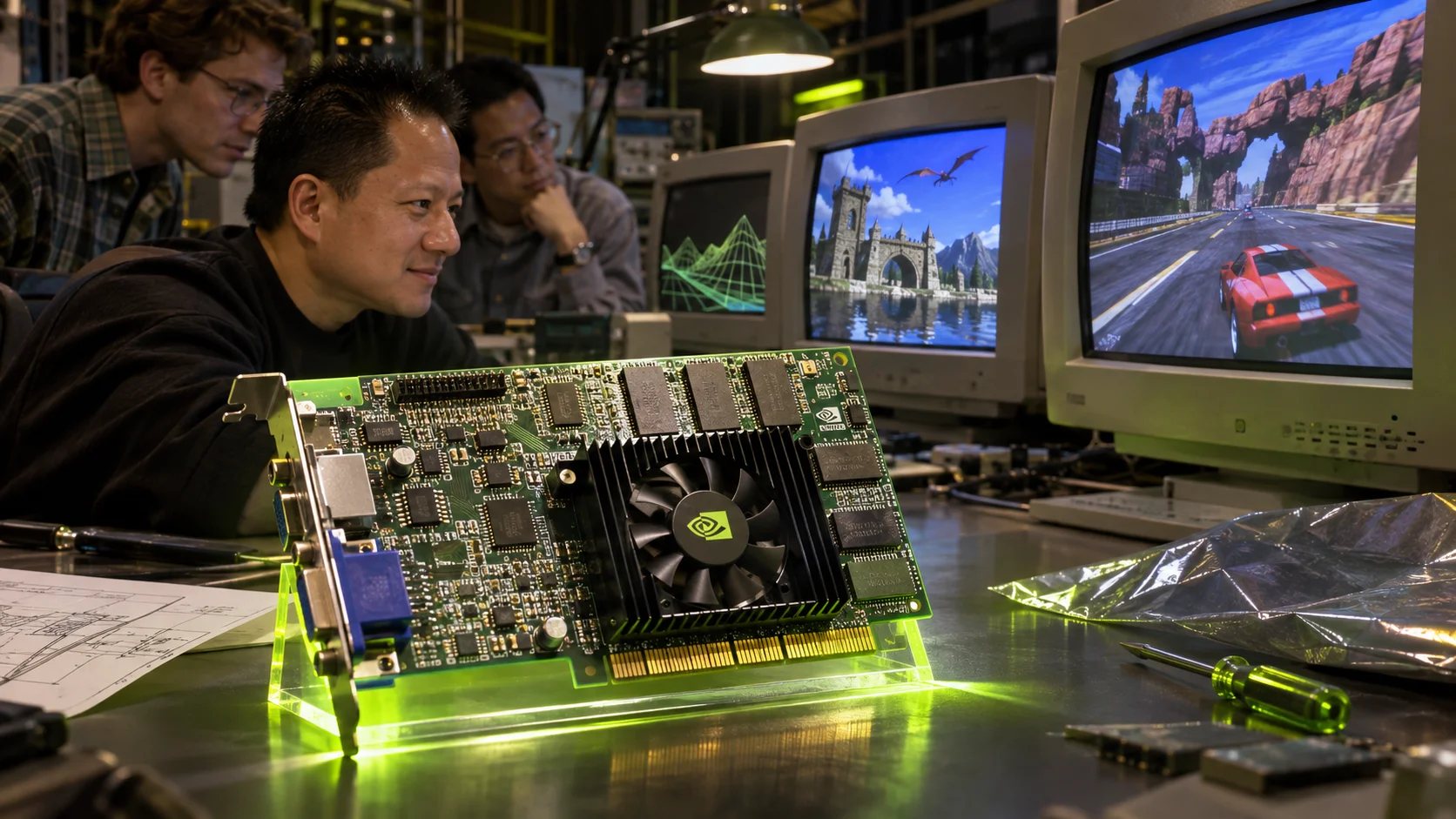
Making computers fast enough to draw realistic 3D worlds. In the early 1990s, PCs struggled with 3D graphics. Huang and his co-founders set out to build a specialized chip that would take over the work. In 1999 Nvidia released the GeForce 256, the first product it marketed as a GPU, or graphics processing unit.
Why did this matter personally to him?
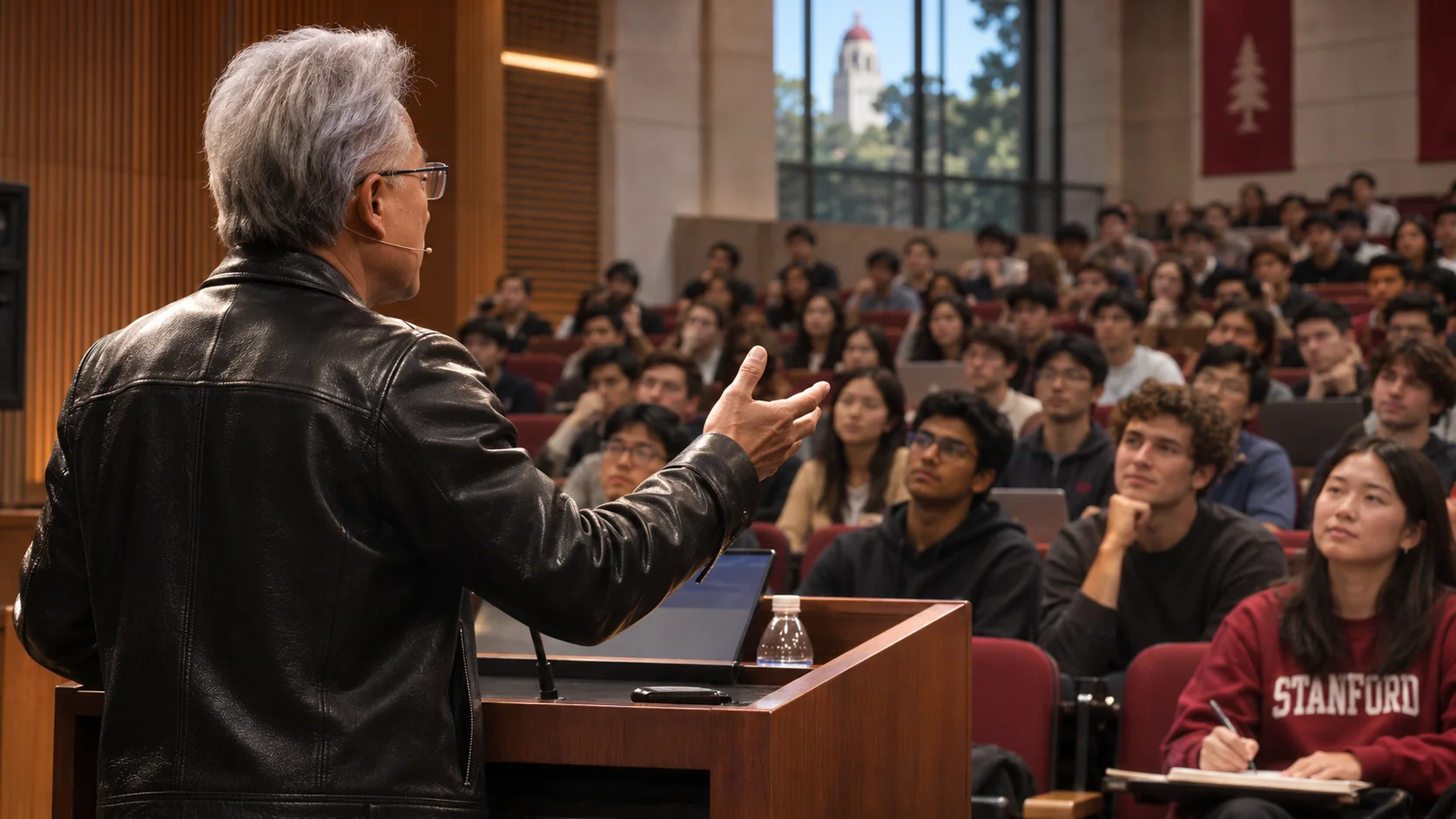
He believes hard times build character, because he lived through them. He has said he remembers his time in Kentucky "more vividly than just about any other," when he was an "undersized Asian immigrant with long hair and heavily accented English." In March 2024, asked by Stanford students for advice, he said greatness comes from people who have overcome setbacks. "I wish upon you ample doses of pain and suffering," he told them.

Where did the first money come from?
A few hundred dollars and a booth at Denny's. In 1992 the three engineers met often at a Denny's in East San Jose to work on their business plan, because it was quieter than home and the coffee was cheap. When they incorporated Nvidia on April 5, 1993, the lawyer required each founder to put in $200 in cash. The company started with about $40,000 in the bank and later raised $20 million from Sequoia Capital, Sutter Hill Ventures and others4. Huang, 30, became CEO on the first day. "You're in charge of running the company," Priem told him, "all the stuff Chris and I don't know how to do."

What made the economics work?
Gamers. Nvidia's chips sold in high volumes to people who wanted better graphics, and that steady demand paid for the company's research. Its RIVA 128, released in August 1997, sold about a million units in its first four months. Nvidia went public on January 22, 1999, and its GeForce cards became a fixture in gaming PCs.

What was the decision or moment after which nothing was the same?
Opening up the GPU. In 2006 Nvidia introduced CUDA, software that let programmers use its graphics chips for general-purpose computing, and it built the capability into its gaming chips. The cost was enormous. "We increased our cost by 50% and we were a 35% gross margin company," Huang later said, and by his account the company's market value fell to about $1.5 billion. For years, few customers needed what CUDA could do5.
What nearly killed it?
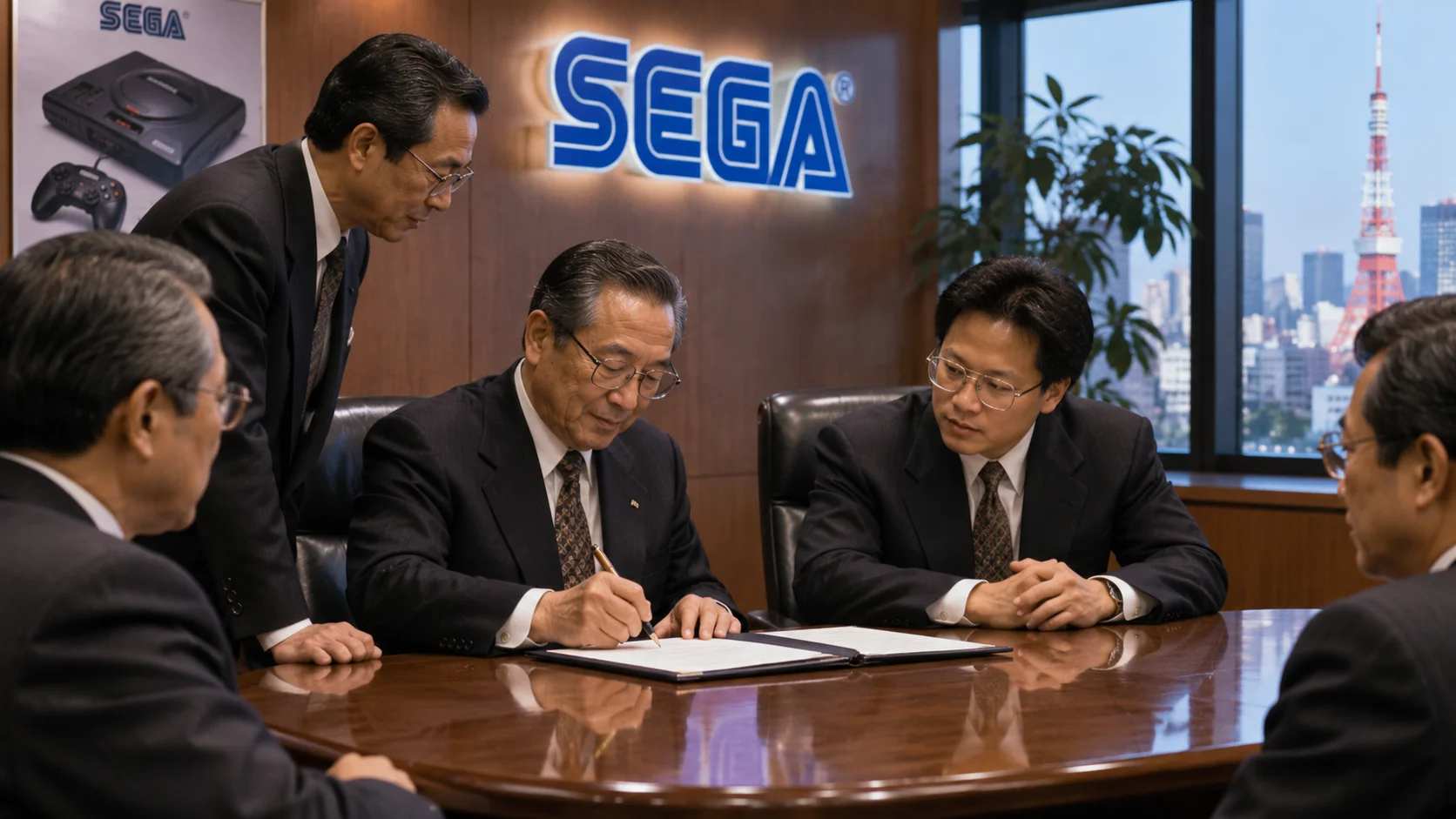
Its first chip. The NV1 rendered images using four-sided shapes, but when Microsoft's DirectX standard settled on triangles, the chip was left behind. Sega, which had hired Nvidia to make a graphics chip for a game console, chose another supplier, but its president, Shoichiro Irimajiri, persuaded the company to invest $5 million in Nvidia anyway. In 1996 Huang cut the staff from about 100 people to 40. When the RIVA 128 came out in 1997, Nvidia had only enough money for one month's payroll. That's where Huang's long-running motto comes from: "Our company is thirty days from going out of business."
What happened that he couldn't have planned for?
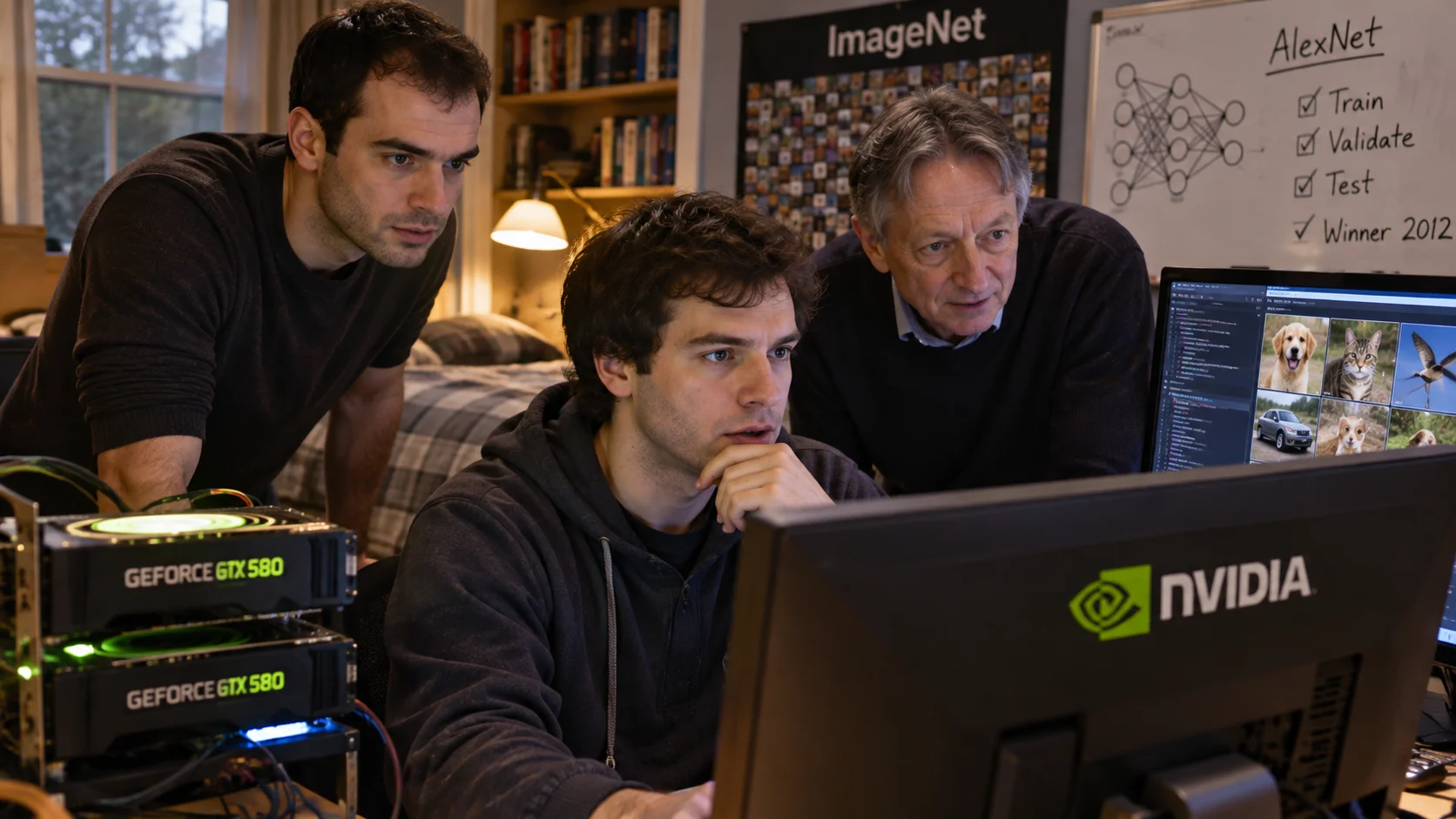
A graduate student's bedroom experiment. In 2012 Alex Krizhevsky, working with Ilya Sutskever and their adviser Geoffrey Hinton at the University of Toronto, trained a neural network called AlexNet on two Nvidia GTX 580 gaming cards in his bedroom at his parents' house, using code written in CUDA. It won that year's ImageNet image-recognition contest by more than 10 percentage points. The result helped launch the boom in deep learning, and it showed that Nvidia's chips were ideal for training AI.

What showed that he was human after all?
He keeps his word, even when it hurts. Huang once told his staff he would get the company's logo tattooed on his arm if Nvidia's stock passed $100 a share. When it did, he followed through, and he later said the experience made him "cry like a baby." He also doesn't wear a watch, saying "now is the most important time6."
What was the change he brought about?
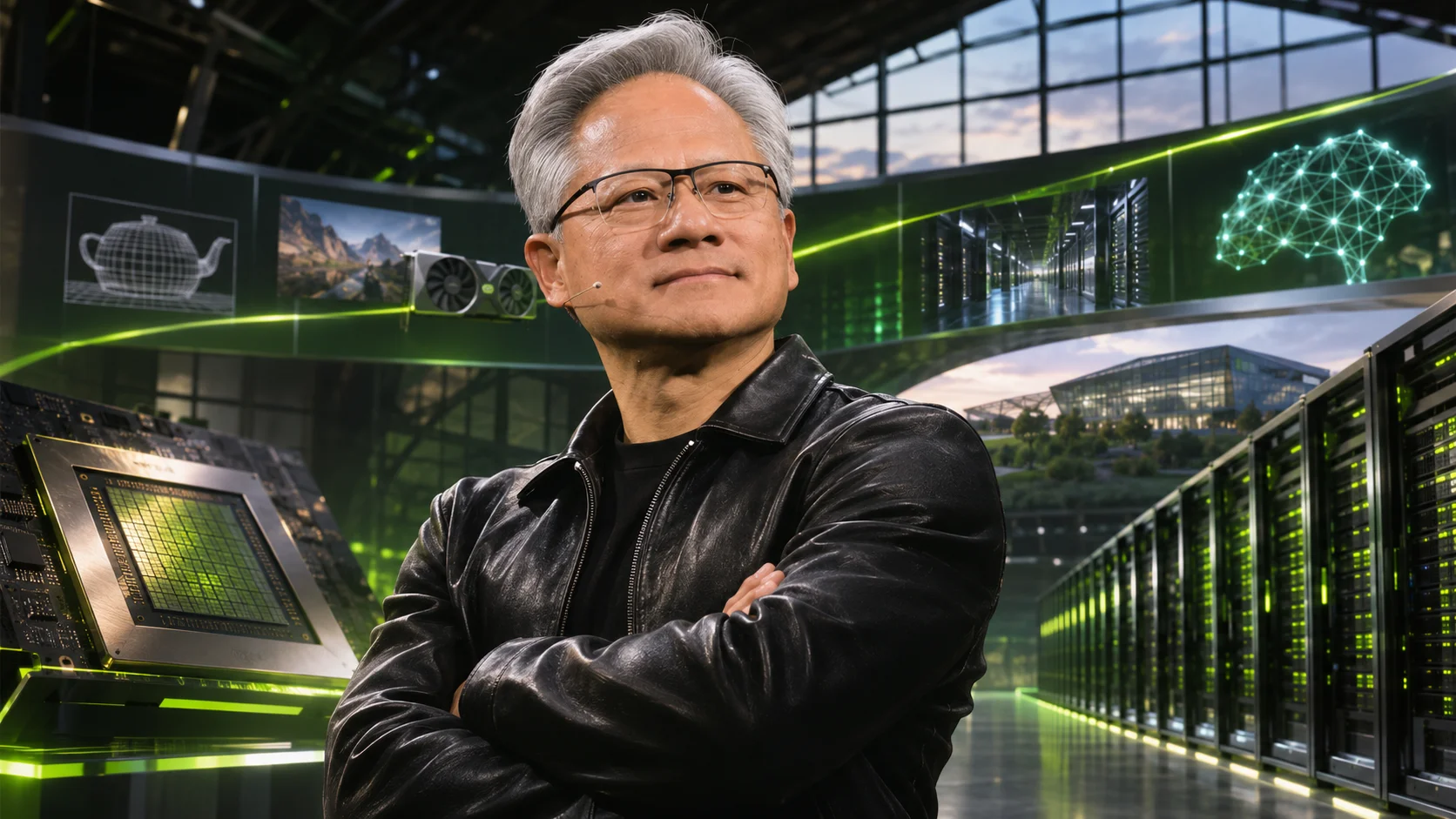
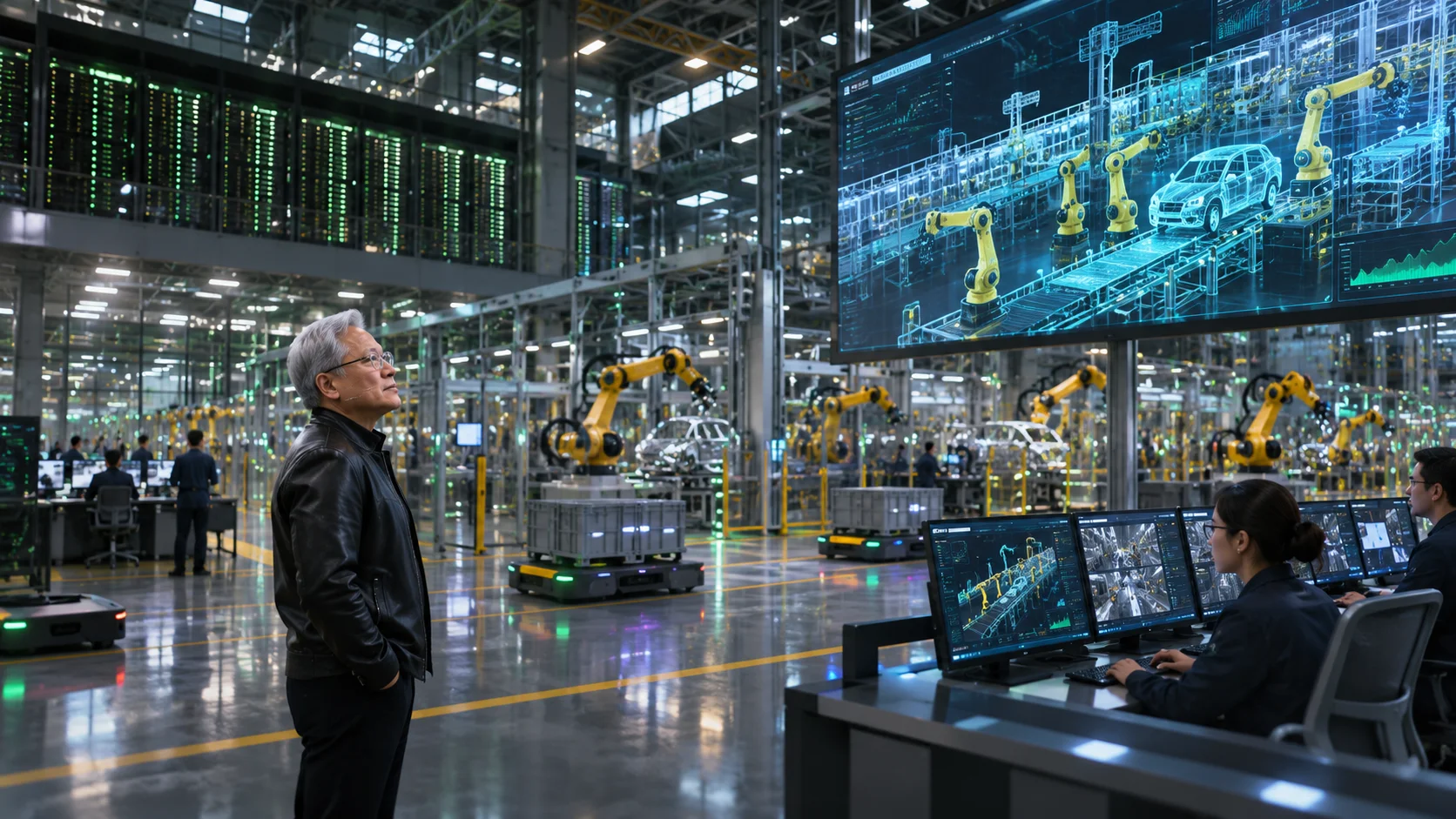
He helped turn the graphics chip into the engine of modern AI. Nvidia's GPUs became the hardware most AI companies rely on to train and run their models. The company's market value passed $1 trillion in May 2023, $2 trillion in March 2024 and $3 trillion in June 2024, and on October 29, 2025, it became the first company worth $5 trillion. In December 2025, Huang was one of the "Architects of AI" named Time's Person of the Year7.
What did he believe that most reasonable people around him did not?
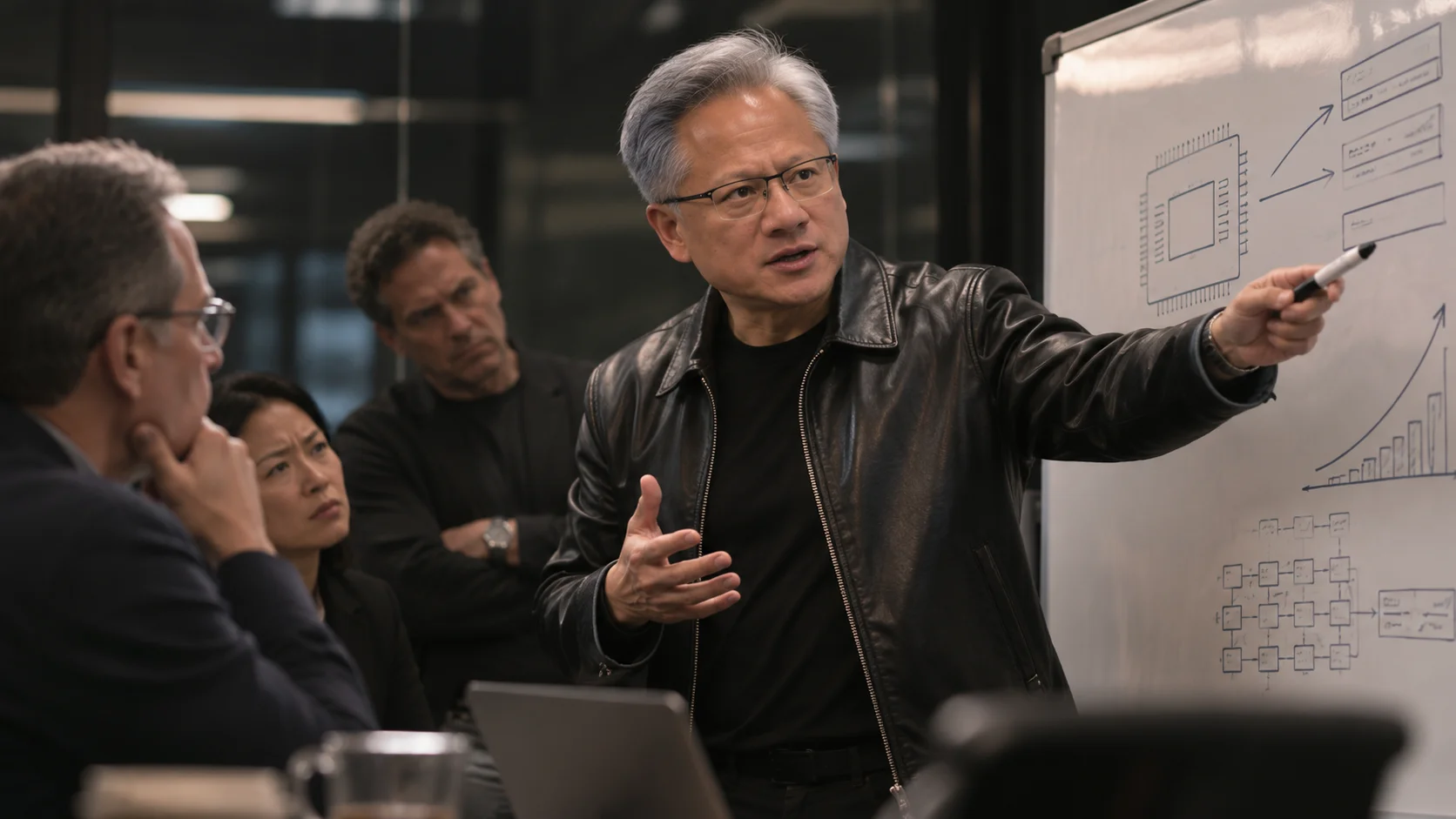
That a CEO doesn't need layers of management between himself and his people. Huang has no fixed office and works from whatever conference room he's passing. As of late 2024, he had about 60 people reporting directly to him, and he has said people in those roles "should be at the top of their game" and "require the least amount of pampering."
What did his trek cost him?
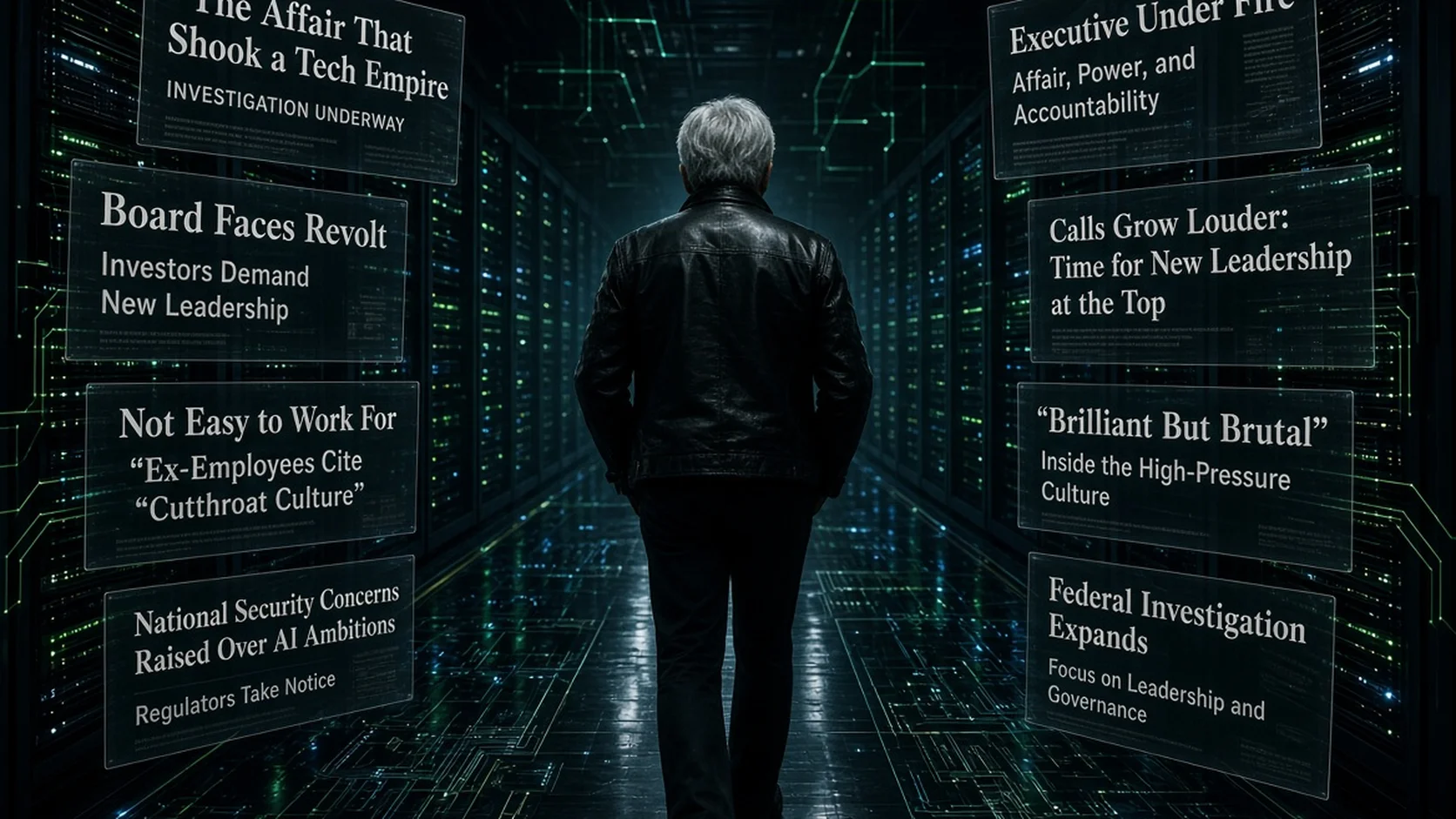
A punishing pace, and now his private life has become public. For years Huang ran Nvidia as if it could fail within a month. When 60 Minutes asked in 2024 about employees describing him as demanding and "not easy to work for," he said: "It should be like that. If you want to do extraordinary things, it shouldn't be easy."
In November 2026, Huang admitted in a letter to Nvidia's staff that he'd had an affair with Alice Huang, no relation, a former executive at Megaspeed, a Singapore company that bought large amounts of Nvidia equipment. The New York Times had reported that US intelligence officials concluded she was working for the Chinese government. China called the allegations groundless, and no charges against her had been reported. "I was unfaithful to my wife. My actions hurt her and our children," Huang wrote. "There is no excuse for what I did." Nvidia's board said it had "no reason to believe that either national security or Nvidia secrets were compromised," and a committee of independent directors began an investigation while Huang remained CEO.
What's the takeaway?
Keep going long enough for the world to catch up. Huang built a graphics company that nearly ran out of money, then spent years and billions of dollars on a capability few customers wanted. When AI researchers needed exactly that capability, Nvidia was ready. His story also shows that the drive that builds a company doesn't protect anyone from personal failure.
Timeline
-
1963-02-17—Born in Taiwan.
-
1973—Sent to the US at 9; enrolled at the Oneida Baptist Institute in Kentucky.
-
1978—Starts working at Denny's in Oregon at 15.
-
1984—Graduates from Oregon State University in electrical engineering.
-
1992—Earns a master's degree from Stanford.
-
1993-04-05—Co-founds Nvidia with Chris Malachowsky and Curtis Priem.
-
1996—Cuts Nvidia's staff from about 100 to 40.
-
1997-08—Nvidia releases the RIVA 128.
-
1999-01-22—Nvidia goes public.
-
2006—Nvidia introduces CUDA.
-
2012—AlexNet, trained on two Nvidia GPUs, wins the ImageNet contest.
-
2023-05—Nvidia's market value passes $1 trillion.
-
2025-10-29—Nvidia becomes the first company worth $5 trillion.
-
2025-12—Named one of Time's Persons of the Year as an "Architect of AI."
-
2026-11-08—Admits to an affair in a letter to staff; Nvidia's board opens an investigation.
Side notes
-
Two cities—Most accounts say he was born in Tainan, but Wikipedia now says he was born in Taipei and moved to Tainan as a child. Learn more ↩
-
Back to Oneida—In 2017, the school began building Huang Hall, a girls' dormitory named for him and his wife. Learn more ↩
-
"Our killer app"—In 2017 Huang called video games Nvidia's "killer app" because they were both computationally demanding and sold in high volume. Learn more ↩
-
The envy name—The name comes from invidia, the Latin word for envy. The founders had considered "NVision," but another company was already using it. Learn more ↩
-
A decade without profit—"We didn't make money for 10 years, and we never gave up on it," said Ian Buck, who led CUDA's development. Learn more ↩
-
Family rivals—AMD's CEO, Lisa Su, is a distant relative. They didn't grow up together and first met at an industry event. "No family dinners," she said. Learn more ↩
-
Art school rescue—In July 2026, Huang and his wife pledged a $75 million matching gift to create an art, architecture and design college at Vanderbilt University's San Francisco campus, his largest gift to any university. Learn more ↩