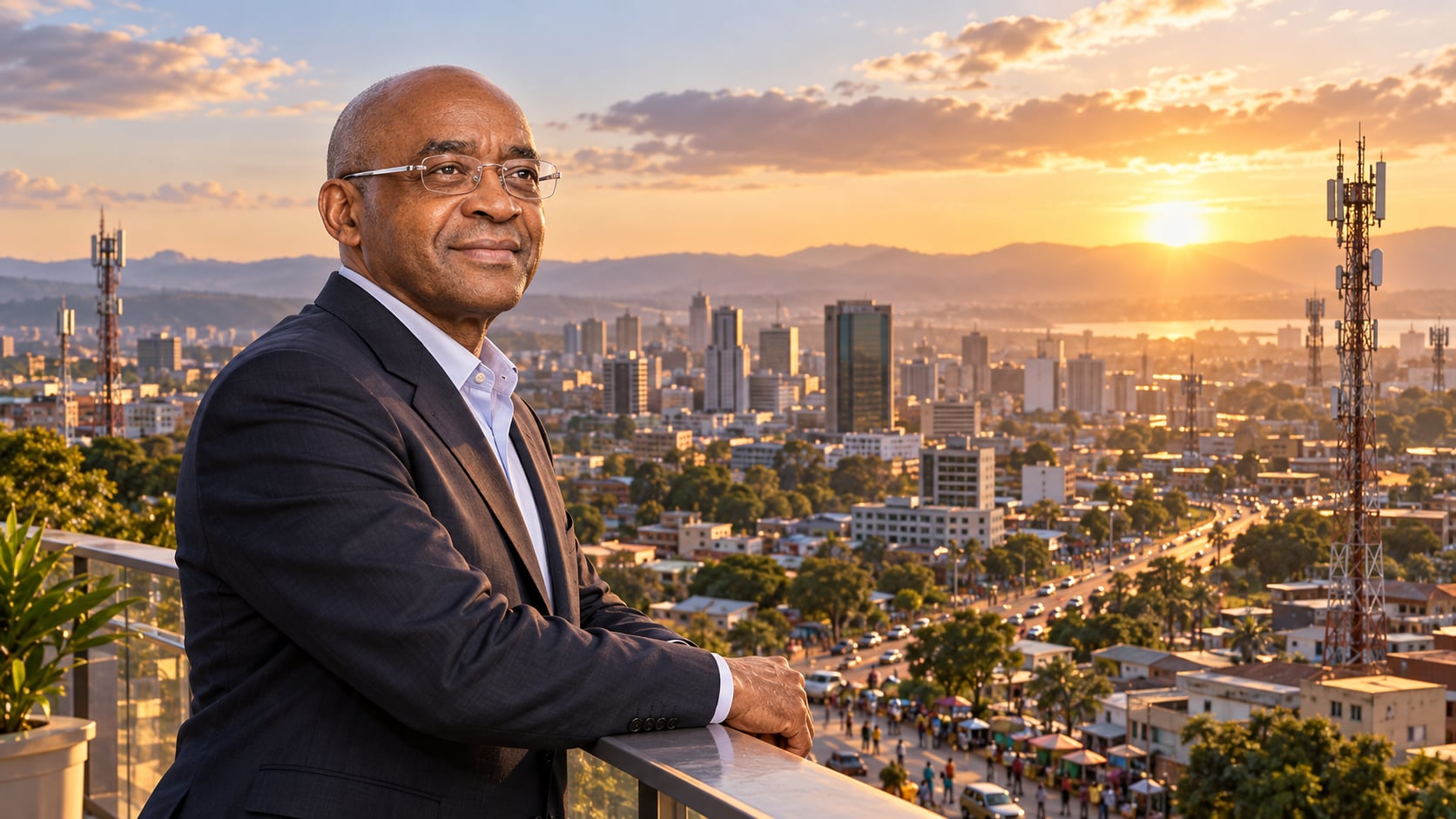
- He paid striking doctors' wages himself when his government refused to.
- His mobile-money service once moved more cash than Zimbabwe's entire economy earned in a year.
- His own case became the blueprint other African countries later used to open their telecom markets to private firms.

Who is he—and what was he like before everyone noticed?
Strive Masiyiwa was born January 29, 1961, in Southern Rhodesia (now Zimbabwe). At seven he was moved across a border by other people's politics: his family left after Ian Smith's Unilateral Declaration of Independence and resettled in Kitwe, a copper-mining town in Zambia. He finished secondary school in Edinburgh and took an electrical engineering degree at the University of Wales in 1984.
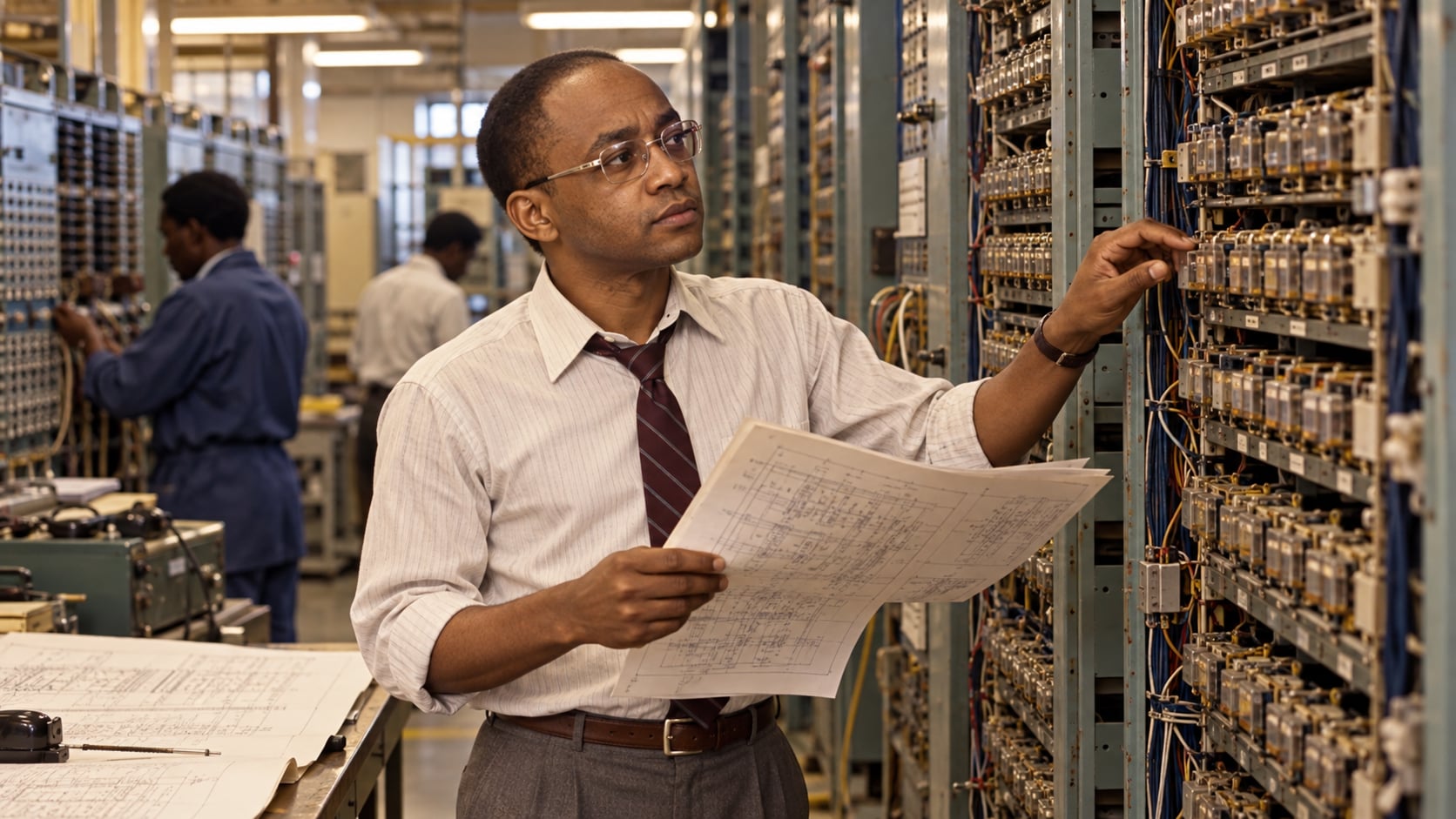
What did his life look like before his trek began?
A state employee inside the monopoly he would later sue. After brief computer-industry work in Cambridge, he returned to Zimbabwe in 1984 and joined the state-owned Zimbabwe Posts and Telecommunications Corporation as an engineer, learning the network and the ministry from the inside. He then left to start his own electrical engineering business with $75 in savings.
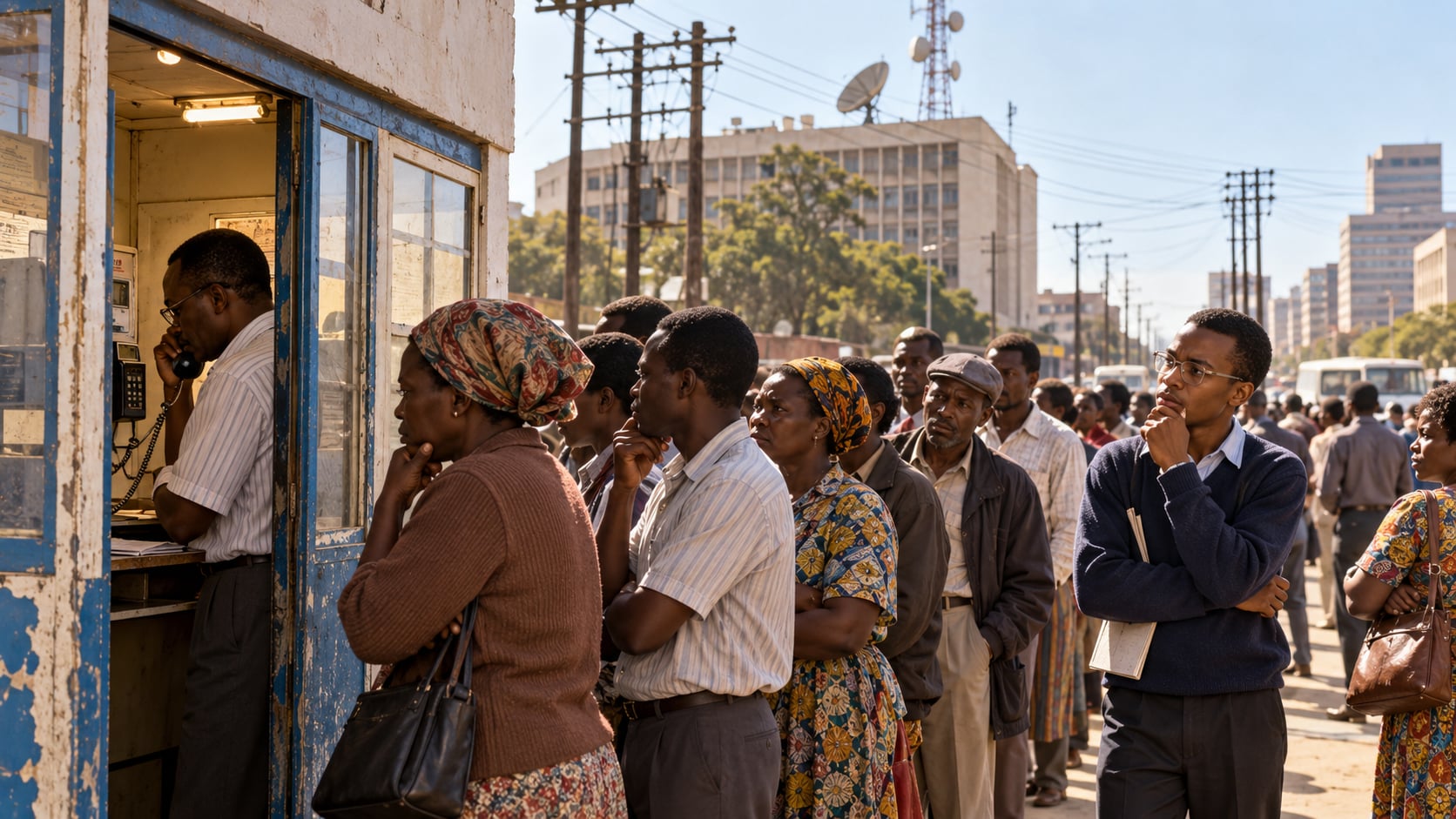
What did he see that other people didn't?
That the shortage was a decision, not a fact. Zimbabwe had almost no working telephones, not because the technology was unavailable, but because one state corporation held the exclusive legal right to provide them and had no urgency to expand it. Masiyiwa read the same situation as a monopoly choosing not to serve a market it was entitled to block anyone else from serving.
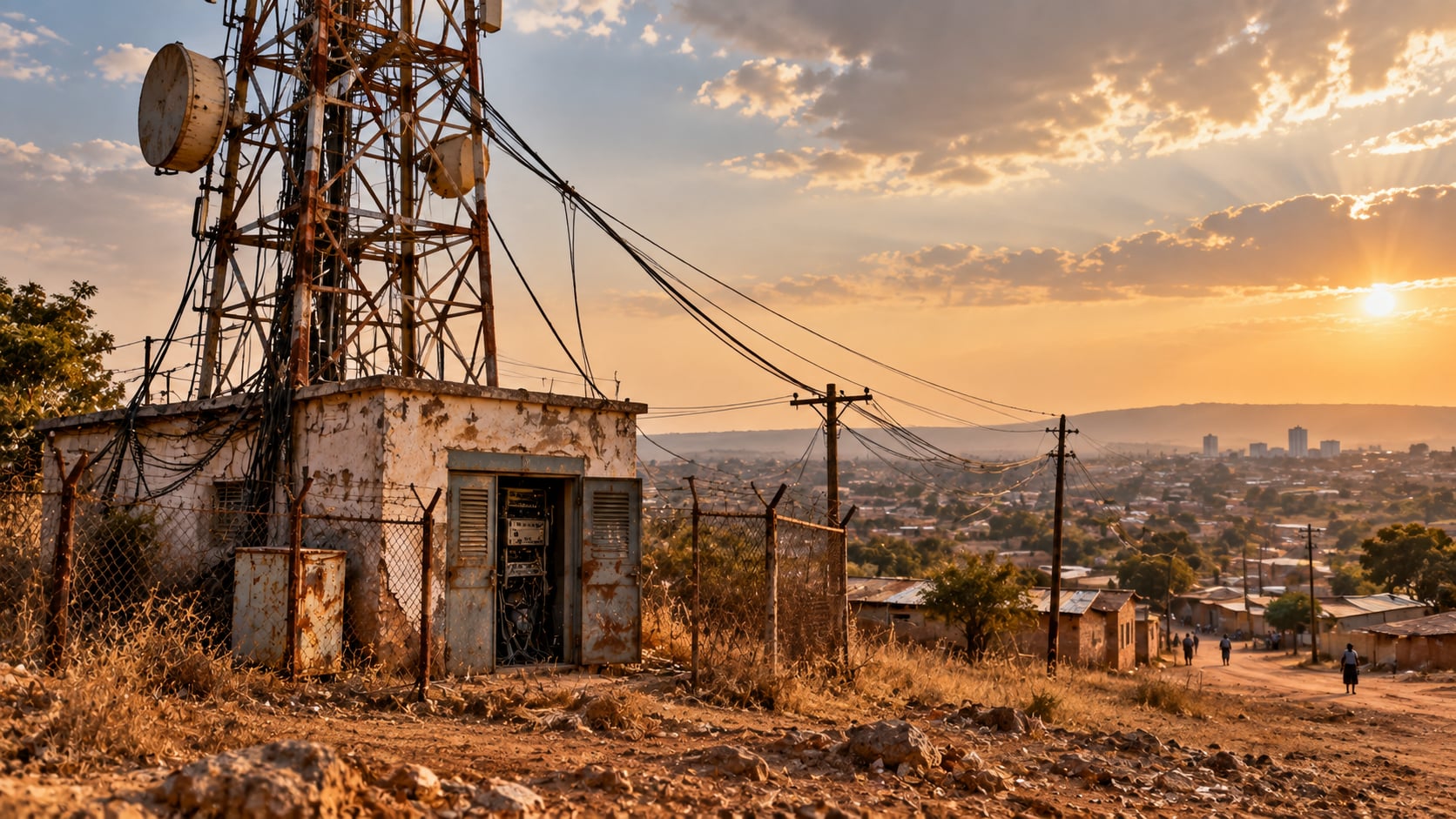
What problem became his obsession?
A country of millions sharing barely 14,000 working telephone lines—a connection rate of a fraction of one percent. That is usually filed as an infrastructure problem, needing capital and time to fix. Masiyiwa's read was that it was a legal problem wearing an infrastructure costume: the binding constraint was a license nobody would issue, not equipment nobody could build.
Why did this matter personally to him?
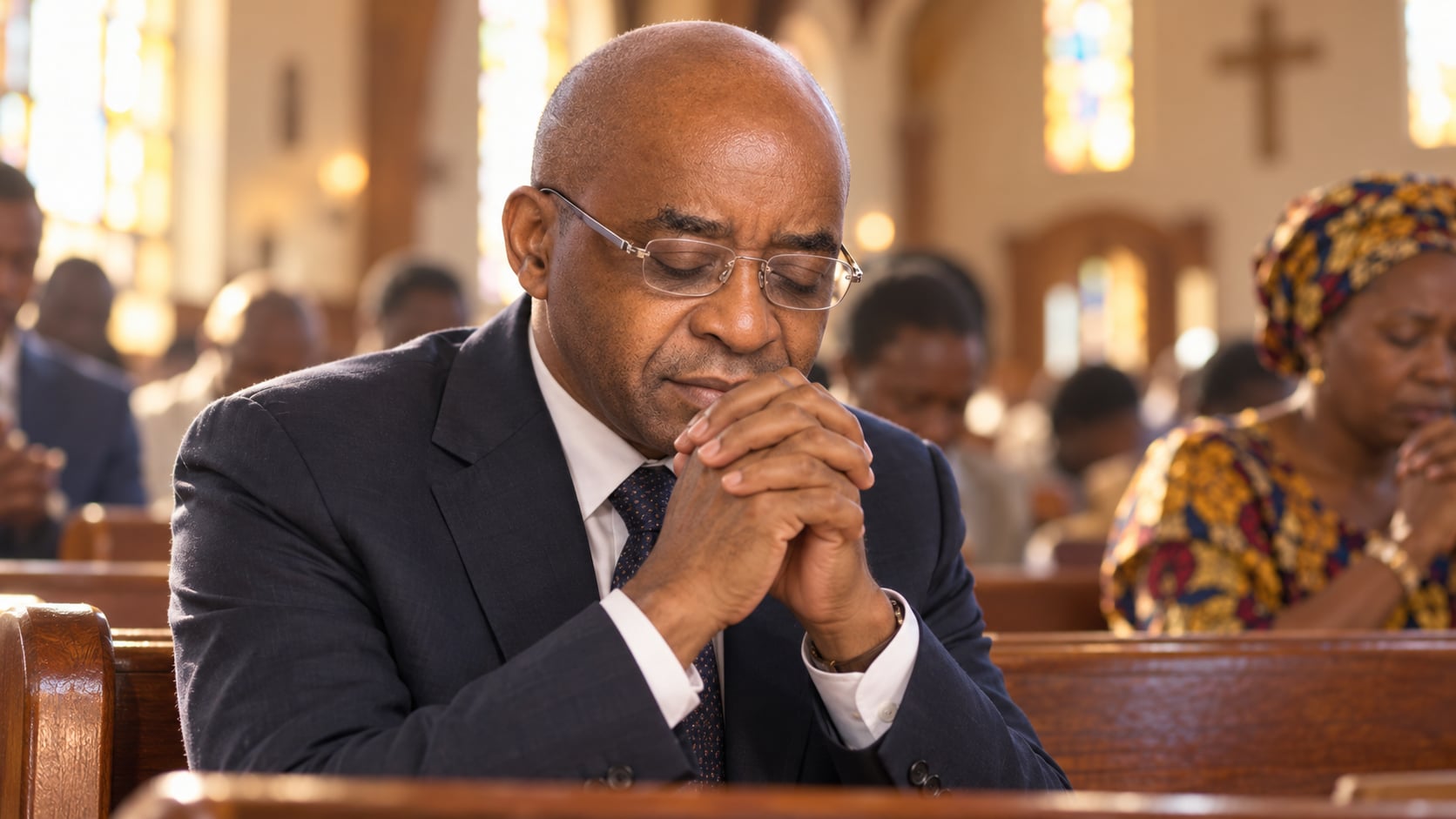
He is a practising Christian, and has been open about what the fight actually felt like day to day: being laughed at, being refused again and again, for years, by people who held all the power in the relationship. None of that shows up in a Supreme Court judgment, which records only the argument and the result.
Where did the first money come from?
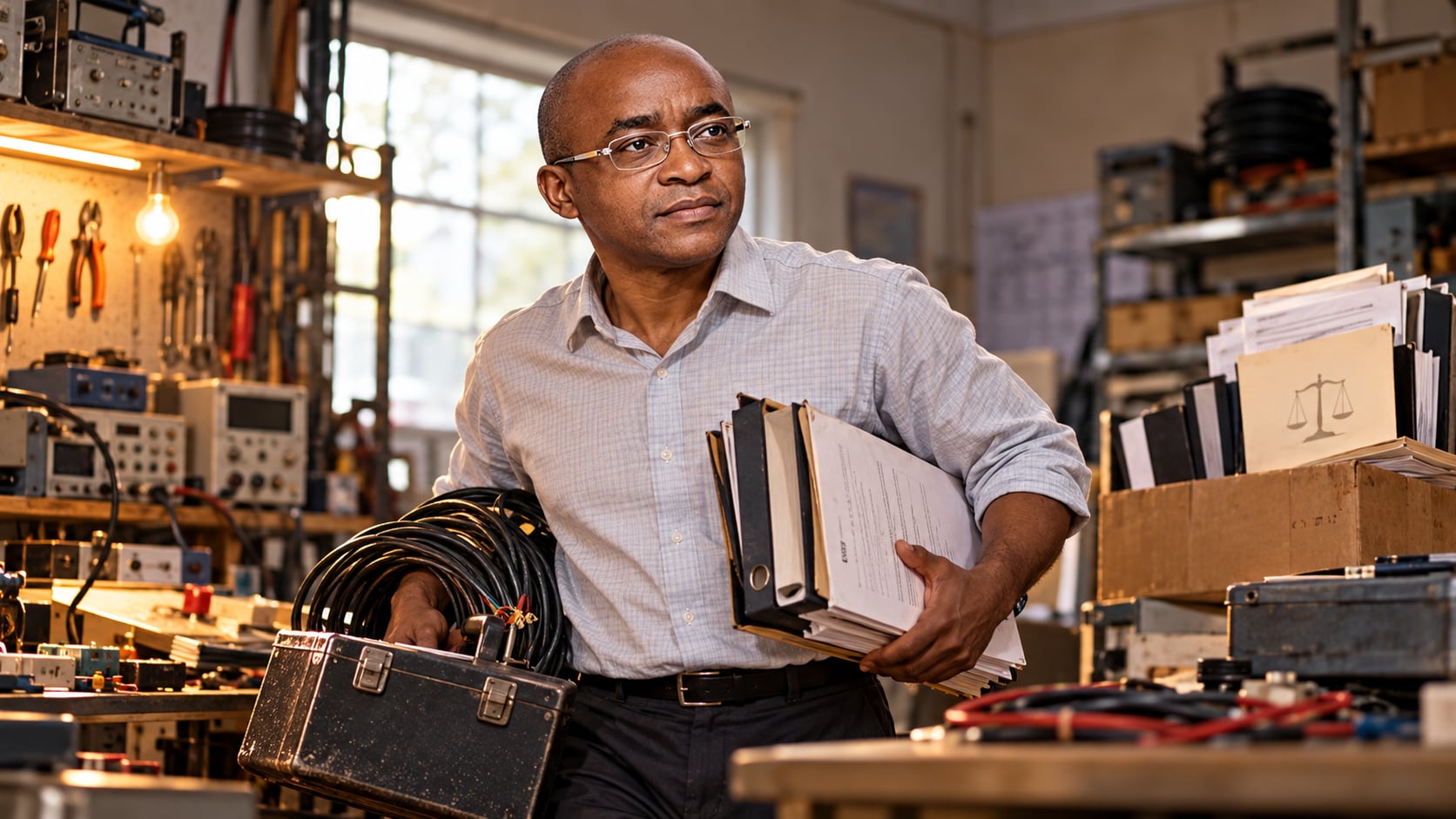
His own electrical business, run down to pay for a lawsuit. In 1993 he founded Econet Wireless and proposed that the state monopoly keep a 51 percent stake while he built and ran the network; the PTC refused outright, telling him there was no future in mobile telecommunications. He sued instead, and spent nearly five years funding litigation against his own government with money that would otherwise have grown the business he already owned.
What made the economics work?
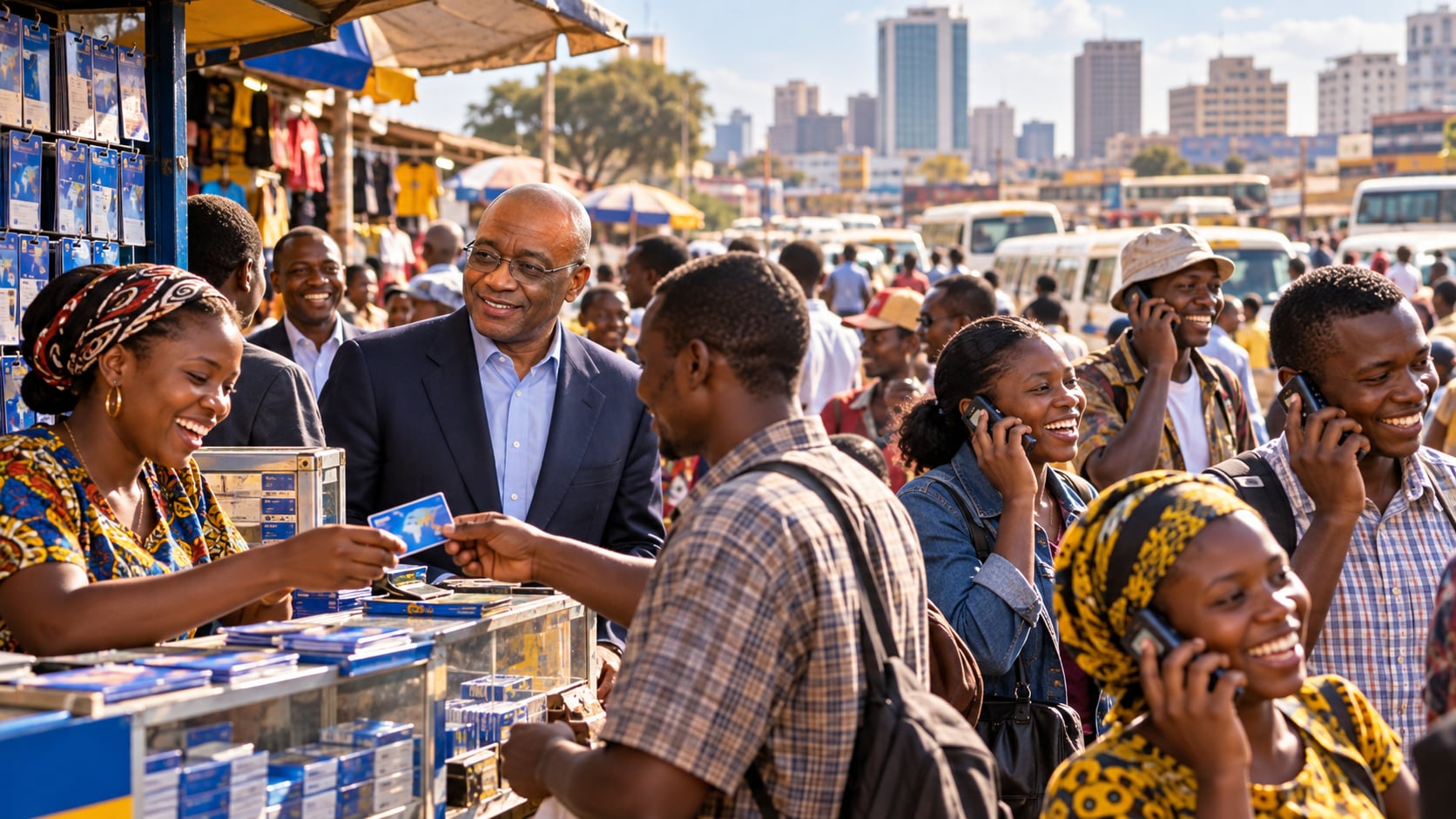
Once a license existed, the economics were never really in question: enormous unmet demand, prepaid billing that needs no credit check in a country with little consumer credit, and a network whose cost per added subscriber falls as it grows. Econet listed on the Zimbabwe Stock Exchange in July 1998 and became the country's second-largest listed company; his stake in it and what followed put his net worth at roughly $2.1 billion by 2026¹.
What was the decision or moment after which nothing was the same?
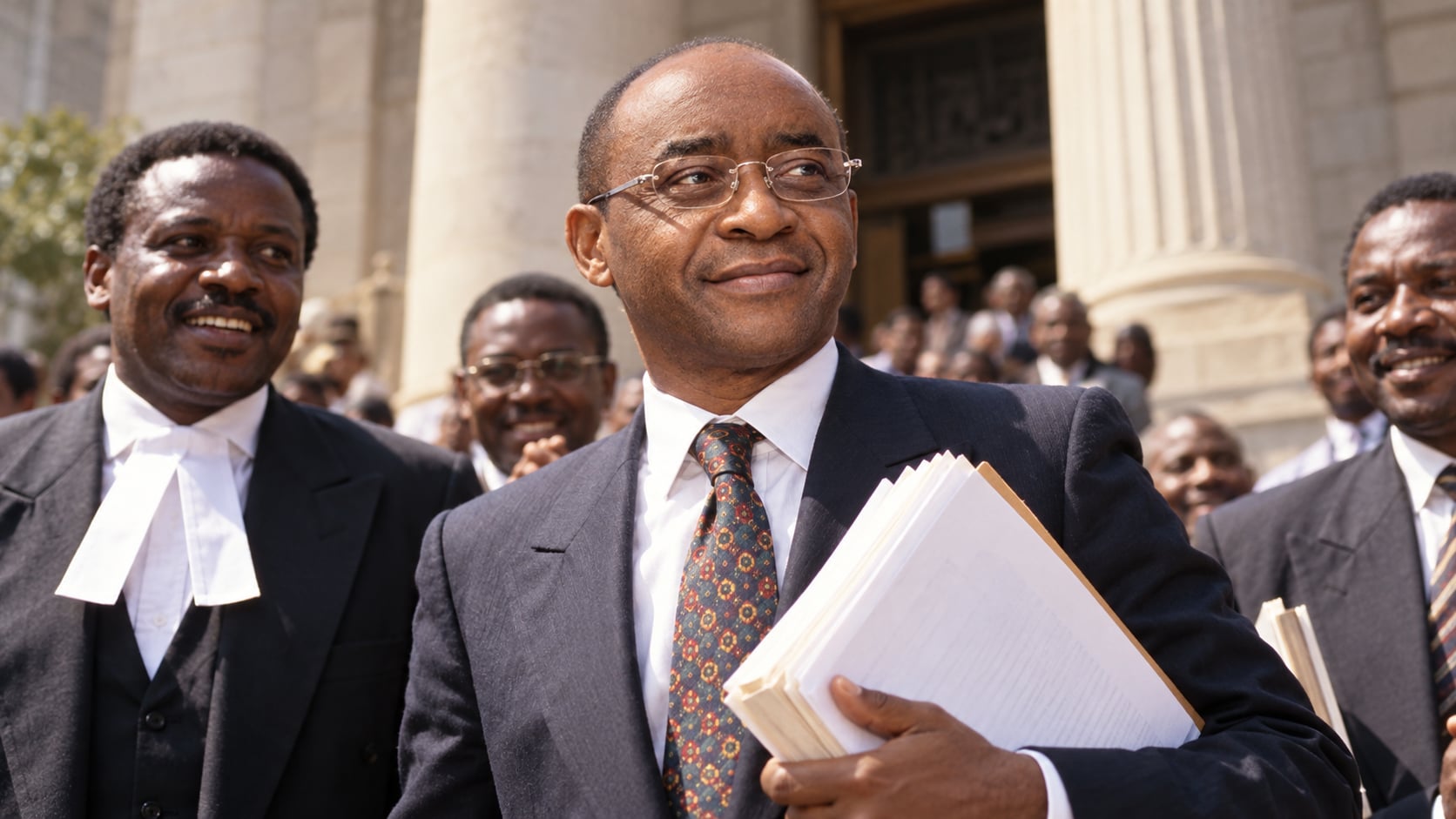
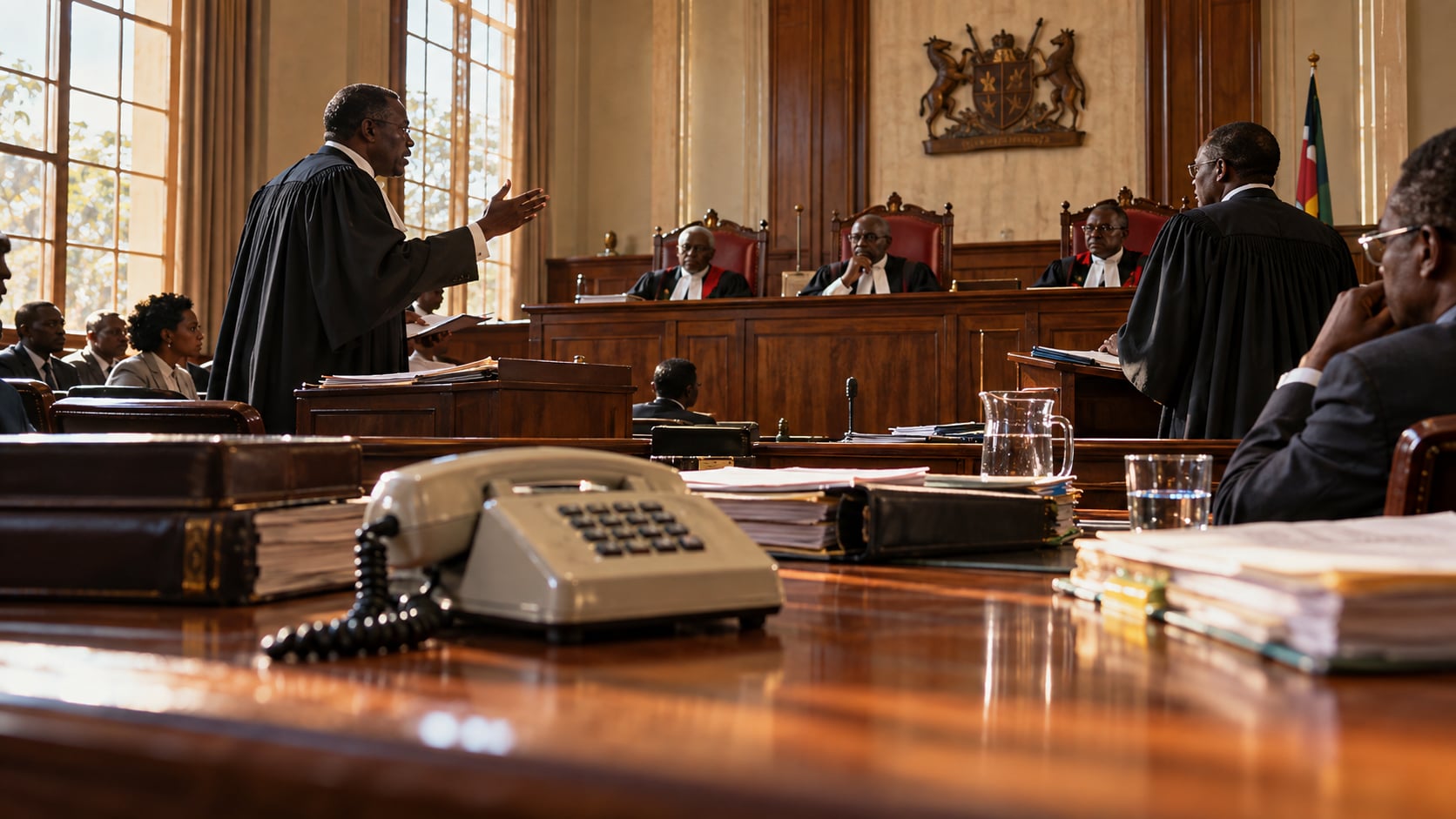
Losing once, then changing the argument entirely. His lawyers first tried to show that mobile telephony simply fell outside the state monopoly's legal scope, and lost. They came back arguing something larger: that a telephone is instrumental to freedom of expression, and that a monopoly leaving most Zimbabweans unable to reach one was a constitutional violation, not a commercial dispute. He won at the Supreme Court on that argument in 1995.
What nearly killed it?
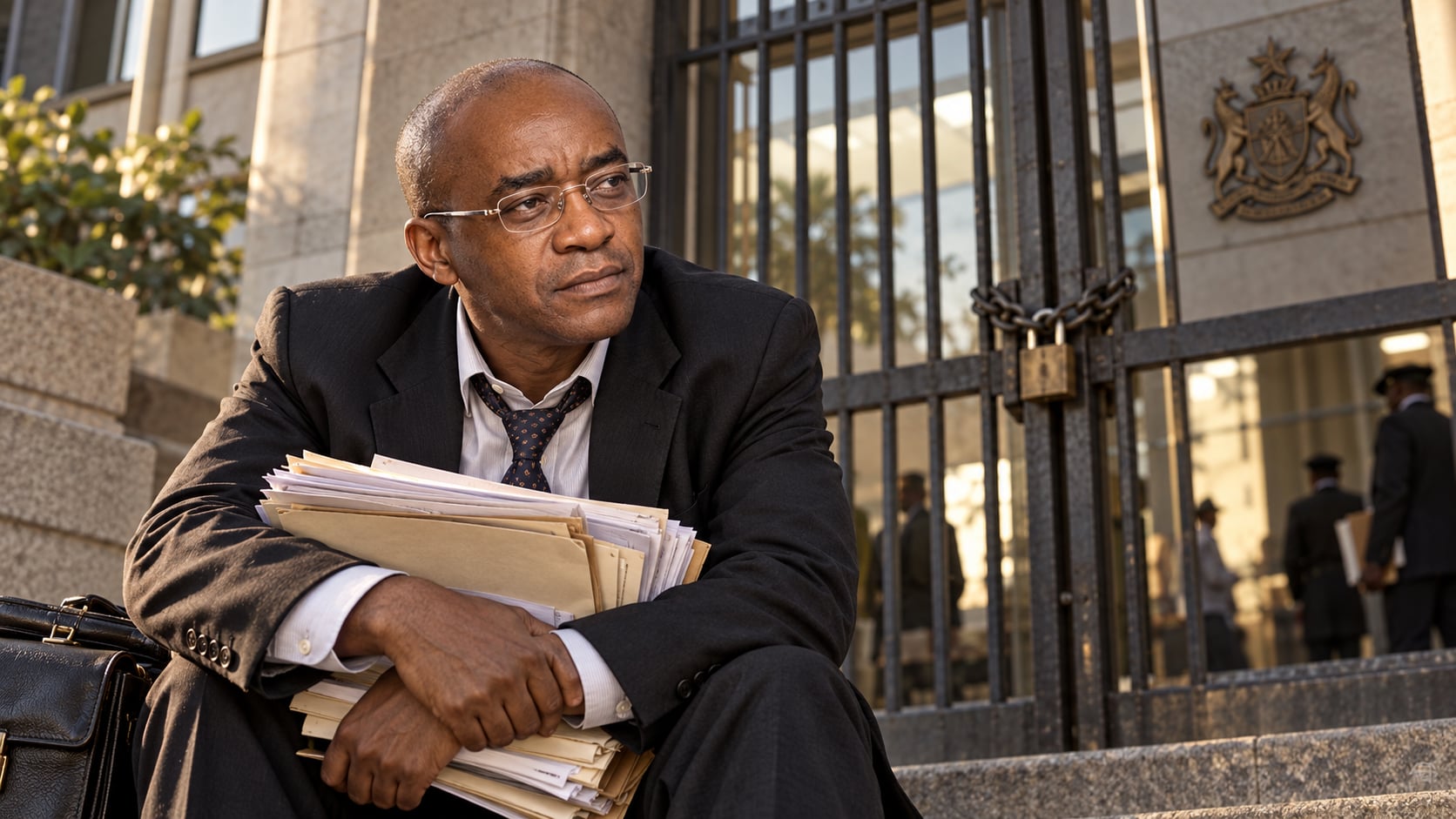
Winning and still having no license—and almost no money left either. A presidential moratorium on private cellular licenses arrived in 1996 and neutralized the ruling by decree. It took a further Supreme Court order in 1997 to compel the government to issue one, and Econet connected its first subscriber in 1998, five years after its founder had started a company that had never been permitted to trade a single minute of it.
What happened that he couldn't have planned for?
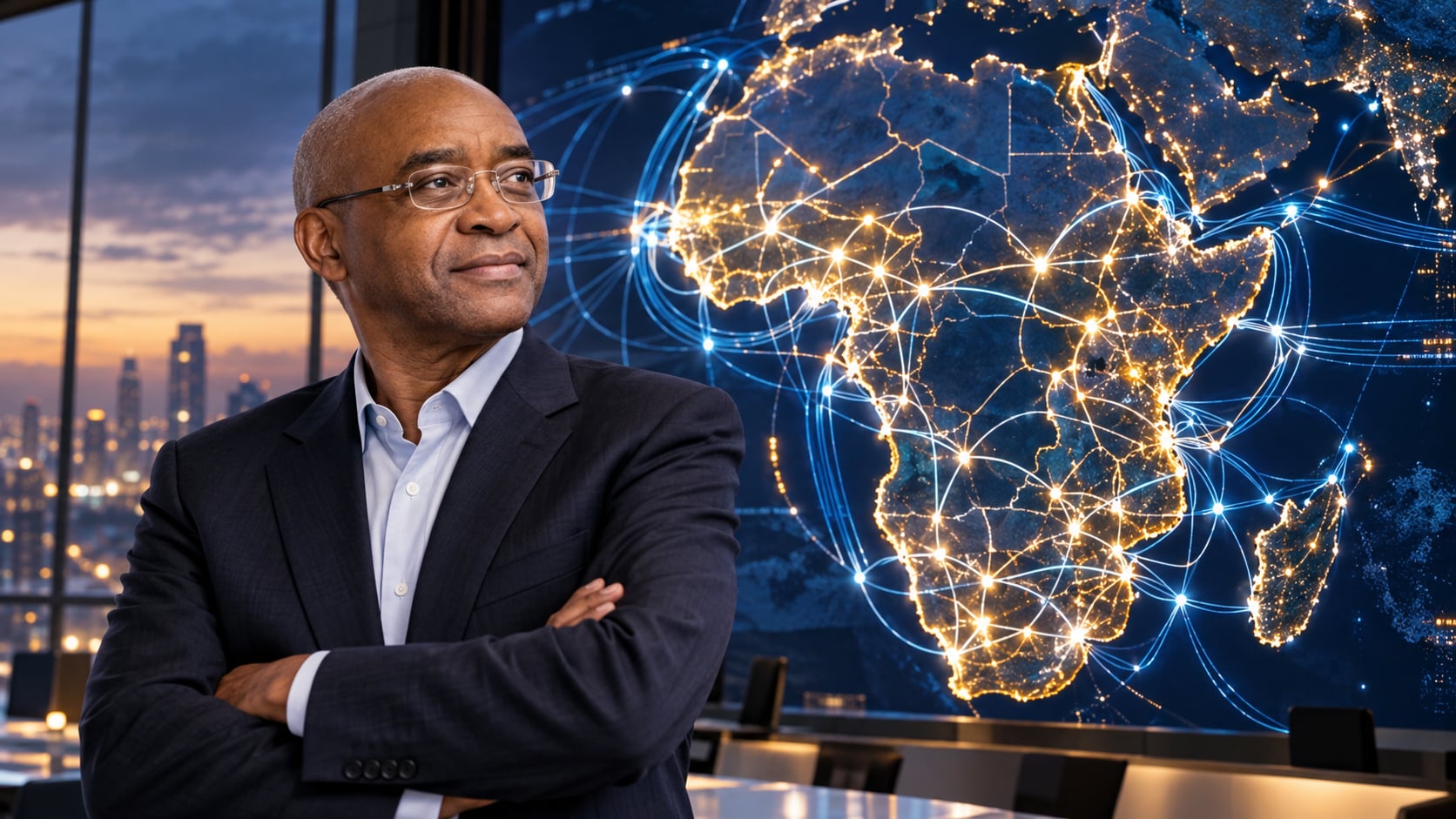
That the precedent would outlast the company that won it. Breaking a state telecoms monopoly through constitutional litigation was a route nobody in the region had used before, and it was read across Africa as proof that private capital could enter infrastructure without waiting on a ministry's permission. He also hadn't planned on exile: he left Zimbabwe in March 2000 citing persecution, and built the wider Econet Wireless Group from South Africa, then London, on top of a fibre and technology layer that now runs to more than 100,000 kilometres across the continent².

What showed that he was human after all?
In January 2020, with the government unable to pay its own doctors through a four-month strike, he paid their wages himself—a $5,000 monthly allowance to as many as 2,000 striking physicians, plus smartphones and transport vouchers, until the walkout ended. No board approved it; a billionaire had simply decided a hospital system couldn't wait on a treasury.

What was the change he brought about?
In September 2011, Econet launched EcoCash, a mobile money service built for a country where most people had a phone and almost no one had a bank account. By 2017 it had 6.7 million registered users against roughly 2 million conventional bank accounts, controlled nearly all of Zimbabwe's mobile money market, and had processed more than $23 billion in its first six years³—more than the country's entire economy produced in 2017. A service built to move airtime had become bigger than the banking system it was never meant to replace.
What did he believe that most reasonable people around him did not?
That access to a telephone was a constitutional right, not a consumer product businesses were free to withhold. The claim was heretical in two directions at once: to a government, because it turned a commercial refusal into a rights violation; to business orthodoxy, because it treated a courtroom as the correct venue for market entry. Most entrepreneurs blocked by a licensing regime lobby, wait, or leave. He picked a fight with the people who controlled his only path to operate, and let a court decide it.
What did his trek cost him?
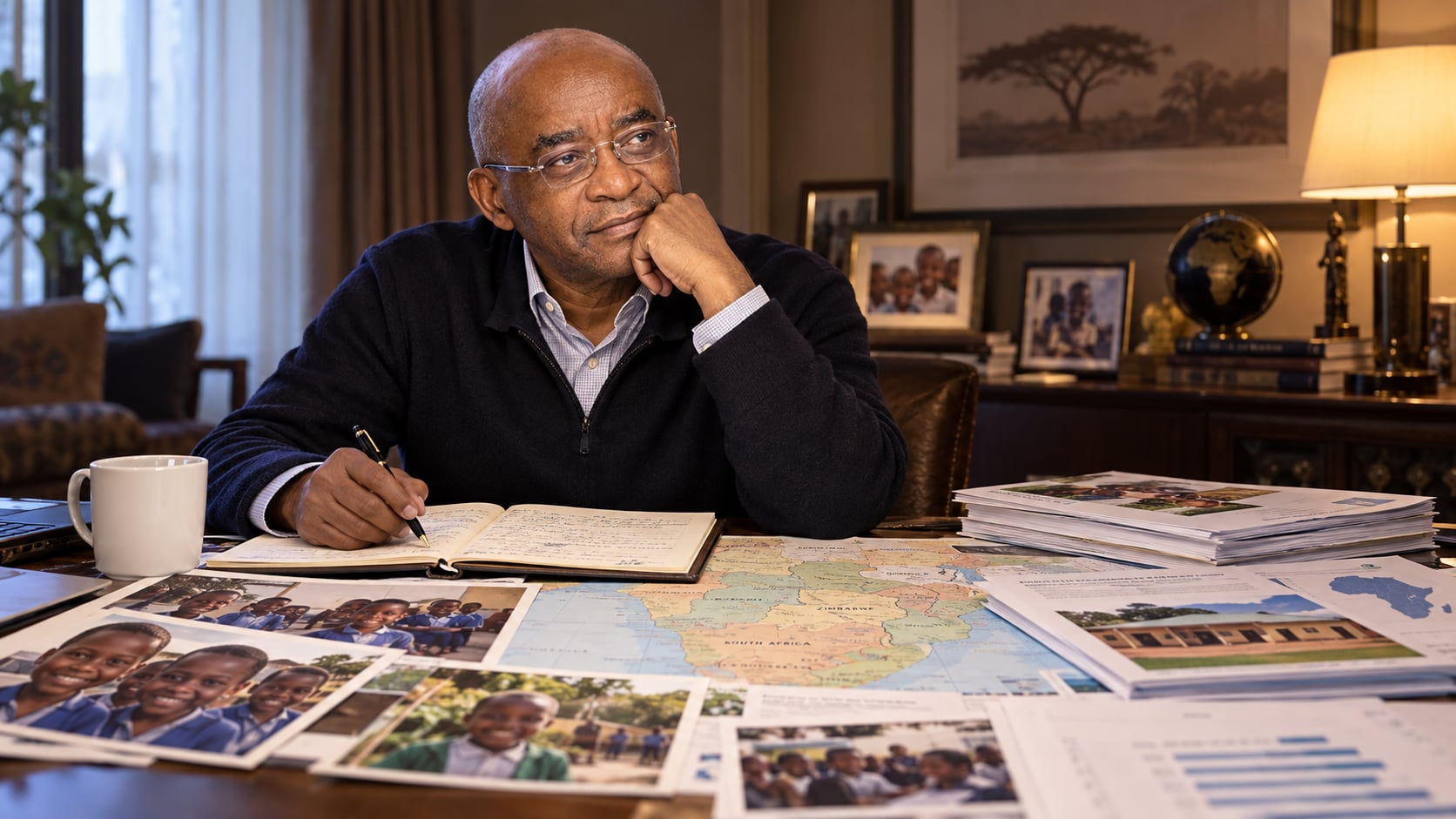
He hasn't lived in the country whose monopoly he broke for more than two decades. He and his wife, Tsitsi, have signed the Giving Pledge, and their foundations support hundreds of thousands of children across Zimbabwe, Lesotho, and Burundi. He has chaired a continental body tackling food security⁴ and co-chaired a separate push that doubled corporate farming pledges across Africa⁵, and personally funded his home country's cholera response⁶ after its own effort stalled. The country that exiled him is still the one his money reaches hardest.
What's the takeaway?
Work out whether your obstacle is commercial or legal before you spend years solving the wrong one. Masiyiwa's competitors treated a licensing monopoly as a fixed fact of the market. He treated it as a claim that could be tested, and tested it in the one venue where the answer would actually bind.
Timeline
-
1961-01-29—Born in Southern Rhodesia.
-
1968—Family leaves after Ian Smith's Unilateral Declaration of Independence and settles in Kitwe, Zambia.
-
1978—Completes secondary education in Edinburgh.
-
1984—Graduates in electrical engineering from the University of Wales; returns to Zimbabwe after brief computer-industry work in Cambridge.
-
1980s—Works as an engineer at the state-owned Zimbabwe Posts and Telecommunications Corporation, then leaves to start his own electrical engineering business with $75.
-
1993—Founds Econet Wireless; the PTC rejects his proposal and refuses a license.
-
1994—Loses an initial Supreme Court round arguing the refusal on commercial grounds.
-
1995—Wins at the Supreme Court, arguing the refusal violates freedom of expression.
-
1996—A presidential moratorium on private cellular licenses neutralizes the ruling.
-
1997—A further Supreme Court order compels the government to issue the license.
-
1998-07—Econet connects its first subscriber and lists on the Zimbabwe Stock Exchange.
-
2000-03—Leaves Zimbabwe citing persecution; builds the Econet Wireless Group from South Africa.
-
2006—Joins the board of the Alliance for a Green Revolution in Africa (AGRA) at its founding.
-
2011-09—Econet launches EcoCash.
-
2012—Becomes co-chair of Grow Africa.
-
2013—Succeeds Kofi Annan as AGRA's board chair.
-
2018-09—Econet Wireless donates $10m toward Zimbabwe's cholera outbreak response.
-
2019-02—He and Tsitsi pledge a further $60m to cholera elimination over five years.
-
2019-08—Steps down as AGRA chair; Hailemariam Desalegn succeeds him.
-
2020-01—Pays subsistence allowances to striking Zimbabwean doctors.
-
2020-05—Appointed the African Union's Special Envoy on COVID-19.
-
2025—Cassava Technologies plans a $720m Nvidia-built AI factory across five African countries.
-
2026—Forbes Africa puts his net worth at about $2.1bn.
Side notes
-
What he actually owns—Forbes Africa's $2.1bn figure rests on three separate stakes: about 38 percent of Econet Wireless Zimbabwe, roughly a third of EcoCash, and more than half of Liquid Telecom, the fibre and satellite business built out of the same group. Learn more
-
The layer underneath—Liquid Intelligent Technologies and Cassava Technologies grew out of Econet into a pan-African fibre and cloud operator; in 2025 Cassava announced a $720m Nvidia-built AI factory, starting with 3,000 GPUs in South Africa before expanding to Nigeria, Kenya, Egypt, and Morocco. Learn more
-
Why EcoCash took off—Zimbabwe had already abandoned its own currency for the US dollar after 2009's hyperinflation, and by 2016 a fresh cash shortage forced the central bank to introduce "bond notes" just to keep transactions moving; a population already used to improvising around physical cash had every reason to move it by phone instead. Learn more
-
AGRA—The Alliance for a Green Revolution in Africa, which Masiyiwa chaired from 2013 to 2019, says its work over that period reached more than 30 million smallholder farmers across 11 countries and helped establish 112 local seed companies, up from 10 when the institution began. Learn more
-
Grow Africa—Co-founded by the World Economic Forum, NEPAD, and the African Union, Grow Africa is where Masiyiwa served as co-chair from 2012 to 2015; by the end of 2013 its corporate partners had committed $7.2bn to African agricultural investment, double what they'd pledged the year before. Learn more
-
The cholera pledge—Econet's corporate $10m, donated when the 2018 outbreak began, and the Masiyiwas' separate $60m personal commitment three months later were structured to run for five years, timed to a global campaign aiming to eliminate cholera entirely by 2030. Learn more
-
"What kind of law is that?"—Recalling his first approach to the state telecoms regulator, Masiyiwa has described demanding to know why a rule could stop him from doing something the regulator itself wasn't doing: "I said, so what kind of law is that, that empowers you to stop me from doing something which you don't do?" Learn more