- HBO Max's real-time ER drama won Outstanding Drama Series at the Emmys two years running.
- Federal law makes ERs treat everyone, and someone still has to pay the bill.
- An AI scribe and a ransomware attack test how much hospitals can trust software.

Intro.
The Pitt1 has no musical score. What you hear instead is the emergency room itself: monitors, pagers, and overlapping voices. Each season is one 15-hour shift told across 15 episodes, an hour at a time, with no swelling strings to tell you when to feel something. Season 2 uses that format to put two of American medicine's biggest arguments in the same room: who pays for the patients who can't, and how much a hospital should trust its software.
Here's the plot.
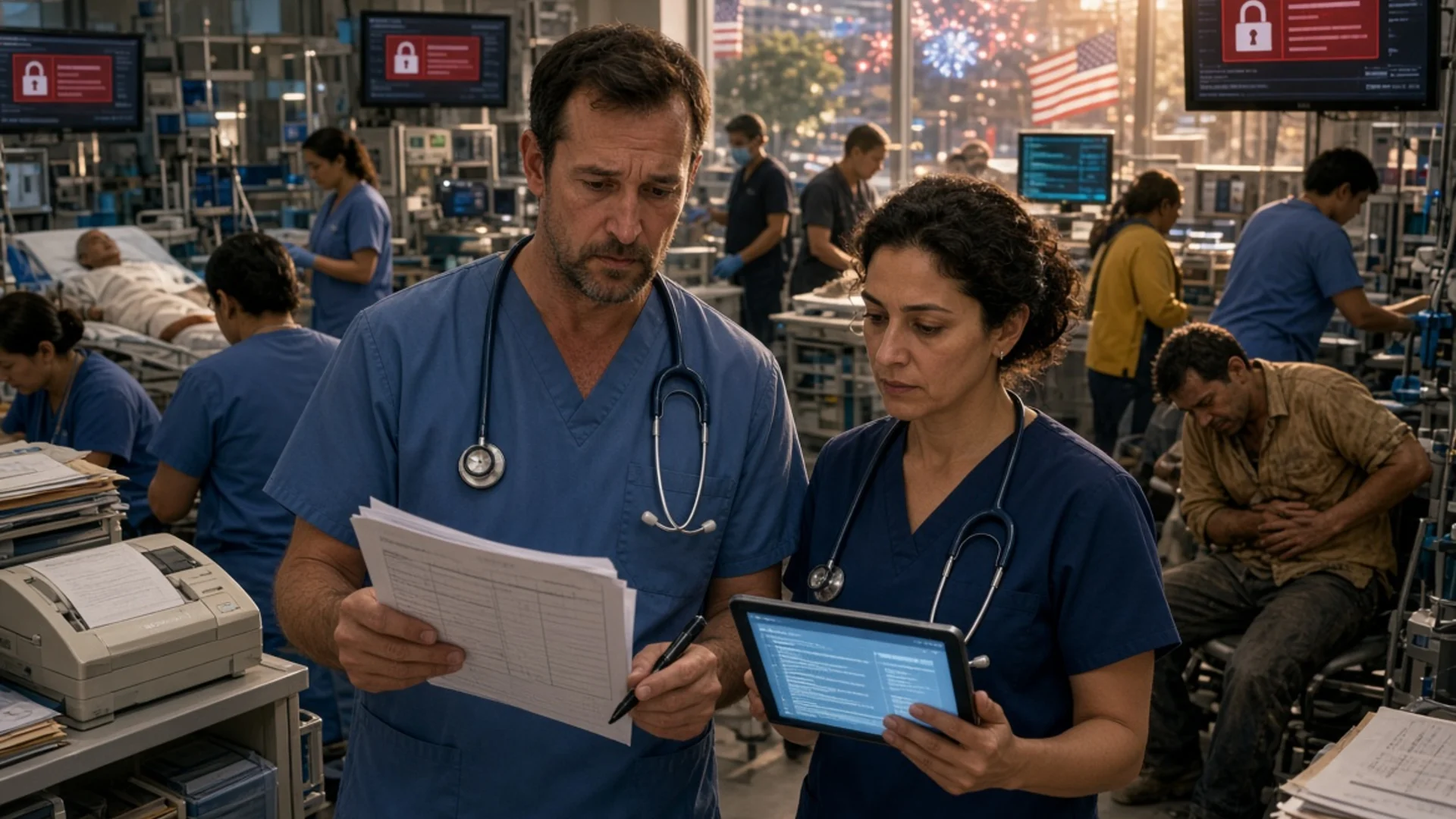
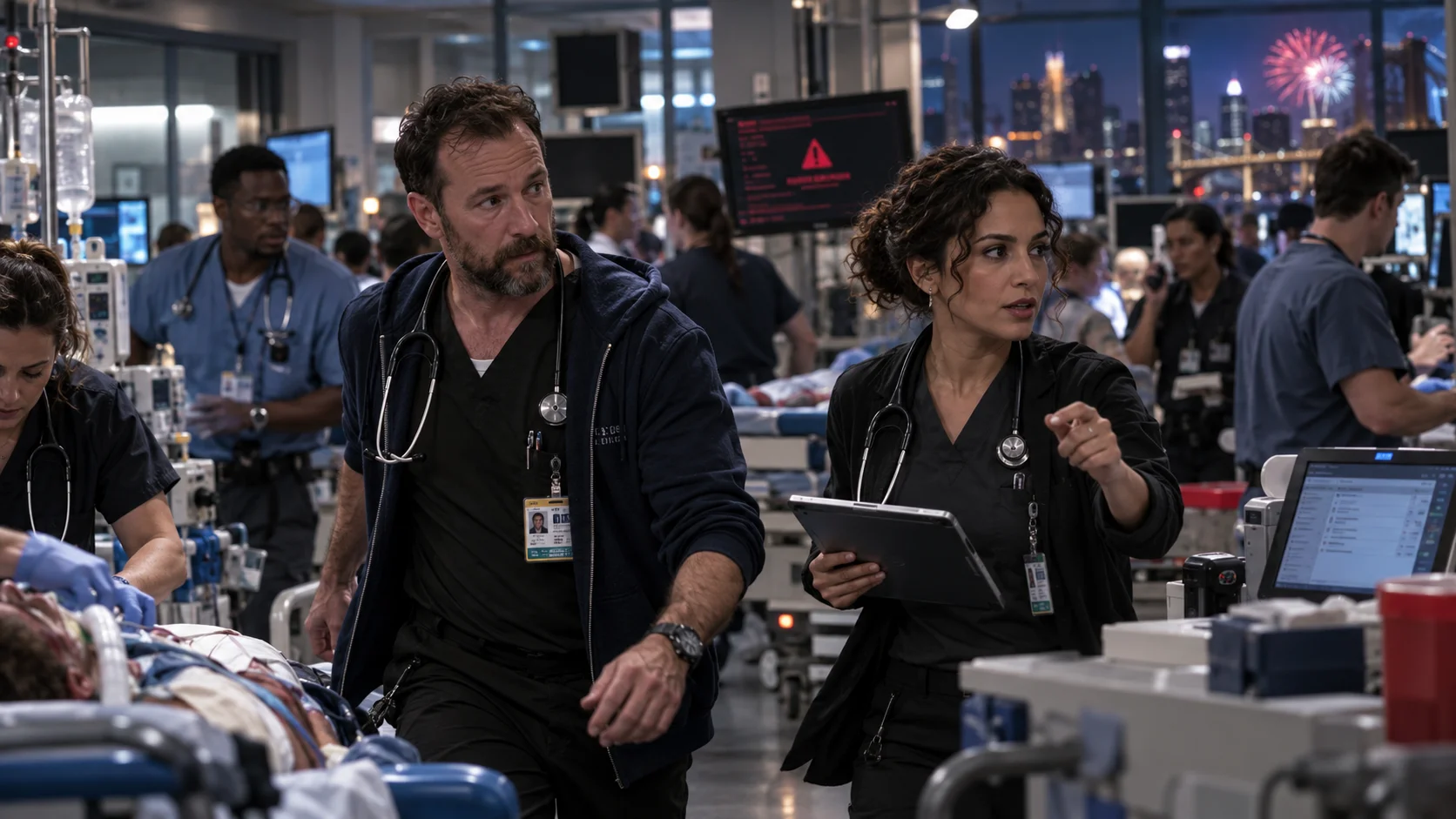
Ten months after Season 1, it's the Fourth of July at the fictional Pittsburgh Trauma Medical Center, and Dr. Michael "Robby" Robinavitch (Noah Wyle) is working his last shift before a three-month sabbatical. Covering for him is Dr. Baran Al-Hashimi (Sepideh Moafi), a new attending with plans to modernize the department, starting with an AI tool that writes the doctors' notes for them. Midway through the holiday shift, a ransomware attack on nearby hospitals pushes the ER to shut down its own computer systems.
Things you didn't know.
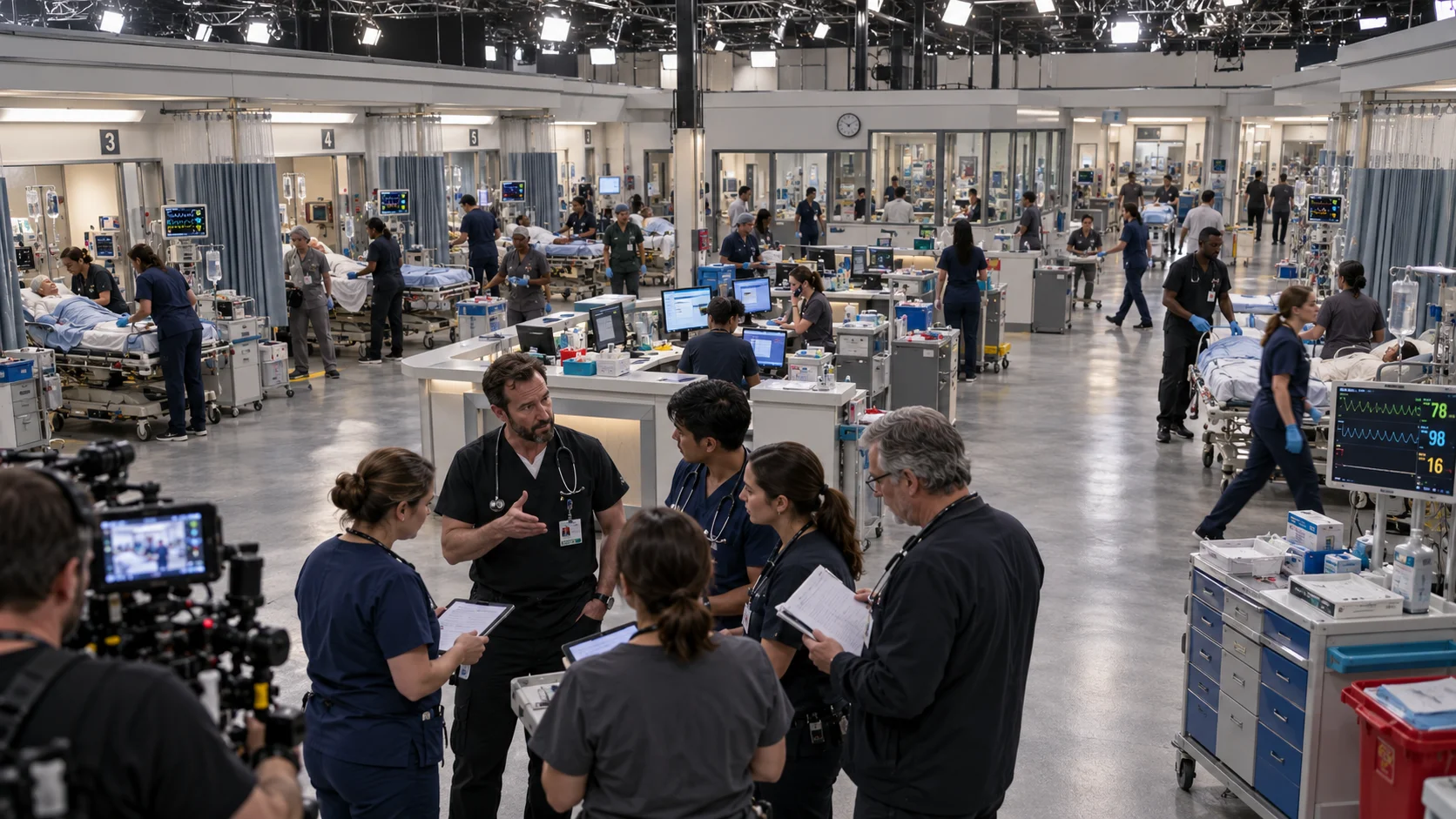
The missing score is deliberate. Wyle has said that taking the music out strips away the artifice of watching a TV show; the only real songs are the season openers, and Season 2's, "Better Off Without You"2, comes from a Pittsburgh band, The Clarks. The medicine gets checked as carefully as the sound. Seven board-certified physicians3 help write and critique the scripts, and the nurses and physician assistants working as extras are real ones who flag mistakes as they happen. The 25-bed ER set4 was built on a Burbank soundstage in about ten weeks.
The showrunner's bet.
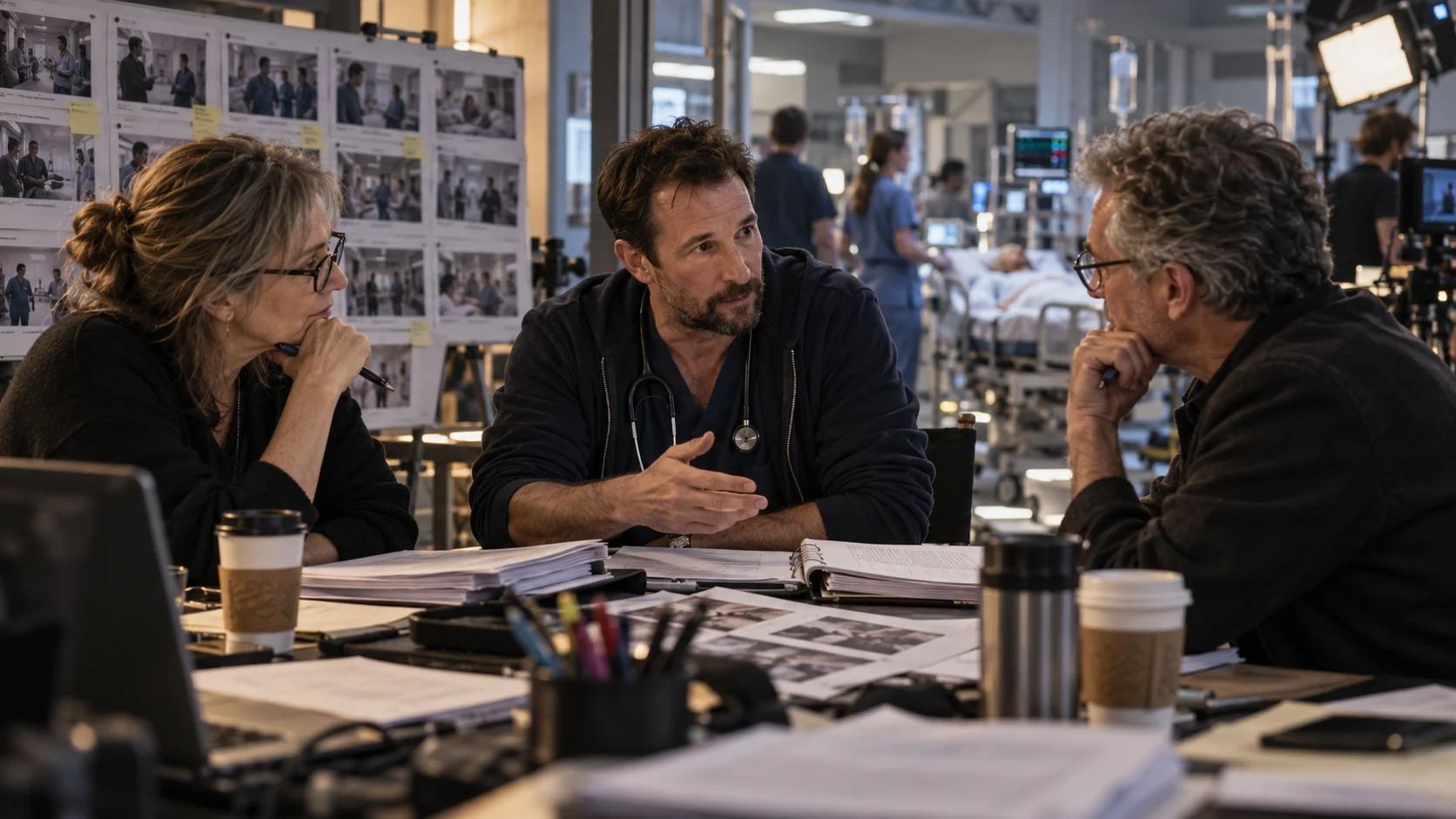
The Pitt exists because another show didn't. Wyle spent 11 seasons as Dr. John Carter on ER, and plans to revive that series stalled before this one took shape with ER veterans John Wells and R. Scott Gemmill. Michael Crichton's estate has since sued, arguing The Pitt is a relabeled ER reboot5; the studio calls it a completely different show. It was a modest bet by prestige standards: Max ordered 15 episodes straight to series in March 2024 at a reported $4 million to $6 million an episode. HBO liked the result enough to announce Season 3 at the Season 2 premiere event, a day before the first new episode streamed.
The cast, and the roles that almost went elsewhere.
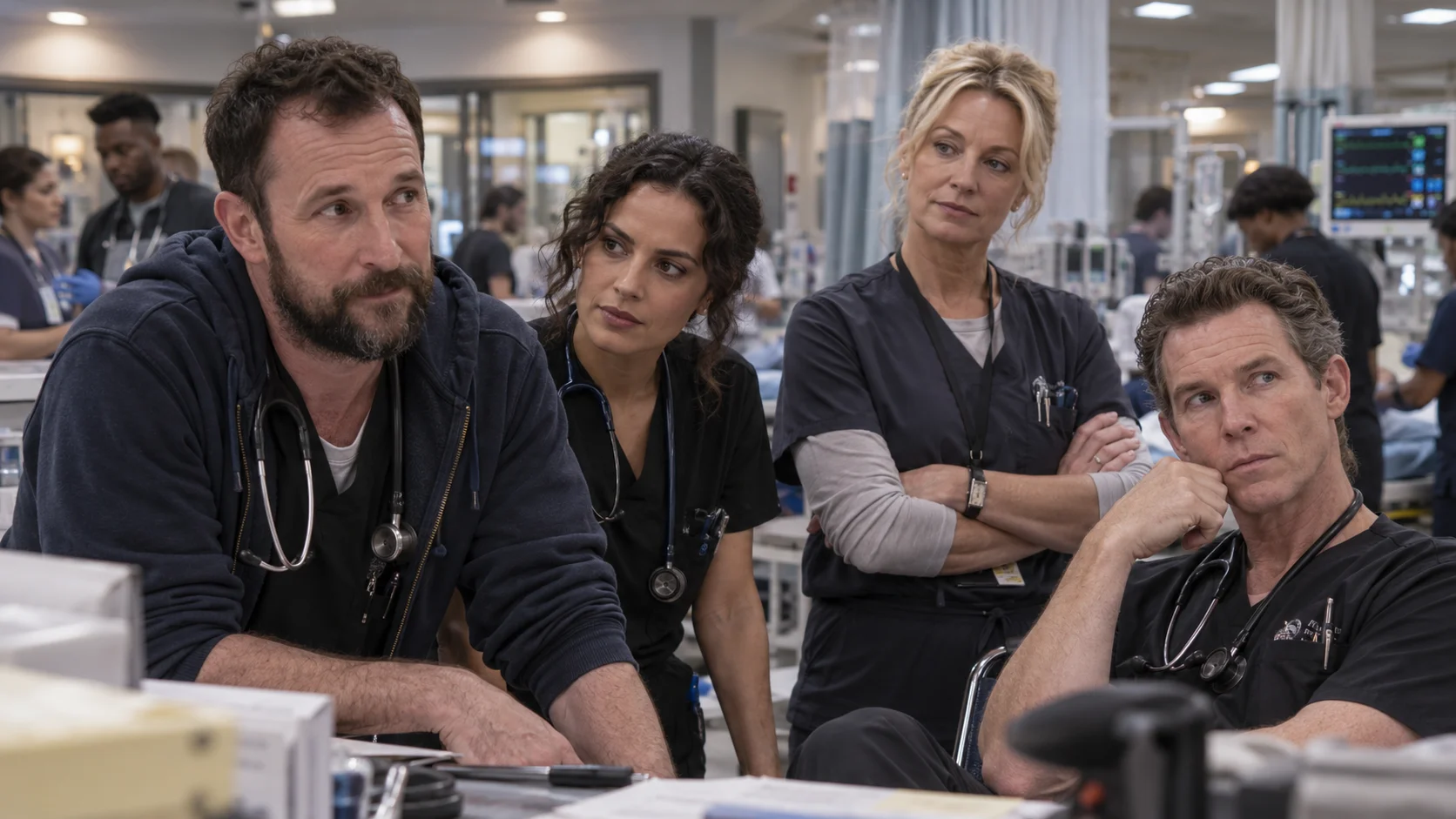
Wyle anchors the show and won the Emmy for Lead Actor in both 2025 and 2026. Katherine LaNasa, as charge nurse Dana Evans, and Shawn Hatosy, as Dr. Jack Abbot, also won Emmys for Season 1. The new face is Sepideh Moafi6, whose Al-Hashimi gives the season its sparring partner for Robby. Season 2's ensemble drew 13 acting nominations, one short of the single-season record Succession set in 2022. No confirmed reporting exists on who else was up for Robby or Al-Hashimi.
Where it came from.
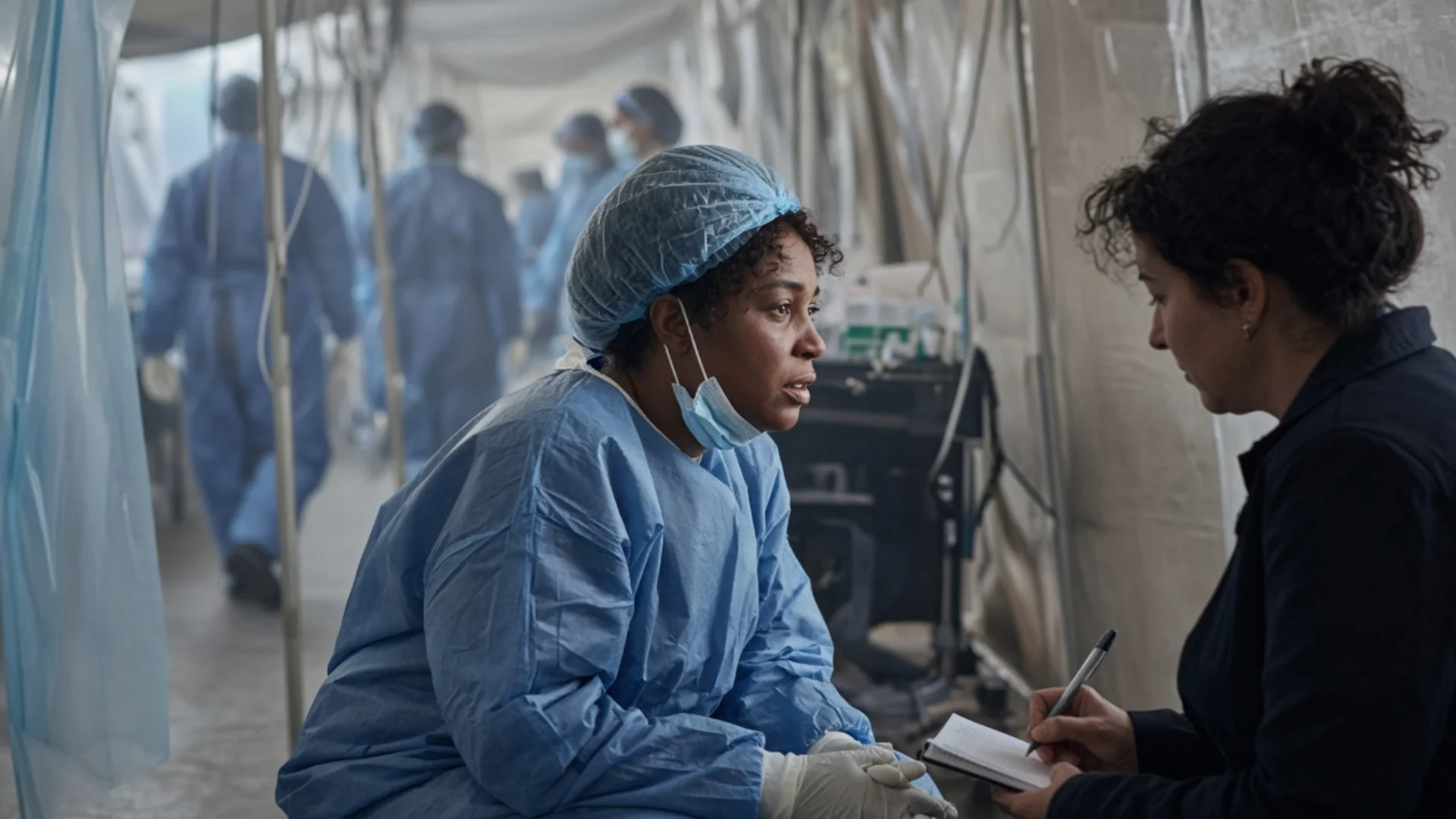
There's no book or true story behind it. Wyle has said the show would not exist without the pandemic7, which exposed how much strain American health care and its workers were under. The creators built storylines from interviews with health care workers, and Wyle said Season 2 would take on the federal spending law signed on July 4, 2025, with gallows humor rather than speeches.
The invisible hand.
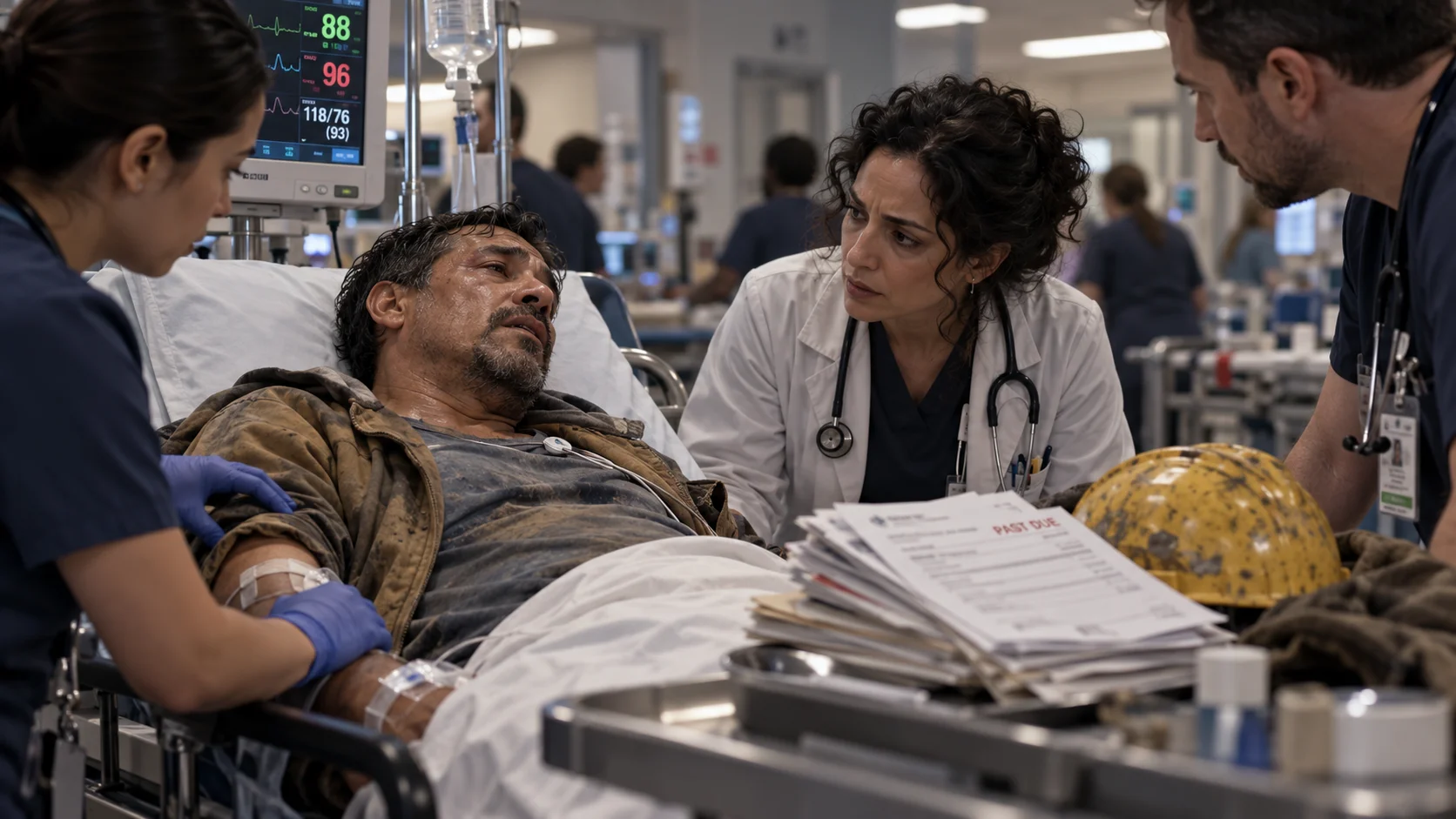
The ER is the one place in American health care that has to see everyone. A 1986 federal law, EMTALA8, requires any hospital that takes Medicare to screen and stabilize every patient who comes through the door, whether or not they can pay, and it came with no money attached. Season 2 shows where that cost lands. Orlando Diaz, a construction worker, collapses after rationing his insulin. He earns too much for Medicaid, can't afford private insurance, and already owes $100,000 in medical debt9, so he refuses admission to get to his second job. The pressure runs the other way, too: Al-Hashimi wants to retire the nickname "the Pitt" because it drags down patient satisfaction scores10, the same kind of scores Medicare uses to decide part of what hospitals get paid. Behind all of it sit the 2025 Medicaid cuts11, which the Congressional Budget Office expects to leave 10 million more Americans uninsured by 2034. Every patient who can't pay gets priced into the bill of someone who can.
The tech behind the tale.
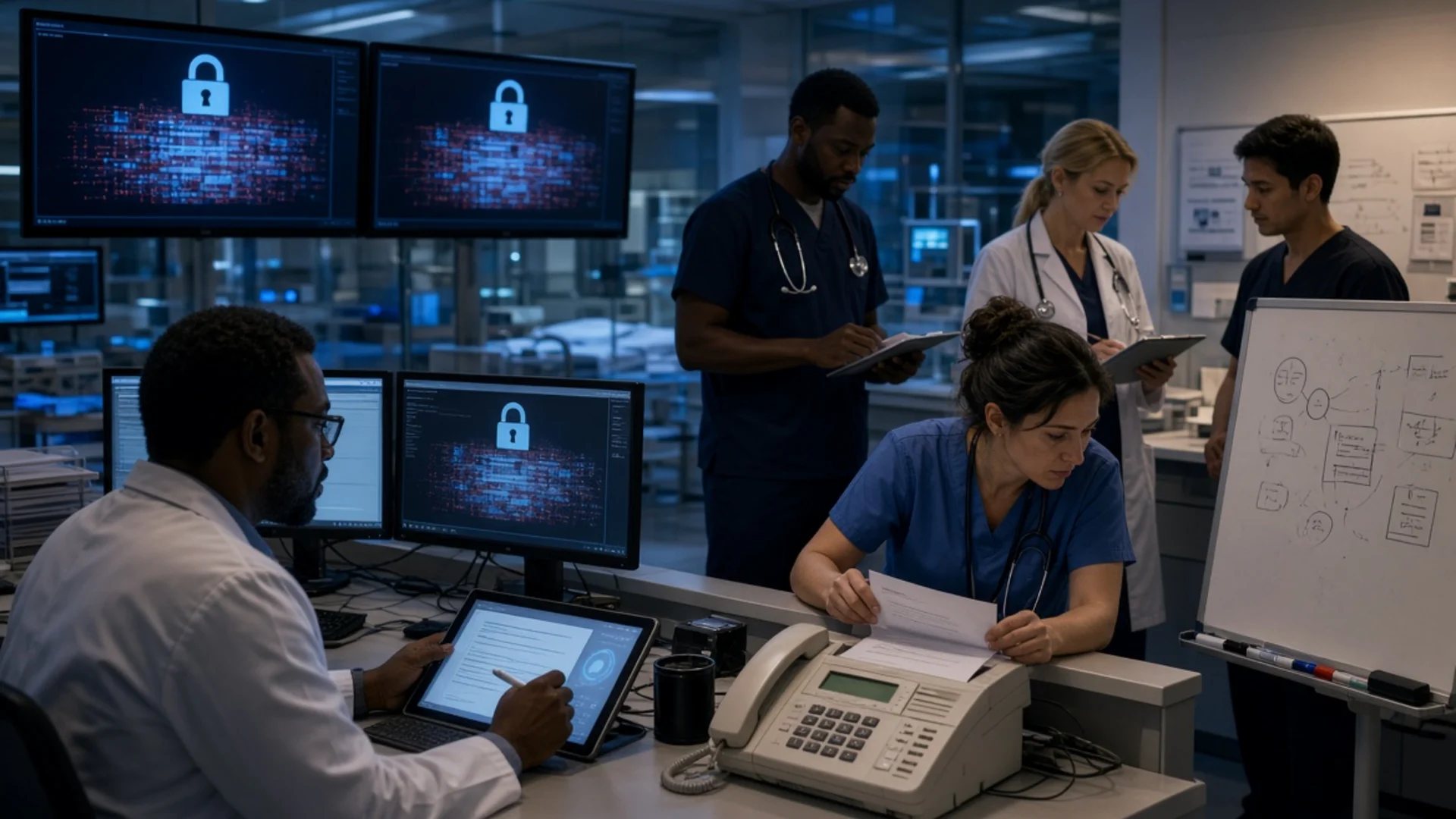
Al-Hashimi's AI tool transcribes patient encounters and drafts the notes. Hospitals are buying that kind of software fast: Abridge, one of the leading makers of these AI scribes12, is valued at $5.3 billion and runs in more than 300 health systems. The pitch is time, less typing and more patients. The show's catch is that the tool garbles a prescription, and the residents keep leaning on it anyway to clear their backlog. Then the opposite failure arrives. When ransomware hits two nearby hospitals, the trauma center takes its own systems offline, and the ER falls back on a fax machine and a dry-erase board that hold up only until a wave of patients from a water park collapse comes through the doors. Real hospitals have lived that day: the 2024 Change Healthcare attack13 ended in a $22 million extortion payment, and Ascension's hospitals across 19 states spent weeks charting on paper. The season's point is a financial one. Software sold as a way to save money becomes the single point of failure that costs the most when it stops.
By the numbers.
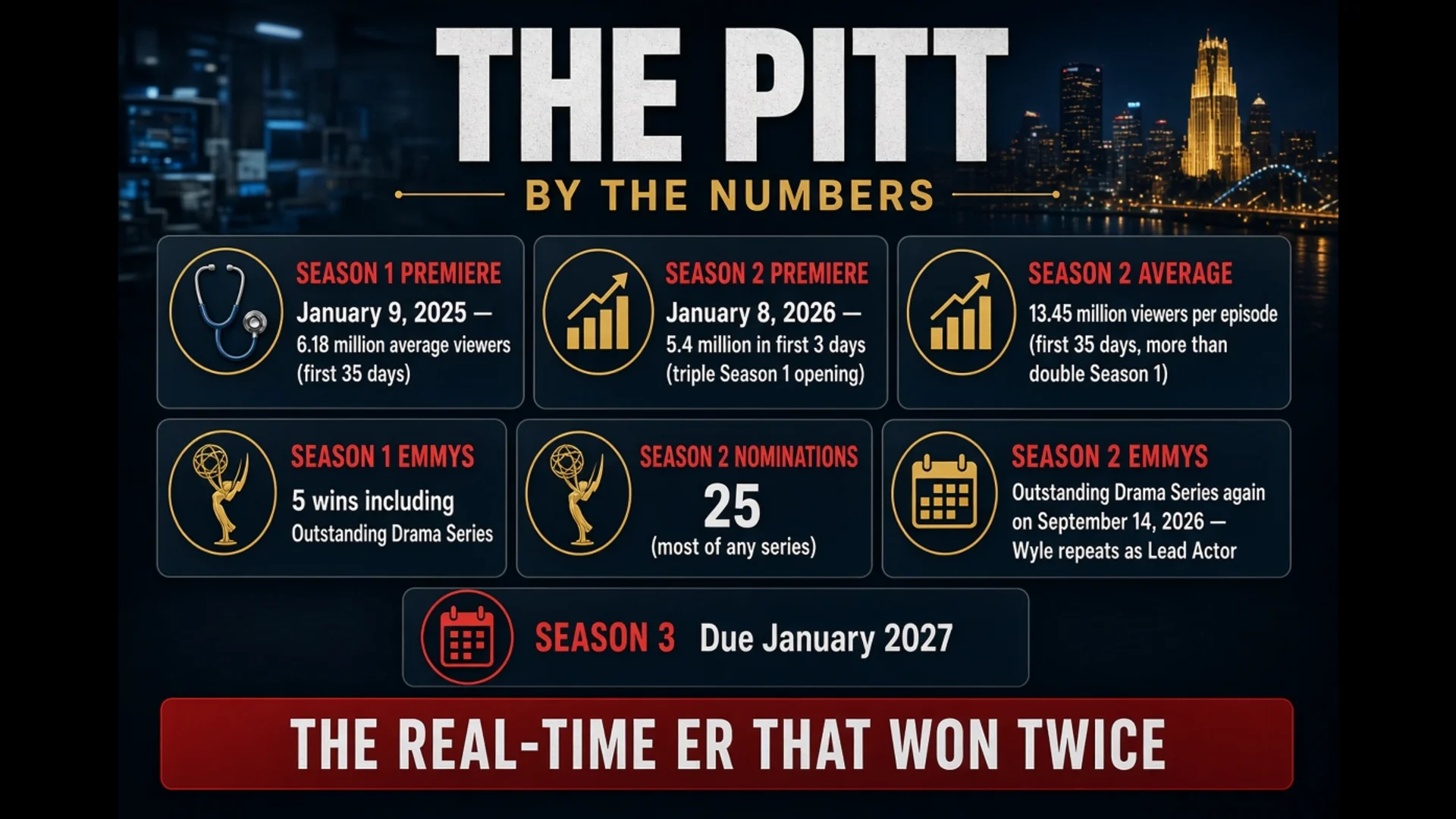
Season 1 premiered on Max on January 9, 2025, and averaged 6.18 million viewers per episode in its first 35 days. Season 2 premiered January 8, 2026, drew 5.4 million U.S. viewers in its first three days, triple the first season's opening, and averaged 13.45 million viewers per episode over its first 35 days, more than double Season 1 over the same window. Season 1 won five Emmys, including Outstanding Drama Series. Season 2 led every series with 25 nominations14 and took the top drama prize again on September 14, 2026, with Wyle repeating as Lead Actor. Season 3 is due in January 2027.
Why it's must-watch now.
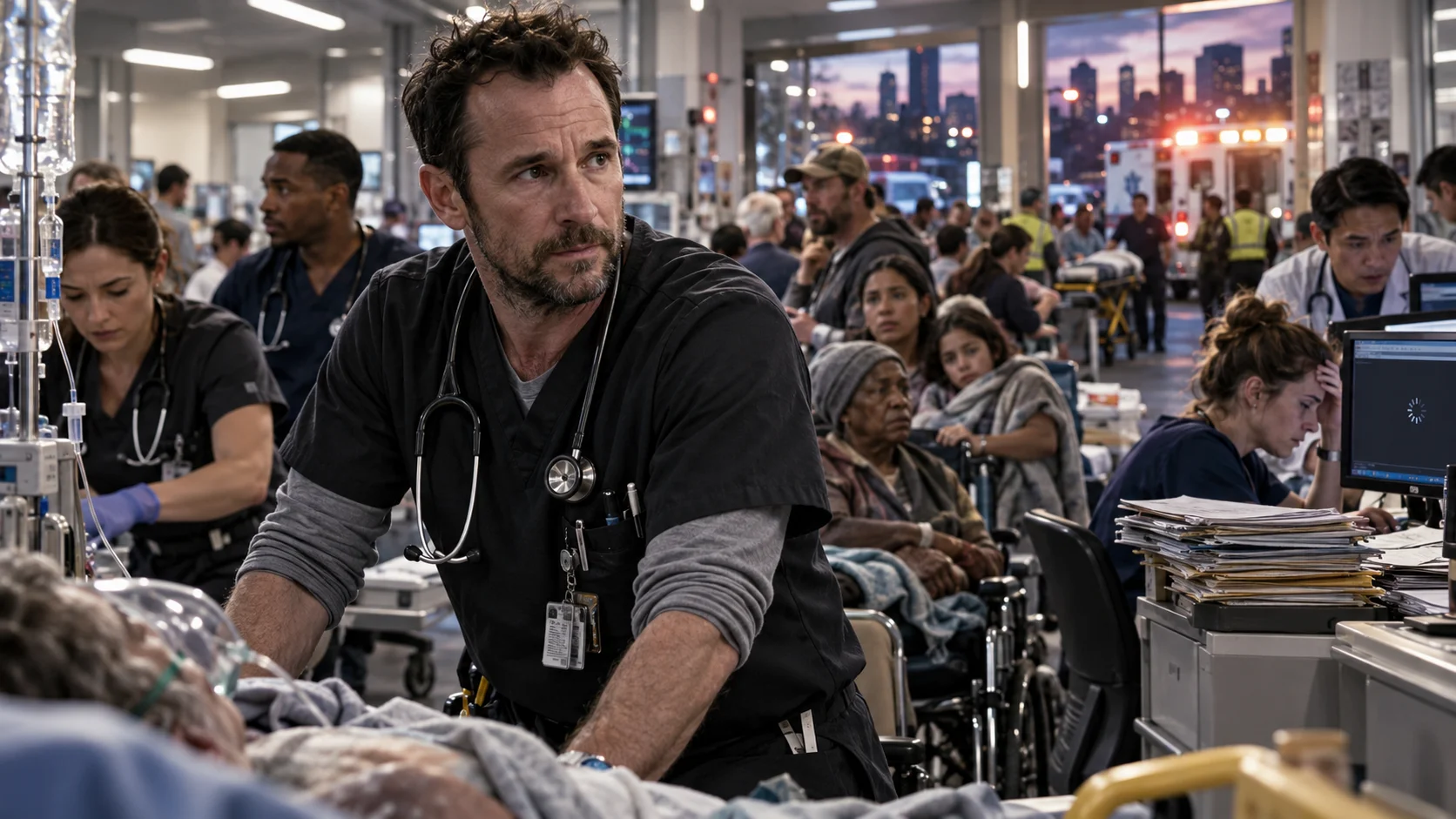
The Pitt makes the economics of American health care visible without a single speech; they simply show up as patients. The arguments it staged are getting louder: Medicaid work requirements must begin by December 31, 2026, and hospitals keep signing up for AI tools that promise to give doctors their time back. Season 3 returns in January with a shift set in November15, about four months after that Fourth of July. Whatever the bill looks like by then, the Pitt will still be the place that has to take it.
Side notes
-
The Pitt — HBO Max released the official Season 2 trailer on December 16, 2025, three weeks before the January 8 premiere, and it previews the Fourth of July shift and the arrival of Dr. Al-Hashimi. Watch the trailer ↩
-
"Better Off Without You" — Creator R. Scott Gemmill chose The Clarks' song partly because the band is from Pittsburgh; Season 1 opened instead with "Baby" by Robert Bradley's Blackwater Surprise. Listen on Spotify ↩
-
Physician writers — The group is led by executive producer Joe Sachs, an emergency physician, and the show even calibrates how much a wound bleeds to match the real injury. Learn more ↩
-
The ER set — Production designer Nina Ruscio's set cost more than $4 million, on a show budgeted at a reported $4 million to $6 million per episode. Learn more ↩
-
The ER lawsuit — Crichton's widow, Sherri Crichton, and his estate sued Warner Bros. Television, Wells, Wyle, and Gemmill in August 2024, citing a deal that gave Crichton approval over any ER spinoffs. Learn more ↩
-
Sepideh Moafi — Cast as a series regular in June 2025, Moafi previously starred in HBO's The Deuce and Showtime's The L Word: Generation Q, and Season 2 brought her first Emmy nomination. Learn more ↩
-
The pandemic — Asked whether the show would have happened without COVID, Wyle answered, "No, definitely not." Learn more ↩
-
EMTALA — President Reagan signed the Emergency Medical Treatment and Active Labor Act on April 7, 1986, after reports of hospitals "dumping" patients who couldn't pay; because it's unfunded, the cost falls on hospitals, doctors, and insured patients. Learn more ↩
-
Medical debt — More than 100 million Americans carry health care debt totaling at least $220 billion, according to KFF figures cited in an essay co-written by the show's Joe Sachs. Learn more ↩
-
Patient satisfaction scores — Under Medicare's Hospital Value-Based Purchasing program, 2% of participating hospitals' Medicare payments are withheld and earned back on performance, and patient experience is one of the areas they're scored on. Learn more ↩
-
2025 Medicaid cuts — The law cuts about $990 billion from federal Medicaid and CHIP spending over 10 years, and the 10 million estimate doesn't count the expiring enhanced Affordable Care Act subsidies, which push the likely total higher. Learn more ↩
-
AI scribes — Abridge has raised about $830 million and counts Johns Hopkins, Emory, and Northwestern Medicine among its customers; Microsoft paid $19.7 billion in 2022 for Nuance, maker of the Dragon dictation software. Learn more ↩
-
Change Healthcare attack — The February 2024 attack compromised records of about 190 million Americans, and 94% of hospitals surveyed by the American Hospital Association reported financial losses from it. Learn more ↩
-
25 nominations — Five of Season 2's acting nominations went to guest actors, including Ernest Harden Jr., who won. Learn more ↩
-
Season 3 — Executive producer John Wells said production would resume in June 2026, and HBO hasn't announced an exact premiere date. Learn more ↩