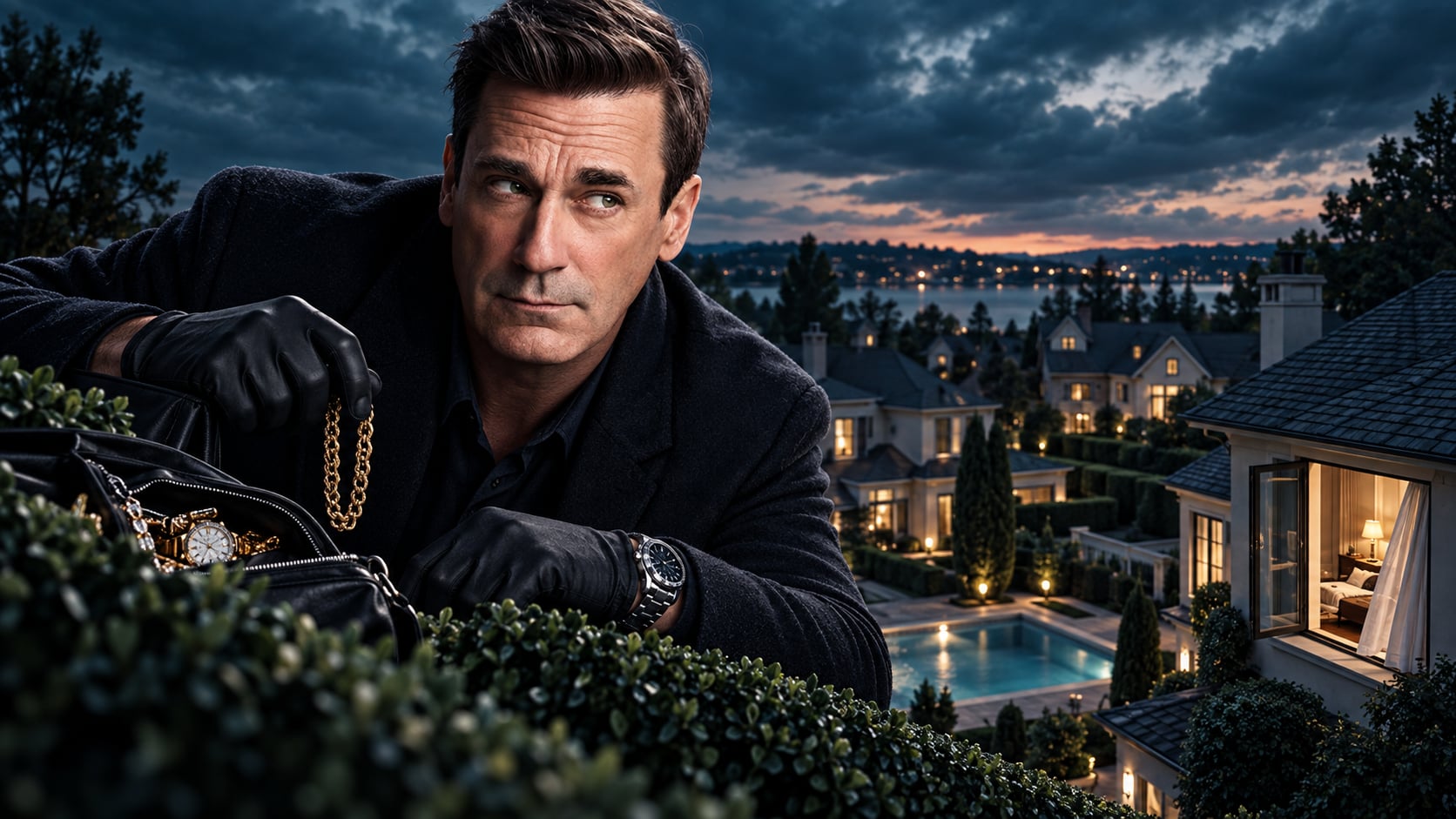
- A fired hedge fund manager starts robbing the wealthy neighbors he used to golf with.
- Apple ordered two more seasons before each one had even aired.
- The same year, Jon Hamm was also leading Paramount+'s Landman as an oil boss.
Intro.
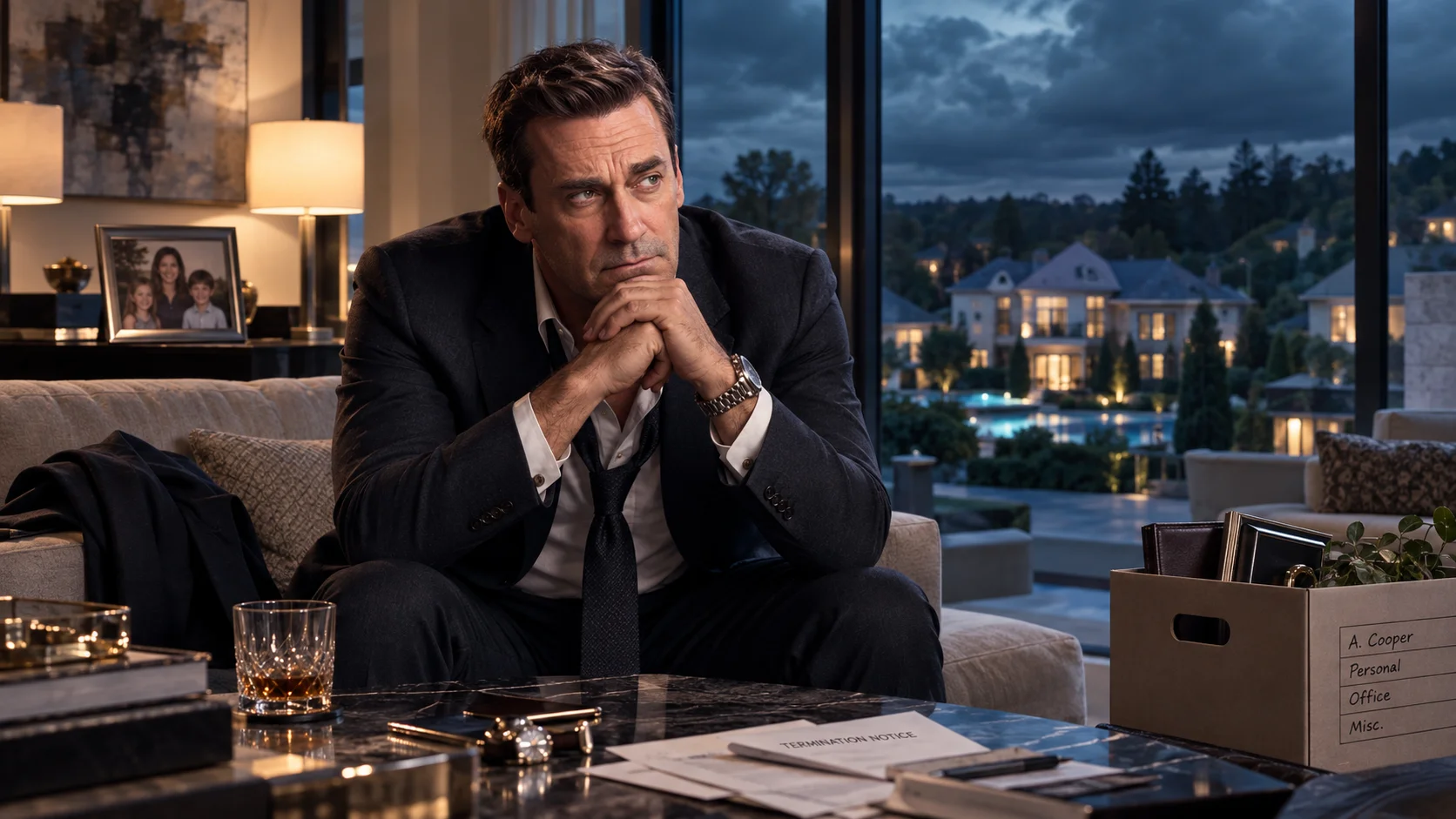
Andrew "Coop" Cooper spent his career managing other people's money. Your Friends & Neighbors opens with him losing his job, his marriage, and the lifestyle both paid for—all at once—and asks what a man like that does next. Jon Hamm plays him as someone still dressed for a world that no longer wants him, testing just how much he can take from the neighbors who never noticed what they had. Season 1 spends nine episodes finding out.
Here's the plot.
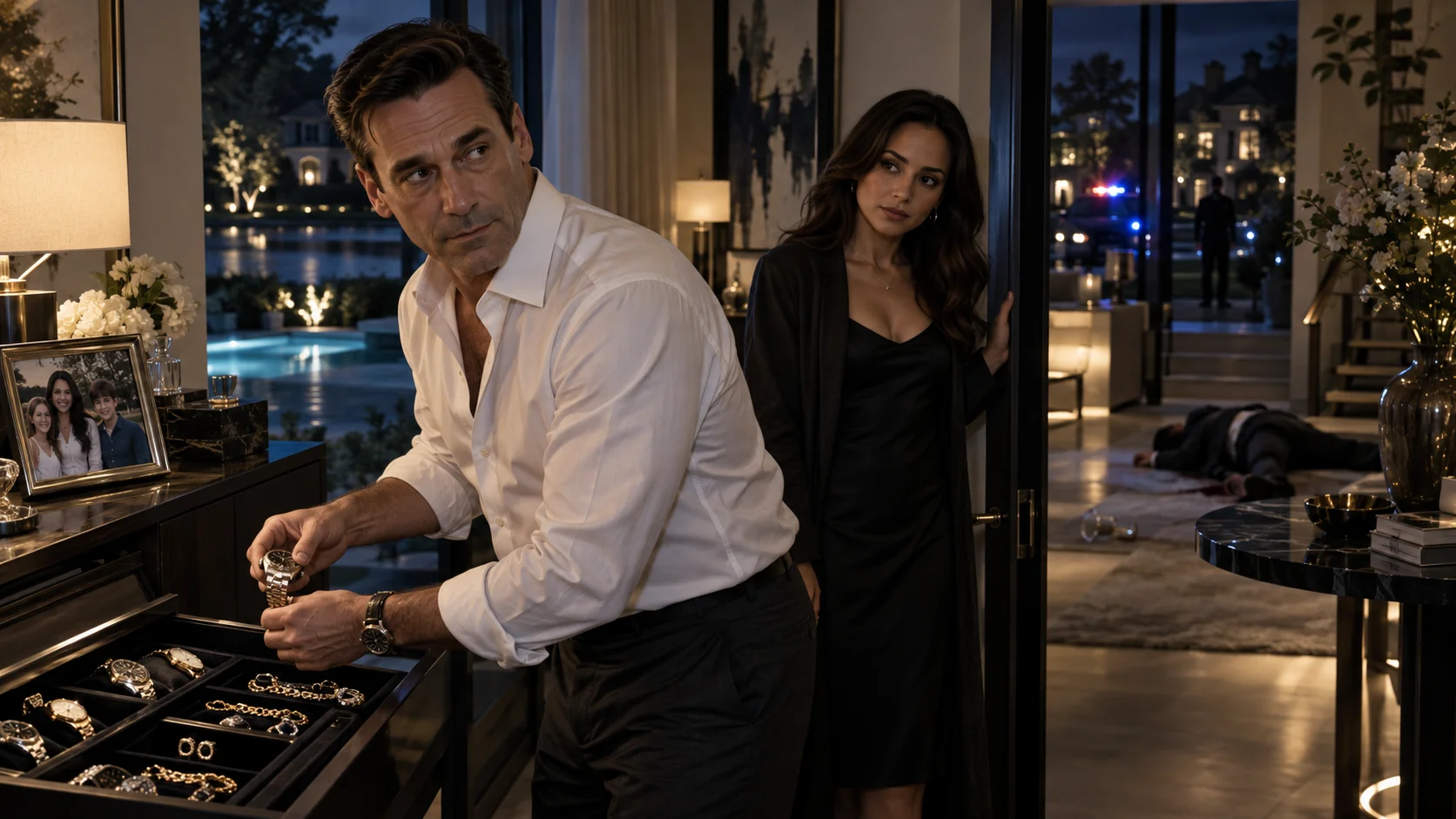
Coop (Jon Hamm) is a hedge fund manager in the wealthy New York suburb of Westmont Village, fired after a relationship with a junior colleague violates his firm's zero-tolerance fraternization policy—and locked out of finance work entirely by a non-compete his old boss has no intention of waiving. Desperate to keep paying for the life his ex-wife, Mel (Amanda Peet), and their two kids still expect, Coop starts breaking into his neighbors' houses and pawning what he finds. His housekeeper, Elena (Aimee Carrero), catches him mid-burglary and proposes they split the take instead of turning him in. The arrangement holds until Coop breaks into the wrong house: he finds his friend Sam's (Olivia Munn) estranged husband dead on the floor, and what looks like a suicide unravels, over nine episodes, into a wrongful-arrest plot with an insurance-fraud twist underneath it. Season 1 premiered April 11, 2025, on Apple TV+, with a full episode guide on IMDb.
Things you didn't know.
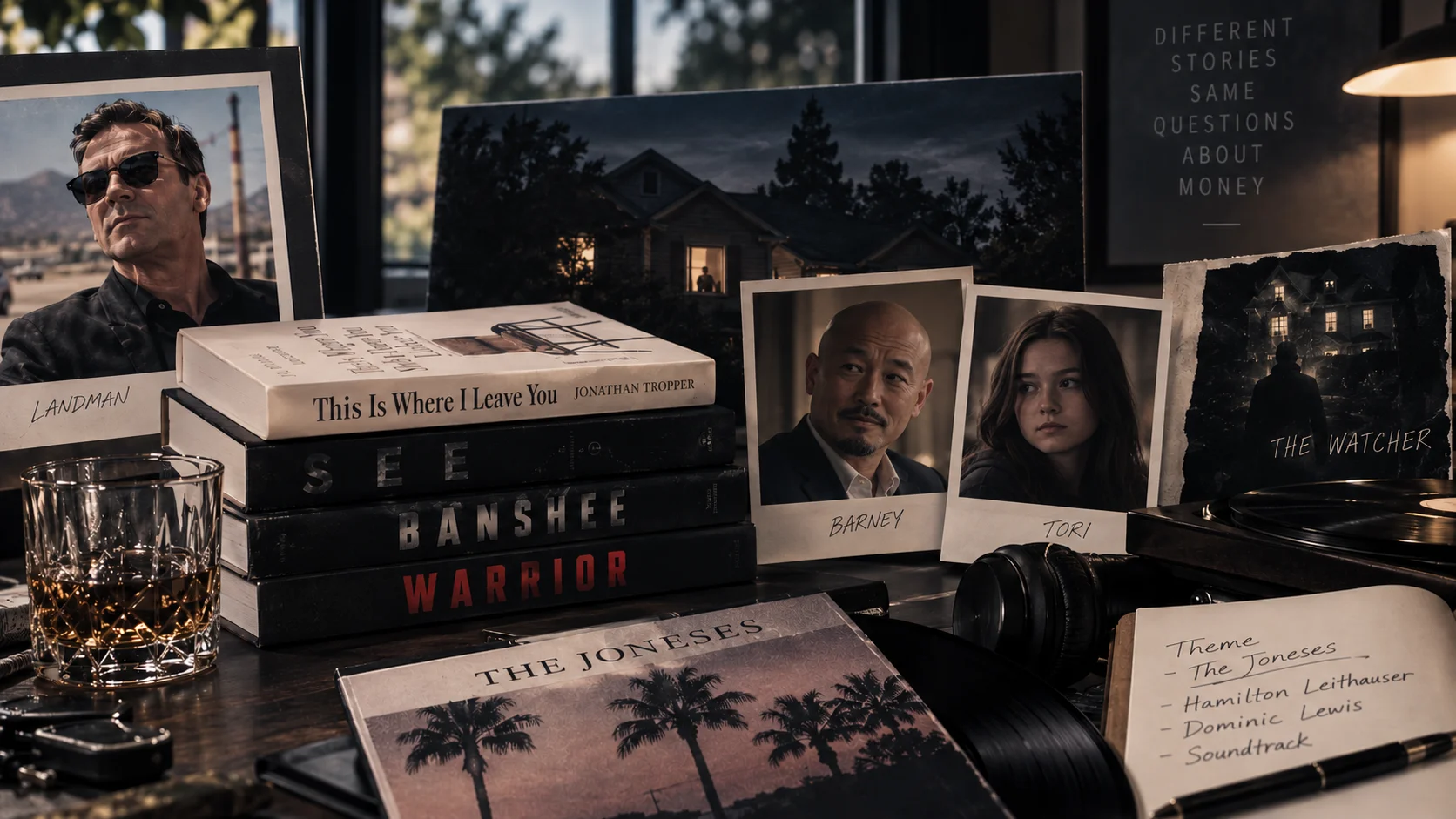
Creator Jonathan Tropper is better known for warm, character-driven novels like This Is Where I Leave You than for the high-concept genre television he'd actually been making—See, Banshee, Warrior—none of which look anything like a wealthy-suburb dramedy. Two cast members carry their own quiet callbacks: Hoon Lee, who plays Coop's accountant neighbor Barney, worked with Tropper on both of those earlier shows, and Isabel Gravitt, who plays Coop's daughter Tori, spent a prior season as an anxious teenager living next door to a very different menace on Netflix's The Watcher. The bigger coincidence belongs to Hamm himself: the same year he started robbing his TV neighbors here, he was also playing oil boss Monty Miller on Landman—one actor, two very different stories about what money does to people. The show's twangy theme song, "The Joneses," was written by Hamilton Leithauser of the Walkmen and composer Dominic Lewis; the wider soundtrack, a mix of moody indie and needle-drops across both seasons, is collected in full here.

The showrunner's bet.
Tropper wrote the lead role of Coop with only Jon Hamm in mind and has said there was no version of this show without him—no alternate was ever discussed. Apple matched that conviction from its own side of the deal: it ordered a second season before Season 1 had aired a single episode, which Tropper called "an incredible validation," then renewed a third season on February 2, 2026, weeks before Season 2 had even premiered. Two blind bets in a row, staked on one actor's ability to make an unlikeable man watchable.

The cast, and the roles that almost went elsewhere.
Amanda Peet plays Coop's ex-wife, Mel, a therapist working through her own anxieties about the divorce; Olivia Munn is Sam, the neighbor secretly having an affair with Coop while her own marriage falls apart; Lena Hall, a Tony winner, plays Coop's sister, Ali; and Randy Danson plays Lu, the pawnbroker who fences everything Coop steals (full character guide here). No confirmed reporting exists on who else was considered for any of these parts before casting landed where it did—for a show built almost entirely around trust and its absence, that's a fitting blank.
Where it came from.
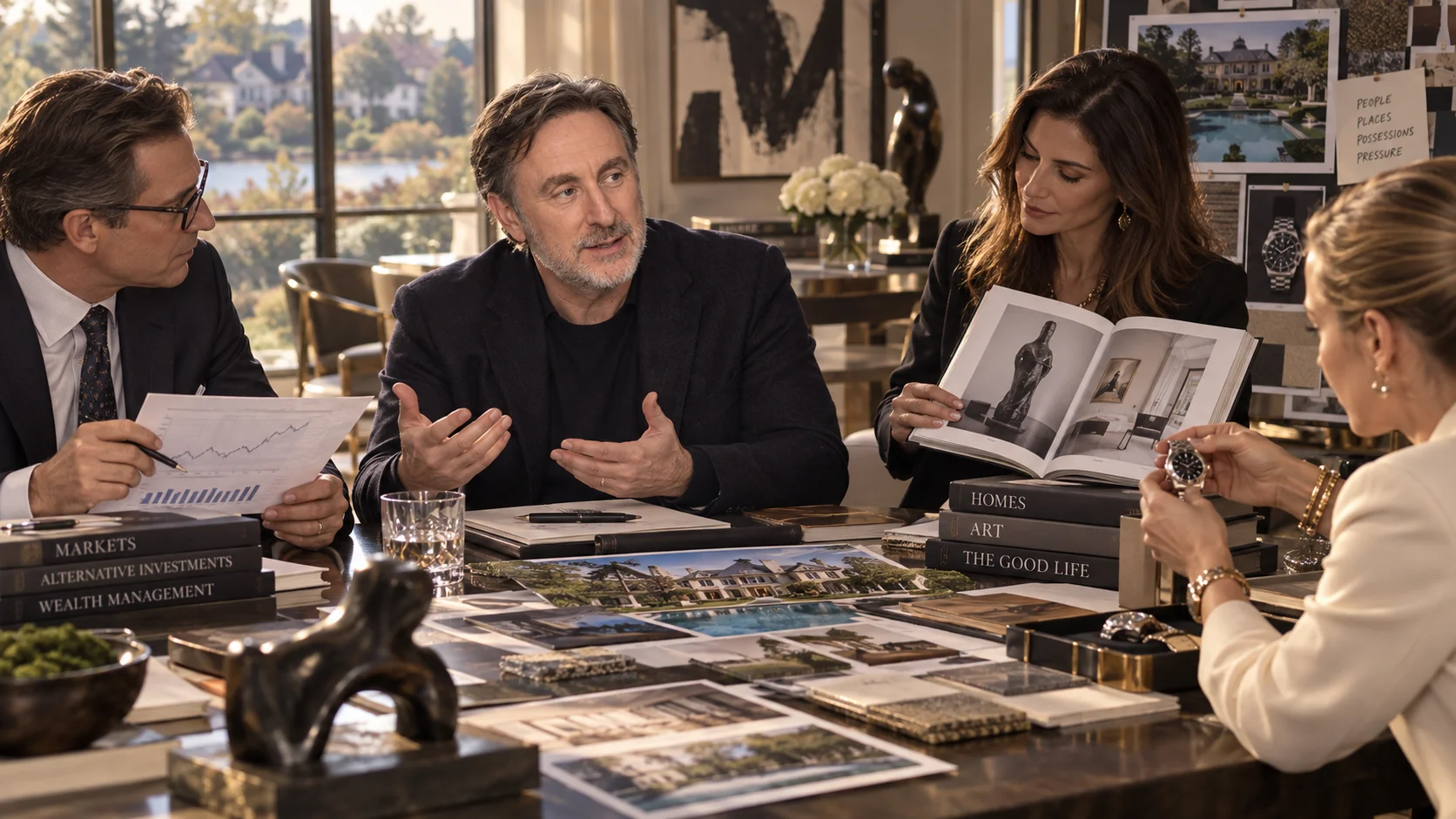
The premise grew out of Tropper's own years living among wealthy neighbors in Westchester County, New York—wondering what would happen if one of them fell on hard times, felt the pressure to keep up appearances anyway, and realized how easily he could slip into a friend's house and take something nobody would notice was gone. Apple's own announcement confirms the idea was entirely original to Tropper, not adapted from a book or true story. To get the details right, he also consulted real hedge fund managers, art consultants, and luxury advisers on what Coop's job and his neighbors' possessions would actually look like. Worth clearing up: an entirely unrelated Your Friends & Neighbors—Neil LaBute's 1998 dark comedy about three unhappy couples—shares only the title.

The invisible hand.
Almost every turn in Season 1 runs on a question of who deserves to keep their money. Coop loses his job over a policy violation his firm treats as non-negotiable, then loses access to his own disputed "capital account" on the way out the door. He justifies robbing his neighbors by telling himself they have, in his words, piles of forgotten wealth just lying around doing no one any good—a comfortable line for a man about to spend it on himself, not redistribute it. By the finale, even Sam's husband's death turns out to be a financial calculation: a staged suicide rewritten as murder to protect a life-insurance payout. Not every critic has been comfortable with how little the show punishes any of this—some have argued it dresses up wealth-hoarding as liberation—but that argument is itself the point: the show never quite decides whether Coop is stealing back what he's owed or just proving he was always one of them.

The tech behind the tale.
Fine watchmaking and wealth have never been separate—flyback chronographs and tourbillons are complications priced for people who can most easily do without them. Your Friends & Neighbors leans into that literally: Coop's thefts pause for full-screen spec cards on real pieces, including the Patek Philippe Nautilus 5811/1G-001 he steals in the pilot and the Richard Mille RM 011 Felipe Massa. As one watch outlet put it, the show uses these pieces to separate generational wealth from people buying its appearance—like Coop. His own Cartier Drive de Cartier, worth a modest $4,000, is the tell. Hamm has talked about the show's wealth obsession in press since it premiered, once naming Tom Cruise as the first person he'd rob in real life.

By the numbers.
Apple TV+ premiered Your Friends & Neighbors's nine-episode first season on April 11, 2025, and critics came around gradually—Rotten Tomatoes settled at 79% fresh, Metacritic at 63. The finale gave the show its first appearance on Nielsen's streaming-originals chart that June, proof enough for Apple, which had already ordered Season 2 before Season 1 aired and ordered Season 3—10 more episodes—on February 2, 2026, weeks ahead of Season 2's April 3 premiere. That confidence looked earned by the 2026 Emmys, where the show landed a nomination for Outstanding Drama Series with no other nominations alongside it, not even for Hamm.

Why it's must-watch now.
The pull of Your Friends & Neighbors was never really "will Coop get caught?"—it's how easily the show makes you root for a man stealing from people no more or less deserving than he is. Coop isn't a criminal mastermind; he's a guy with the exact same appetite for status as the neighbors he's robbing, minus the paycheck that used to cover it, and the show never lets that resemblance disappear. One critic summed up the appeal as watching Hamm "sell you the life you can't afford"—the show's real trick is making his version of that life look worth wanting even as it comes apart. Every house Coop breaks into is really just a mirror: whatever he takes, he's still trying to buy his way back into a class that was never going to have him regardless. Coop got away with more than he should have in Season 1; nothing since suggests the bill is about to come due.