- Walter White's five-season transformation became one of television's most awarded antihero dramas.
- His fictional 99% purity now matches what real DEA testing finds today.
- Burner phones, GPS trackers, and hidden bugs mirror tradecraft used by cartels and cops alike.
Intro.
Walter White's meth was famously 99.1% pure, a number that sounded like pure invention. It wasn't quite as fictional as it seemed. Breaking Bad runs on a chemistry teacher's diagnosis and the empire he builds from it, but the show also runs on precision, in its dialogue, its plotting, and, it turns out, its drugs. Five seasons taught a generation of viewers to root for a man doing the wrong math for reasons that felt, scene by scene, like the right ones.
Here's the plot.
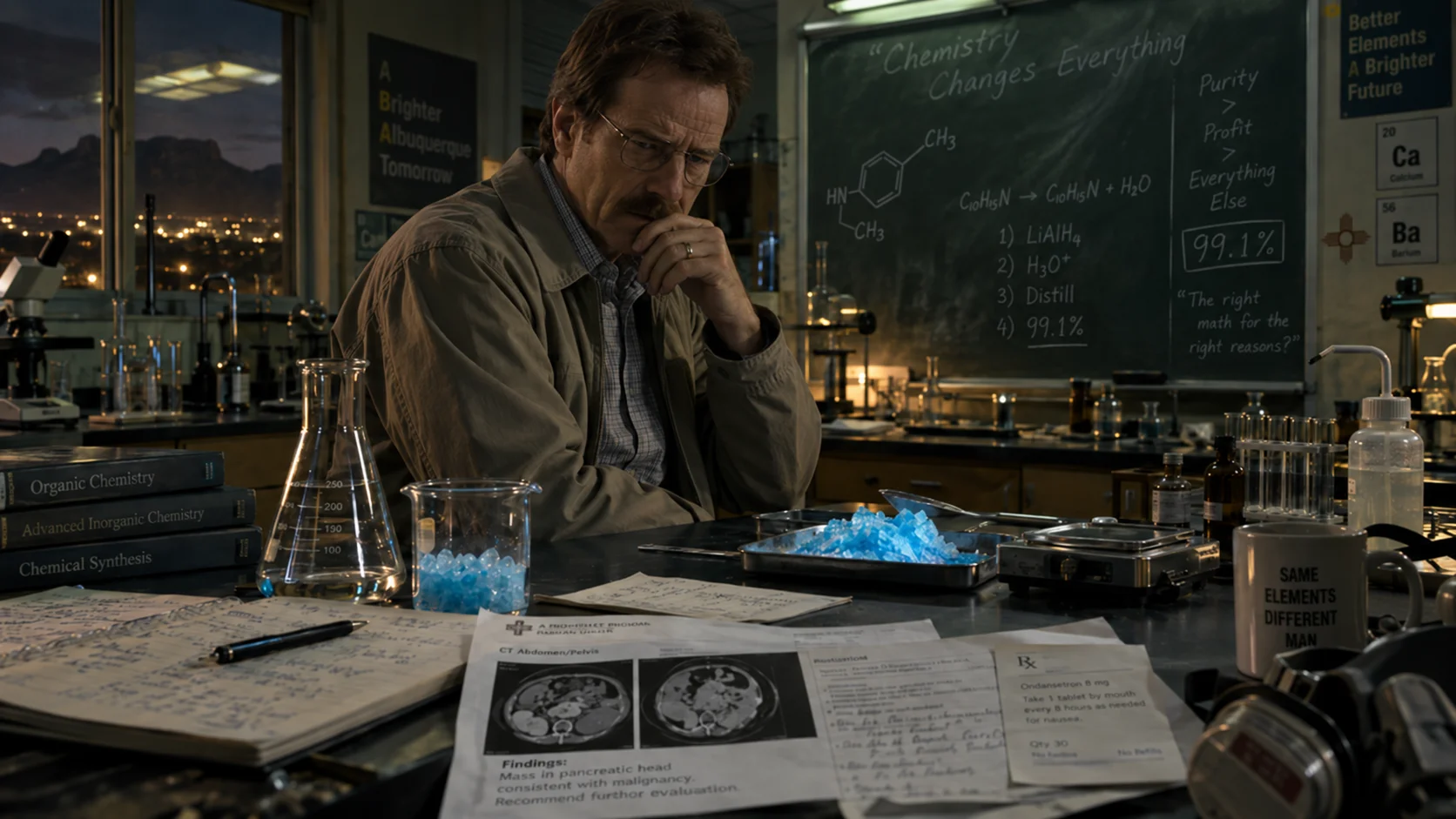
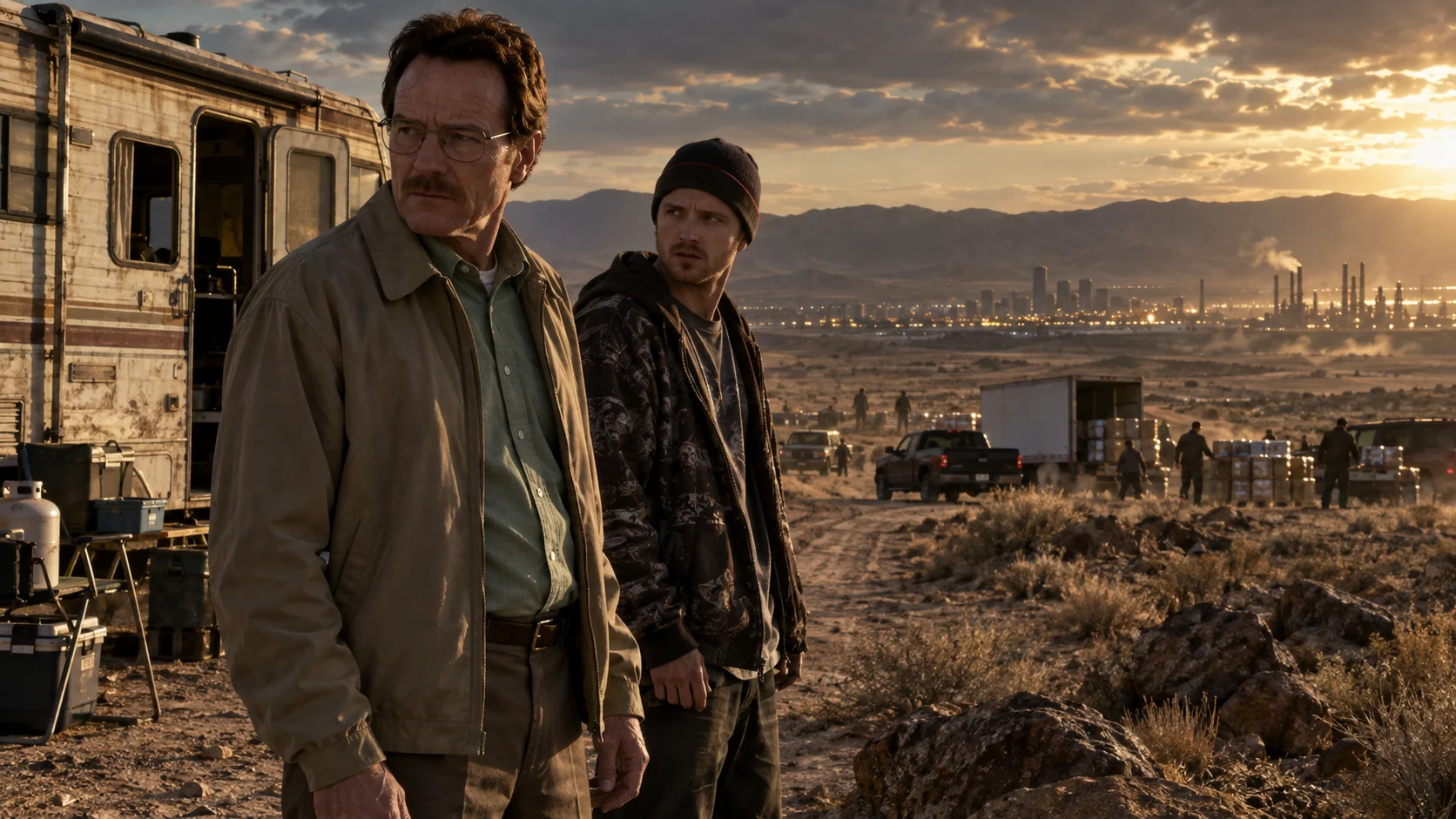
Walter White (Bryan Cranston) is a high school chemistry teacher in Albuquerque, New Mexico1, diagnosed with inoperable lung cancer and staring down medical bills his salary can't touch. He partners with a former student, Jesse Pinkman (Aaron Paul), to cook and sell crystal meth, at first just enough to leave his family provided for. That math never holds. Across five seasons and 62 episodes, the operation grows from a rented RV into a multistate business, and Walter's justifications curdle from survival into appetite, ending in a body count that outlasts the cancer that started it.
Things you didn't know.
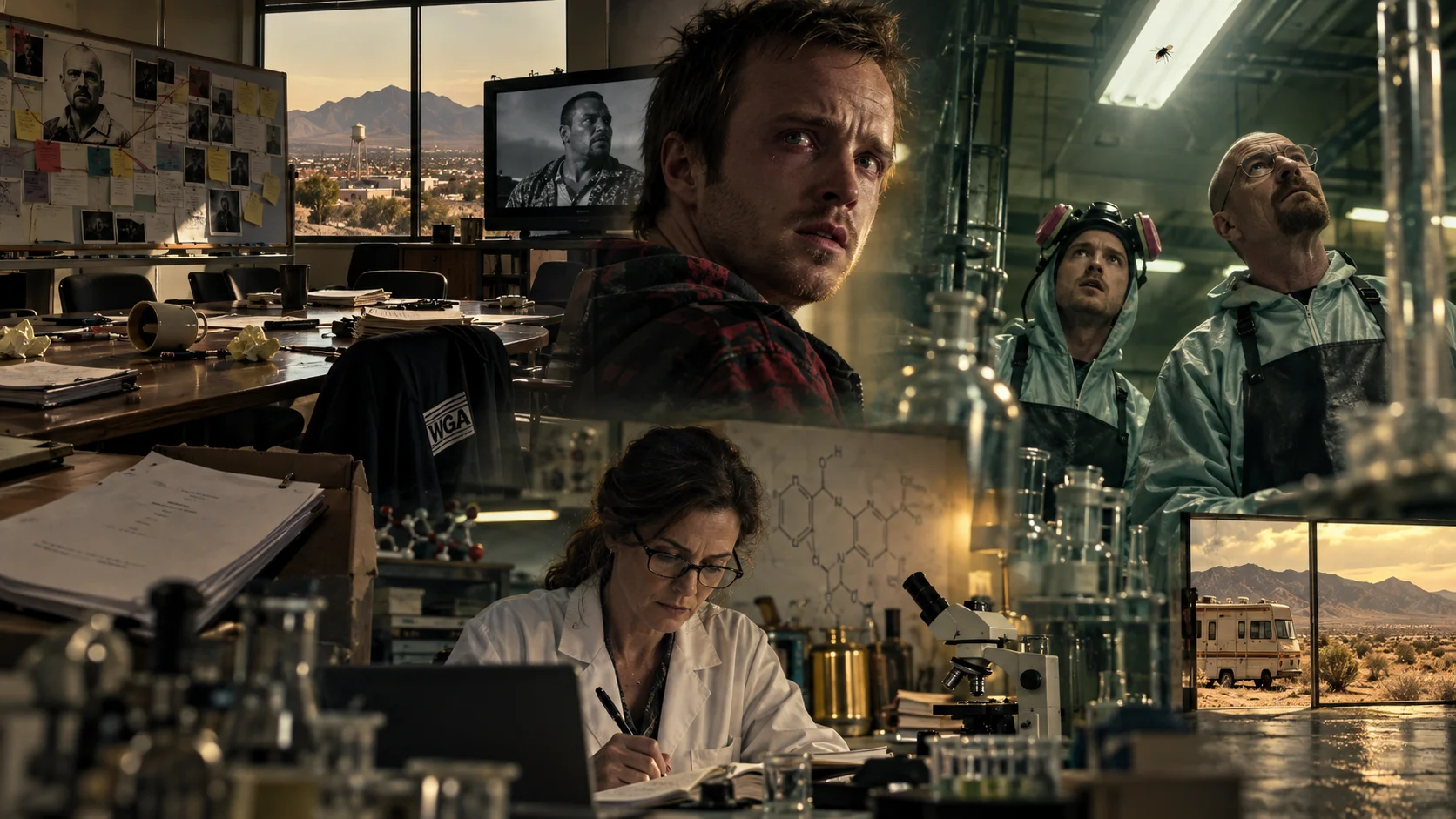
Season 1 got cut short for reasons that had nothing to do with the writing: the 2007-2008 Writers Guild strike stopped production after just seven episodes, forcing the writers to scrap two planned endings built around the volatile dealer Tuco and improvise a finale from what they had left. A persistent myth credits that same pause with saving Jesse Pinkman, who was originally written to die at the end of Season 1; Gilligan has said he'd already decided to keep the character, because of Aaron Paul's performance, before the strike ever began. Season 3 later ran so far over budget that the crew built "Fly," a two-character bottle episode confined almost entirely to the lab, just to claw costs back. Gilligan called that season "hopelessly over budget." The chemistry held up throughout because a real chemist checked it: Dr. Donna Nelson2 spent years as the show's volunteer, unpaid science advisor, after writing to Gilligan to point out an error and getting drafted instead.
The showrunner's bet.
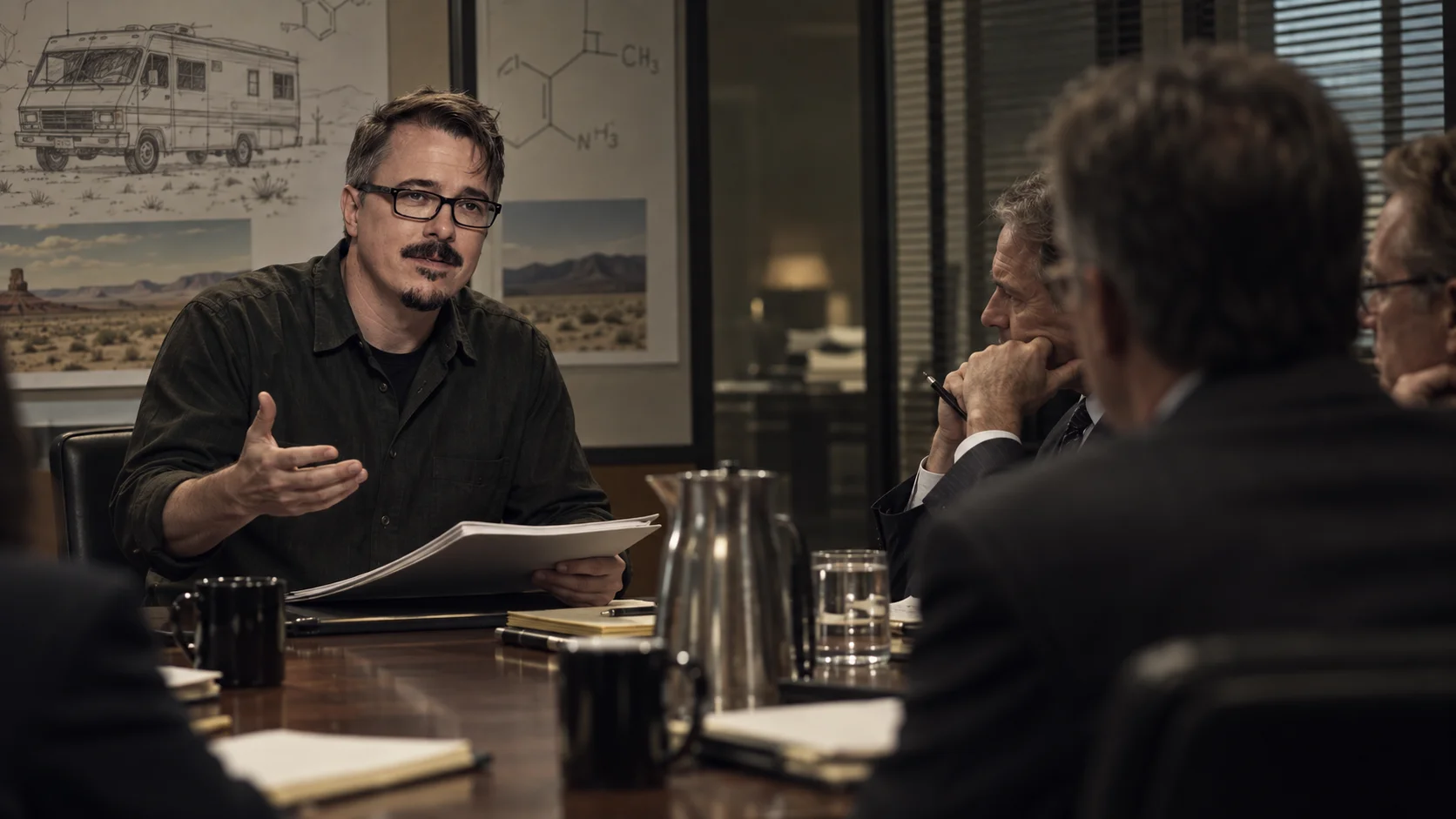
Gilligan pitched the concept as turning "Mr. Chips into Scarface." TNT loved the meeting and passed anyway: "if we bought this, we'd be fired... it's meth, it can't be meth, it's reprehensible," one executive told him, then asked if the drug could be something else. He said no. FX actually bought the script in 2005, then shelved it rather than become "the male antihero network," and greenlit Dirt3 instead. AMC, with no scripted-drama history beyond Mad Men, bought Breaking Bad in 2006, on the condition Gilligan could cast whoever he wanted.
The cast, and the roles that almost went elsewhere.
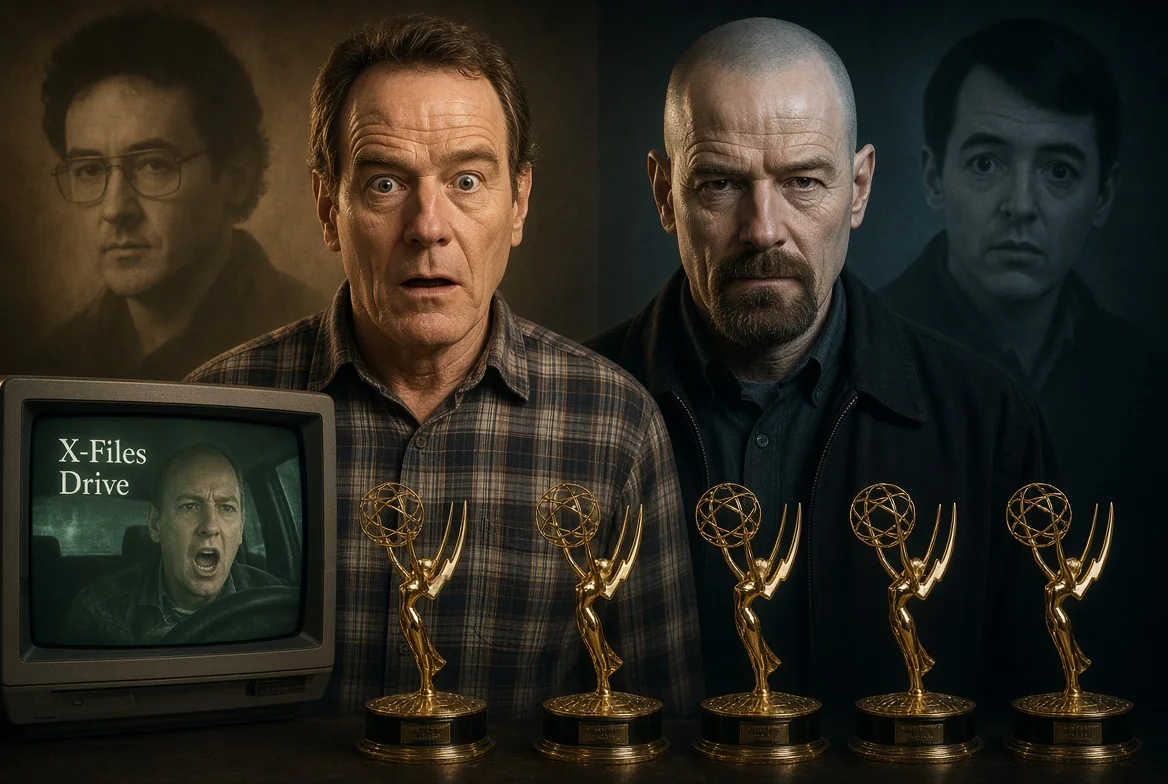
Bryan Cranston was best known as the goofy dad on Malcolm in the Middle, and Sony offered Walter White to John Cusack and Matthew Broderick before him; both passed. Gilligan had one card left to play: a 1998 X-Files episode he'd written, "Drive4," in which Cranston played a desperate, dying man audiences somehow still felt for. He screened it for skeptical executives, and Cranston got the part, then four Emmys for playing it.
Where it came from.
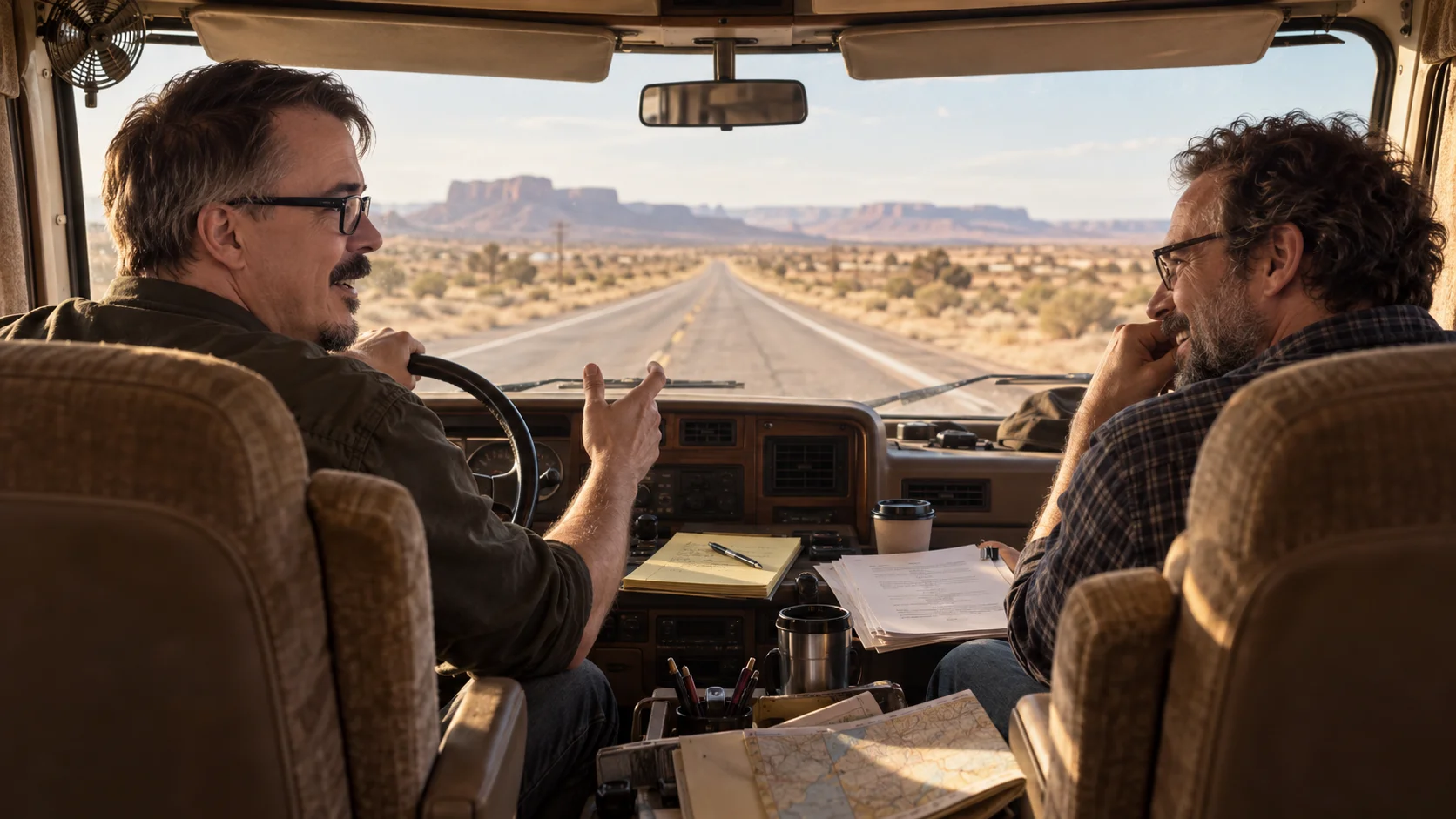
The idea wasn't adapted from a book, a true story, or a format remake. Gilligan has said it grew out of a joke he made with fellow writer Thomas Schnauz5, both between jobs at the time, about solving their money troubles by driving around in an RV cooking meth. Schnauz laughed it off; Gilligan didn't.
The invisible hand.
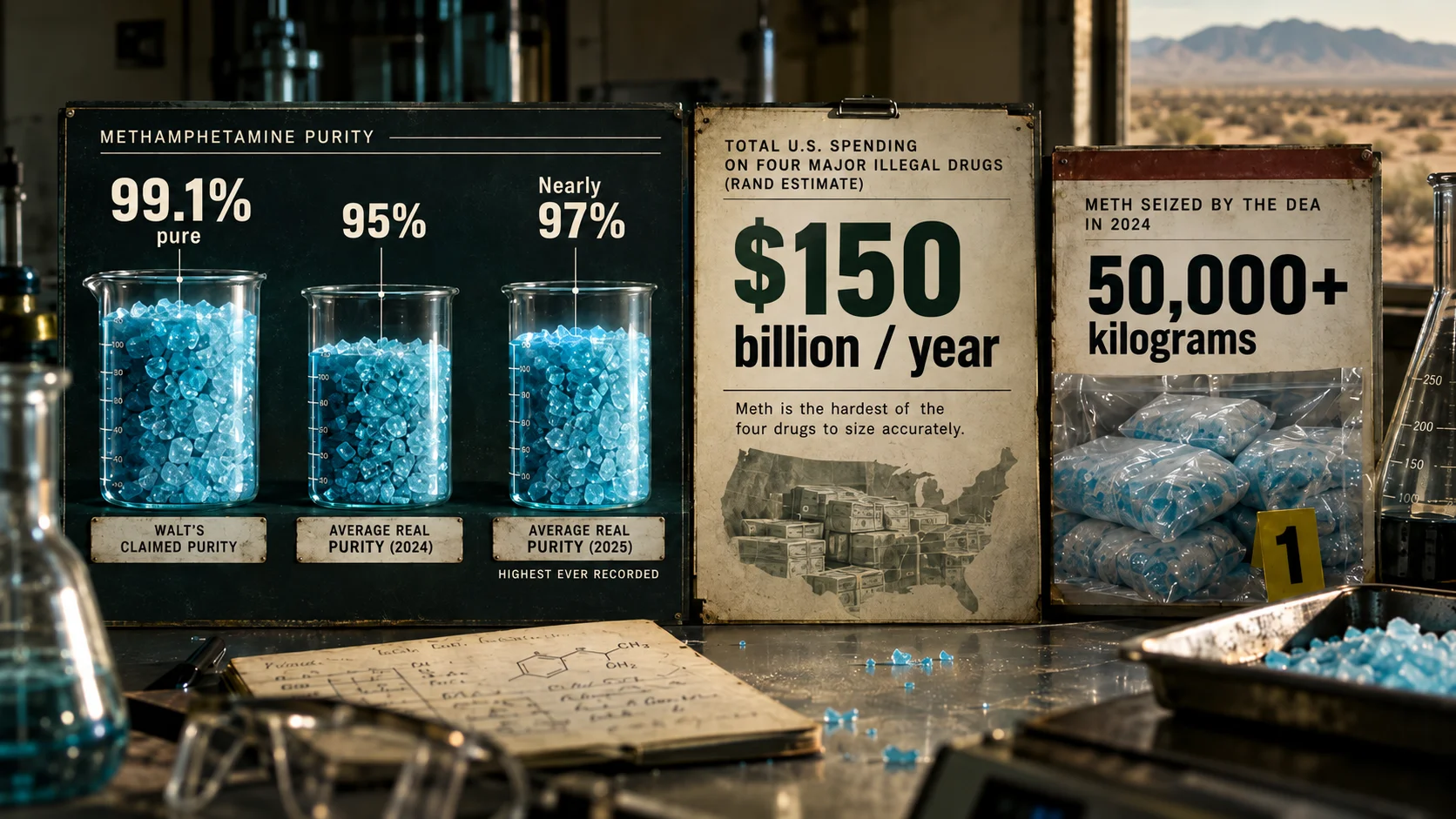
Walt treats his own economics like a science: his meth is "99.1% pure," his empire scales on his math, never anyone else's. That precision turns out to be less fictional than it looked. DEA lab testing found real methamphetamine purity averaging 95%6 through 2024, and nearly 97% in 2025, the highest ever recorded, a couple of points from Walt's number, achieved by the actual cartels now supplying the real US market. What the show never has to admit is how little anyone can say about that market's size: RAND's federally funded research puts total US spending on the four major illegal drugs at roughly $150 billion a year, but its own researchers flag meth as the hardest of the four to size, because the national data sets meant to capture it simply don't. DEA seized more than 50,000 kilograms of it in 2024 alone. Walter White would have found that unacceptable; he never once left a number unaccounted for.
The tech behind the tale.
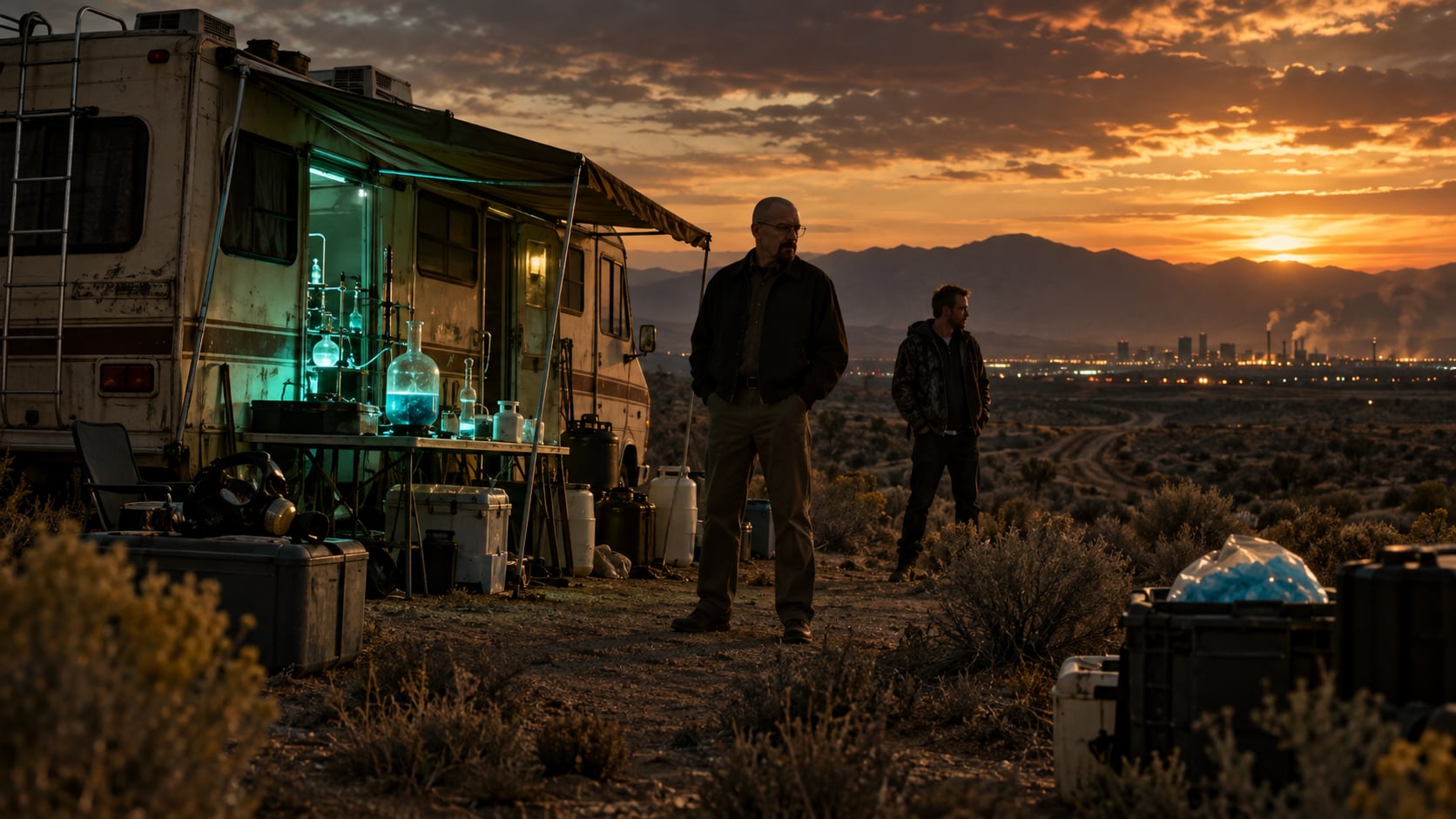
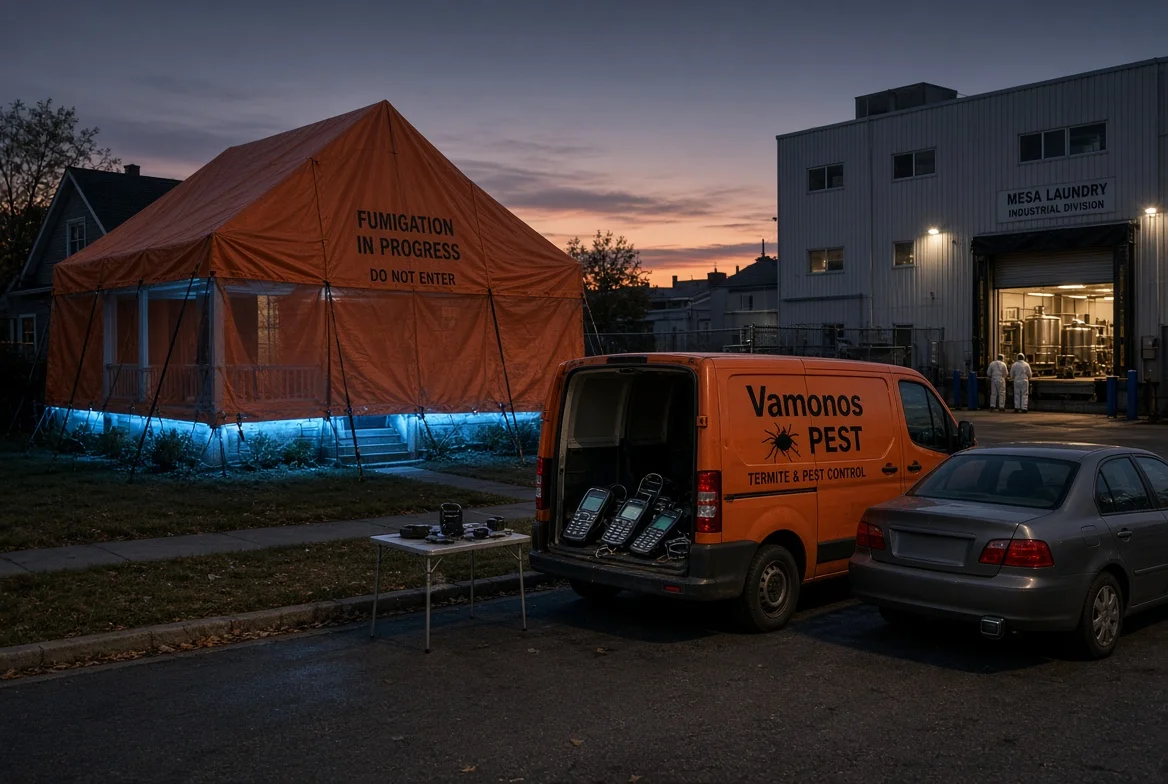
Walt and Jesse cycle through burner phones like office supplies; later, so does the DEA agent hunting them, planting a GPS tracker on a suspect's car the same way Walt once planted one on Jesse's. Gus Fring hides his superlab behind an industrial laundry and a pest-control company, Vamonos Pest7, that tents customers' houses to "fumigate" them before turning the interior into a mobile cook site. It's not far from how real trafficking organizations actually launder proceeds and hide production, through legitimate-looking front businesses that the DEA spends as much time unwinding as it does chasing the drugs themselves.
By the numbers.
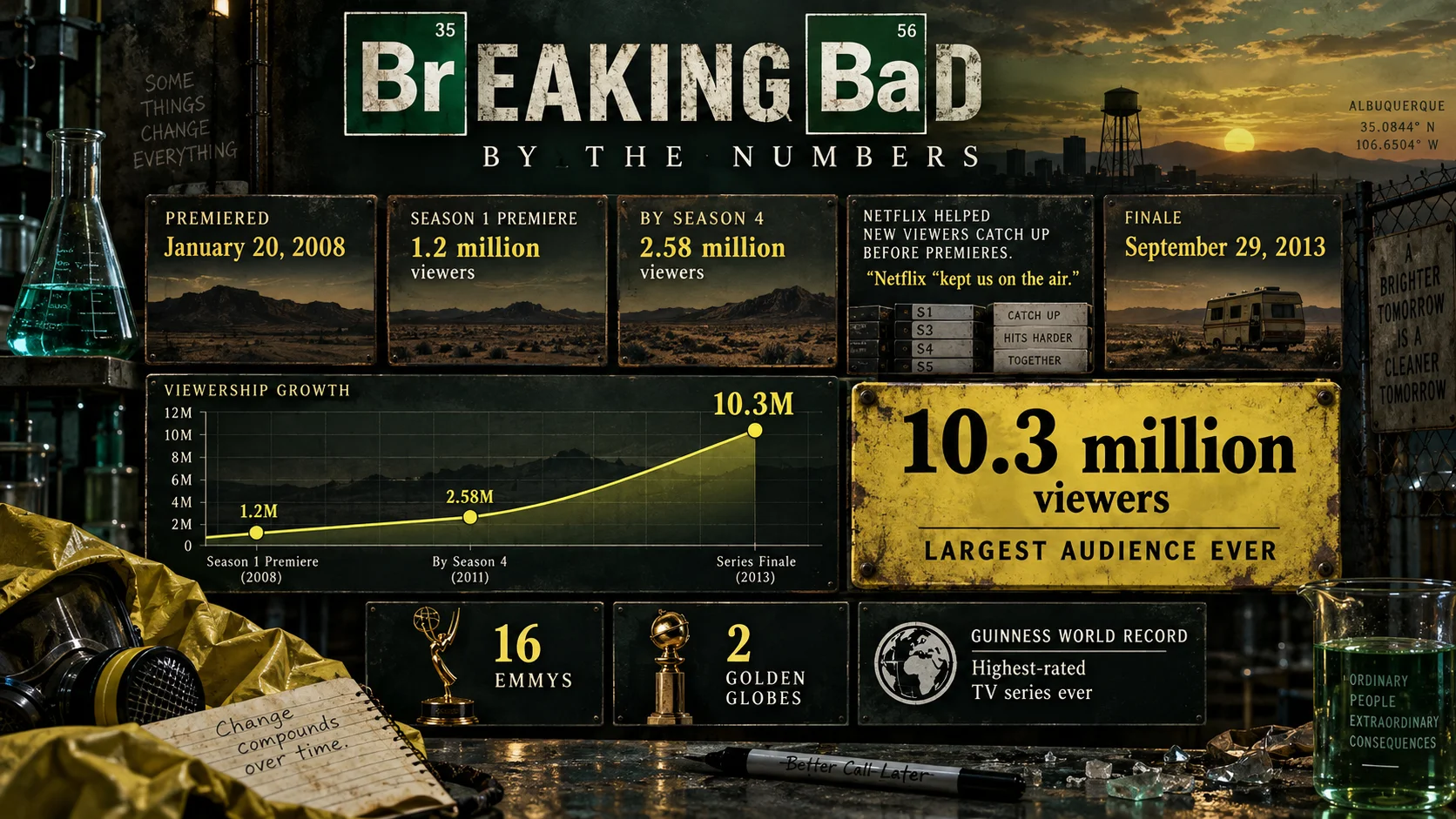
Breaking Bad premiered on AMC on January 20, 2008, to just 1.2 million viewers, a number that crept only as high as 2.58 million by Season 4, helped along once Netflix put earlier seasons in front of new viewers ahead of each premiere; Gilligan later said Netflix "kept us on the air." The September 29, 2013 finale drew more than 10.3 million viewers, the show's largest audience ever, and the show closed its run with 16 Emmys, two Golden Globes, and a Guinness World Record8 for the highest-rated TV series ever.
Why it endures.
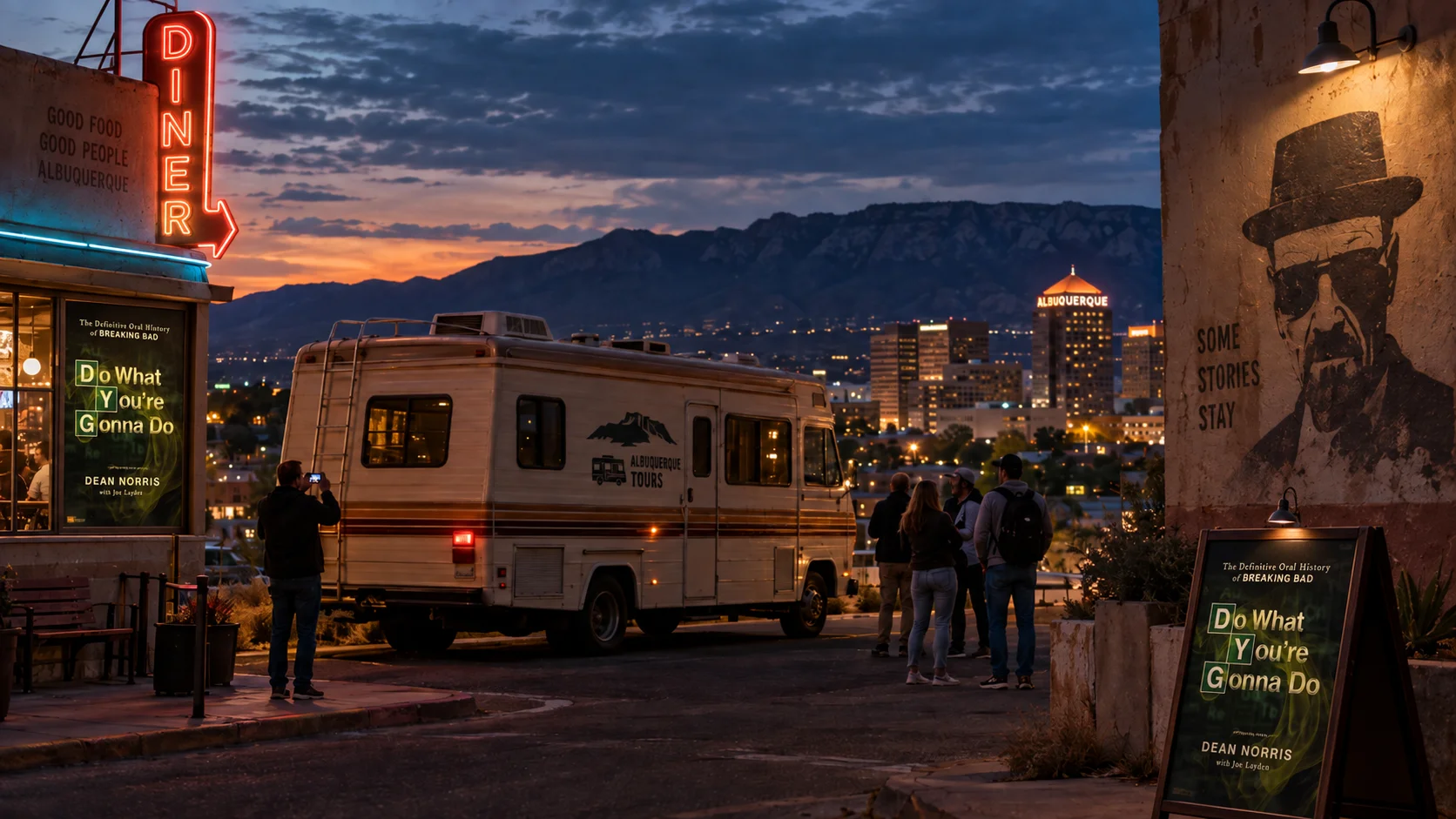
Every choice Walt makes toward becoming Heisenberg is defensible in isolation, which is the entire argument of the show: nobody wakes up deciding to run a drug empire, they just keep agreeing to the next reasonable-sounding step. That's still what gets studied and rewatched more than a decade later, and the show keeps generating new material to argue about: Dean Norris, who played DEA agent Hank Schrader, publishes Do What You're Gonna Do, the first full oral history of the show, this November, its title borrowed from Hank's own last words. It also left an unusually literal legacy behind: production spent roughly $75 million in New Mexico across five seasons for at most $300,000 back in tax credits per episode, and Albuquerque still runs RV tours retracing Walt's old routes. A fictional drug empire's real economic footprint has outlasted the fictional empire itself, which is either the show's best joke or its most honest one.
Side notes
-
Albuquerque, New Mexico — Breaking Bad was originally written for Riverside, California; Sony moved production to Albuquerque for New Mexico's 25% film tax rebate, and Gilligan's resistance to just "replacing the license plates" ended up shaping the show's whole look. Learn more ↩
-
Dr. Donna Nelson — An organic chemistry professor at the University of Oklahoma, Nelson wrote to Gilligan pointing out a scripted error and ended up serving as the show's unpaid science advisor for years. Learn more ↩
-
Dirt — FX's chosen alternative to Breaking Bad, a Courteney Cox tabloid drama that ran two seasons before FX declined to finish out its already-shortened second season. Learn more ↩
-
"Drive" — The 1998 X-Files episode Gilligan wrote, casting Cranston as a man who will die if he stops moving west; the performance is what got him cast six years later. Learn more ↩
-
Thomas Schnauz — Gilligan's friend since their days at NYU's film program, who later joined Breaking Bad's writing staff and became a Better Call Saul executive producer in his own right. Learn more ↩
-
Purity testing — DEA's own forensic labs produced the 95-to-97% figures cited above, part of the agency's annual methamphetamine profiling program. Learn more ↩
-
Vamonos Pest — Fictional, but the tented-house-as-cover trick echoes a real pattern; the DEA says trafficking organizations increasingly launder proceeds through ordinary-looking front businesses. Learn more ↩
-
Guinness World Records — The record cites Season 5's 99-out-of-100 Metacritic score, tied with four other TV seasons; Breaking Bad's edge is its 9.6-out-of-10 user rating, the highest of the group. Learn more ↩