- A single post-credits scene set up the dozens of connected films that followed.
- Stan Winston's crew made real, wearable armor, and computer effects filled in the rest.
- A year after the film opened, Disney paid $4b for the studio behind it.
Intro.
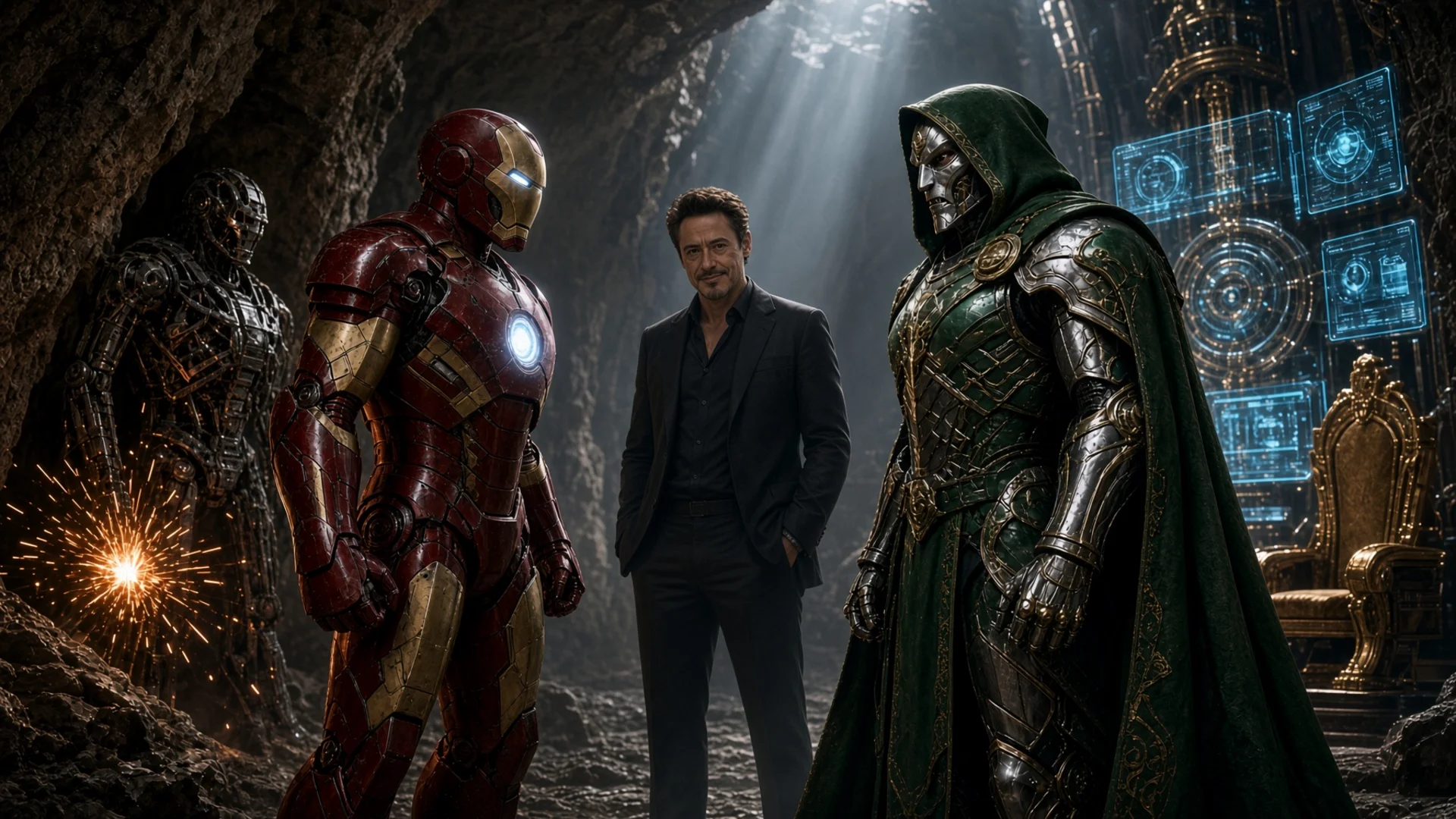
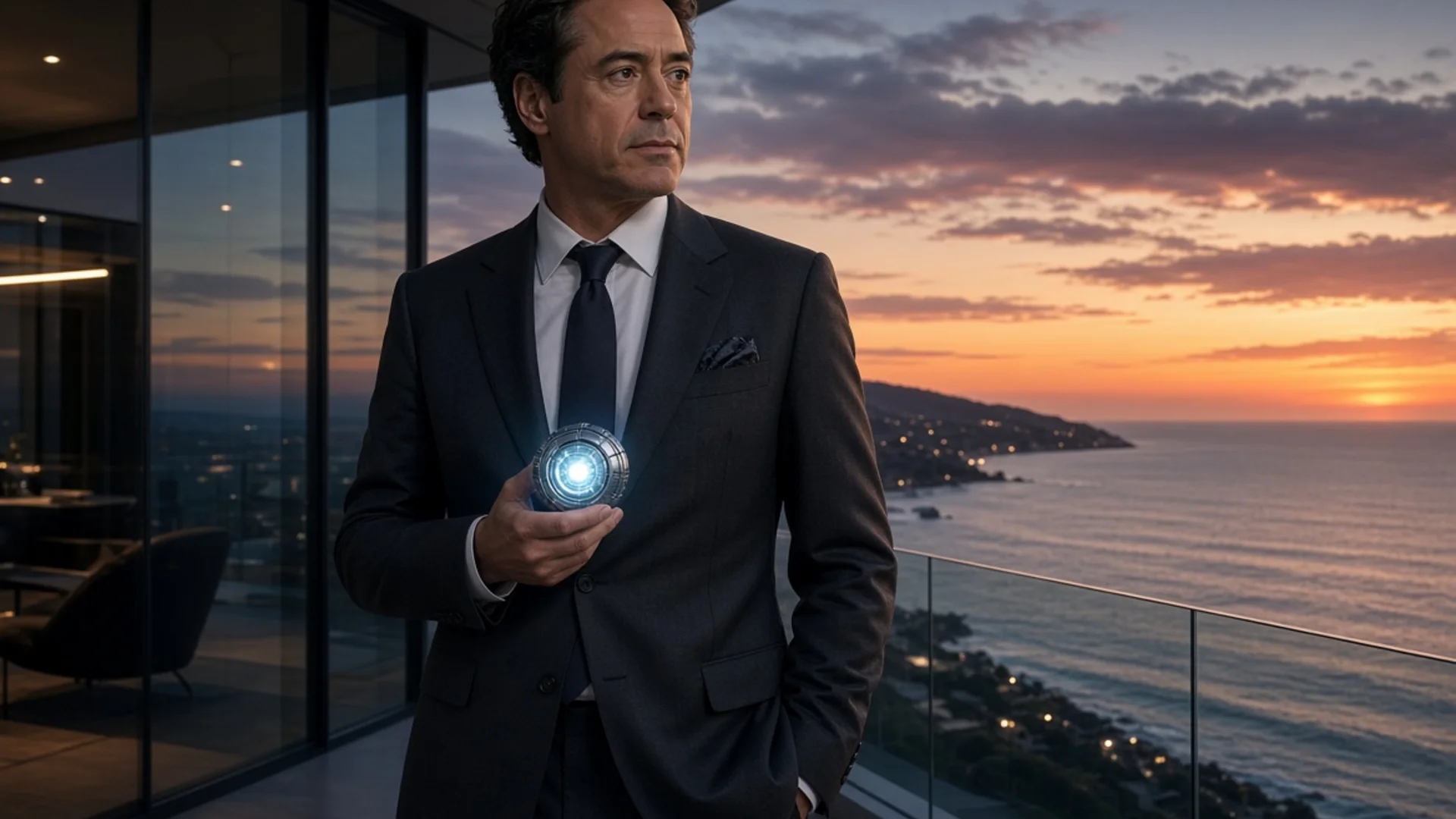
Eighteen years ago, Iron Man1 rested on an actor much of Hollywood had written off. On December 18, Robert Downey Jr. trades Tony Stark's suit for the green cloak and steel faceplate of the villain at the center of Avengers: Doomsday2. Few actors get to play both the hero who launched a franchise and the enemy it has to stop.
Here's the plot.
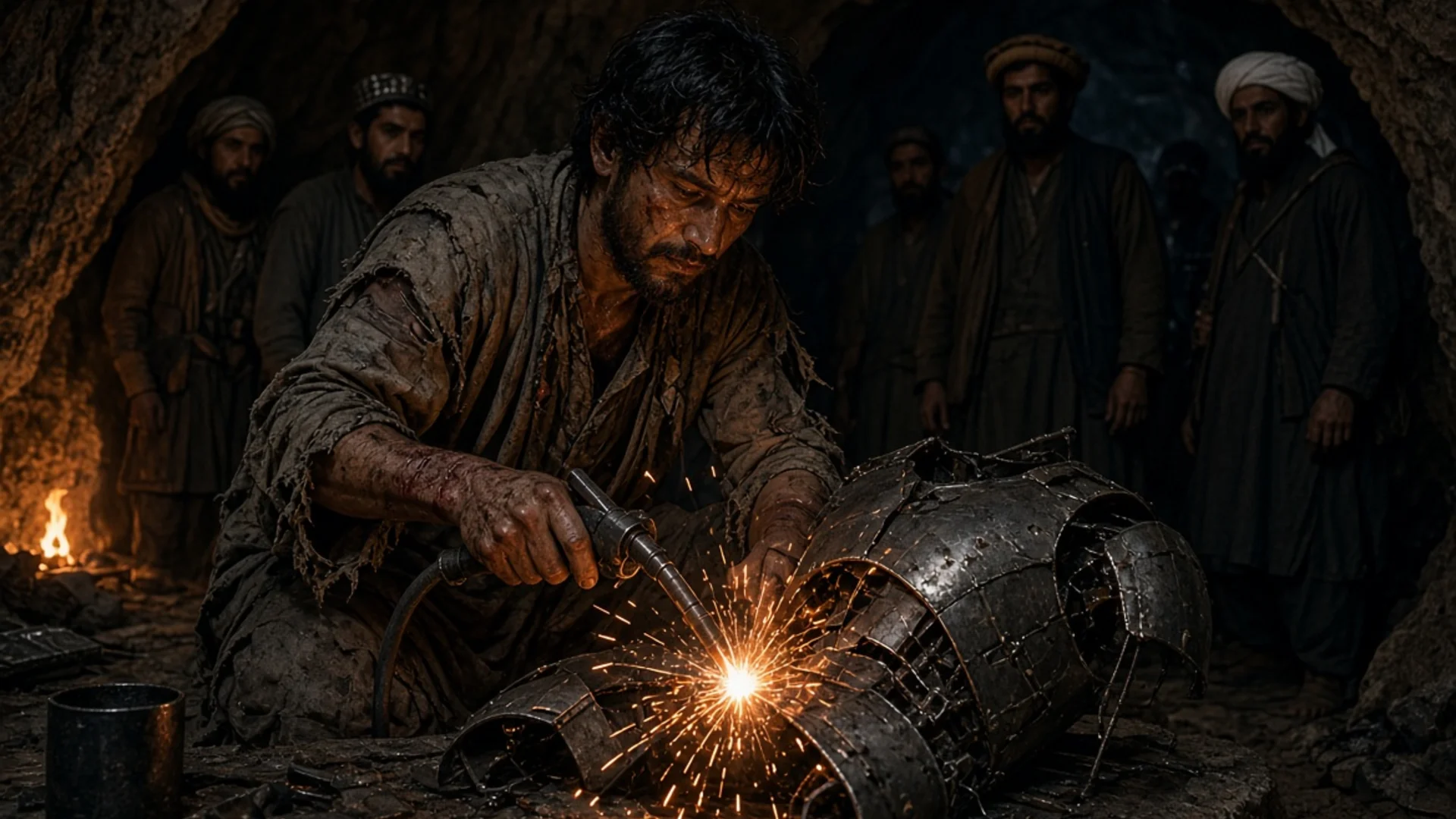
Tony Stark runs Stark Industries, the weapons company his father built, and he's very good at selling missiles. On a demonstration trip to Afghanistan, he's wounded, kidnapped, and ordered to build one for his captors. He builds a suit of armor instead, escapes, and comes home announcing that his company is out of the weapons business. That decision turns his father's old partner, Obadiah Stane, into an enemy, and the fight over Stark Industries becomes a fight in armor.
Things you didn't know.
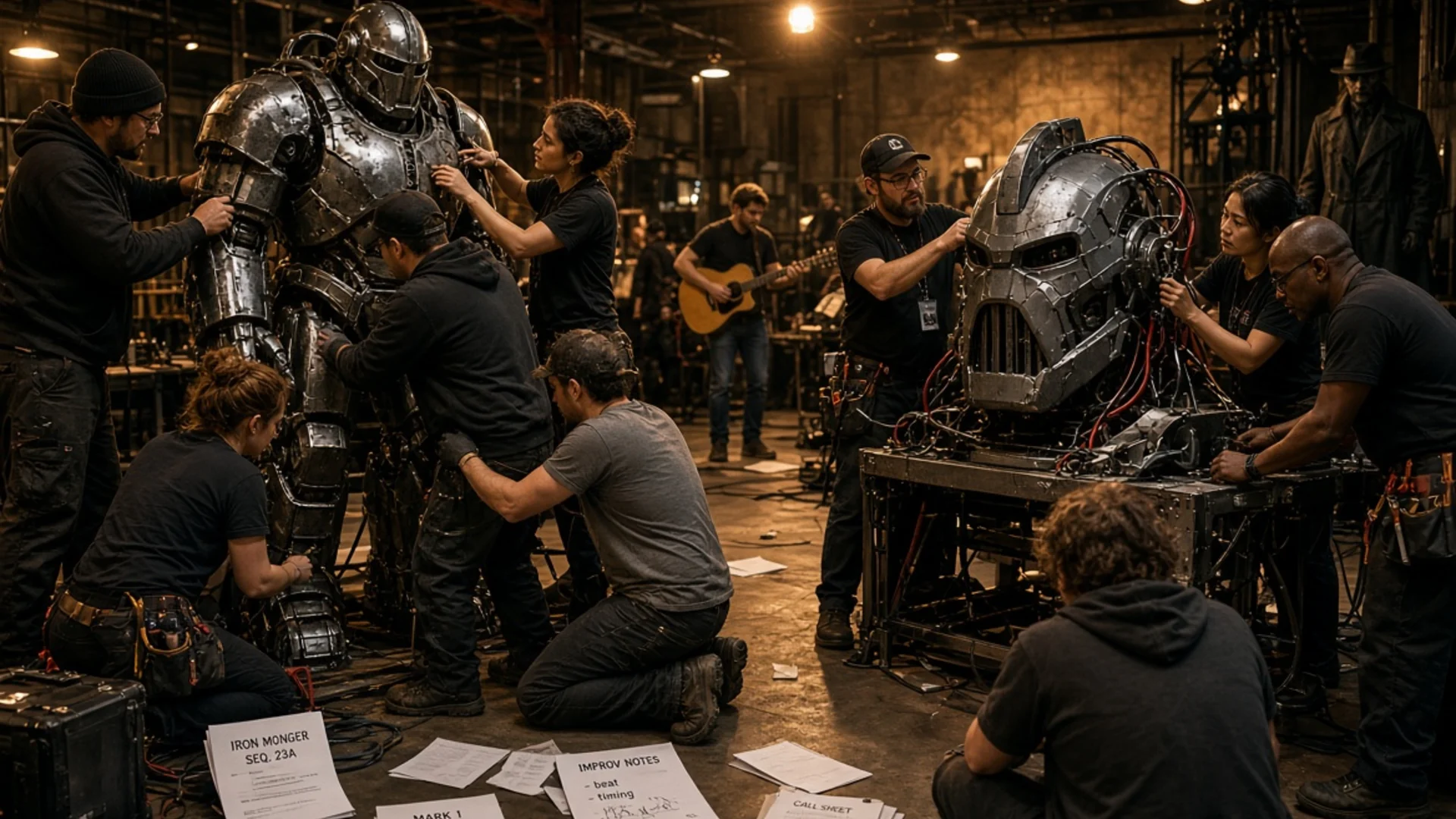
The script wasn't finished when filming began in March 2007, so much of the dialogue was improvised. Jeff Bridges called the shoot "a $200 million student film." Stan Winston's studio built a wearable Mark I suit weighing about 90 pounds and a 10-foot, 800-pound animatronic Iron Monger. Rage Against the Machine guitarist Tom Morello played on the score and turns up on screen as one of Stark's captors. The biggest surprise came after the credits: Samuel L. Jackson's Nick Fury, mentioning something called the "Avenger Initiative."
The director's gamble.
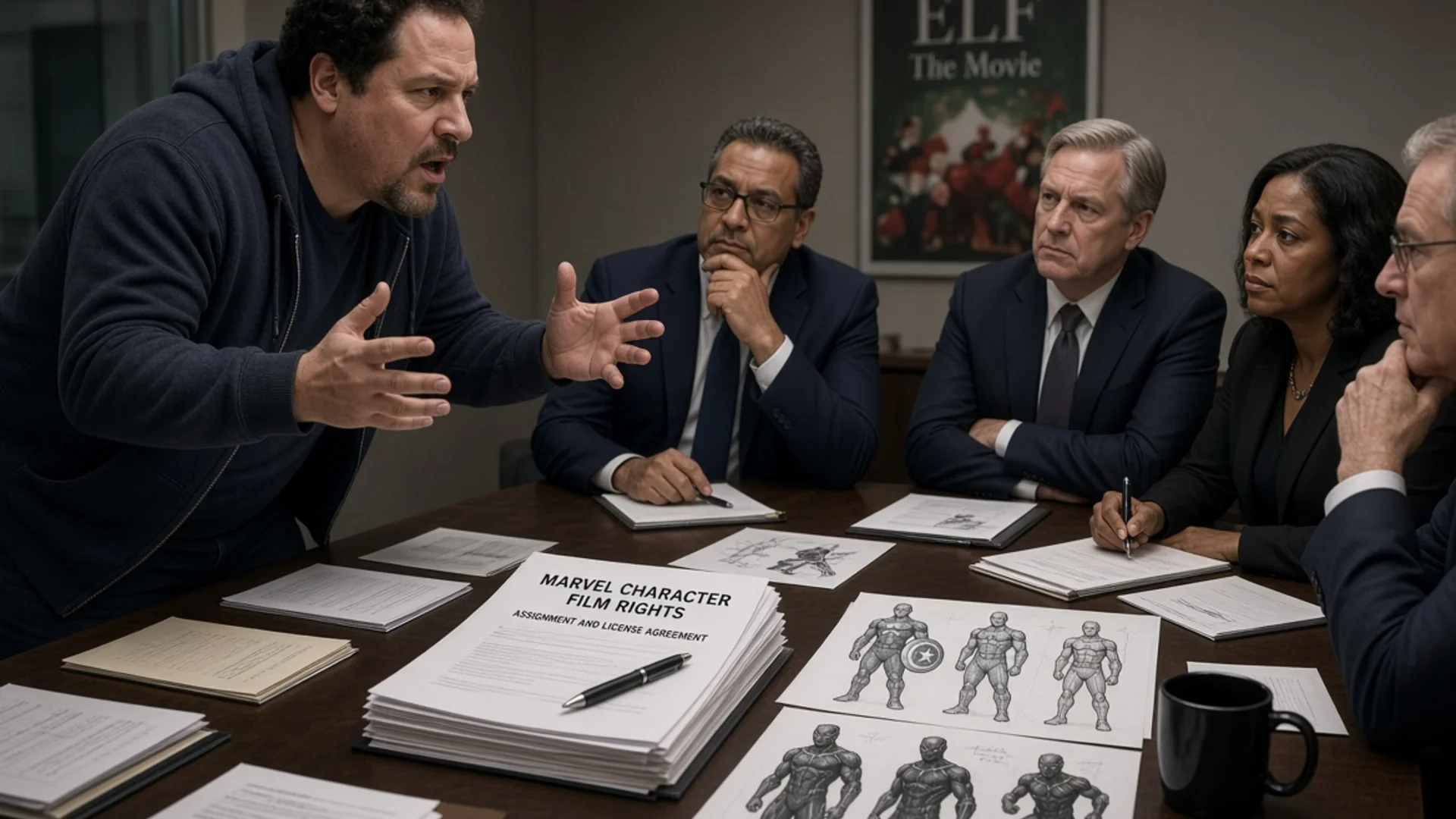
Jon Favreau, then best known for Elf, was directing the first film Marvel would pay for itself. In 2005 the company had arranged a $525m credit line through Merrill Lynch and pledged the film rights to 10 of its characters as collateral3, Captain America and Black Panther among them. If the films failed, those were the heroes on the line. Favreau's other fight was over his star. Marvel's executives kept saying no to Downey, and Favreau kept pushing. "It was my job as a director to show that it was the best choice creatively," he said.
The cast, and the roads not taken.
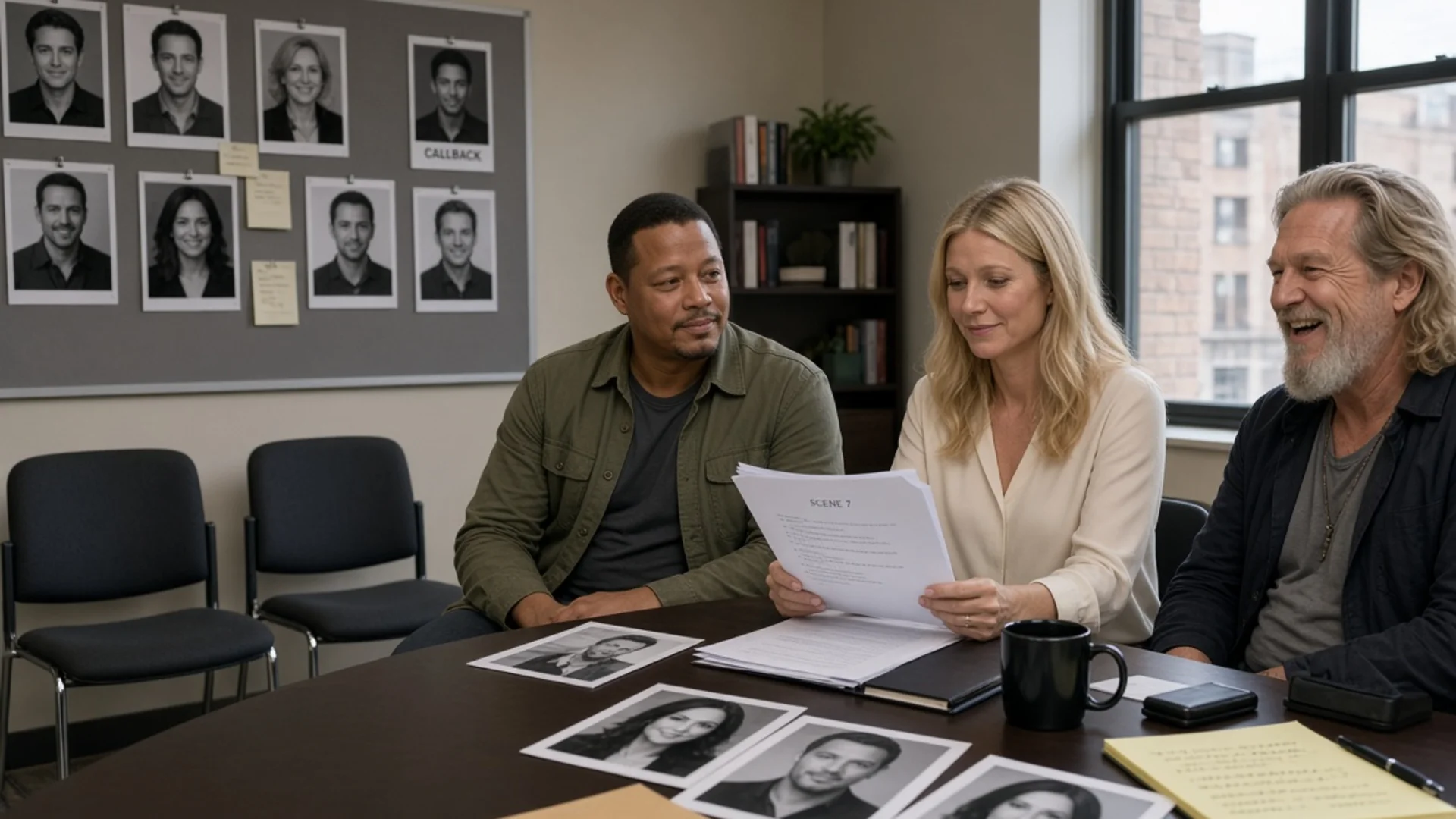
Downey was cast in September 2006 for $500,000. His arrests and drug history had already cost him parts, some of them over insurance problems4. Favreau saw the fit anyway: "the story of Iron Man was really the story of Robert's career." Terrence Howard signed first, as James Rhodes, followed by Gwyneth Paltrow as Pepper Potts and Jeff Bridges as Stane. Favreau had considered Jim Caviezel, Timothy Olyphant, and Sam Rockwell for Stark. Clive Owen was Marvel's top choice and passed, and Rachel McAdams turned down Pepper. Eighteen years later, the studio that didn't want Downey brought him back to play its biggest villain.
Where it came from.
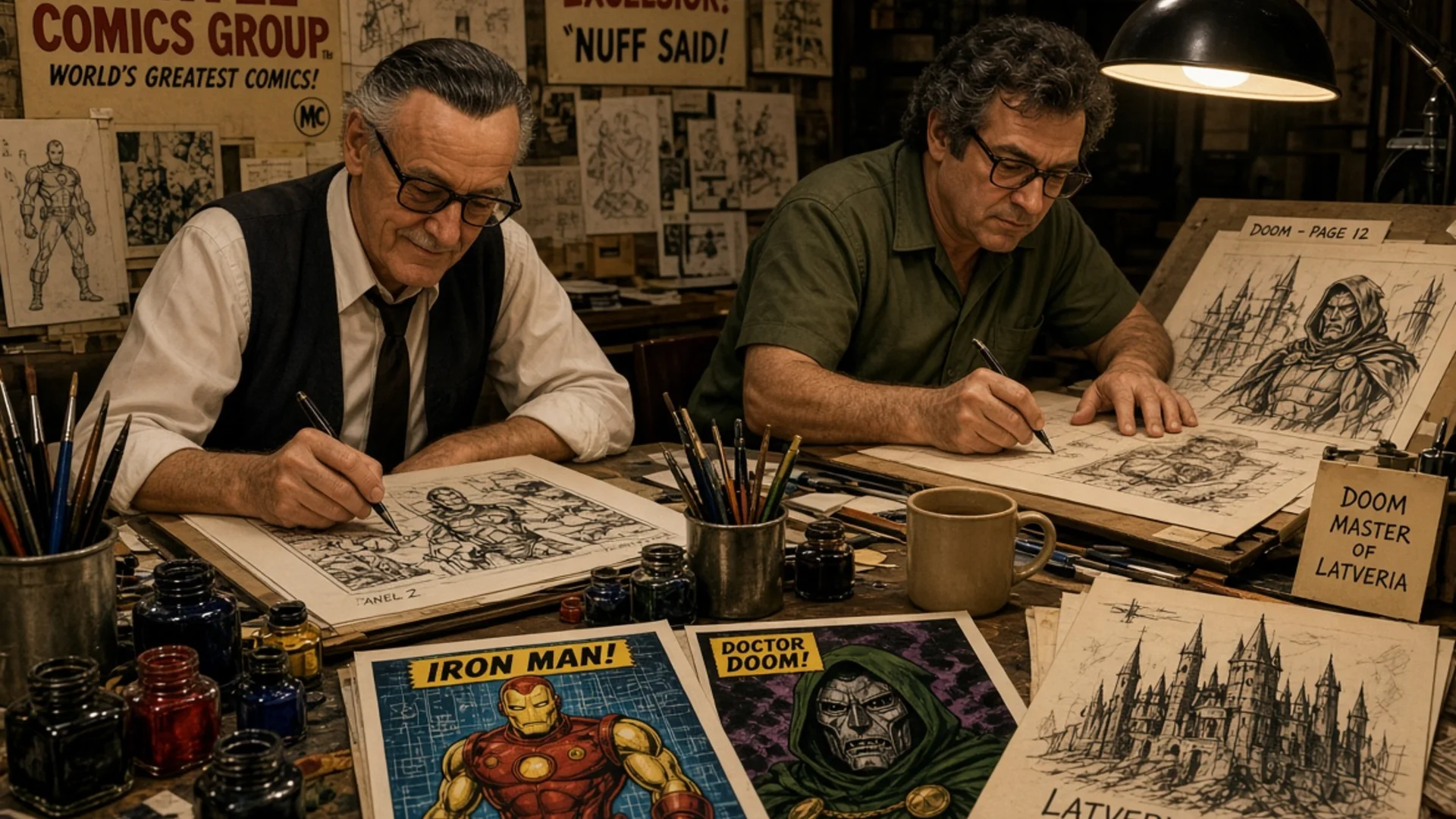
Iron Man first appeared in Marvel's comics in 1963, a creation of Stan Lee and his collaborators. Doctor Doom5 got there first. Lee and Jack Kirby introduced him in 1962 as the armored ruler of a small European country and the Fantastic Four's arch-enemy. The film rights took their own winding road, from Universal in 1990 to Fox in 1996 to New Line in 1999, then back to Marvel in 2005, just in time for the bet.
The tech behind the tale.
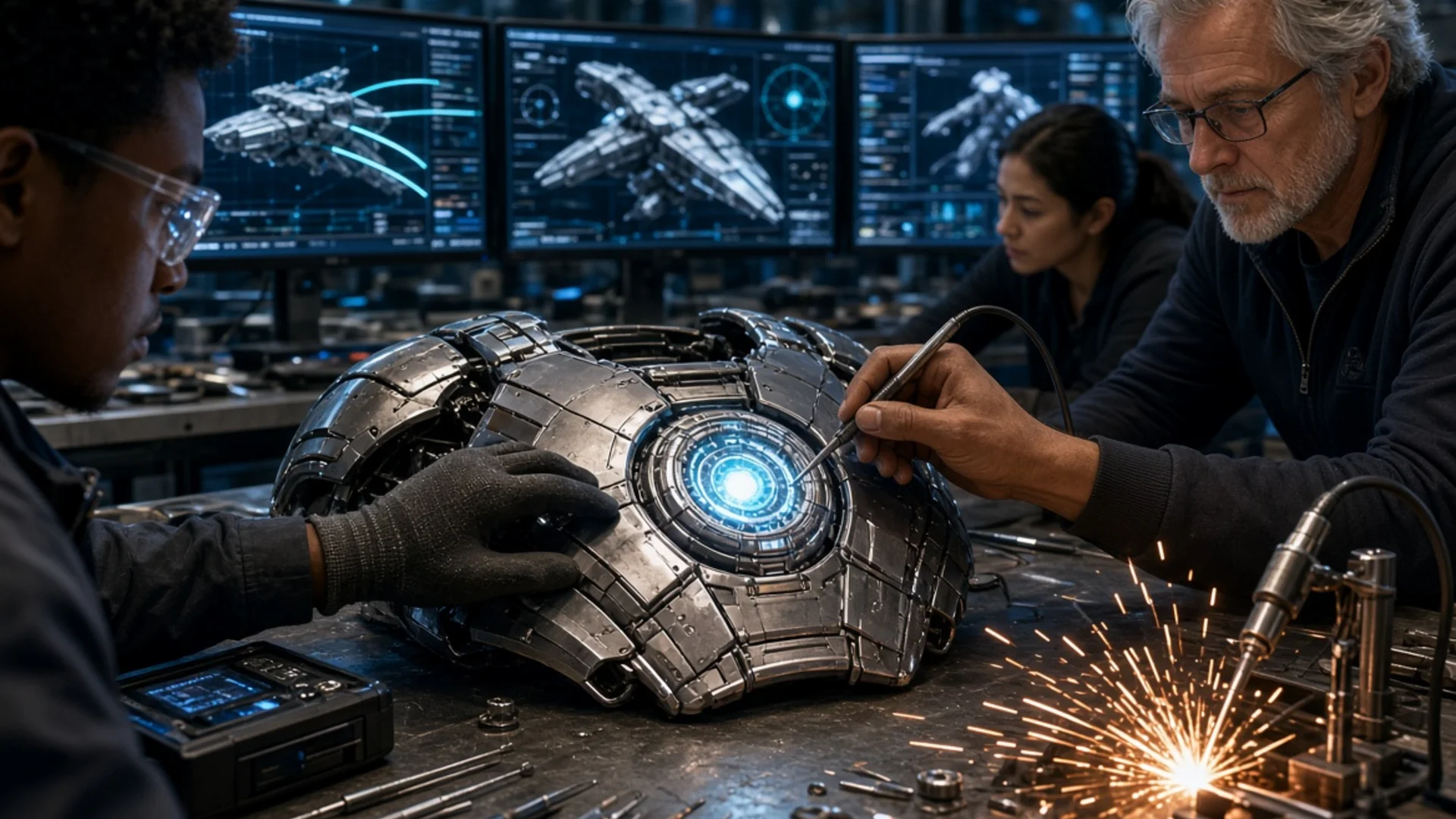
Stark's first suit runs on an arc reactor, a miniature power source he builds in a cave to keep shrapnel out of his heart, then scales up in his Malibu workshop. On set, much of the armor was real. Stan Winston's crew built suits the actors could wear, and Industrial Light & Magic took over in computer-generated versions for the flying and fighting. Doom has worn powered armor in the comics since before Iron Man existed, and writer David Michelinie once called him "Tony's reflection in a dark mirror." In one comics run, Doom even became Iron Man6.
The invisible hand.
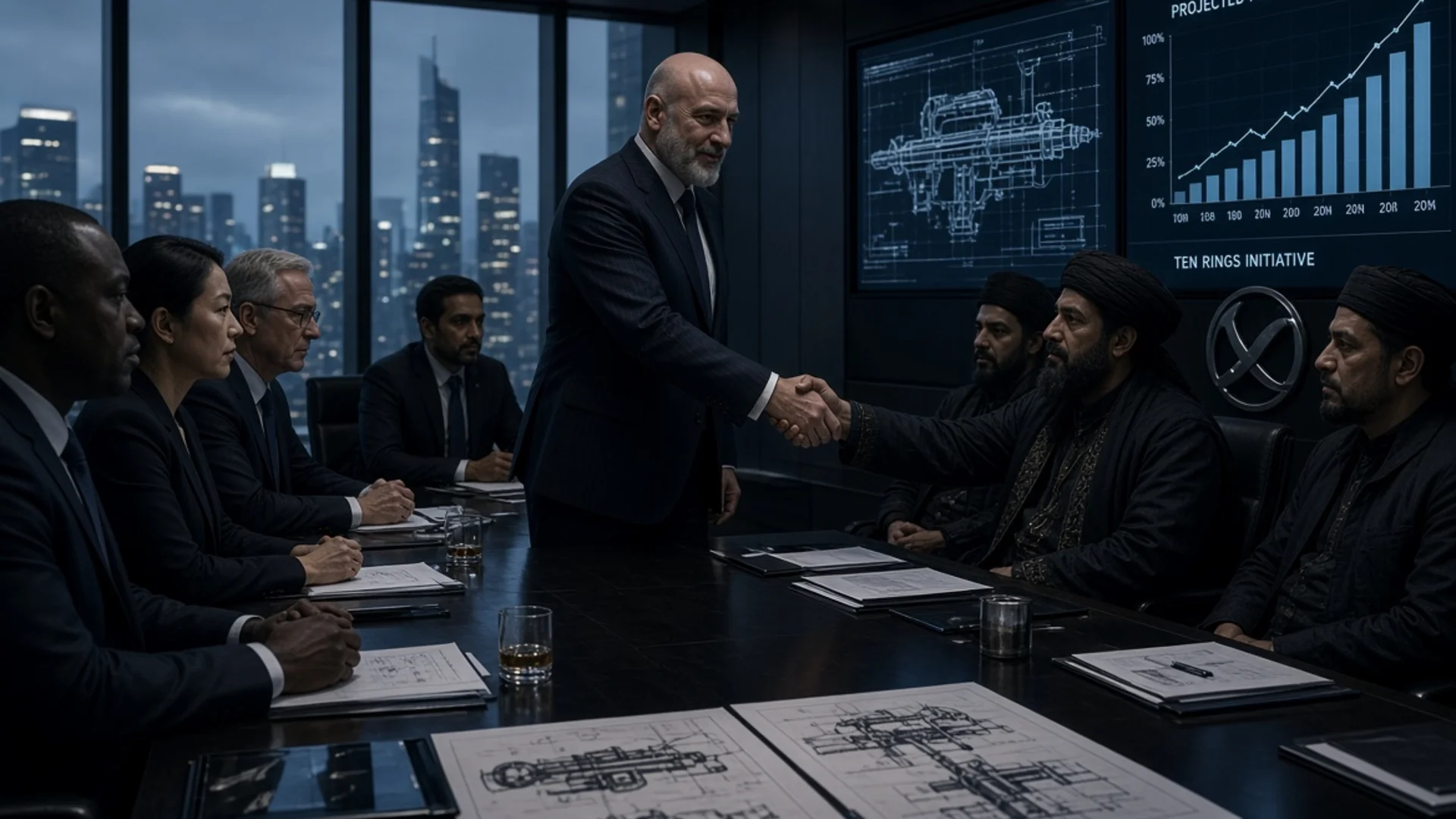
Stark Industries makes its money from war, and the film never pretends otherwise. When Stark announces he's done making weapons, he becomes the problem. Stane, his father's old partner, has been quietly selling Stark weapons to the Ten Rings, the group that kidnapped him, and turns on Stark to keep that revenue flowing. The villain is a business partner protecting a profit line. Real-world rights shaped Doom's return too. He and the Fantastic Four sat at Fox for years, out of Marvel's reach, until Disney bought Fox's film studios for $71b in 20197. Without that deal, Downey couldn't be playing Doom.
By the numbers.
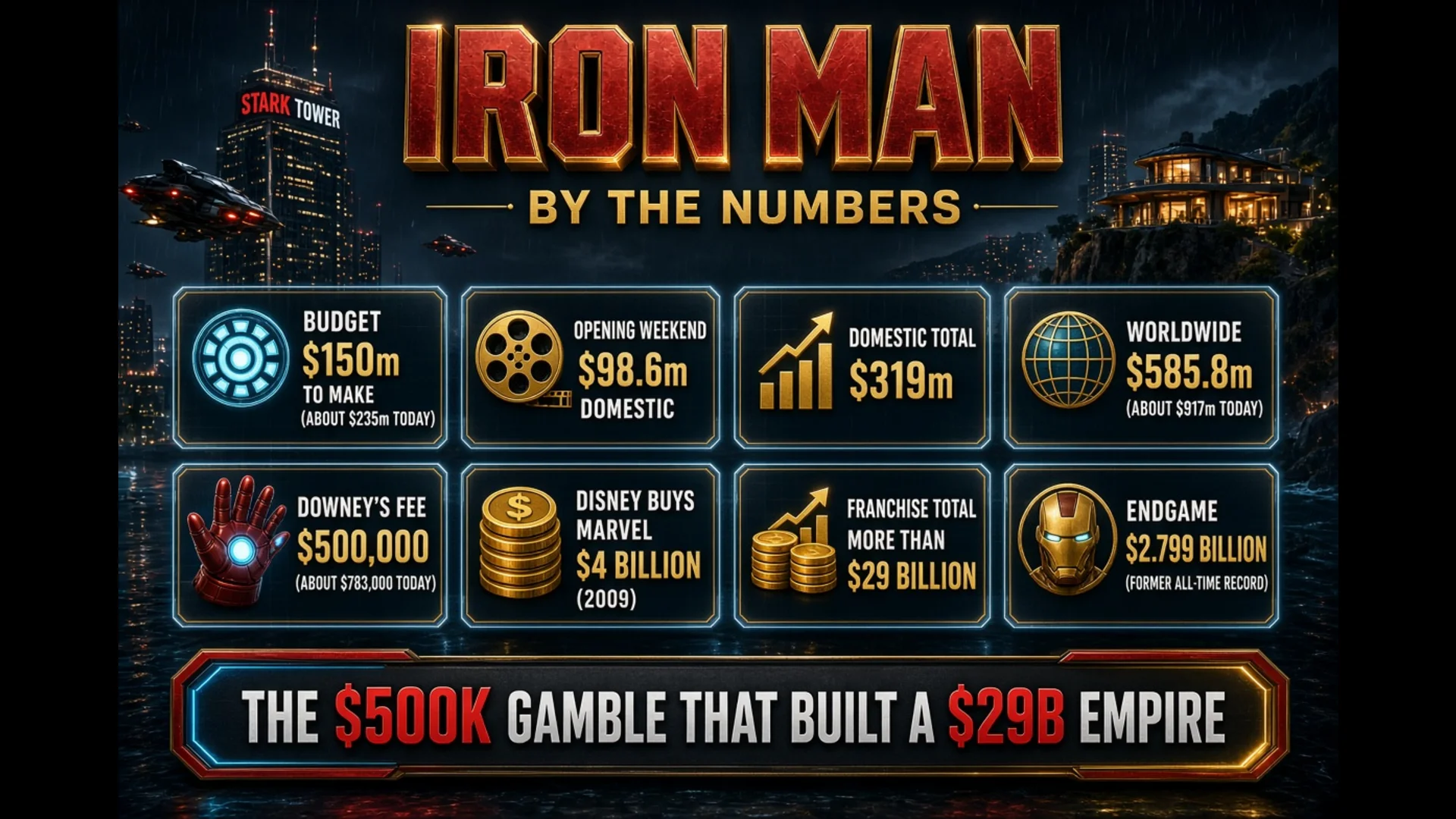
Iron Man cost about $150m to make, roughly $235m in today's dollars, and opened to $98.6m in North America. It finished with $319m there and $585.8m worldwide, about $917m today. Downey's $500,000 fee works out to about $783,000. The return didn't stop at the box office. Disney bought Marvel for $4b in 2009, and the franchise Iron Man started has grossed more than $29b, including Avengers: Endgame8, for a time the highest-grossing film ever.
Figures adjusted to 2026 dollars using BLS CPI (~1.57x).
Why it endures.
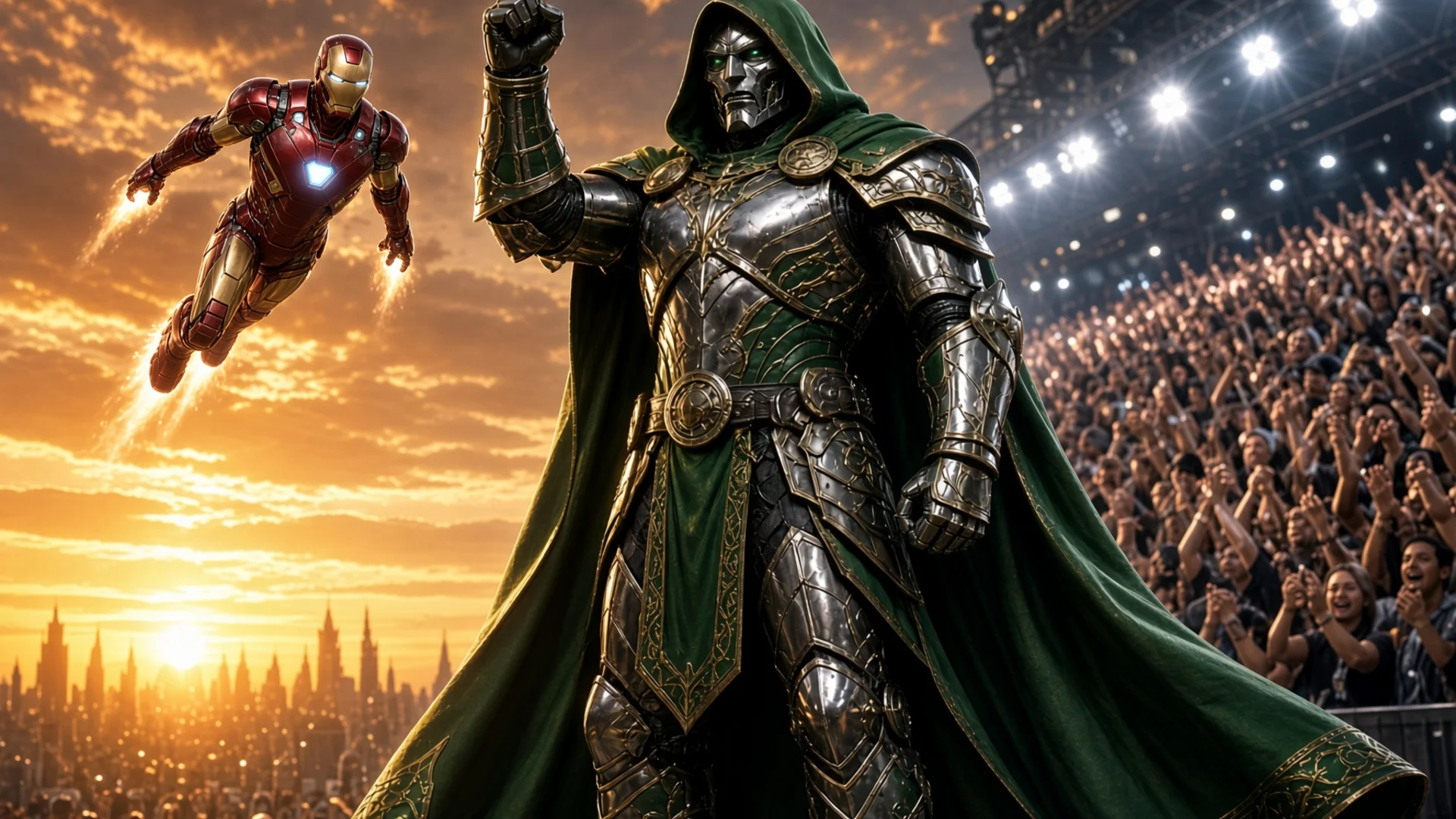
Stark's story ended in Endgame, with a sacrifice that closed the arc Iron Man opened in 2008. Downey's didn't. Marvel unveiled him as Doom at Comic-Con in 2024, where he told the crowd, "New mask, same task." His first appearance in the role came quietly, face unseen, in a mid-credits scene of The Fantastic Four: First Steps9. Avengers: Doomsday arrives December 18, and Avengers: Secret Wars10 is set for December 2027. In between, the Library of Congress added Iron Man to the National Film Registry11 in 2022. The risk Marvel almost passed on is now the threat its heroes are lining up against.
Side notes
-
Iron Man** trailer** — Marvel debuted a new Iron Man trailer during Super Bowl XLII in February 2008, three months before the film opened. Watch the trailer · Learn more ↩
-
Avengers: Doomsday — Joe and Anthony Russo, who directed Avengers: Endgame, return for the film, which opens December 18, 2026, with a reported runtime of 165 minutes. Watch the trailer · Get tickets ↩
-
Marvel's collateral — The 10 characters pledged against the 2005 loan were Captain America, the Avengers, Nick Fury, Black Panther, Ant-Man, Doctor Strange, Hawkeye, Shang-Chi, Cloak & Dagger, and Power Pack. Learn more ↩
-
Lost roles — Before Iron Man, insurance problems cost Downey parts in Wild Things and Woody Allen's Melinda and Melinda, and he was fired from Ally McBeal after a 2001 arrest. Learn more ↩
-
Doctor Doom — Doom debuted in The Fantastic Four #5, cover-dated July 1962, and rules the fictional nation of Latveria, which gives him diplomatic immunity for most crimes committed abroad. Learn more ↩
-
Infamous Iron Man — Brian Michael Bendis and Alex Maleev's series, which ran from 2016 to 2018, cast a reformed Doom as a stand-in Iron Man while Tony Stark lay in a coma. Learn more ↩
-
Disney's Fox deal — The purchase closed March 20, 2019, and brought the X-Men and the Fantastic Four back under the same roof as the Avengers. Learn more ↩
-
Avengers: Endgame — The 2019 film grossed about $2.799b and held the all-time record from July 2019 until March 2021, when a re-release of Avatar took it back. Learn more ↩
-
The Fantastic Four: First Steps — Vanessa Kirby has said Downey shot the 2025 mid-credits scene during production of Avengers: Doomsday. Learn more ↩
-
Avengers: Secret Wars — The follow-up to Doomsday is set to close out Marvel's current saga on December 17, 2027, though reports suggest production could slip. Learn more ↩
-
National Film Registry — The Library of Congress selected Iron Man in 2022, one of the 25 films it adds each year for their cultural, historical, or aesthetic significance. Learn more ↩