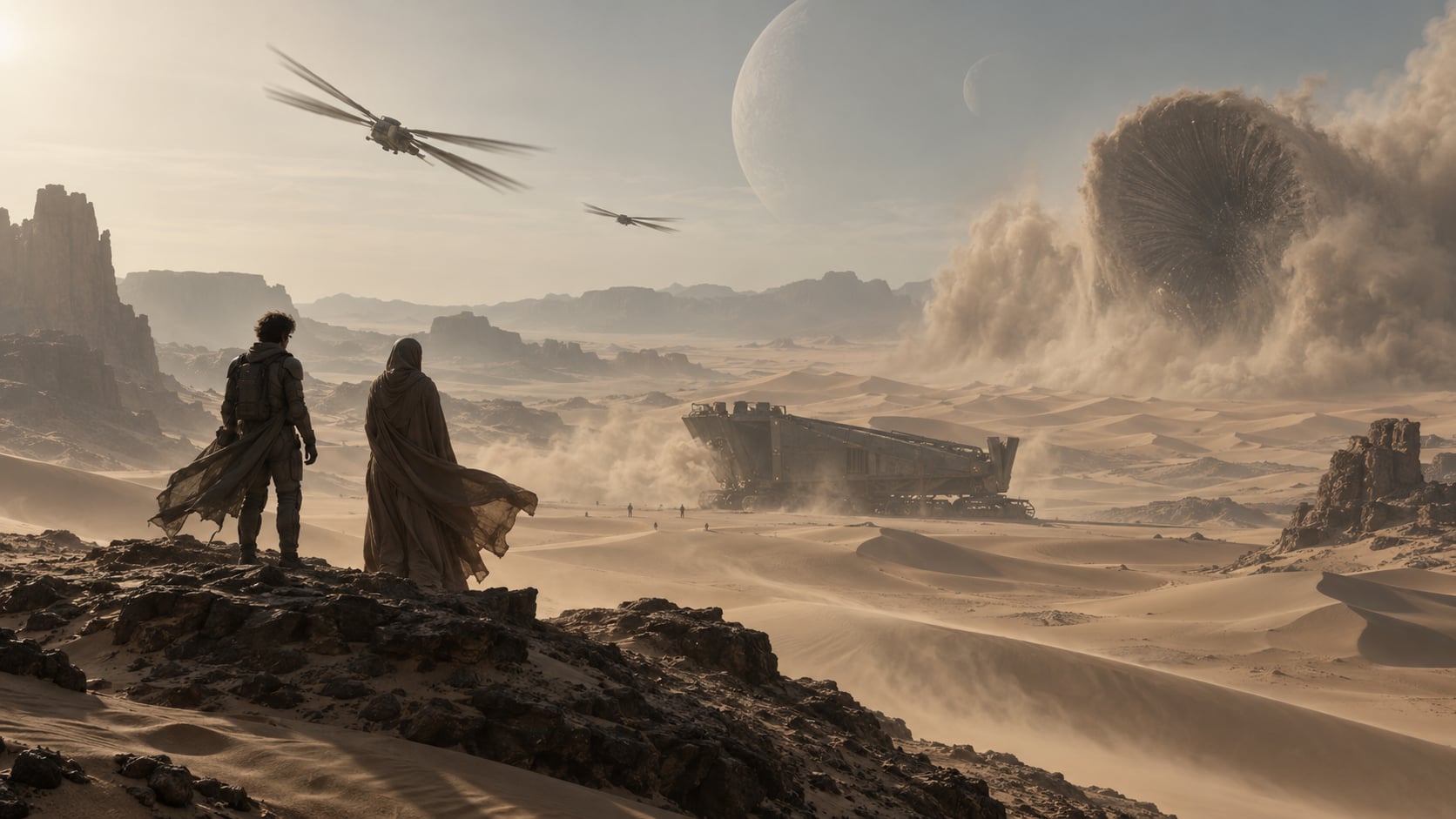
- Dune failed twice before Denis Villeneuve finally got it right in 2021.
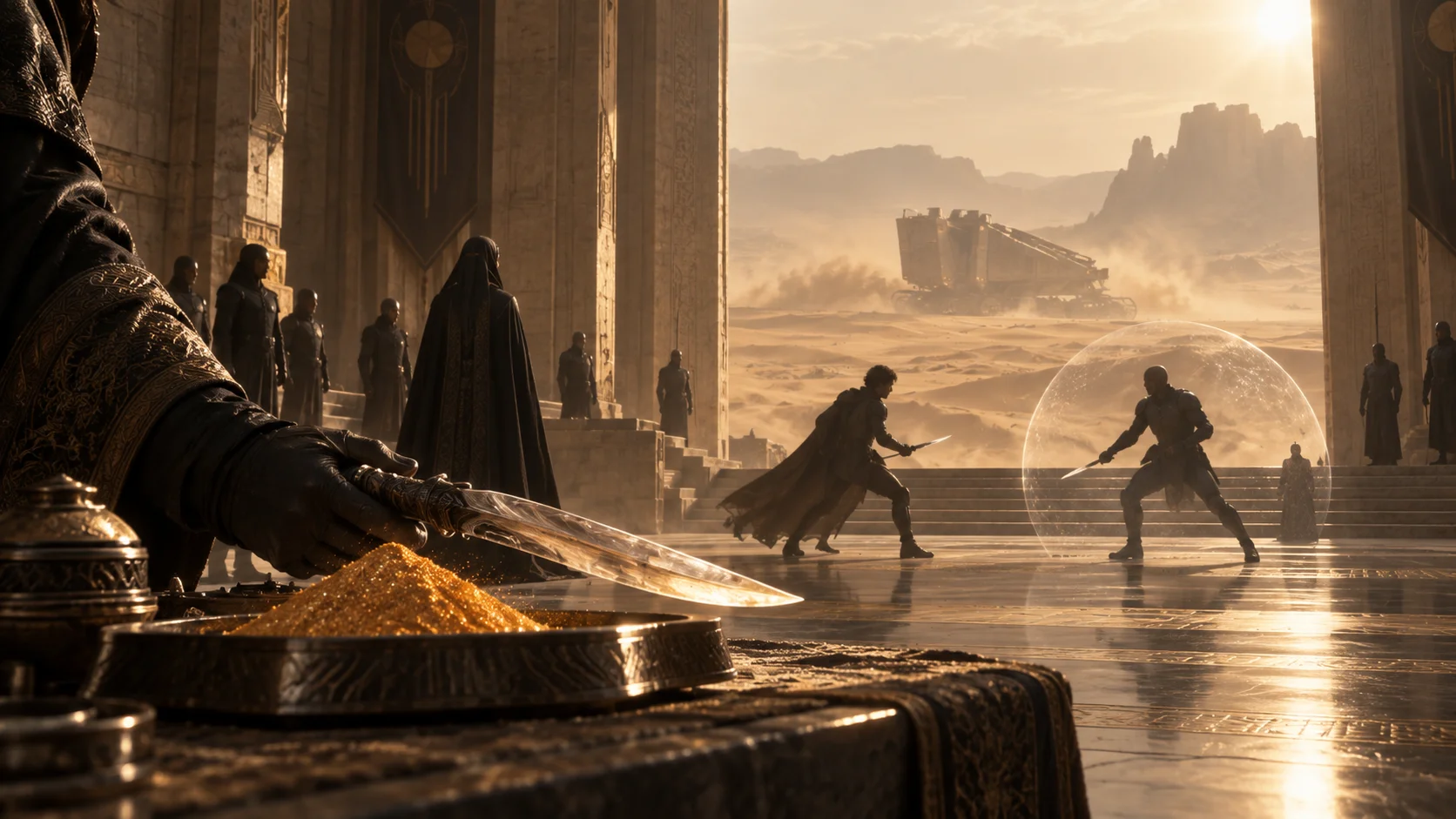
- Personal shields make guns pointless, so an interstellar empire still fights with knives.
- Arrakis’s spice supply decides which noble house holds power across the empire.
Intro.
Dune spent over fifty years failing to become a movie. A 1970s version collapsed before a single frame was shot1, and a 1984 adaptation arrived so mangled its own director disowned the cut2. Denis Villeneuve finally cracked it in 2021 by trusting the strangest part of Frank Herbert's novel: an empire so wary of thinking machines it still settles disputes with knives, propped up by a drug grown on one hostile planet. On December 18, 2026, a third film closes out the trilogy he built from that first, unlikely win.
Here's the plot.
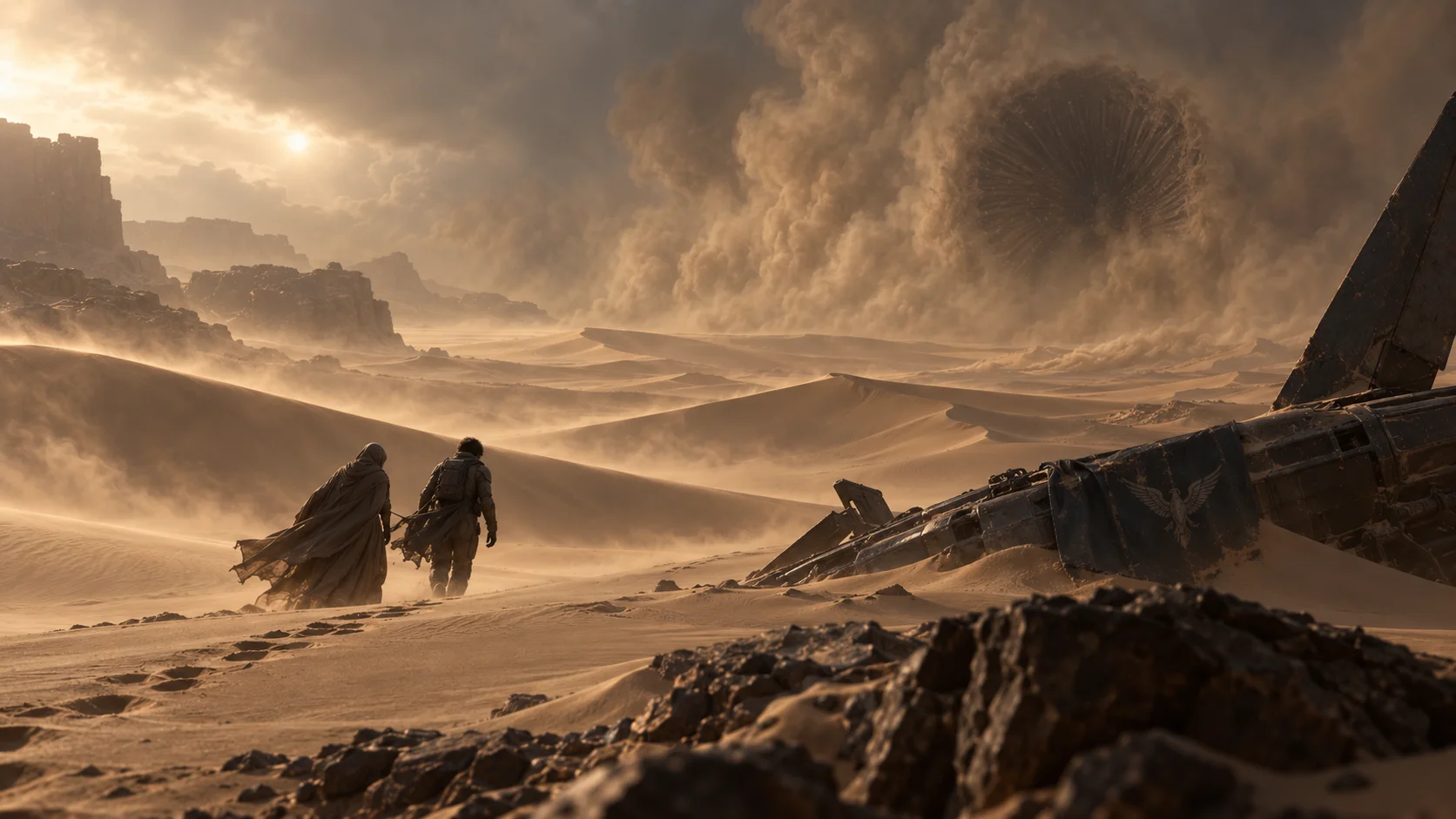
Arrakis, the far future. House Atreides is handed stewardship of the desert planet, the only source of the spice melange, and walks straight into a trap set by rivals House Harkonnen and the Emperor himself. Duke Leto is dead within the first act. His son Paul and his mother Jessica escape into the open desert, where the native Fremen may be the only thing standing between Paul and a prophecy he never asked for. It sounds like a straightforward hero's journey. Villeneuve keeps undercutting that read, framing Paul's rise as warning as much as triumph.
Things you didn't know.
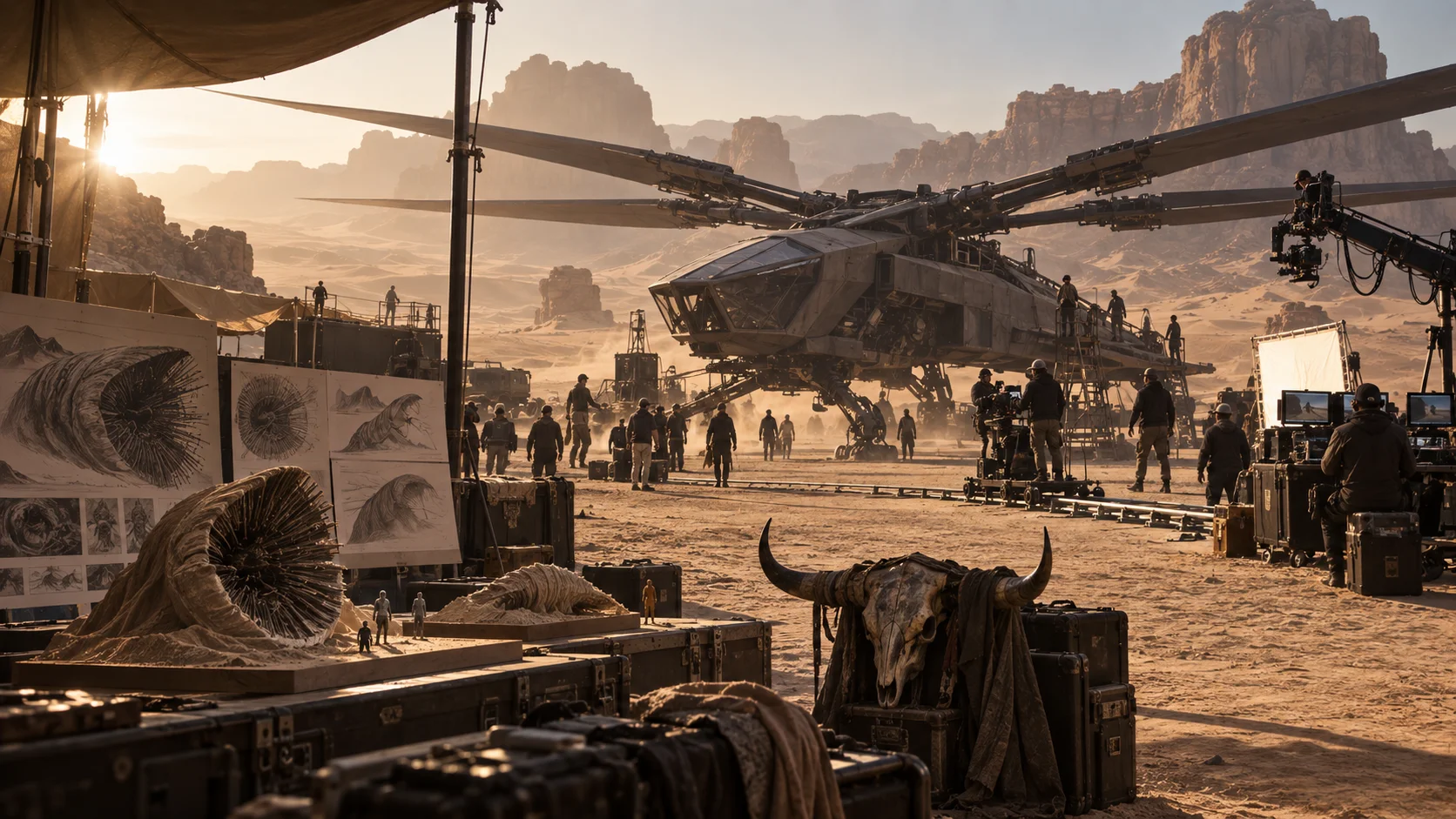
Two working ornithopter models, one 48 feet long and one 75, had to be flown to locations in Hungary and Jordan aboard an Antonov cargo plane, since nothing smaller could carry them. The visual effects team spent over a year studying how real animals move before deciding how a sandworm hundreds of feet long should move on screen. Oscar Isaac filmed Duke Leto's death scene nude and had a bull's head placed on set as a deliberate omen.
The director's gamble.
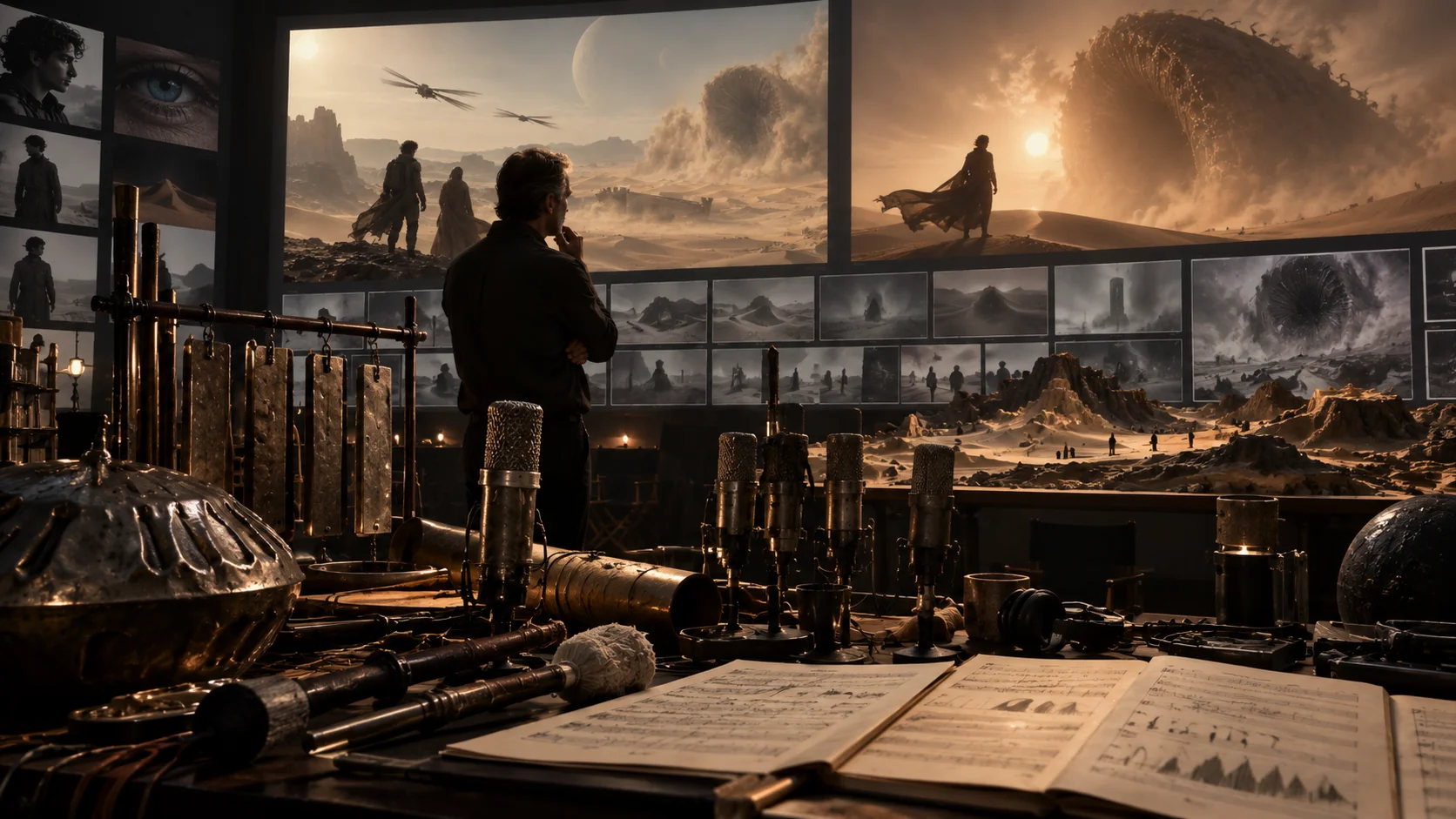
Villeneuve called adapting Dune a longstanding dream as far back as 2016, and made Arrival and Blade Runner 2049 first, partly to prove to a studio he could be trusted with it. Confirmed as director in February 2017, he pitched the project as two films from the start, loosely modeled on how the It films split their source novel. What nearly broke it: Warner Bros.'s decision to release the film simultaneously on HBO Max mid-pandemic, which pushed Villeneuve to go public with doubts a sequel would ever get made. The score carried its own gamble. Hans Zimmer turned down Christopher Nolan's request to score Tenet so he could work on this film instead, then built custom instruments from scratch to get sounds that didn't already exist, calling the result some of the most personal work of his career.
The cast, and the roads not taken.
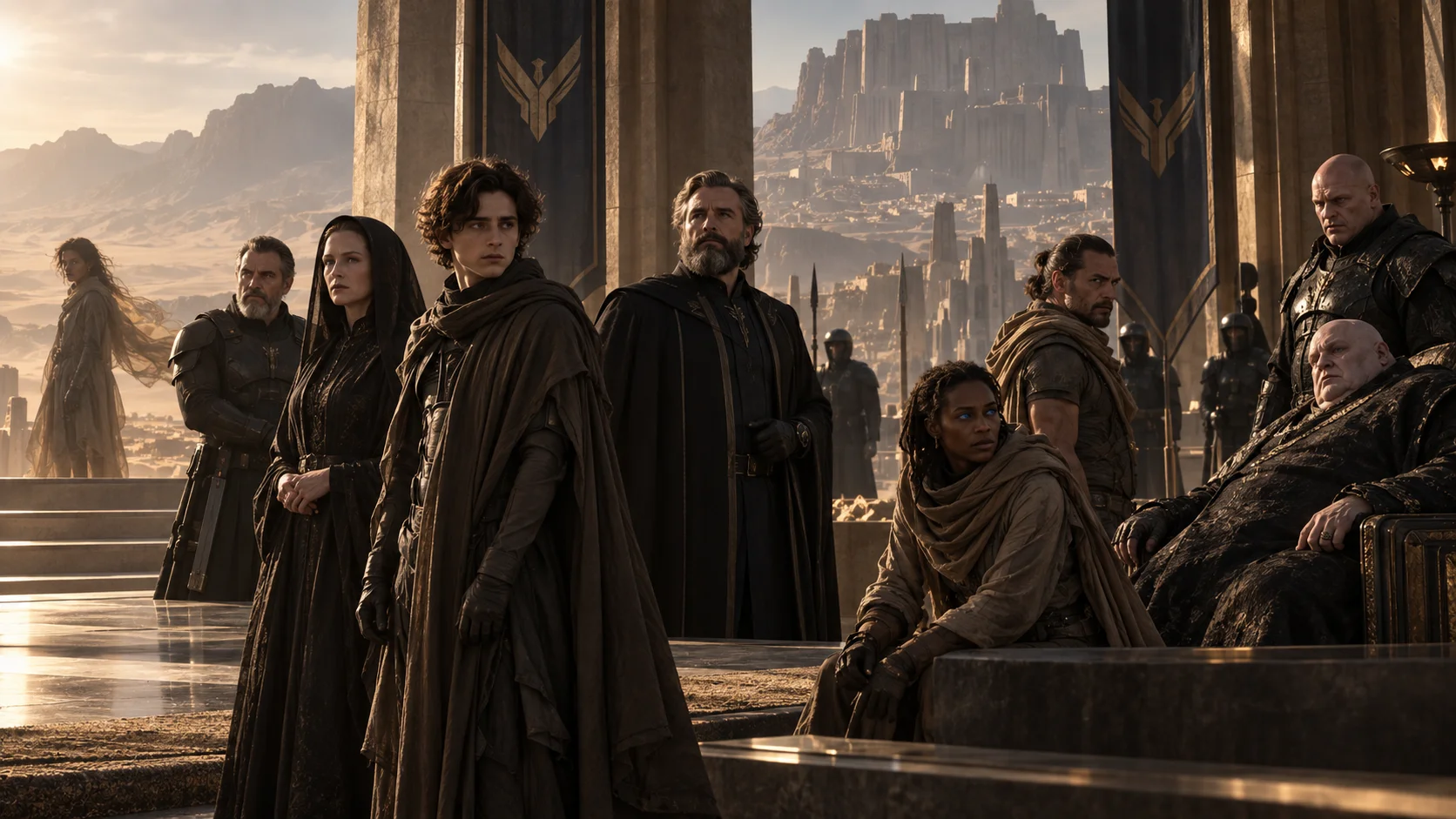
Timothée Chalamet, Rebecca Ferguson, Oscar Isaac, Josh Brolin, Stellan Skarsgård, Zendaya, Jason Momoa, Javier Bardem, and Dave Bautista rounded out the cast. Liet Kynes, a male character in the novel, was rewritten as a woman at co-writer Jon Spaihts's suggestion, an idea Villeneuve says he accepted immediately. Chalamet was never really a competition: Villeneuve has said he had no alternate in mind for Paul. Ferguson turned Jessica down at first, worried the role sat too close to one she'd already played. Bardem was reportedly stunned to be offered Stilgar, since it was the one role in the whole production he'd wanted for himself. Zendaya's Chani got just seven minutes of screen time across a two-and-a-half-hour film, a gap between marketing and reality Villeneuve later addressed directly, promising her character far more room once the story reached its second half.

Where it came from.
Everything traces back to Frank Herbert's 1965 novel, Dune, which grew out of him watching efforts to stabilize migrating sand dunes on the Oregon coast3. He spent five years researching and writing, folding in his interests in ecology, feudal power, and the history of the Middle East and Central Asia. Villeneuve and co-writers Jon Spaihts and Eric Roth adapted roughly the first half of the book alone, restraint that's rare for a story this dense.
The tech behind the tale.
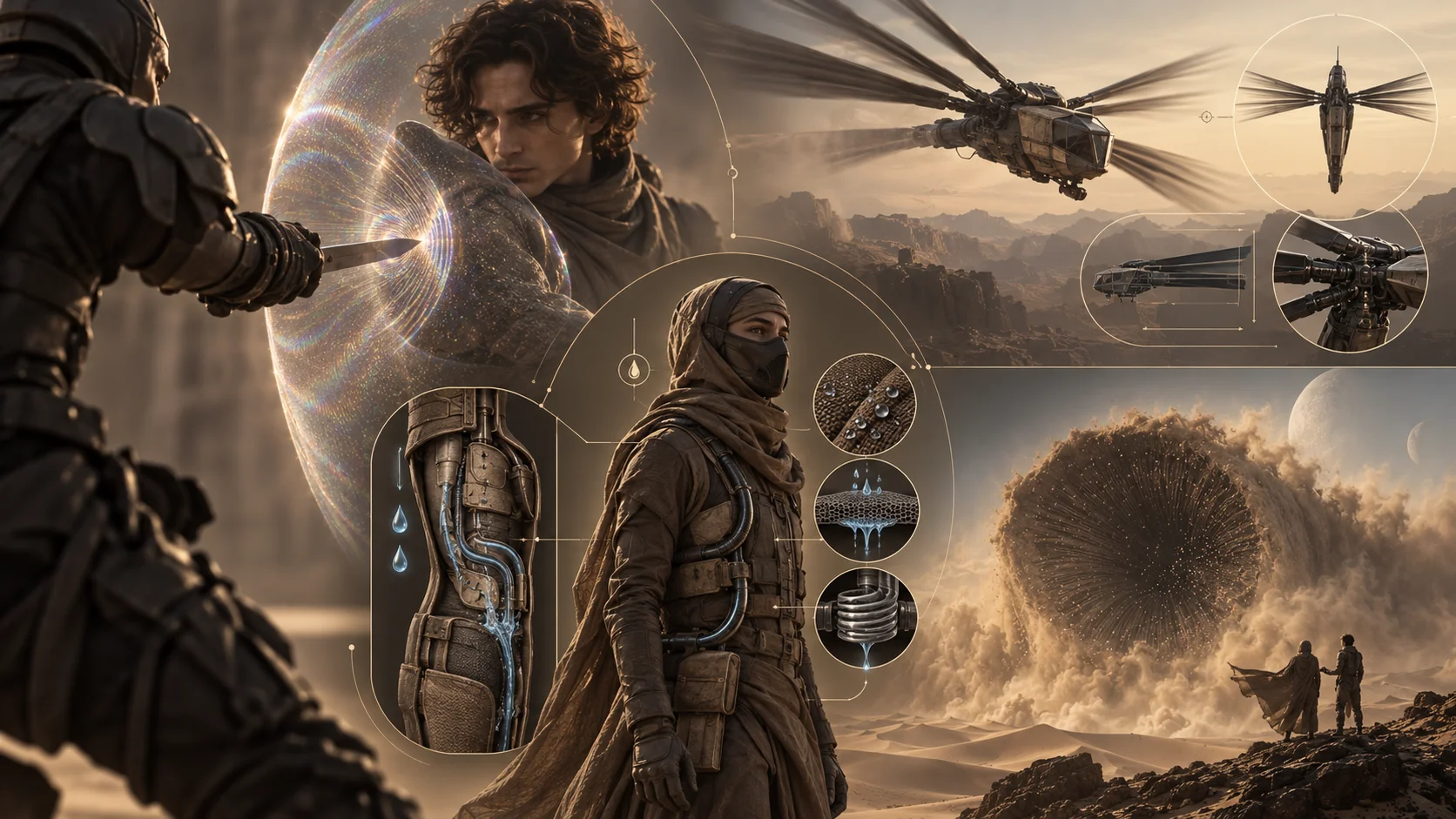
The Holtzman shield reorganizes everything else: a personal force field that stops anything moving fast, so a gun is nearly useless against it while a blade, moved slowly enough to slip past, is not. The result is a civilization that still fights hand to hand despite building starships. None of this runs on artificial intelligence. Computers are effectively banned across this future4, replaced by trained human Mentats. Stillsuits solve a smaller, stranger problem: a full-body suit that reclaims sweat, urine, and breath moisture, cutting daily water loss from more than 10 liters to about 5 milliliters. Ornithopters, insect-winged aircraft on jet-assisted wings, move people across a planet with no real infrastructure, while the sandworms they dodge make sure nothing about Arrakis stays simple. Even Fremen secrecy runs on technology of a kind: a constructed language5 built so outsiders can't follow along.
The invisible hand.
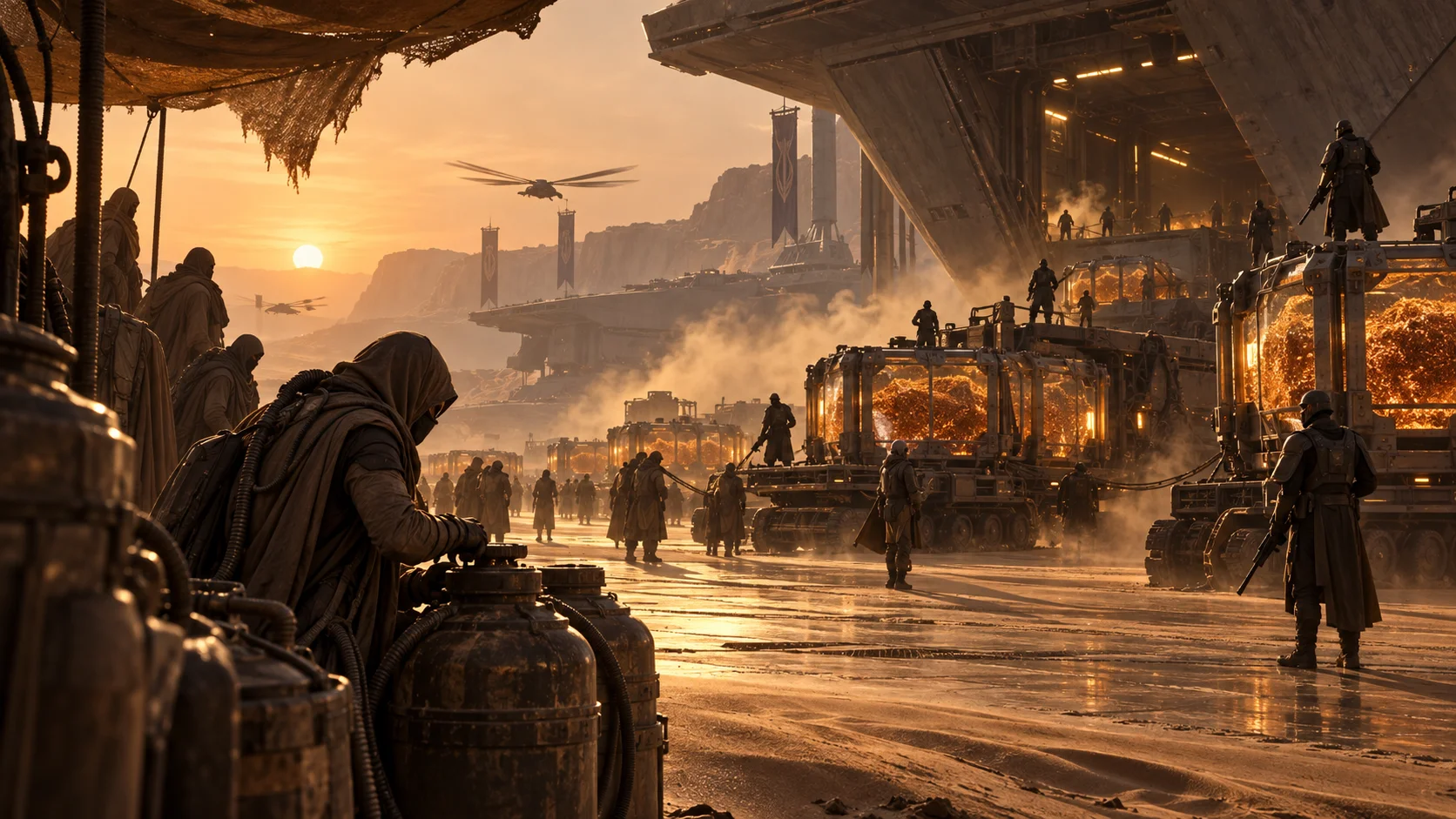
Arrakis is the only source of melange spice, required for interstellar travel and prized for extending life, and its trade runs through CHOAM6, a commerce cartel the Great Houses hold shares in roughly proportional to their power. Whoever controls Arrakis's spice production controls CHOAM, and whoever controls CHOAM controls most of the empire's wealth. House Atreides's entire arc here is being handed that control, then having it torn away by force. Money on Arrakis itself works differently and just as ruthlessly: water is the real currency7, guarded and rationed by Fremen who die defending secret reserves the way another culture defends a bank vault. Stillsuits and moisture-sealed architecture aren't background color. They're the economy, worn on the body.
By the numbers.
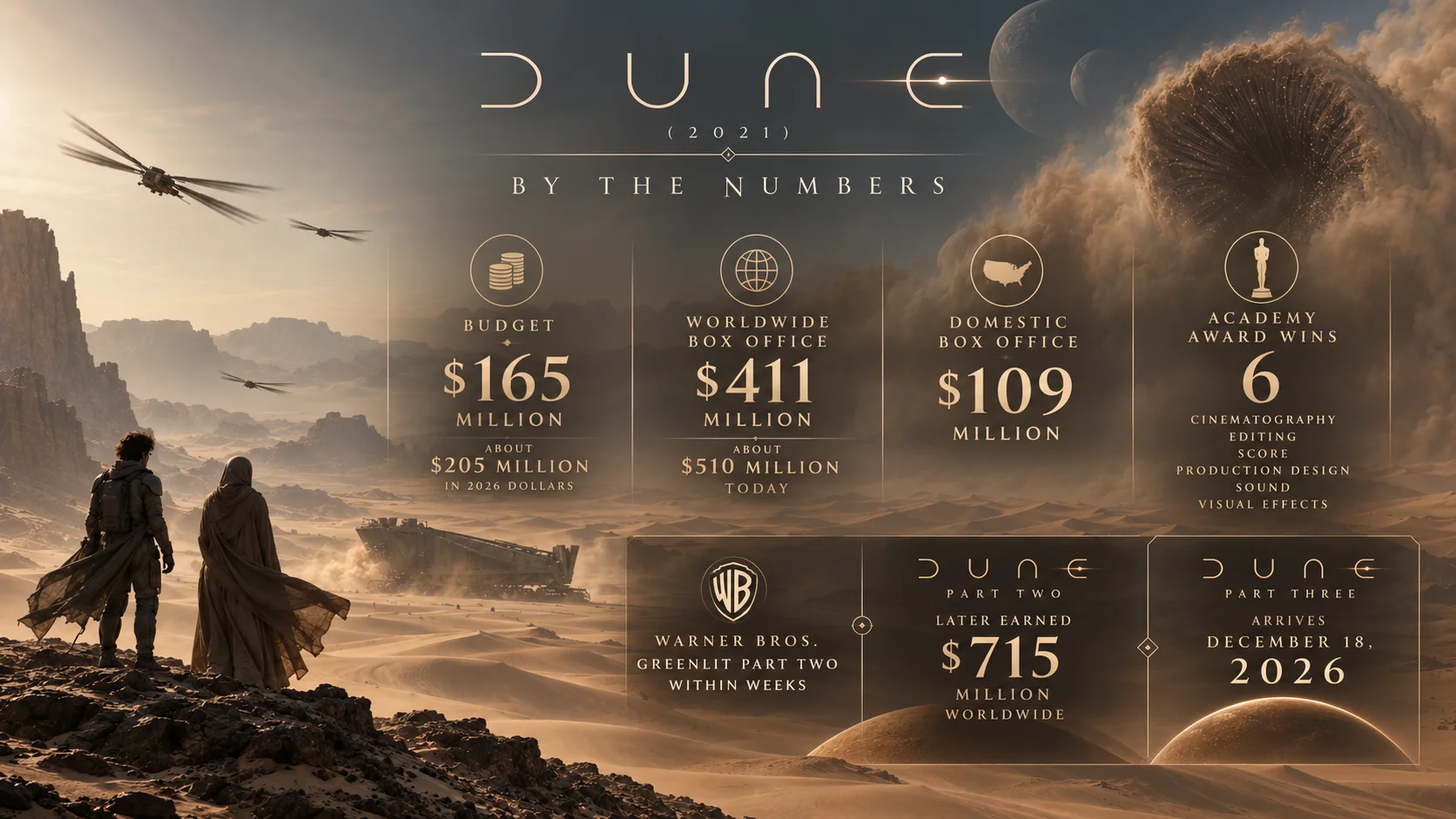
Dune cost about $165 million to make, roughly $205 million in 2026 dollars, and didn't need a rescue arc the way Blade Runner or The Wolf of Wall Street did. It earned $411 million worldwide, about $510 million today, on a $109 million domestic take: a genuine hit, not a slow-burn cult rehabilitation. Six Academy Award wins followed, mostly in the craft categories that make a film feel real: cinematography, editing, score, production design, sound, visual effects. Proof came fast. Warner Bros. greenlit Dune: Part Two within weeks, and that sequel's own $715 million worldwide take set up a third and final film, arriving this December.
Figures adjusted to 2026 dollars using BLS CPI (~1.24x).
Why it endures.
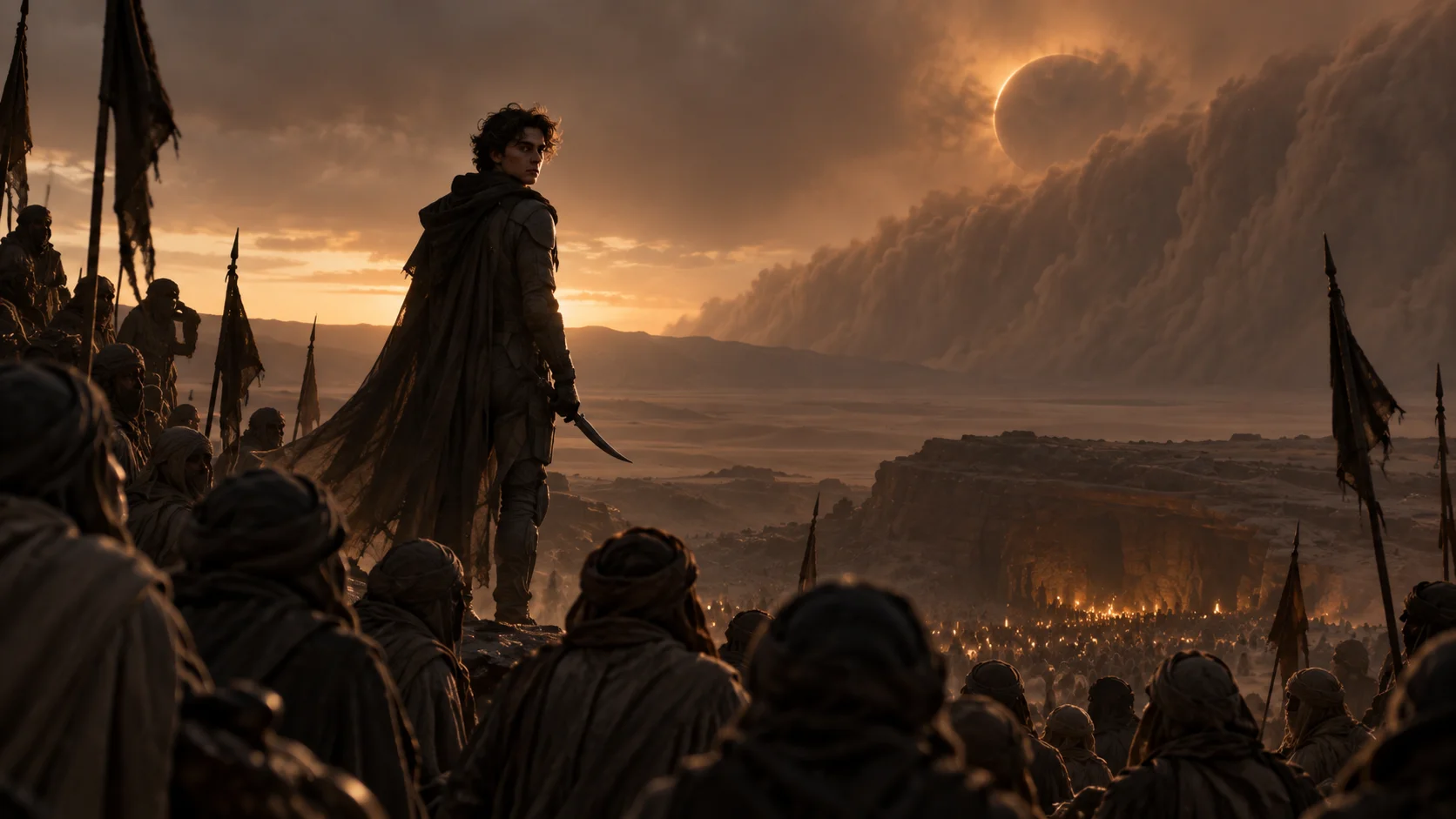
Dune spent over fifty years and two failed adaptations proving itself nearly unfilmable. The version that finally worked did it by trusting the world's own internal logic: a shield that makes knives more dangerous than guns, a drug that runs an empire's economy, a hero whose rise is framed as a warning rather than a triumph — over spectacle for its own sake. Part Two and the coming Part Three exist because this one got that balance right.
Side notes
-
Jodorowsky's Dune — Alejandro Jodorowsky spent years assembling a cast and crew that included Salvador Dalí, Orson Welles, Pink Floyd, and Mick Jagger before the production collapsed over cost and length; storyboards from the unmade film later circulated widely enough to influence Alien, Star Wars, and Flash Gordon. Learn more ↩
-
David Lynch's Dune (1984) — Lynch's version was recut by the studio against his wishes, performed poorly at the box office, and was disowned so completely by its director that some prints credit the film to "Alan Smithee," the industry's standard pseudonym for directors who want their name removed. Learn more ↩
-
Frank Herbert's Oregon research — Herbert's dune research began as a magazine assignment about the U.S. Department of Agriculture's efforts to use poverty grasses to stop sand dunes near Florence, Oregon from burying nearby towns and highways; the article was never finished, but the research became the seed of the novel. Learn more ↩
-
The Butlerian Jihad — Roughly ten thousand years before the events of the film, a galaxy-wide crusade destroyed nearly every thinking machine after an era of human enslavement to artificial intelligence, leaving behind a single commandment: thou shalt not make a machine in the likeness of a human mind. Learn more ↩
-
Chakobsa — Herbert's novel drew the Fremen's language from real-world Arabic. The film's linguists built a new constructed version instead, deliberately dropping the Arabic influence on the reasoning that any human language would have drifted past recognition over the story's thousands of intervening years. Learn more ↩
-
CHOAM's shareholding structure — The Combine Honnete Ober Advancer Mercantiles runs like a board of directors: the Great Houses hold the directorships, the Bene Gesserit and the Spacing Guild sit in as silent partners, and the Emperor can revoke any house's directorship at whim, which makes galactic commerce and galactic politics functionally the same system. Learn more ↩
-
Water as currency on Arrakis — Fremen custom treats water so seriously that spitting in someone's presence is a mark of respect, since it means offering up moisture from one's own body; the practice runs through an entire water discipline of technologies and behaviors built to hoard every drop on a planet with almost none to spare. Learn more ↩