
- Blade Runner flopped in 1982, then defined how we picture the future.
- Its tech—Voight-Kampff, "enhance," replicants—still outpaces what's real.
- Tyrell's economy runs on manufactured people, never openly priced.

Intro.
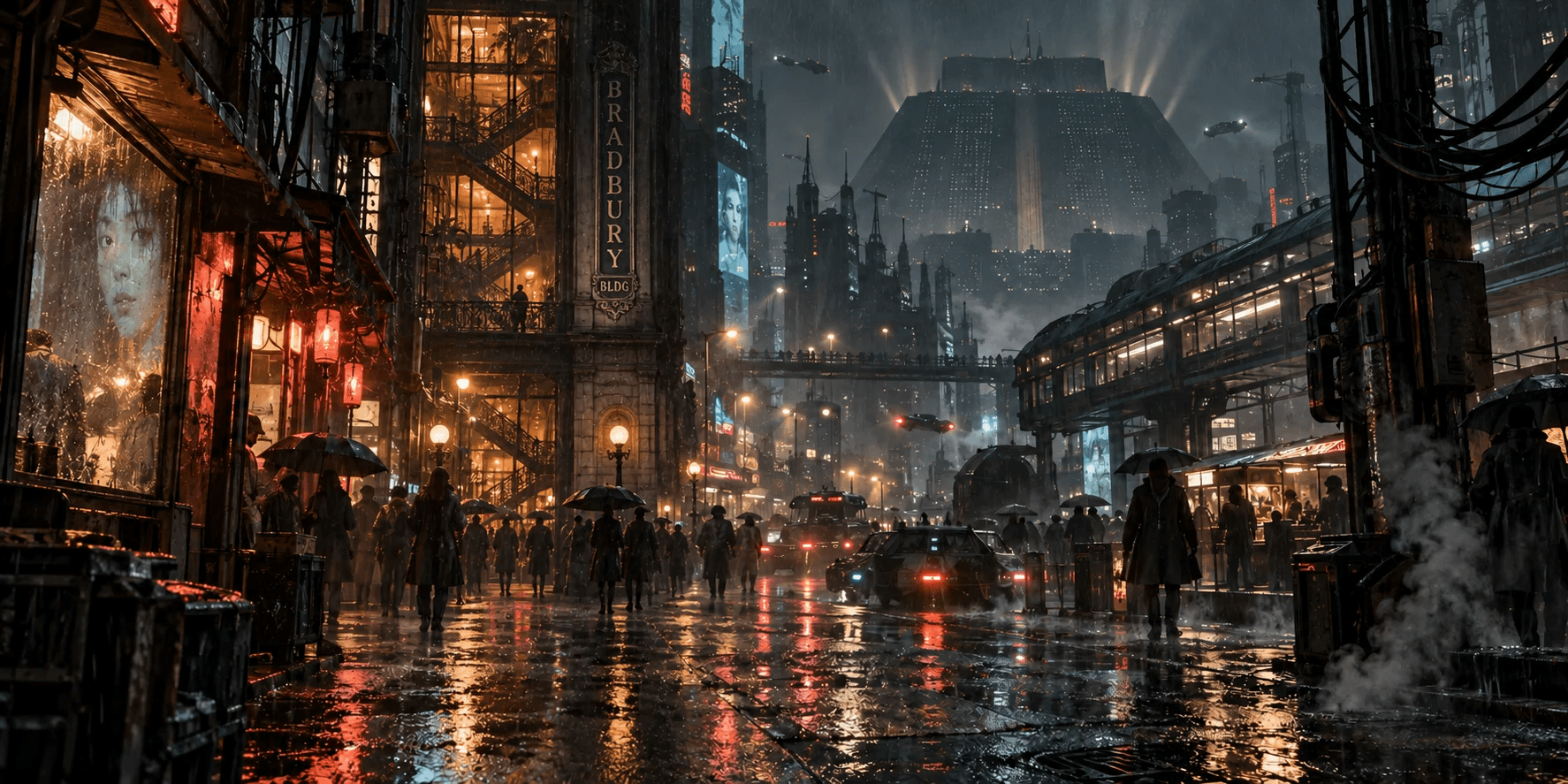
On a rainy June night in 1982, Blade Runner opened against E.T. and lost badly. Critics split, audiences shrugged, and Warner Bros. quietly moved on to the next release. Forty-some years later, the film's Los Angeles, all rain, neon, and corporate dread, has become the default picture of the future. Ridley Scott's flop won the argument it wasn't even trying to have.
Here's the plot.
Los Angeles, November 2019. Rick Deckard, a burned-out ex-cop, gets pulled back into service as a "blade runner," a bounty hunter who retires rogue replicants: bioengineered humans built to work the off-world colonies. Four of them have slipped back to Earth, hunting their maker at the Tyrell Corporation for a few more years of life. The premise sounds like pulp. What Scott built around it, a Los Angeles that feels lived-in and wired rather than shiny, is why the film outlasted its reviews. Nobody remembers the plot points first. They remember the rain.
Things you didn't know.
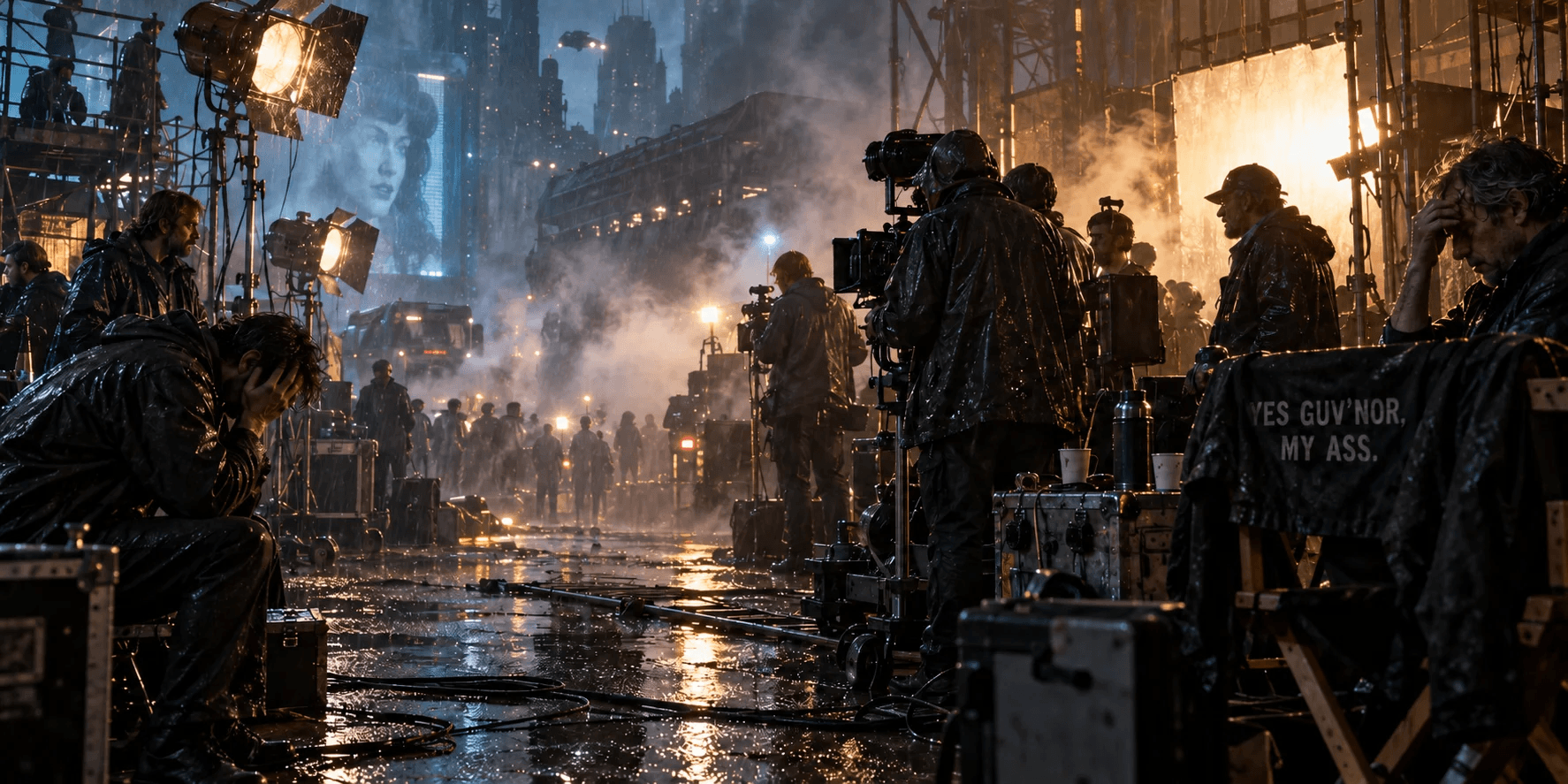
The shoot was miserable by design: endless rain, thick smoke, and nights that ran until dawn. Tension with the American crew got bad enough to produce T-shirts reading "Yes Guv'nor, My Ass." Weak test screenings forced a voiceover onto Harrison Ford that he hated; the fan story that he read it badly on purpose, to get it cut, is popular but disputed. That "happy ending" tacked onto the 1982 cut reused unused aerial footage from Kubrick's The Shining. Philip K. Dick died months before release, but he reportedly saw early effects footage and approved.
The director's gamble.
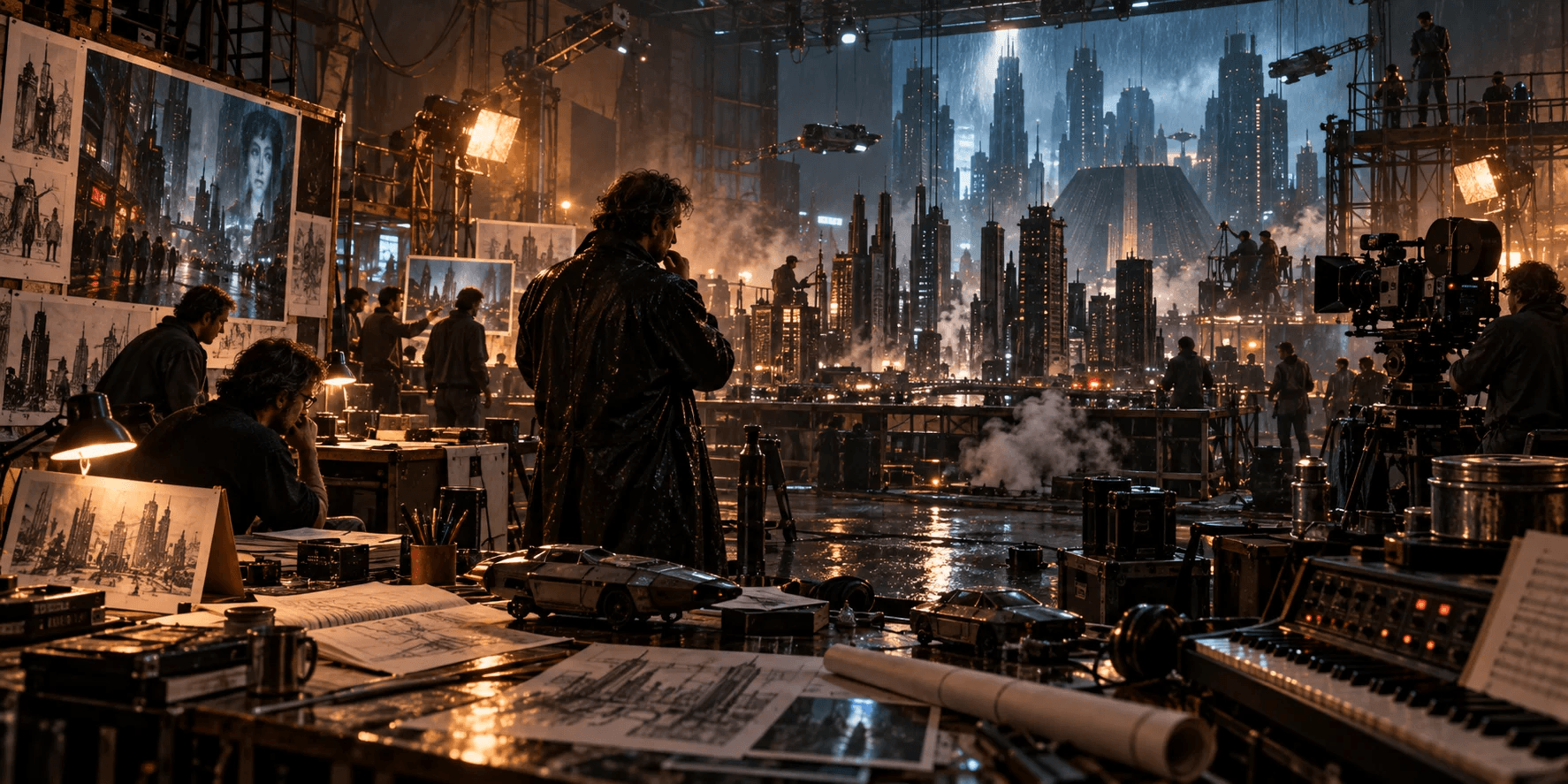
Scott took the job fresh off Alien, partly to work through his brother's death, and built a "retrofitted" Los Angeles with production designer Lawrence G. Paull, visual futurist Syd Mead, cinematographer Jordan Cronenweth, and a score from Vangelis that still gets sampled decades later. The shoot ran over budget and behind schedule from week one, straining its backers badly enough to threaten a completion-bond takeover. Scott didn't get final creative control until the 2007 Final Cut, the only version that's entirely his.
The cast, and the roads not taken.
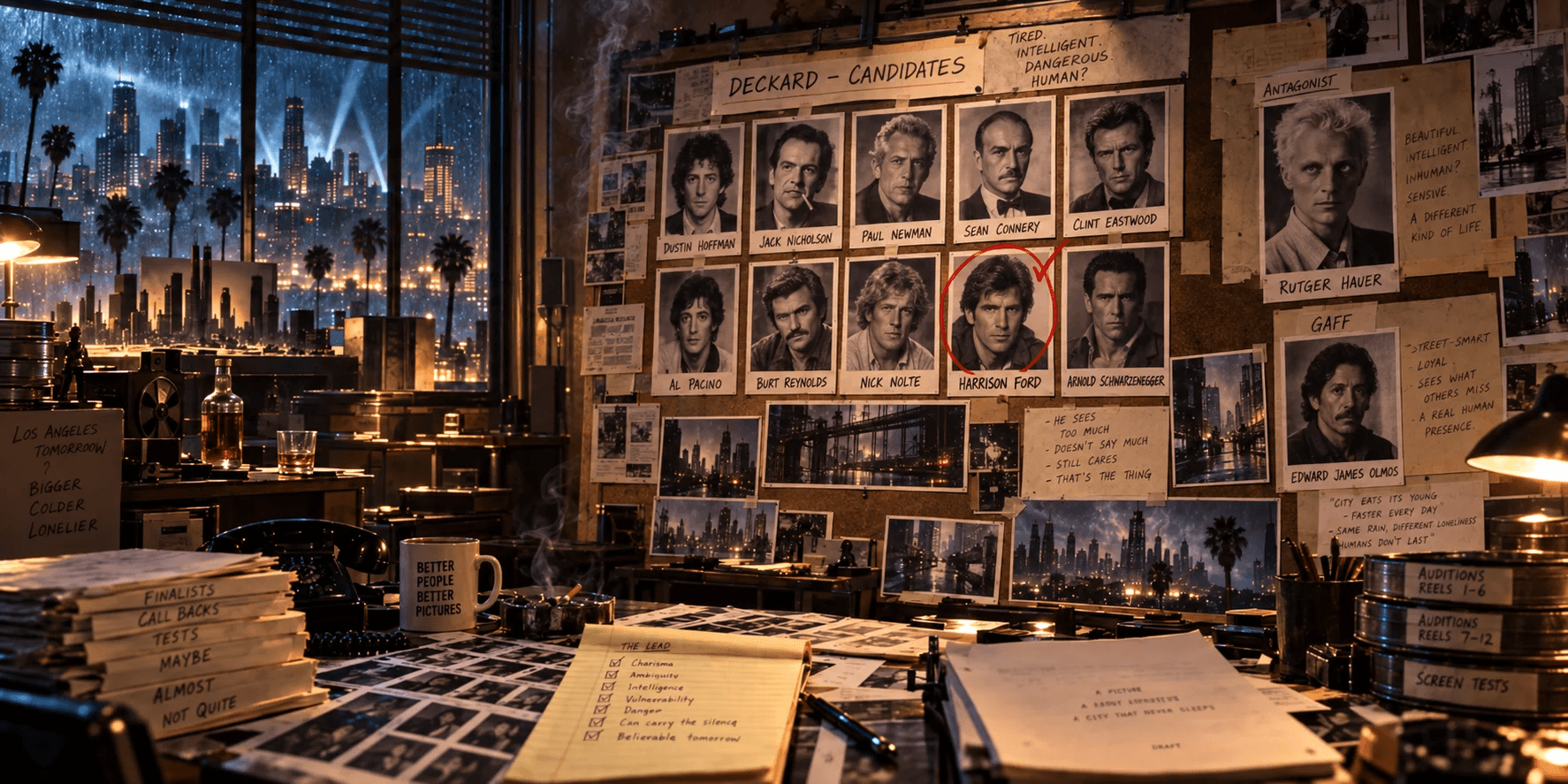
Deckard is one of Hollywood's great near-misses. Producers courted Dustin Hoffman for months before he chose Tootsie instead, and floated Jack Nicholson, Paul Newman, Sean Connery, Clint Eastwood, Al Pacino, Burt Reynolds, Nick Nolte, Peter Falk, and even Arnold Schwarzenegger. Scott picked Harrison Ford after watching Raiders of the Lost Ark, then had to fight financiers who didn't think Ford was a big enough name yet. Rutger Hauer gave Roy Batty a strange, serene menace, and Edward James Olmos invented Gaff's street patois, "Cityspeak," almost entirely on his own.
Where it came from.
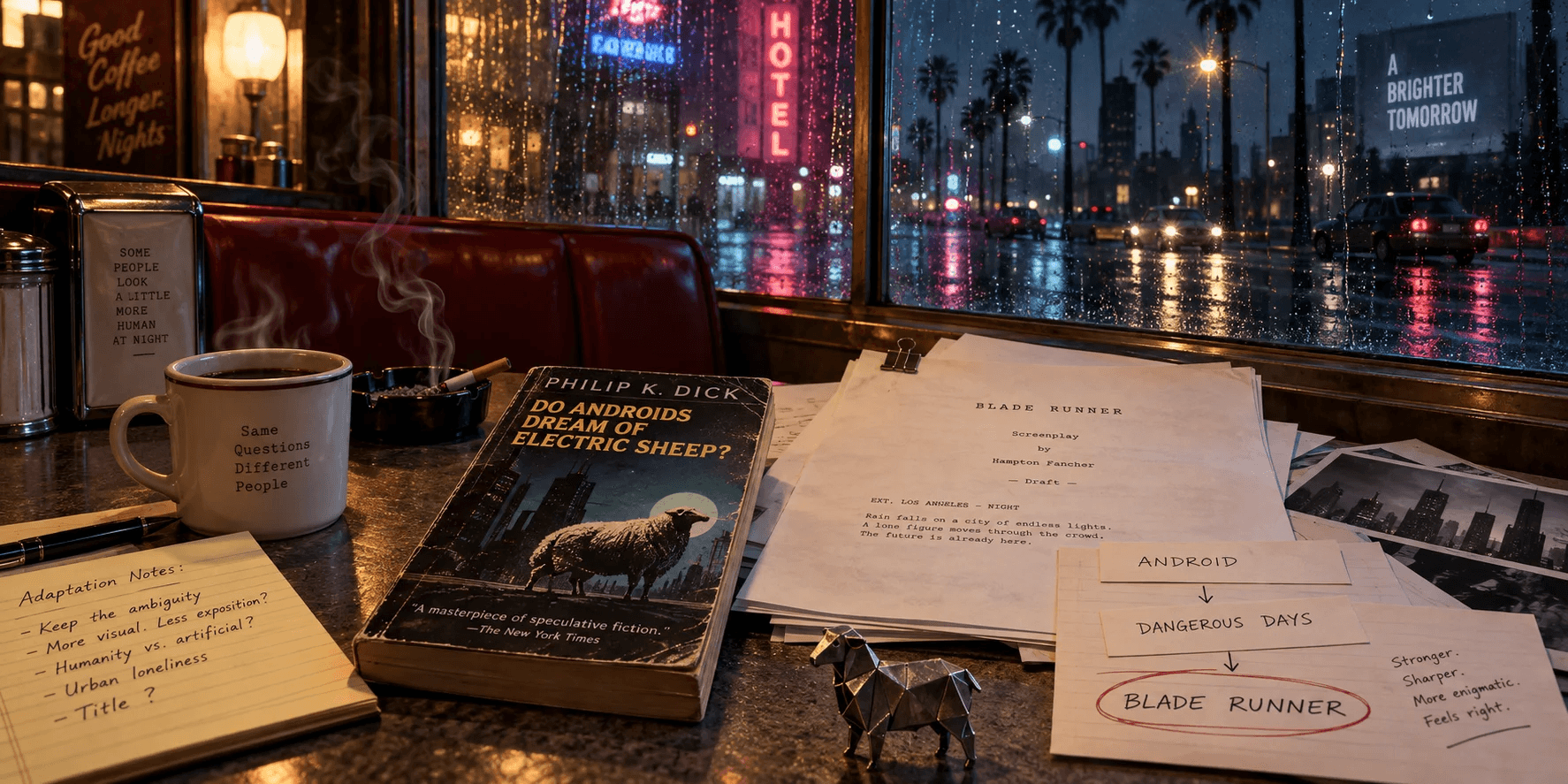
Everything traces back to Philip K. Dick's 1968 novel, Do Androids Dream of Electric Sheep? Hampton Fancher wrote the early drafts, and David Peoples rewrote them. Dick never named it Blade Runner: Fancher borrowed that title from a William S. Burroughs treatment, which itself borrowed from Alan E. Nourse's 1974 novel The Bladerunner. The studio bought the phrase for its sound alone, beating out Android and Dangerous Days. The film keeps Dick's central question and drops most of his plot, which is unusual for a book this beloved.
The tech behind the tale.
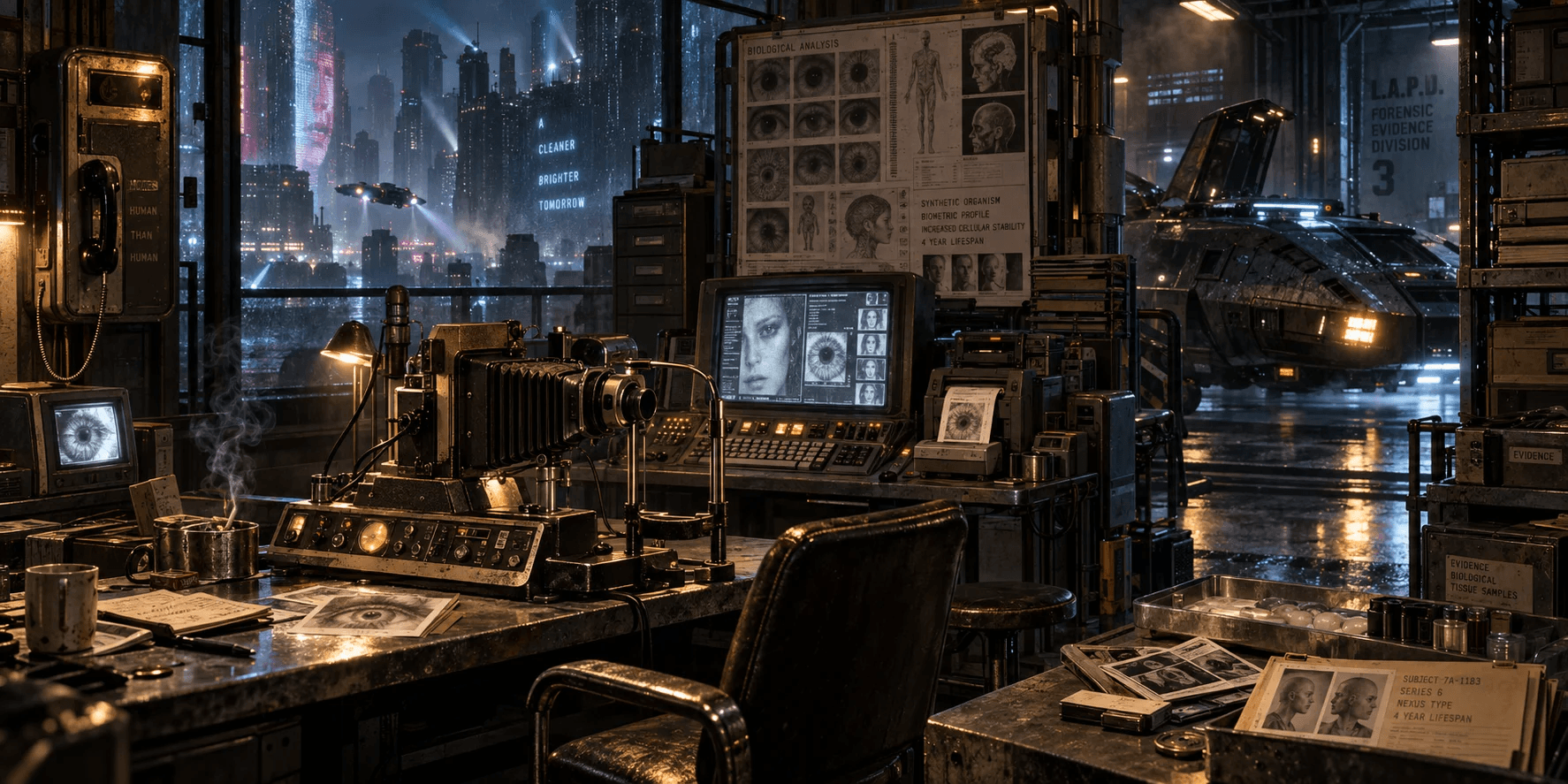
Syd Mead's designs made the tech feel lived-in rather than gleaming, from the Spinners, cars that drive, fly, and hover, to the grimy analog interfaces everyone still uses. The Voight-Kampff machine turns a lie detector into an empathy test, reading pupil dilation and blush response to emotionally loaded questions to separate human from replicant: biometric interrogation decades before anyone built real affective computing. The Esper machine, where Deckard orders a photograph to "enhance," invented the zoom-and-enhance cliché and got the physics wrong doing it. Replicants themselves are the boldest idea of all: not robots but engineered biology, sold as "more human than human," built with a four-year lifespan as a built-in kill switch. For all that invention, the everyday tech still runs on coins and cathode screens.
The invisible hand.
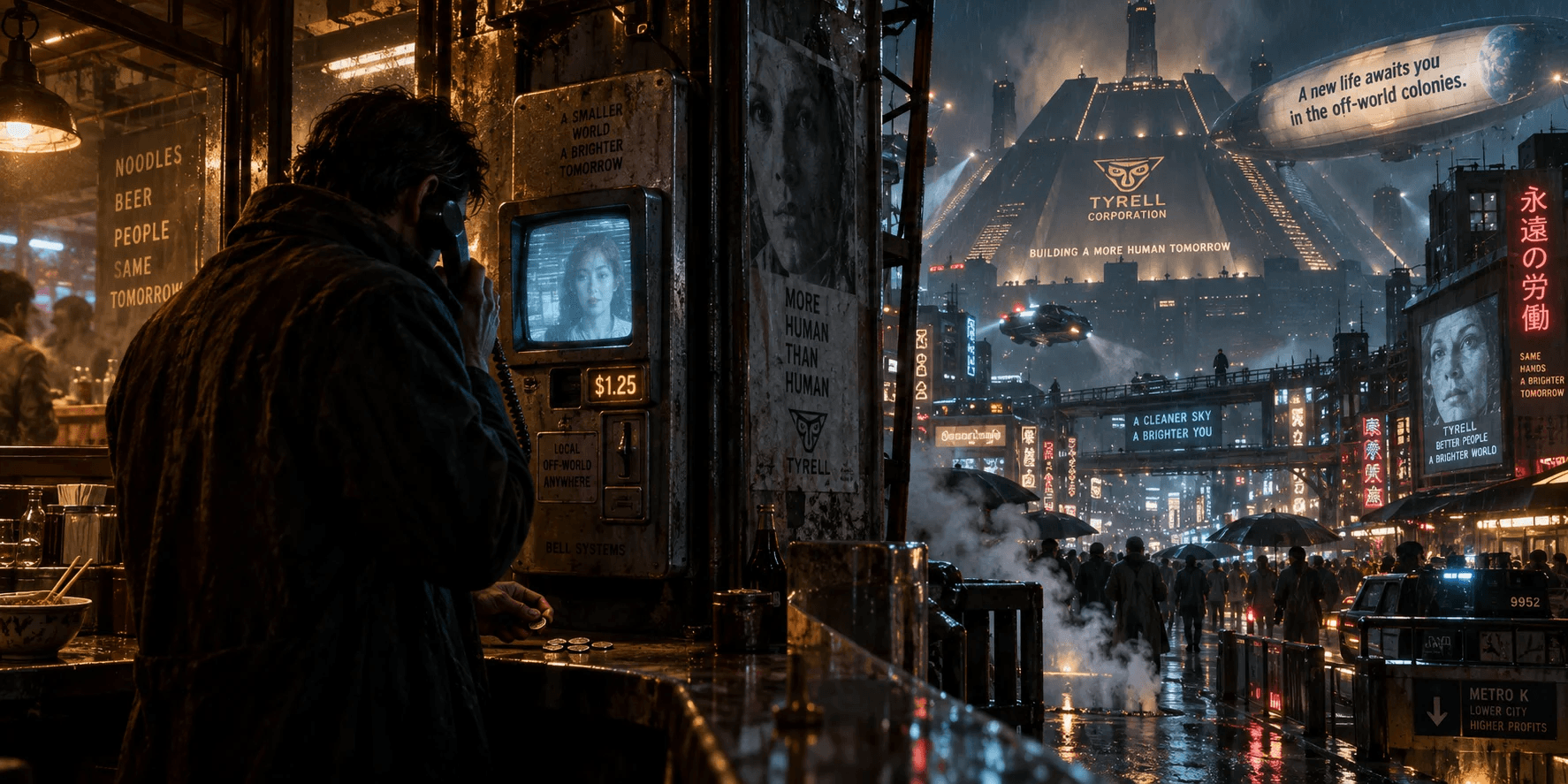
Money tells its own story in this Los Angeles. The Tyrell Corporation looms over a rain-soaked street level, and the sky belongs to blimps selling escape: "A new life awaits you in the off-world colonies." Those colonies work as both frontier and labor valve, a pressure release for a crowded, stratified Earth. Tyrell's actual business is manufacturing sentient, disposable labor, so the economy runs, in part, on made people. The film never once prices a replicant: the cost of a person is left unspeakable, which is the point. Everyday cash still gets the smallest word. A videophone call from a bar costs Deckard $1.25, coins and all, in a future that invented off-world colonies but never a free phone call.
By the numbers.
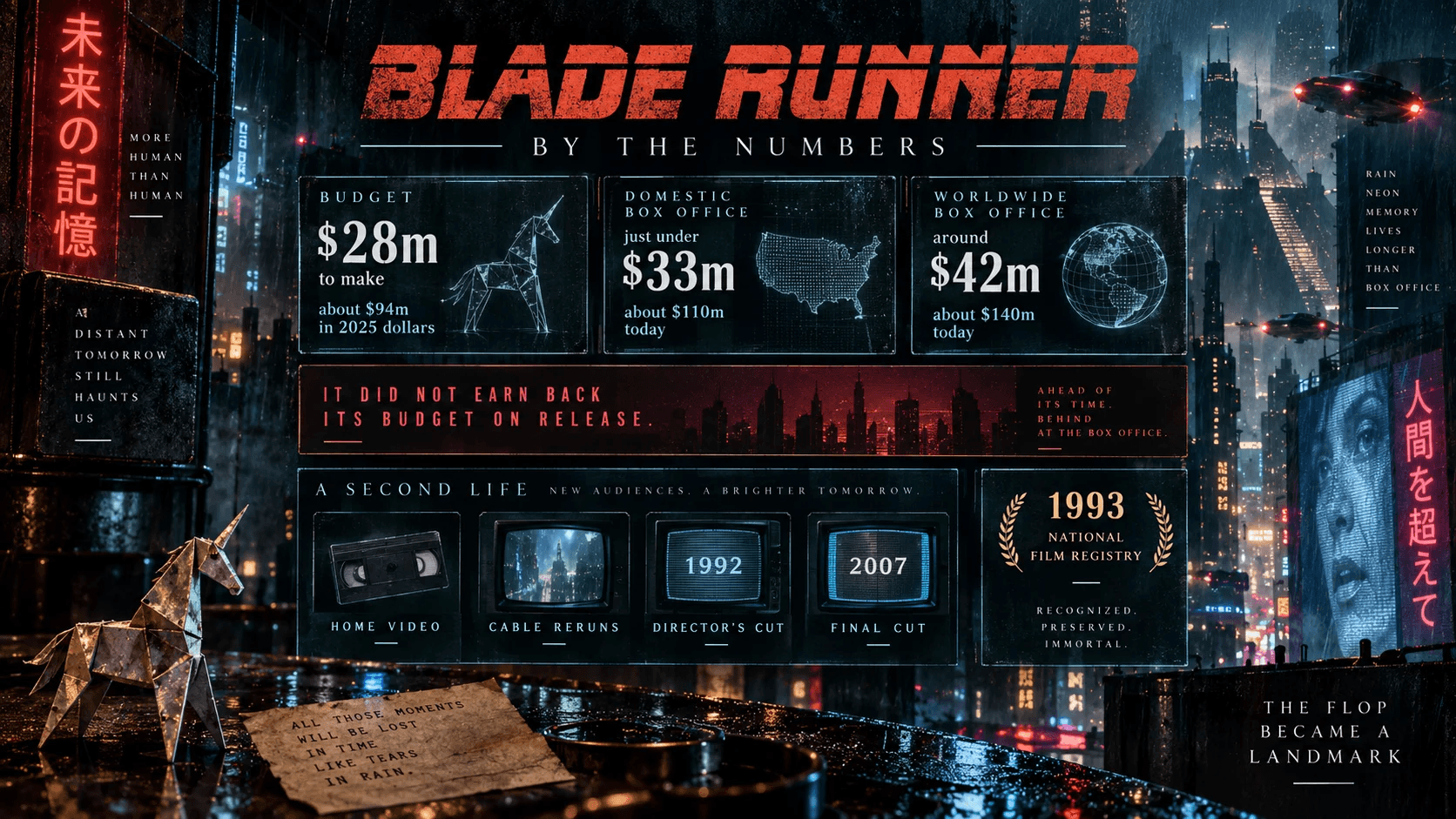
Blade Runner cost roughly $28 million to make — about $94 million in 2025 dollars — and didn’t come close to earning it back on release. Domestic audiences paid just under $33 million to see it (about $110 million today), and the worldwide total landed around $42 million (about $140 million today), a soft number for a film with that budget and that pedigree. The rehabilitation came later and came slowly: home video, cable reruns, and two re-cuts, the 1992 Director’s Cut and the 2007 Final Cut, did what theaters couldn’t. By 1993 the Library of Congress had selected it for the National Film Registry — official confirmation that the flop had become a landmark. Figures adjusted to 2025 dollars using BLS CPI (~3.34x).
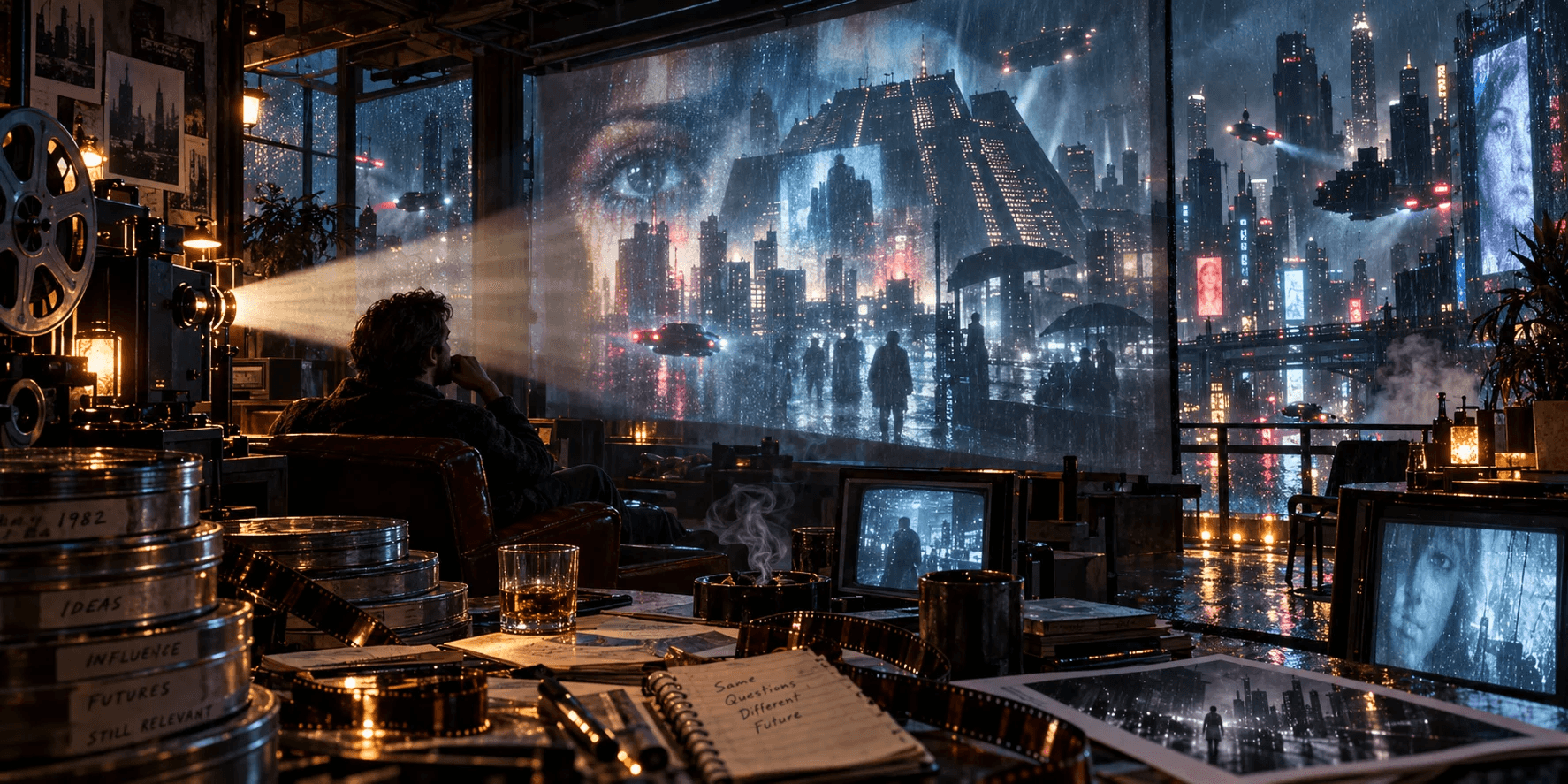
Why it endures.
Blade Runner lost the summer of 1982, and won every one since. Nearly every rain-soaked, neon-lit corporate dystopia that followed owes it rent. Its real question, what separates a manufactured life from a real one, has only gotten louder as the technology it imagined keeps closing the distance. The film that flopped in its own invented 2019 is the lens we watch 2019 through now. That's the kind of legacy Hollywood can't manufacture on purpose.