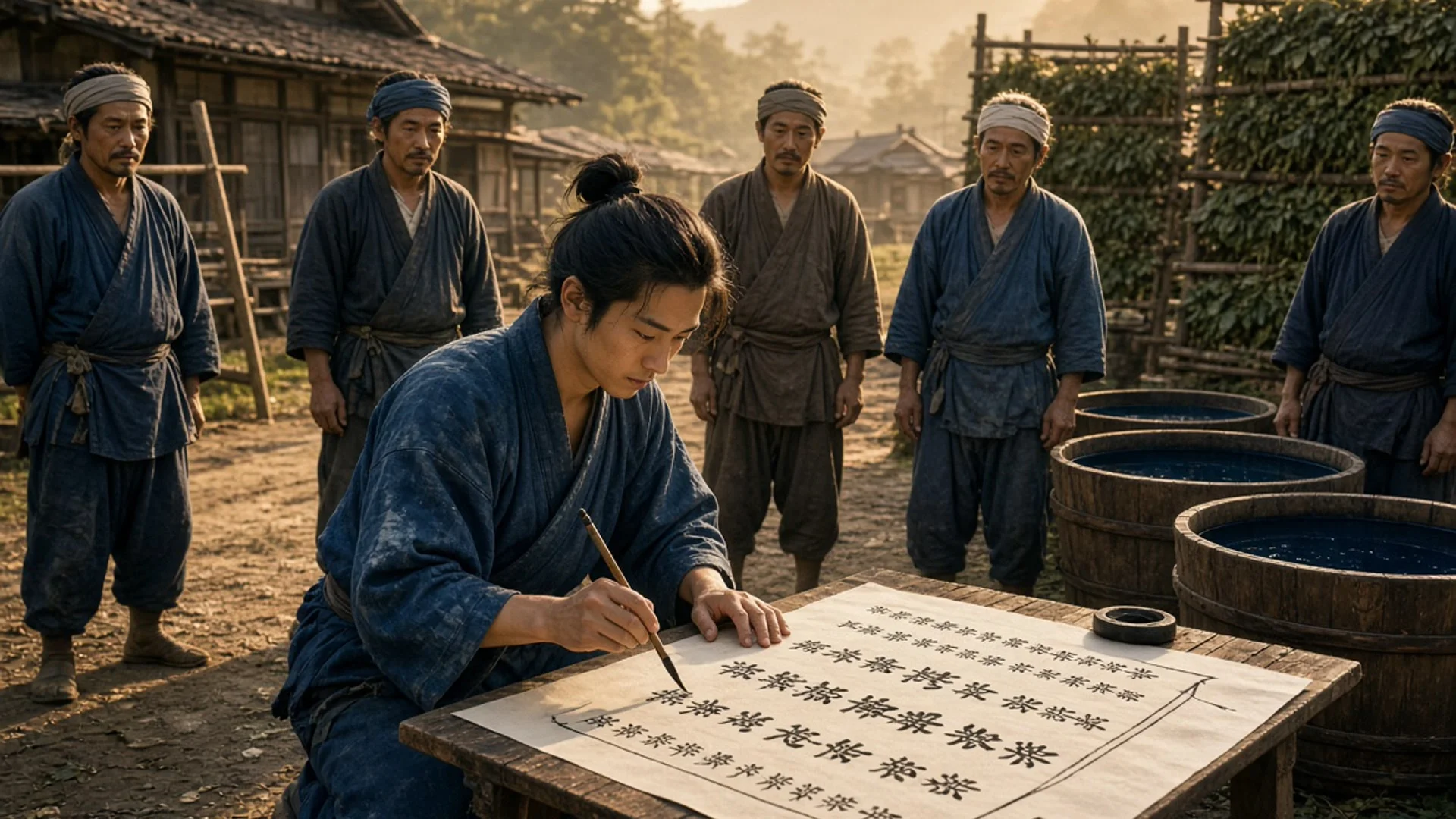
- At 22 he ranked local indigo farmers sumo-style and appointed himself judge.
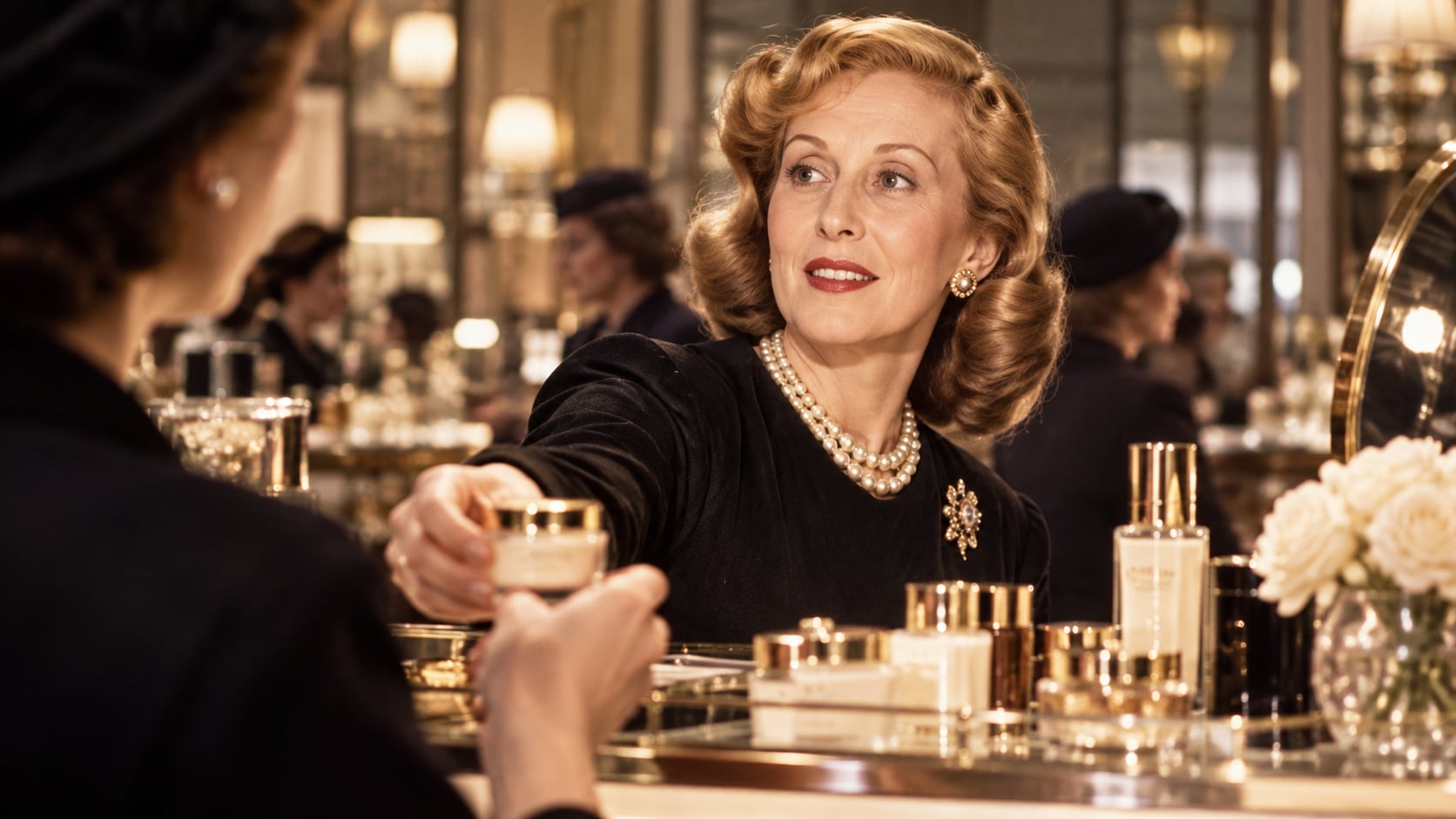
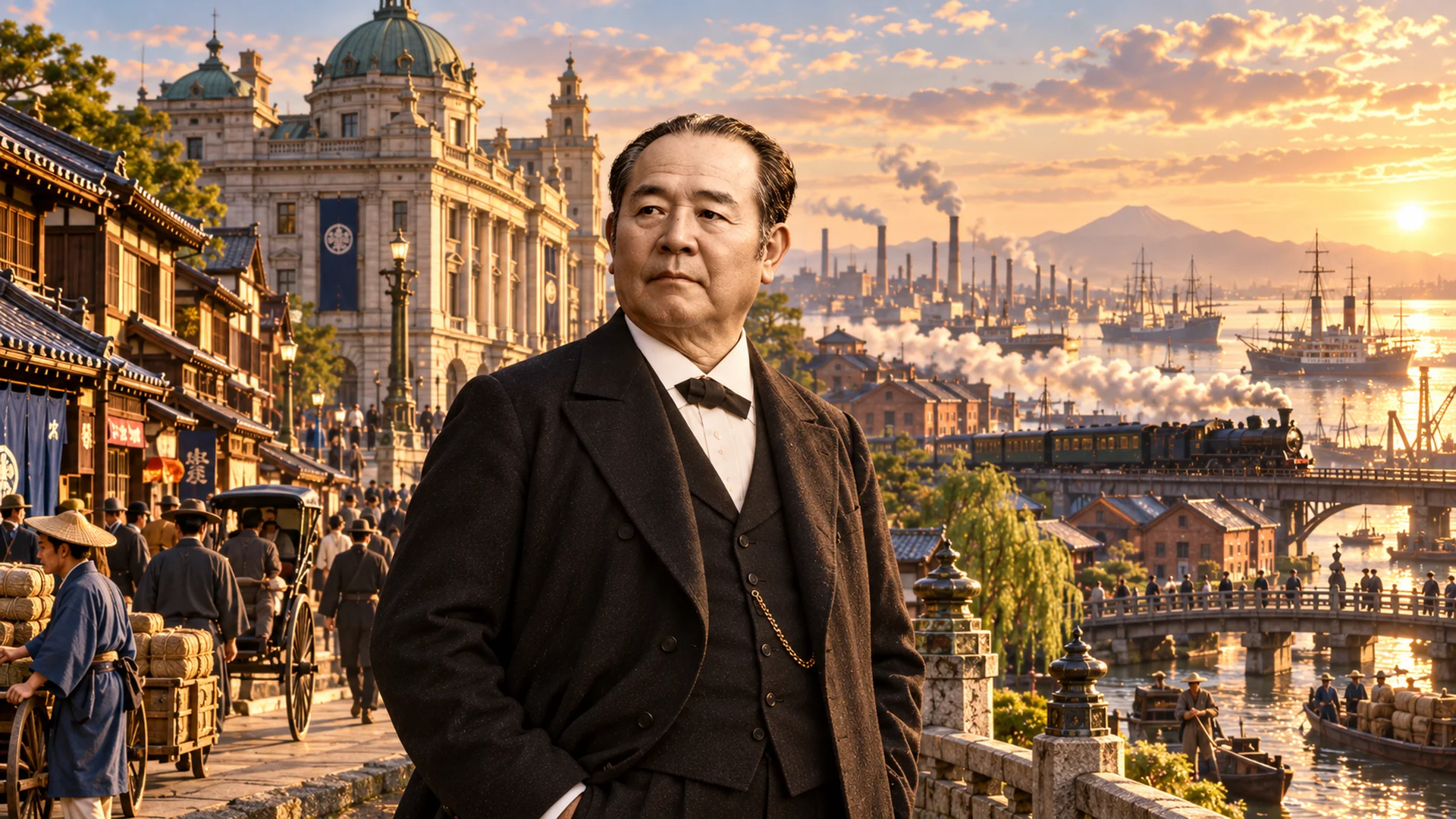
- Japan's 10,000 yen note has carried his portrait since July 2024.
- At 82 he chaired a Tokyo committee raising money for Armenian orphans.
Who was he—and what was he like before everyone noticed?
Eiichi Shibusawa was born on March 16, 1840, in Chiaraijima, now part of Fukaya in Saitama Prefecture, to a prosperous family that farmed, raised silkworms, and made indigo dye. Before anyone had heard of him he was a boy studying the Analects of Confucius under his cousin Odaka Junchū. At 22 he drew up a banzuke, the ranking chart used for sumo wrestlers, that graded the district's indigo farmers, with himself as judge.
What did his life look like before his trek began?
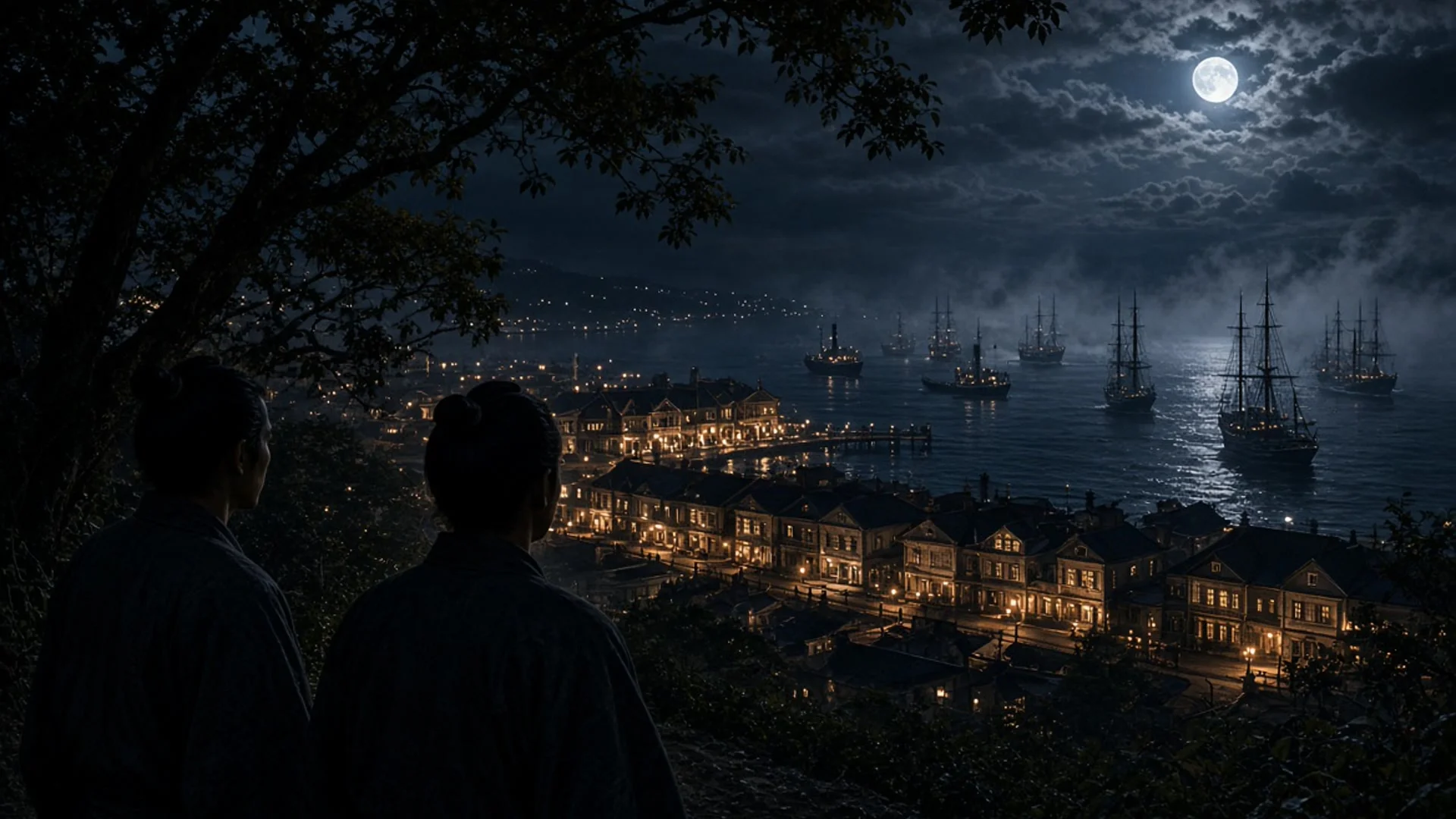
A farm boy who wanted to fight the foreigners. At 20 he went to Edo to study and took up sonnō jōi, "revere the emperor, expel the barbarians." In 1863 he and his cousins planned to seize Takasaki Castle and set fire to Yokohama's foreign settlement, then dropped the plan when he judged that it would cost his life and do little to change national politics. He moved to Kyoto, and in 1864 he entered the service of Hitotsubashi Yoshinobu1, who became shogun two years later.
What did he see that other people didn't?
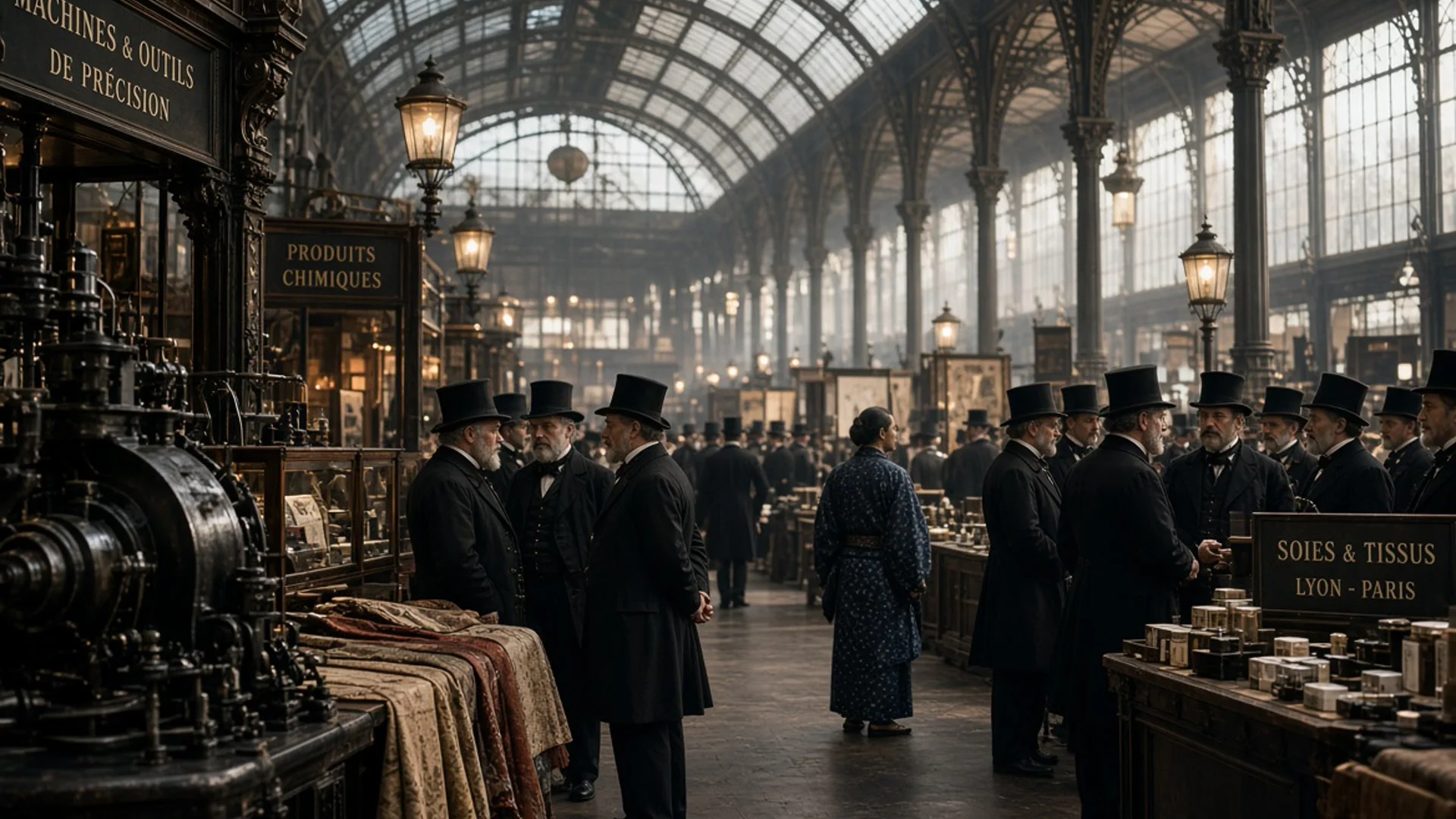
That merchants could be respected. In 1867, at 27, he was given samurai rank and sent to the Paris Exposition with Tokugawa Akitake's delegation. He was struck by the high standing of merchants and industrial leaders in Europe; at home, samurai looked down on both. He later wrote that he "deeply resolved at that time to transfer to Japan the practice of allowing each person to do their best in a job suited to that person's ability."
What problem became his obsession?
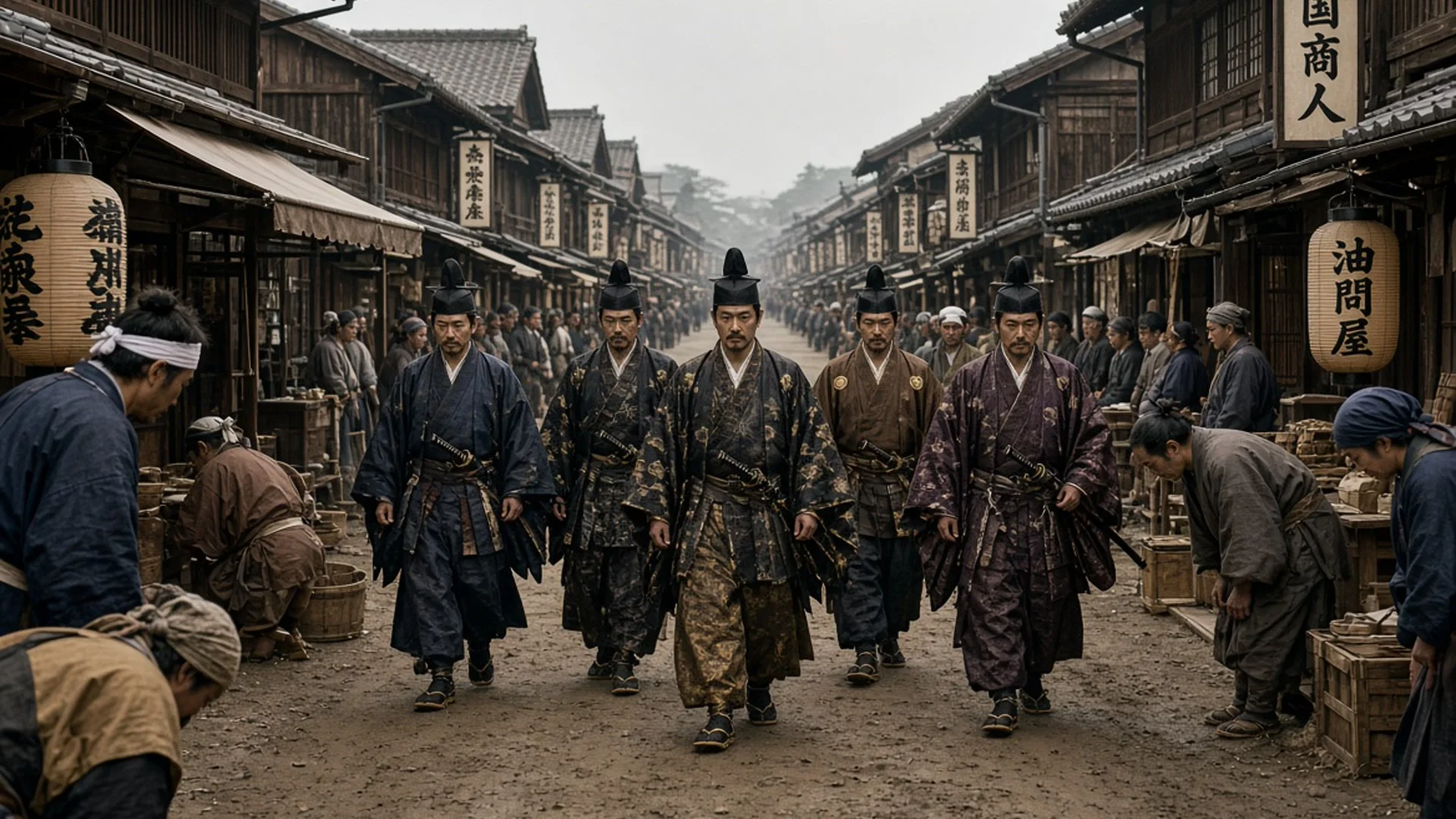
Status. Under the Tokugawa order merchants ranked below samurai, farmers, and artisans, and the habit outlived the order: able men went into government and looked down on business. The attitude had a name, kanson minpi, "revere officials, despise the people," and in 1916 Shibusawa was still calling it a "poisonous notion" that had to be stopped. A country that needed banks and factories had trained its talent to stay away from running them.
Why did this matter personally to him?
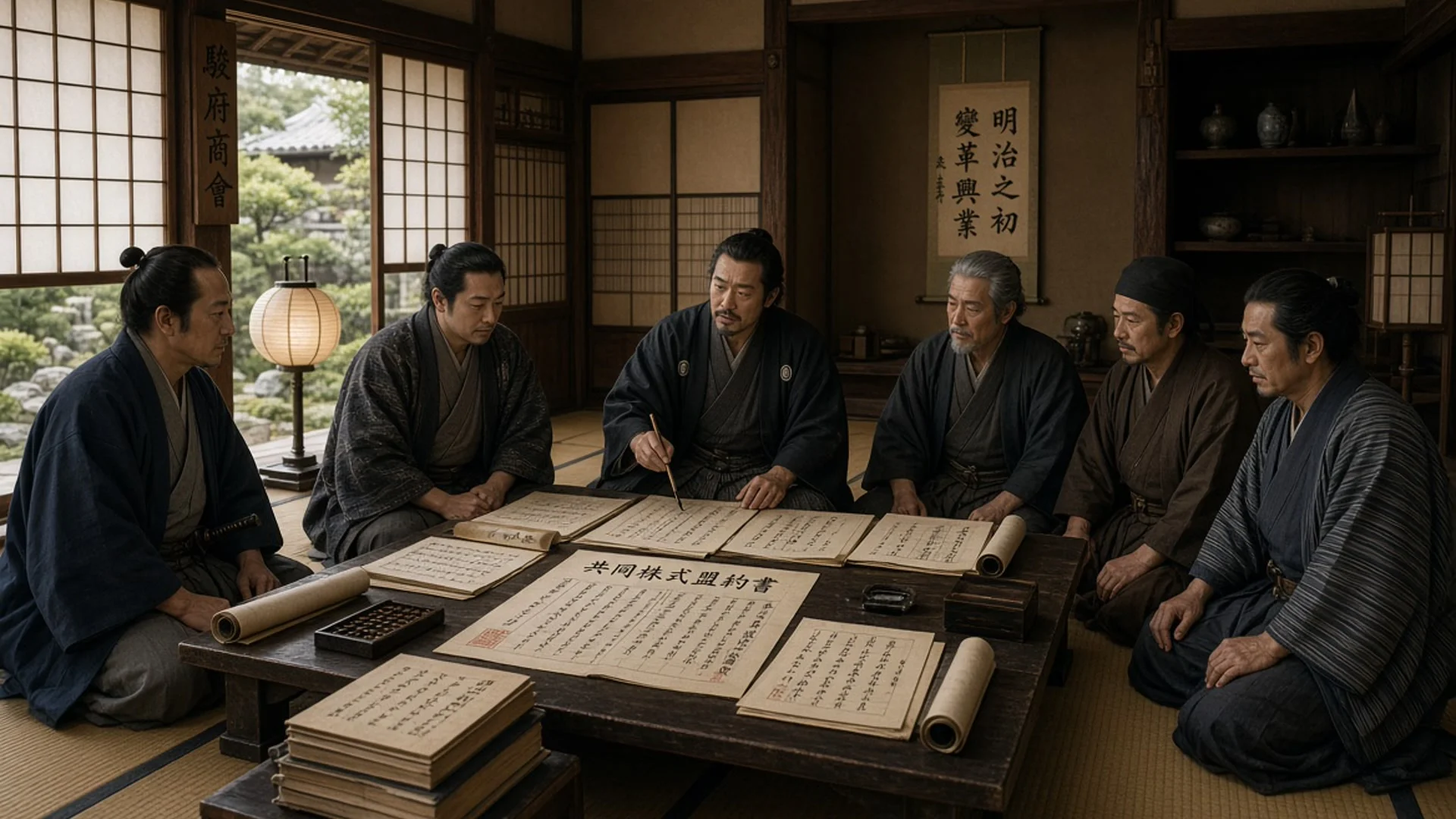
He'd seen the system from below. As a young man, he later recalled, "it occurred to me that the Tokugawa system of government was not good." His own side lost in 1868: he came home from Europe after the Meiji Restoration to find the shogunate gone, followed Yoshinobu to Shizuoka, and in 1869 set up the Shōhō Kaisho there, a commercial association run on a joint-stock framework.
Where did the first money come from?
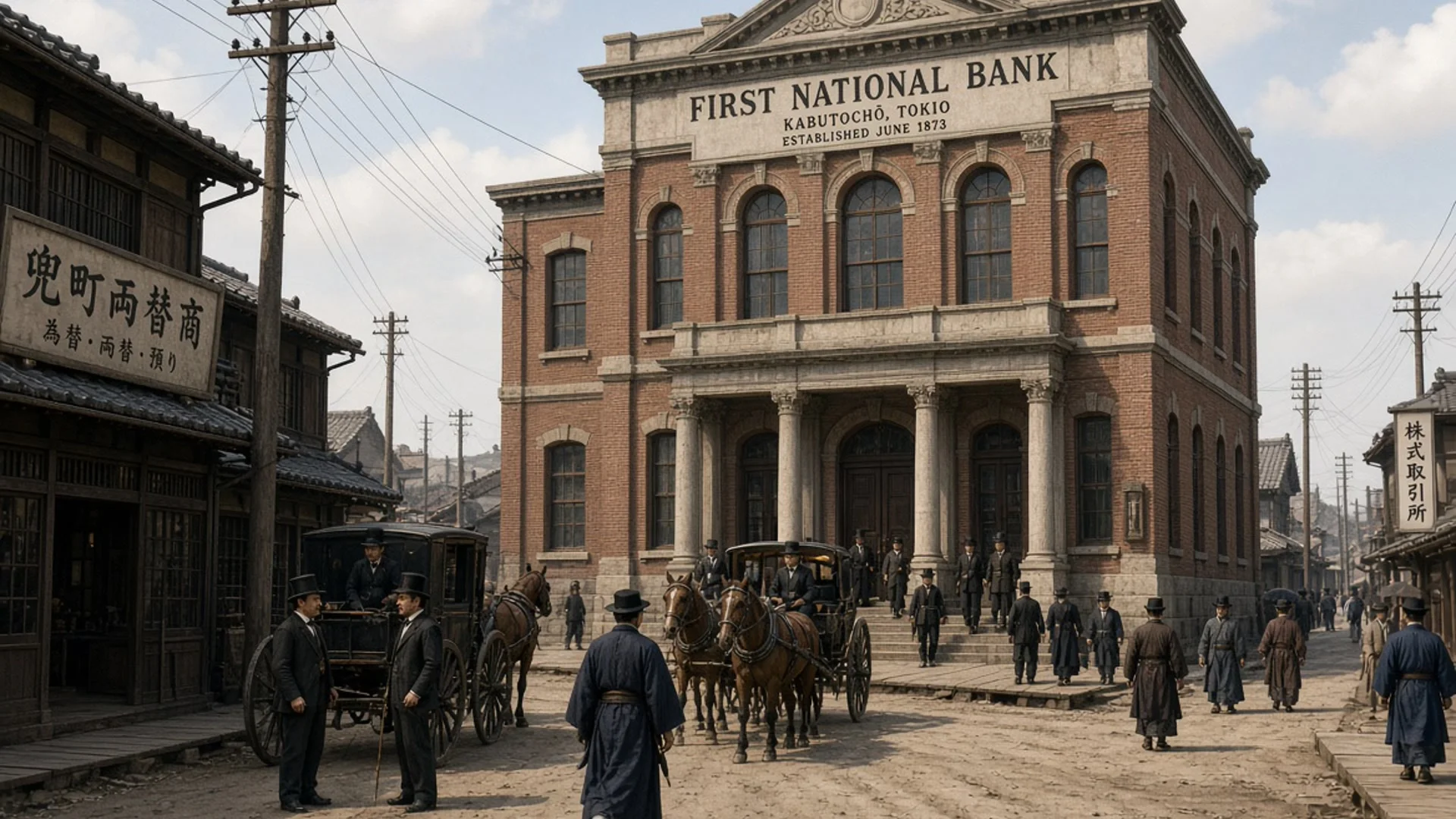
From two old merchant houses he'd helped persuade to combine. First National Bank, Dai-Ichi Kokuritsu Ginkō in Japanese, opened in Tokyo's Kabutochō in June 1873 with about ¥2.44 million in capital2. Mitsui and Ono put in ¥1 million each, and a public subscription raised about ¥440,000.
What made the economics work?
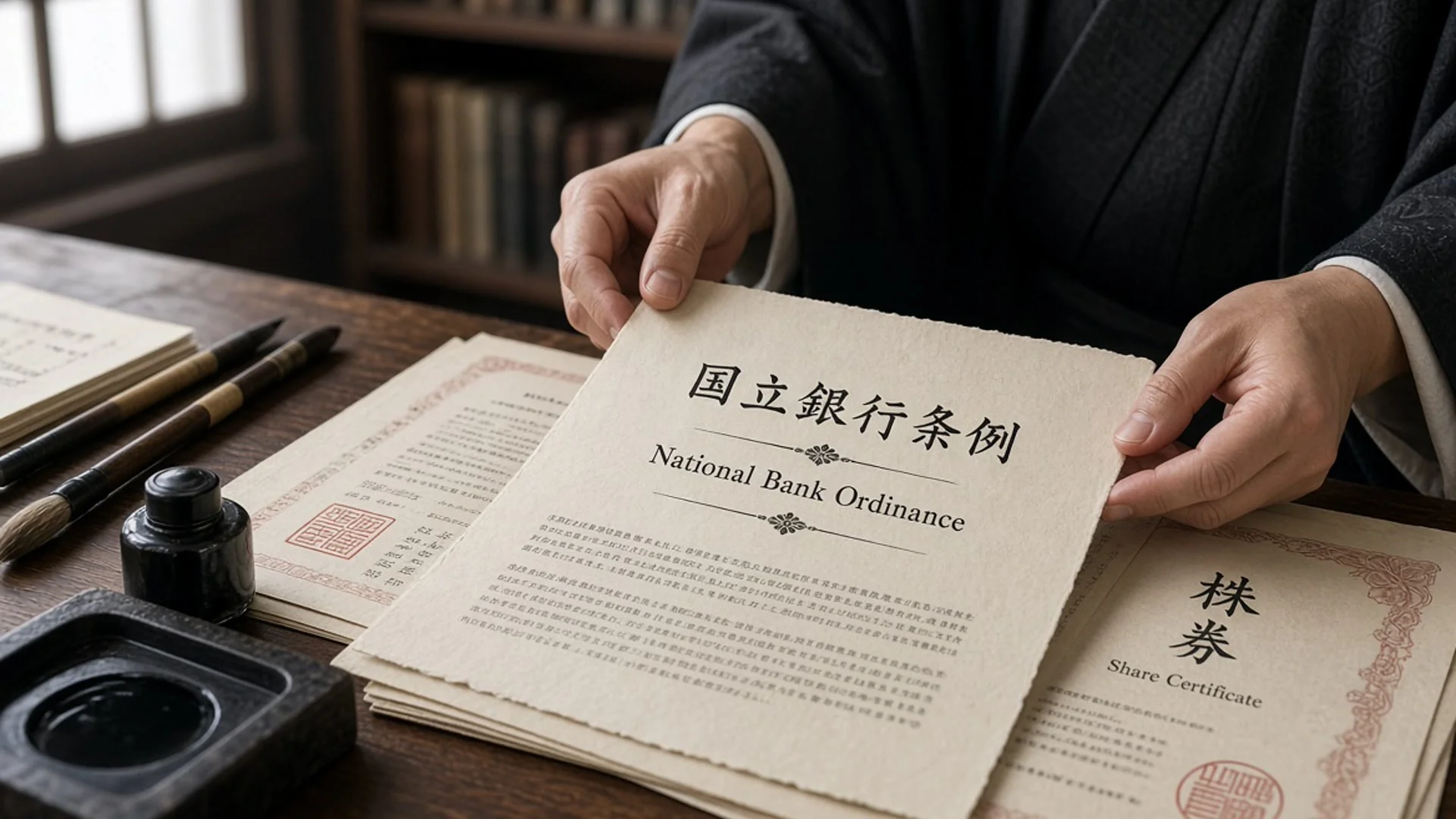
Limited liability. He led the drafting of the 1872 National Bank Ordinance3, which capped what a shareholder could lose at the amount invested, so people could buy into a company without staking everything they owned. The same structure carried his later ventures, and by 1898 he sat on 31 corporate boards at once.
What was the decision or moment after which nothing was the same?
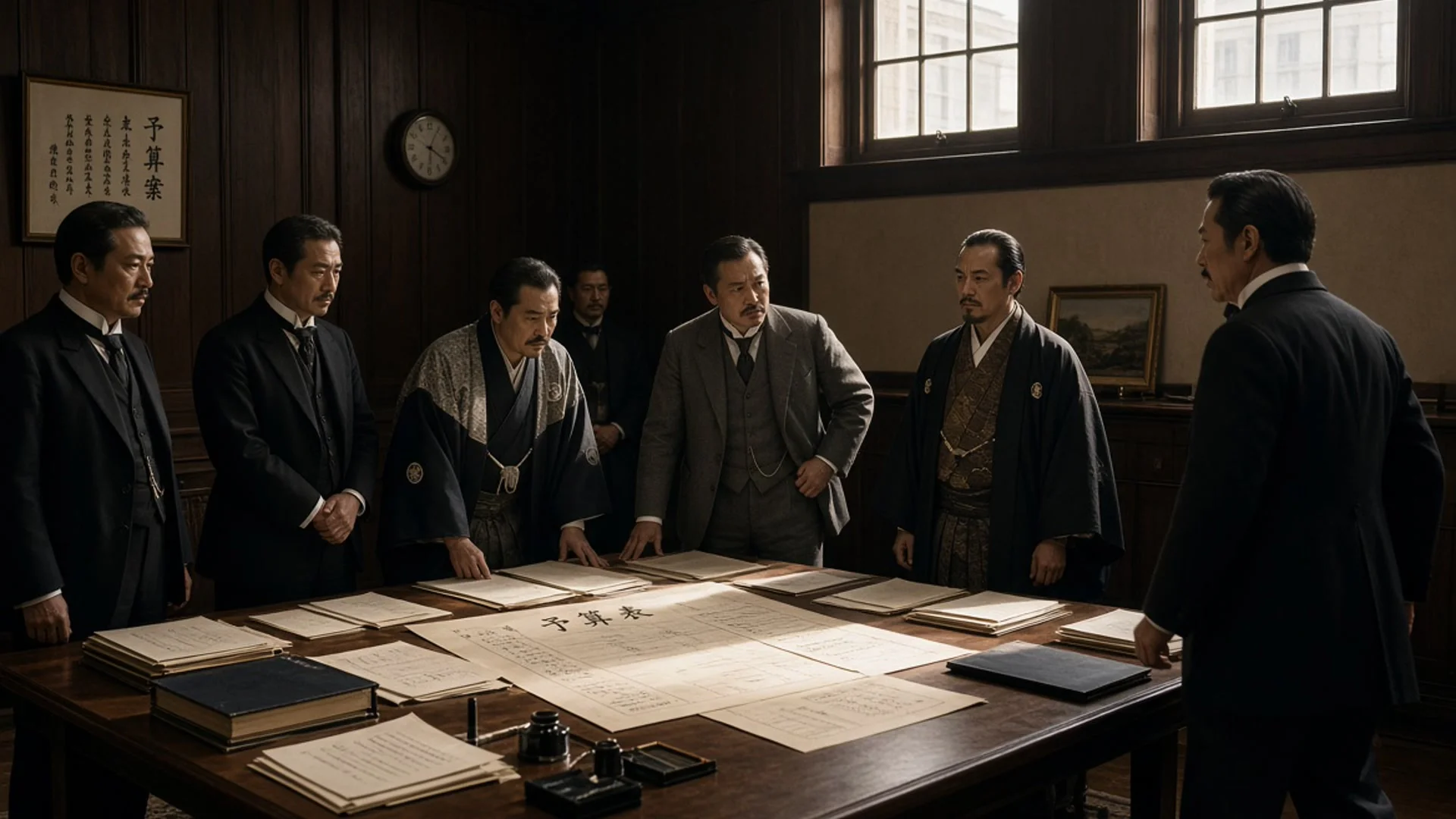
1873, and a budget fight. He and his patron Inoue Kaoru resigned from the Ministry of Finance after clashing with Ōkubo Toshimichi4, one of the most powerful men in the government. Shibusawa took over Japan's first national bank as its chief supervisor and spent the rest of his working life in private business.
What nearly killed it?
The collapse of a founder. In the bank's first years the Ono house went bankrupt, taking down one of the two backers that had supplied most of its capital. The bank survived, Mitsui became its dominant shareholder, and by the end of 1876 Shibusawa was running it on his own5.
What happened that he couldn't have planned for?
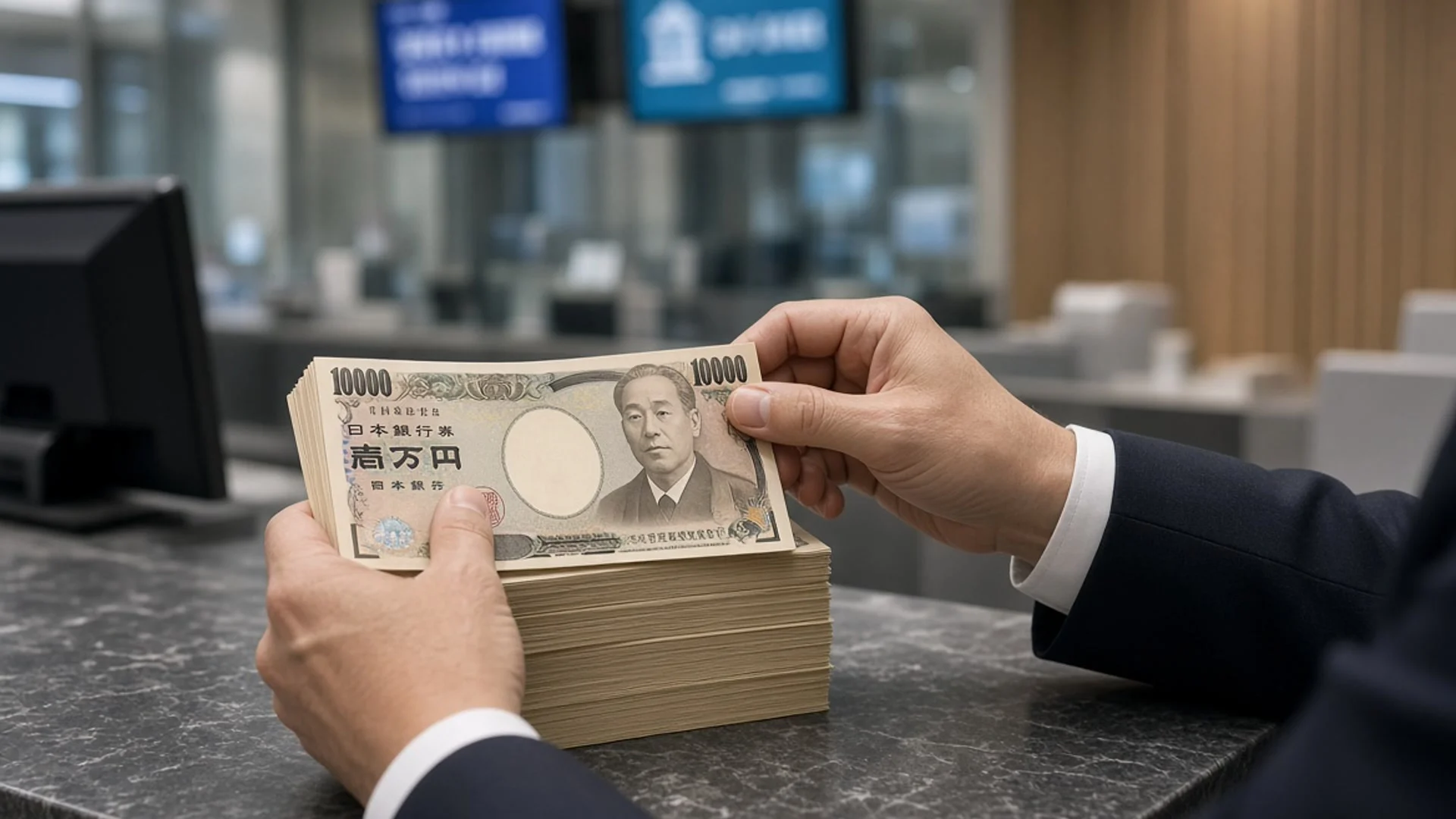
That he'd end up on the money. On July 3, 2024, the Bank of Japan began issuing a new ¥10,000 note with his portrait6, 93 years after his death. He replaced Fukuzawa Yukichi, who had been on the note since 1984.
What showed that he was human after all?
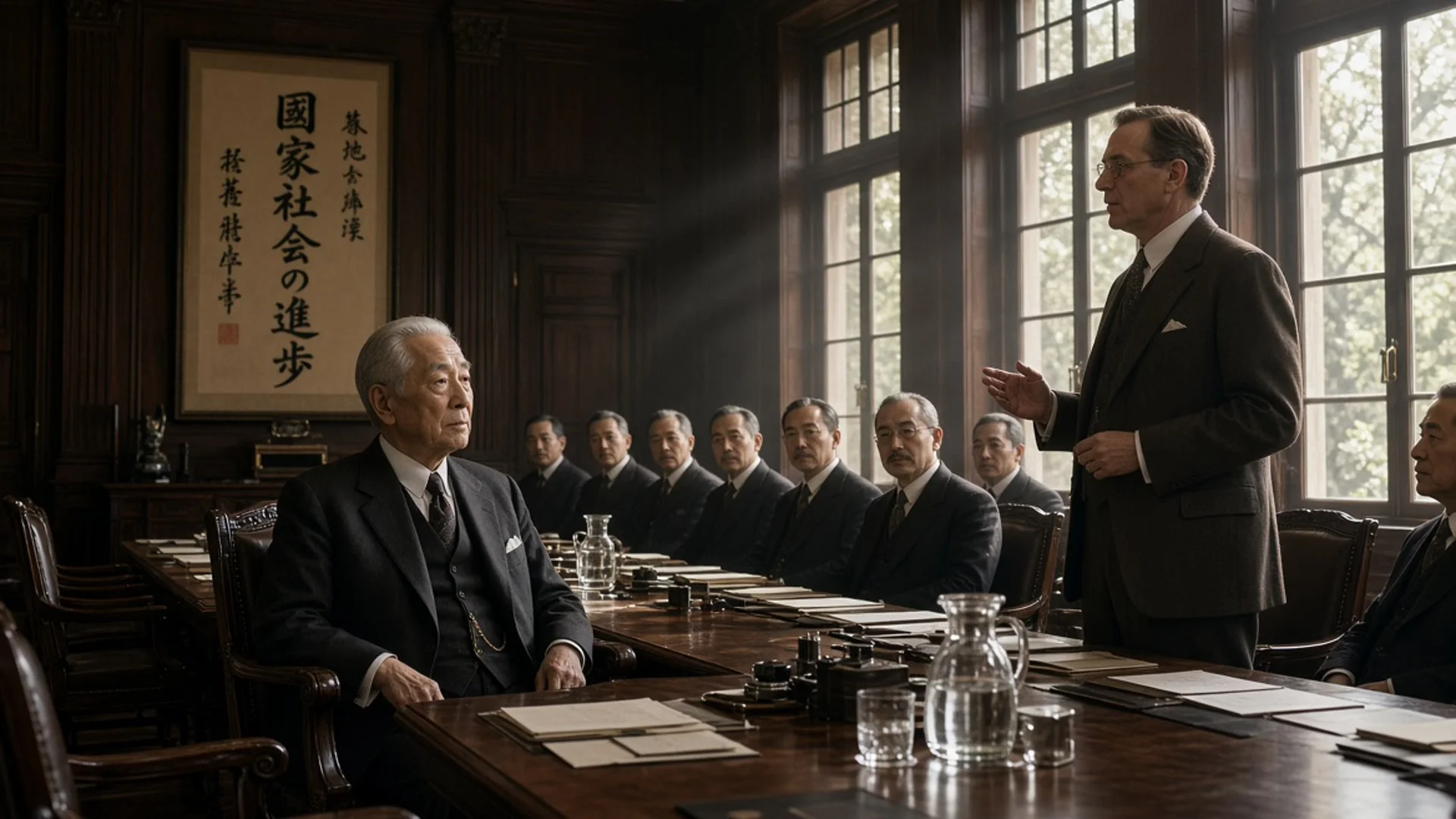
The relief committee he ran at 82. In April 1922 he wrote to 100 Japanese leaders inviting them to hear an American minister, Loyal Lincoln Wirt, appeal for Armenian survivors in the Near East, and he agreed to chair the Armenian Relief Committee of Japan7. Its lectures, concerts, film screenings, and plays raised about ¥20,000, and the money reached the largest Armenian orphanage of its day, in Aleksandrapol, now Gyumri.
What was the change he brought about?
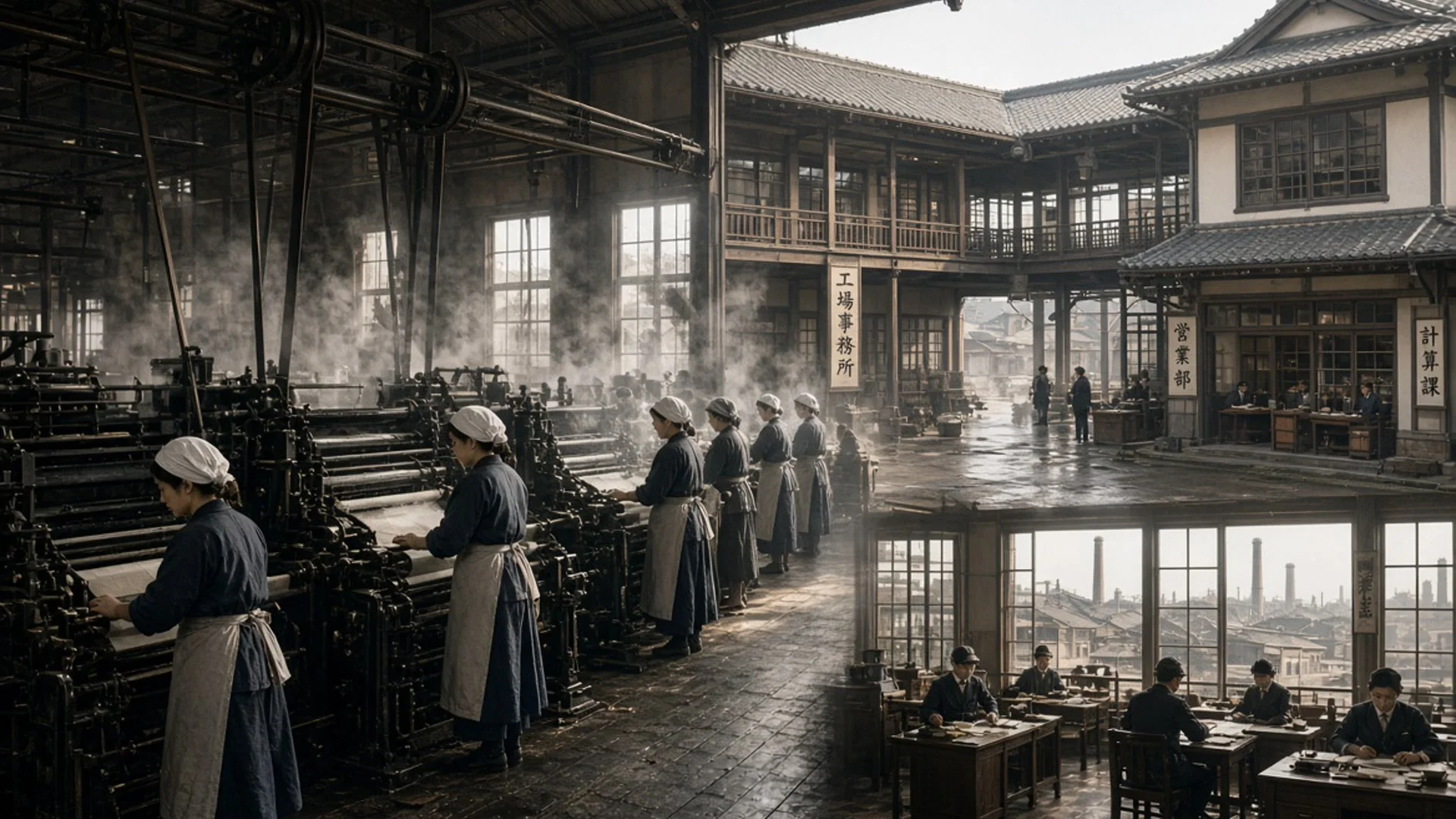
He helped make the bank and the shareholder-owned company ordinary parts of Japanese life. By 1879 Japan had 153 national banks, and the government stopped issuing new charters. He's credited with roughly 500 companies and about 600 education and welfare organizations8, and firms that trace back to him include Mizuho Financial Group, Tokio Marine, Tokyo Gas, Sapporo Breweries, Oji Paper, and the Imperial Hotel.
What did he believe that most reasonable people around him did not?
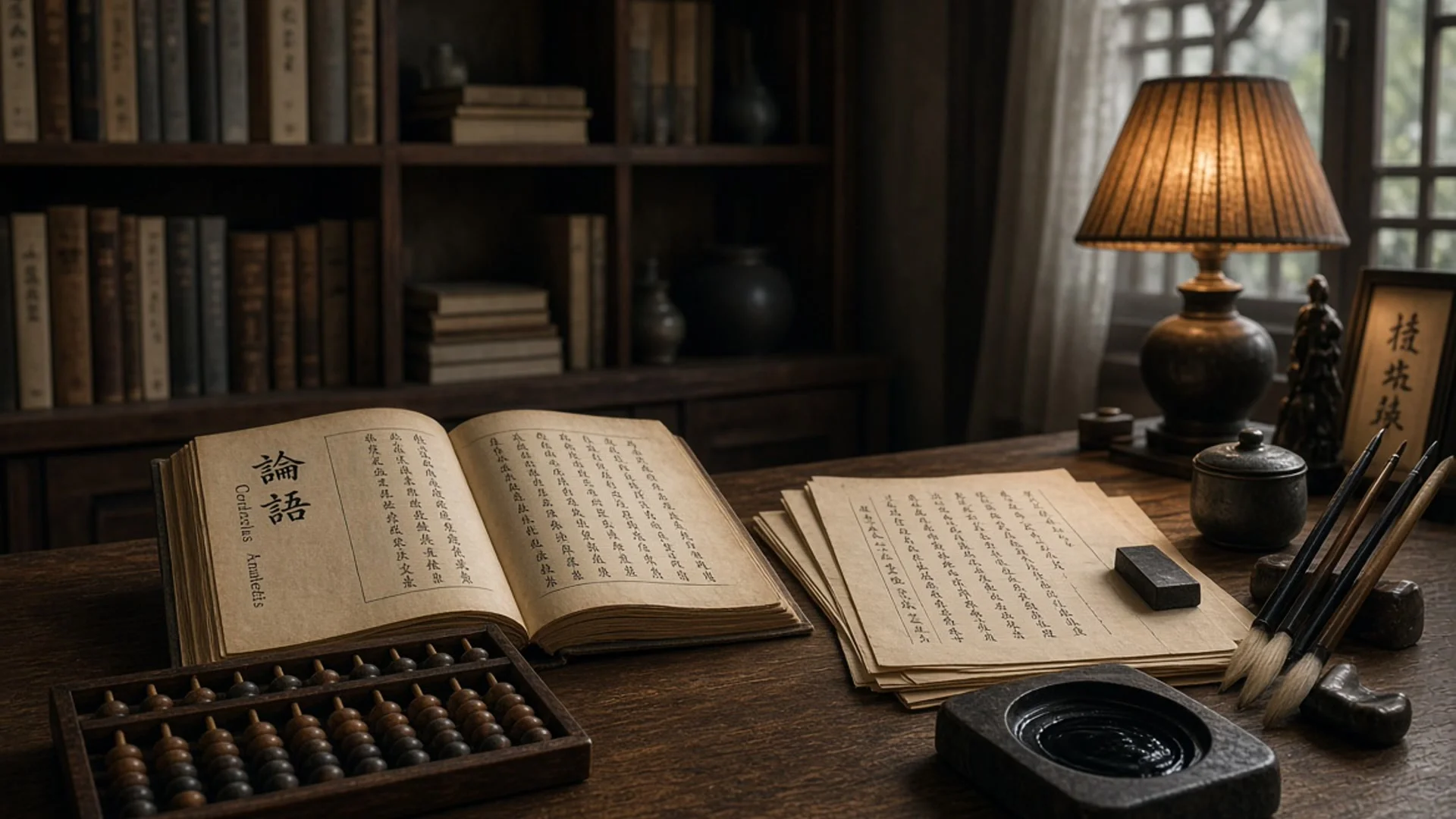
That morality and profit belong in the same ledger. He called it dōtoku keizai gōitsu, the unity of morality and economy, and set it out in Rongo to Soroban (The Analects and the Abacus), published in 1916 as he retired from business at 76. Confucian tradition treated the pursuit of profit as beneath a gentleman. In his 80s he was still telling young people: "Don't look for personal profit, but seek to profit the country and be faithful to your parents and friends."
What did his trek cost him?
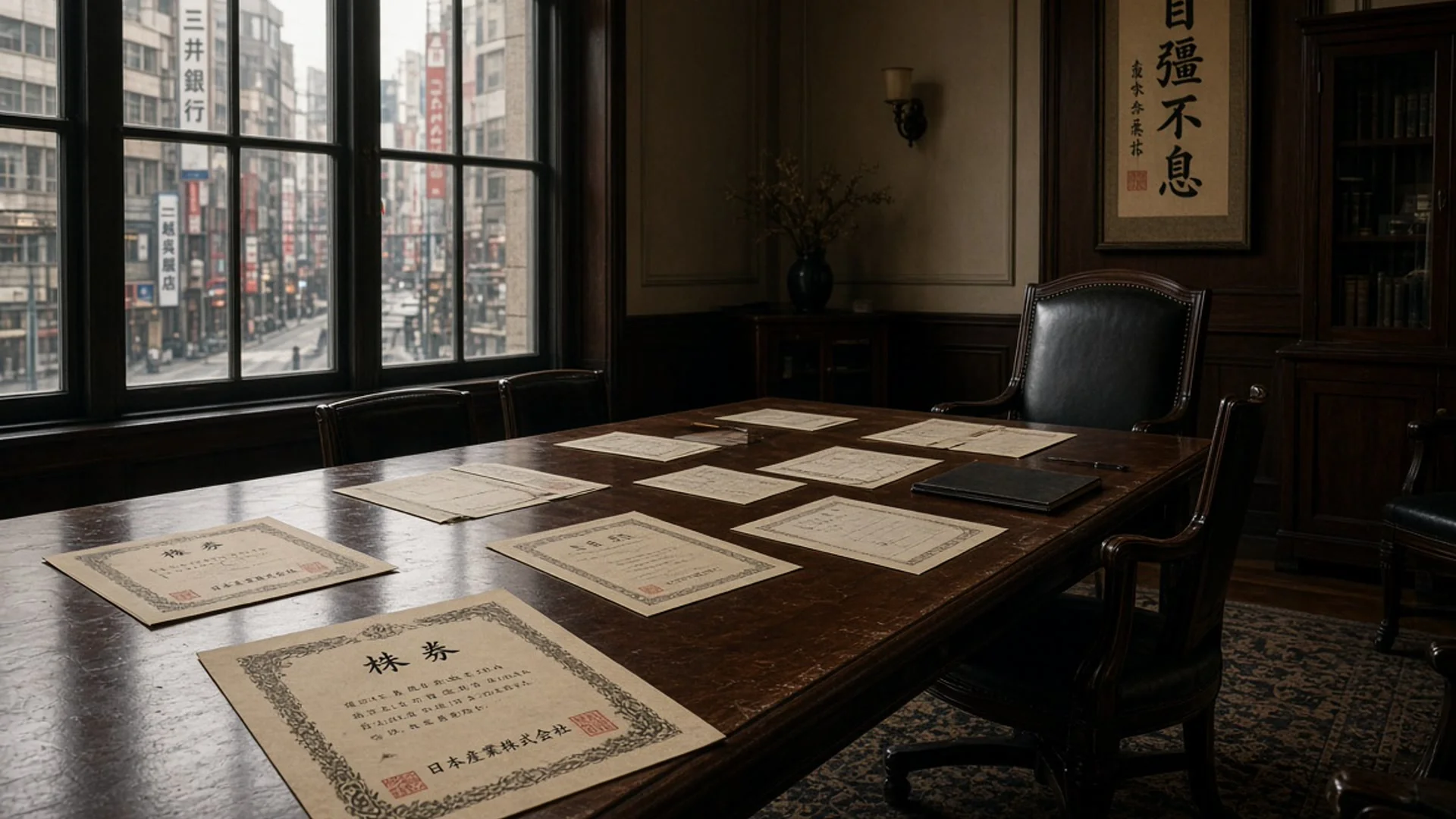
A dynasty. Iwasaki Yataro built Mitsubishi, and Mitsui and Sumitomo grew from Edo-era merchant houses into conglomerates that held controlling stakes across whole industries. Shibusawa kept no controlling stakes, and he sold shares even in companies whose boards he sat on to fund the next venture9. His health paid too: in December 1904 he announced that illness would force him to give up his posts gradually. He died on November 11, 1931, aged 91.
What's the takeaway?
If you want an idea to spread, make it easy for other people to copy and own. Shibusawa plotted against foreigners at 23, then spent the rest of his life importing one of their inventions: the company owned by many shareholders. He could have kept control of what he started. He sold down, moved on, and used each new firm to show that the form worked in Japan, so that by the time he died it belonged to everyone who used it.
Timeline
-
1840-03-16—Born in Chiaraijima, in present-day Fukaya, Saitama Prefecture.
-
1862—Ranks the district's indigo farmers in a sumo-style banzuke.
-
1863—Plots to seize Takasaki Castle and burn Yokohama's foreign settlement, then abandons the plan.
-
1864—Enters the service of Hitotsubashi Yoshinobu.
-
1866—Becomes a shogunate retainer when Yoshinobu becomes shogun.
-
1867—Travels to the Paris Exposition with Tokugawa Akitake's delegation.
-
1869—Sets up the Shōhō Kaisho in Shizuoka and joins the Ministry of Finance.
-
1872—Leads the drafting of the National Bank Ordinance.
-
1873—Leaves the ministry; First National Bank opens in June with Shibusawa as chief supervisor.
-
1878—Helps found the Tokyo Chamber of Commerce.
-
1879—Japan reaches 153 national banks, and new charters stop.
-
1896—First National Bank is reorganized as Dai-Ichi Bank.
-
1898—Sits on 31 corporate boards.
-
1900—Made a baron.
-
1915-04—The family sets up Shibusawa Dōzoku K.K.
-
1916—Publishes Rongo to Soroban and retires from business.
-
1920—Made a viscount.
-
1922-04—Writes to 100 leaders about Armenian relief and chairs the Armenian Relief Committee of Japan.
-
1926—Nominated twice for the Nobel Peace Prize.
-
1927—Nominated again; sends 58 Japanese dolls to the United States in return for about 12,000 friendship dolls.
-
1931-11-11—Dies, aged 91.
-
1971—Dai-Ichi Bank merges with Nippon Kangyo Bank to form Dai-Ichi Kangyo Bank, a predecessor of Mizuho.
-
2024-07-03—The new 10,000 yen note with his portrait enters circulation.
Side notes
-
The loyal retainer—Shibusawa stayed loyal to Yoshinobu after the shogunate fell. In 1902 the Meiji government made Yoshinobu a duke at his urging, and in 1918 he published a biography of his former lord after about 25 years of work. Learn more ↩
-
A building thrown in—Mitsui also transferred its partly built Mitsui-gumi House to the new bank. The two houses had originally planned separate banks. Learn more ↩
-
An American model—The national banks the ordinance created were modeled on the US national banking system, and one of their goals was to retire the government's paper money. Learn more ↩
-
What the fight was about—Shibusawa and Inoue wanted spending held back until expected tax revenue was clearer, while Ōkubo wanted immediate appropriations. Factions mattered too, since Satsuma and Chōshū men controlled the government and Shibusawa was outside their circle. Learn more ↩
-
Help and a warning—The merchant Furukawa Ichibei helped the bank through the Ono crisis. Later, Allan Shand, a banker Shibusawa asked to inspect the bank, found it wasn't lending enough. Learn more ↩
-
The announcement—The government named him for the note on April 9, 2019. In the month that followed, visitors to the Shibusawa Eiichi Memorial Museum's exhibition in Fukaya outnumbered the total for the whole previous year. Learn more ↩
-
Three Nobel nominations—He was nominated for the Peace Prize twice in 1926, once by Prime Minister Katō Takaaki, and again in 1927. The nominations cited his work on US-Japan relations over the legal status of Japanese workers in California. Learn more ↩
-
More than 50 years at one post—He joined the Tokyo Yōikuin, a welfare institution, in 1874 and became its director in 1876. He held the post for more than half a century. Learn more ↩
-
The family company—In April 1915 the family set up Shibusawa Dōzoku K.K. with ¥3.3 million in capital to hold its property and securities. Eiichi held 1,000 shares, and his heir Keizō was named president while still a student. Learn more ↩