- Employees set their own salaries, chose their bosses, and voted on major decisions.
- Sales grew from about $4 million in 1982 to $212 million by 2003.
- His book Maverick became a global bestseller, and executives from about 720 firms visited.
Who is he—and what was he like before everyone noticed?
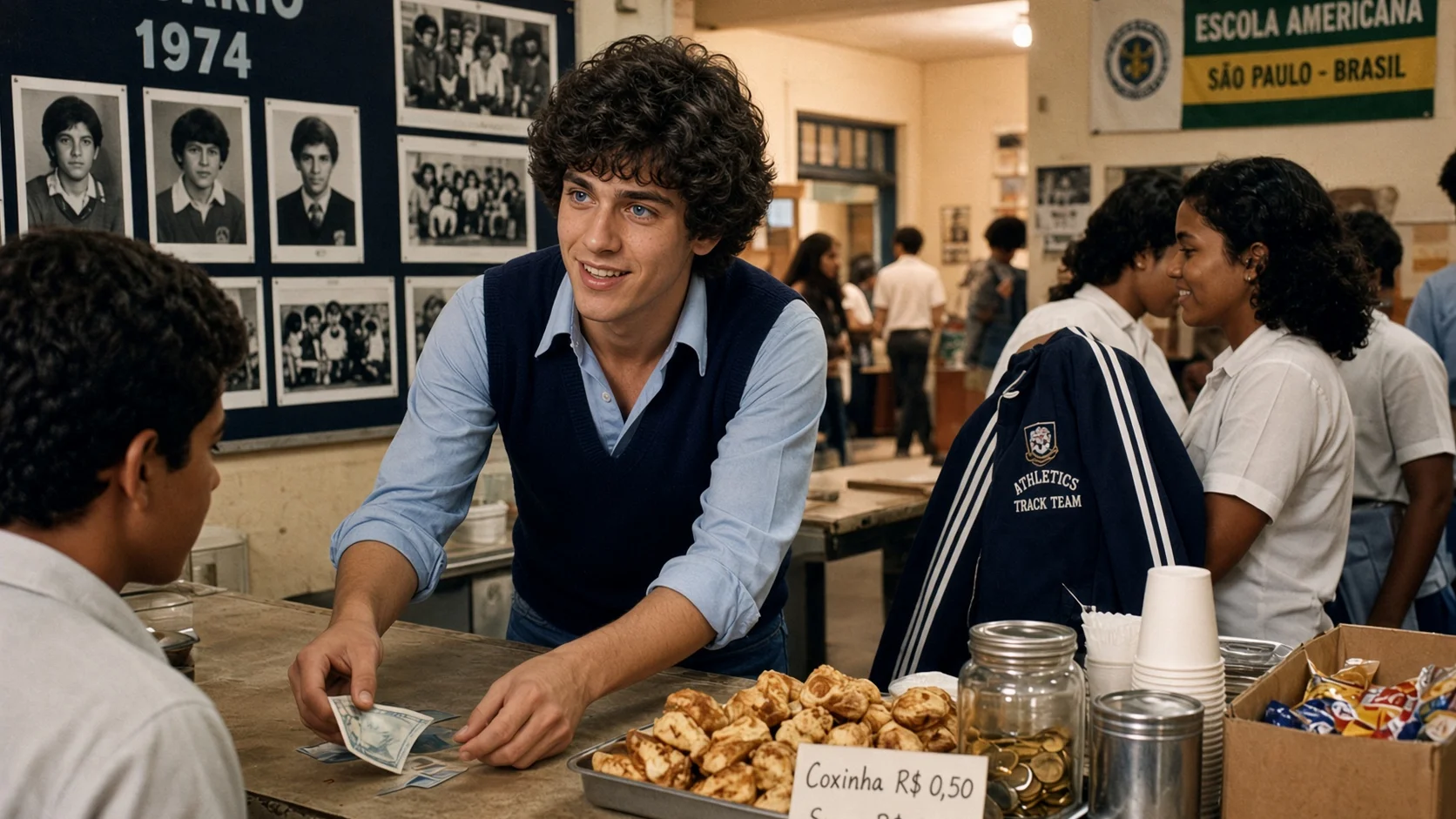
Ricardo Semler was born in 1959 in São Paulo, Brazil, the son of Antonio Curt Semler, an engineer who had started Semco, short for Semler & Company, as a small machine shop. Before anyone had heard of him he was a high school student who collected roles: class president, captain of the track team, and photography editor of the yearbook. He also took over the lunchtime snack stand, cut out the free handouts, added new suppliers, and made enough money to fly his whole class to a resort.
What did his life look like before his trek began?
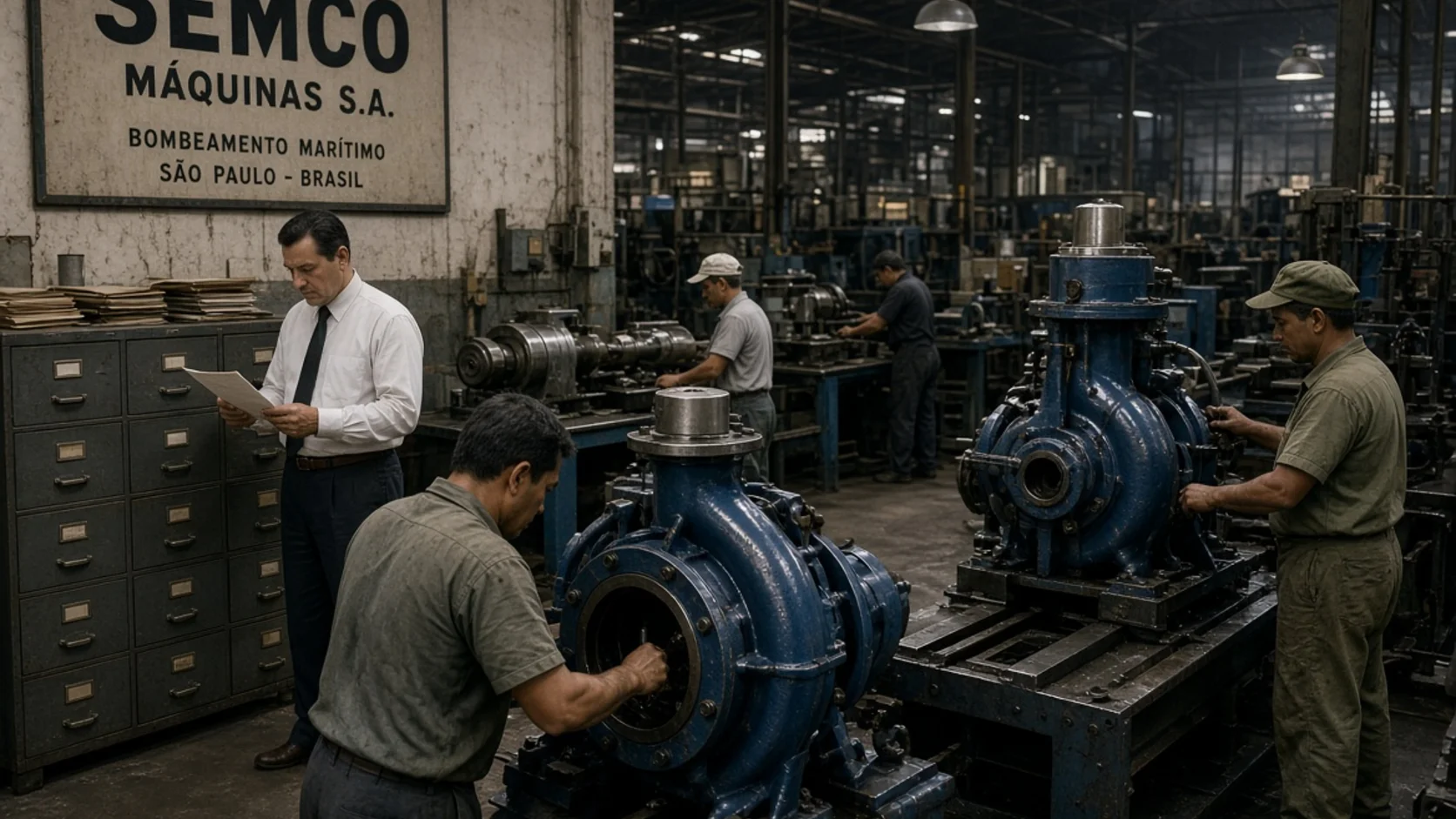
The heir to a traditional family factory. By the 1950s and 1960s Semco employed about 110 people and brought in roughly $2 million a year, and it grew into a maker of marine pumps for the shipbuilding industry. Ricardo joined while he was studying law, and he and his father clashed almost immediately. His father, he said later, "was very traditional." Ricardo wanted a looser, more human way of running things, and he wanted to move the company away from a shipbuilding industry that was starting to struggle. His first attempts at expansion didn't go well1.

What did he see that other people didn't?
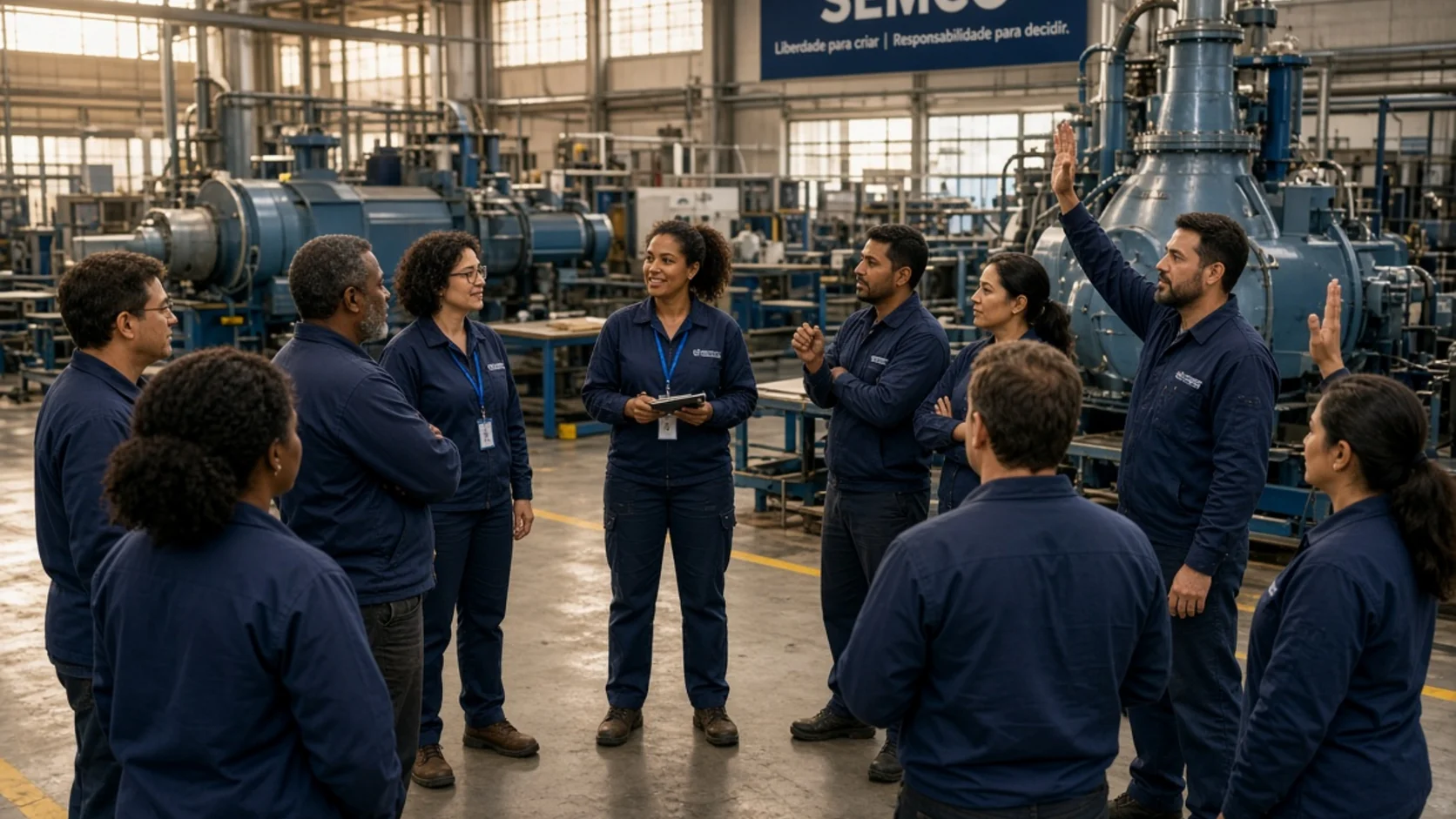
That most of a company's rules survive because nobody asks why they exist. Semler's method, which he still describes in talks, is to "ask three whys in a row." The first answer comes easily, the second is harder, and by the third, people often realize they don't know why they're doing what they do. Applied to Semco, the three whys took apart job titles, dress codes, and the idea that the company needed to know where its people were at every hour.
What problem became his obsession?
How to run a company where people were treated like adults. He wanted employees to design their own jobs, choose their own supervisors, and decide what they were paid, and he wanted to show that a business built that way could outperform one built on control. The challenge was holding a manufacturer together once the usual machinery of command was gone.

Why did this matter personally to him?
Control nearly broke him first. At 24, on a trip to Gothenburg, Sweden, to sign an acquisition deal, he passed out during a factory tour after months of sore throats, headaches, and gastritis. Not long afterward, on a visit to a pump factory in Baldwinsville, New York, he collapsed again. A local doctor sent him to the Lahey Clinic in Boston, where an internist spent three days running tests and then told him, "You have nothing whatsoever, Ricardo." What he had, the doctor said, was "the most advanced case" of stress "I have ever seen in a person of twenty-five." He prescribed two aspirins, eight times a day, so the pills would remind him of the problem he needed to solve. Semler took them for one day. "Before I could reorganize Semco," he wrote, "I had to reorganize myself."
Where did the first money come from?
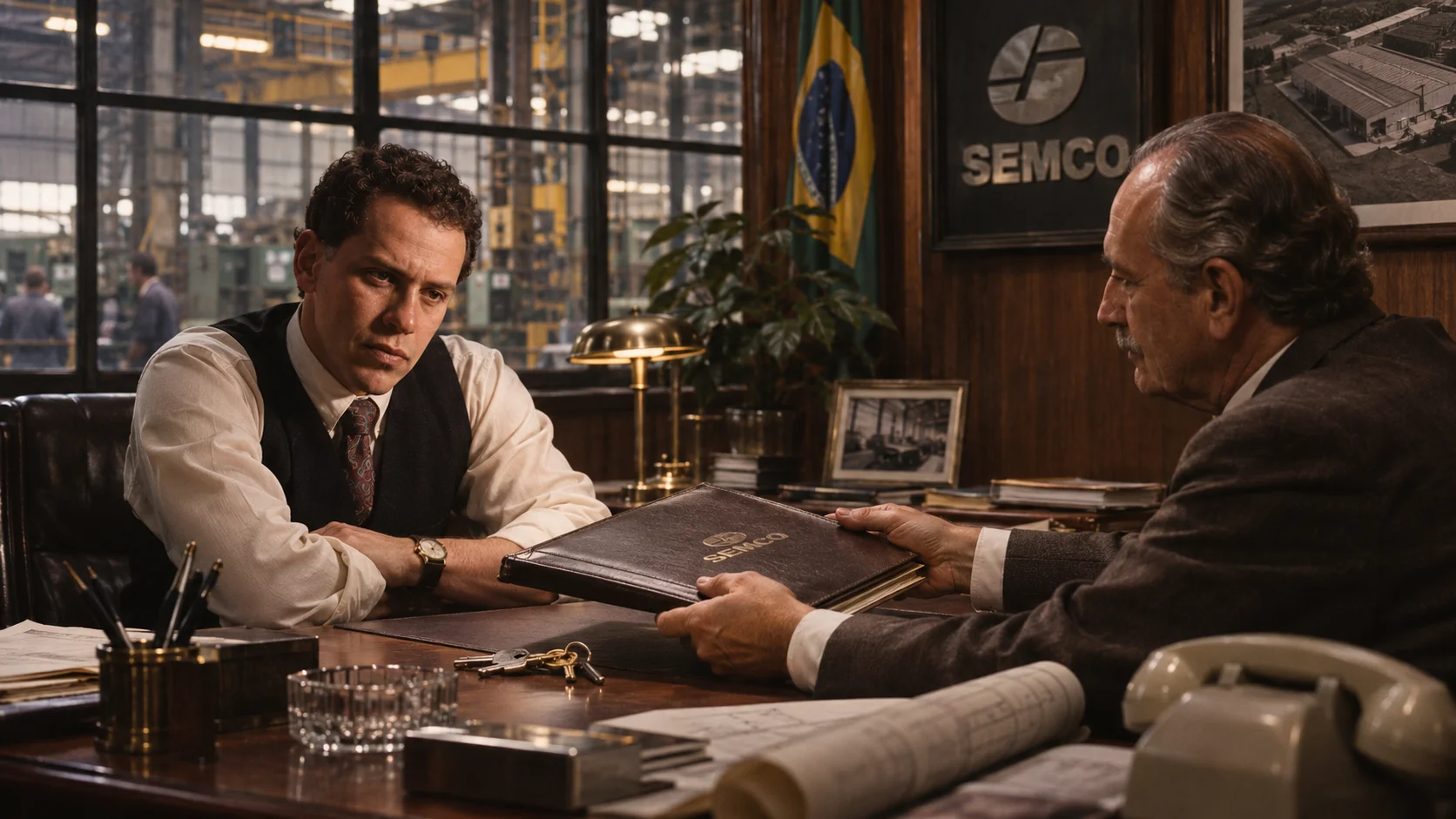
From his father. In 1980, after Ricardo threatened to leave the company, Antonio Semler stepped down as chief executive and gave his 21-year-old son majority ownership. Ricardo inherited a working manufacturer, its customers, and its cash flow, along with a management team that had been built to run the company his father's way.
What made the economics work?
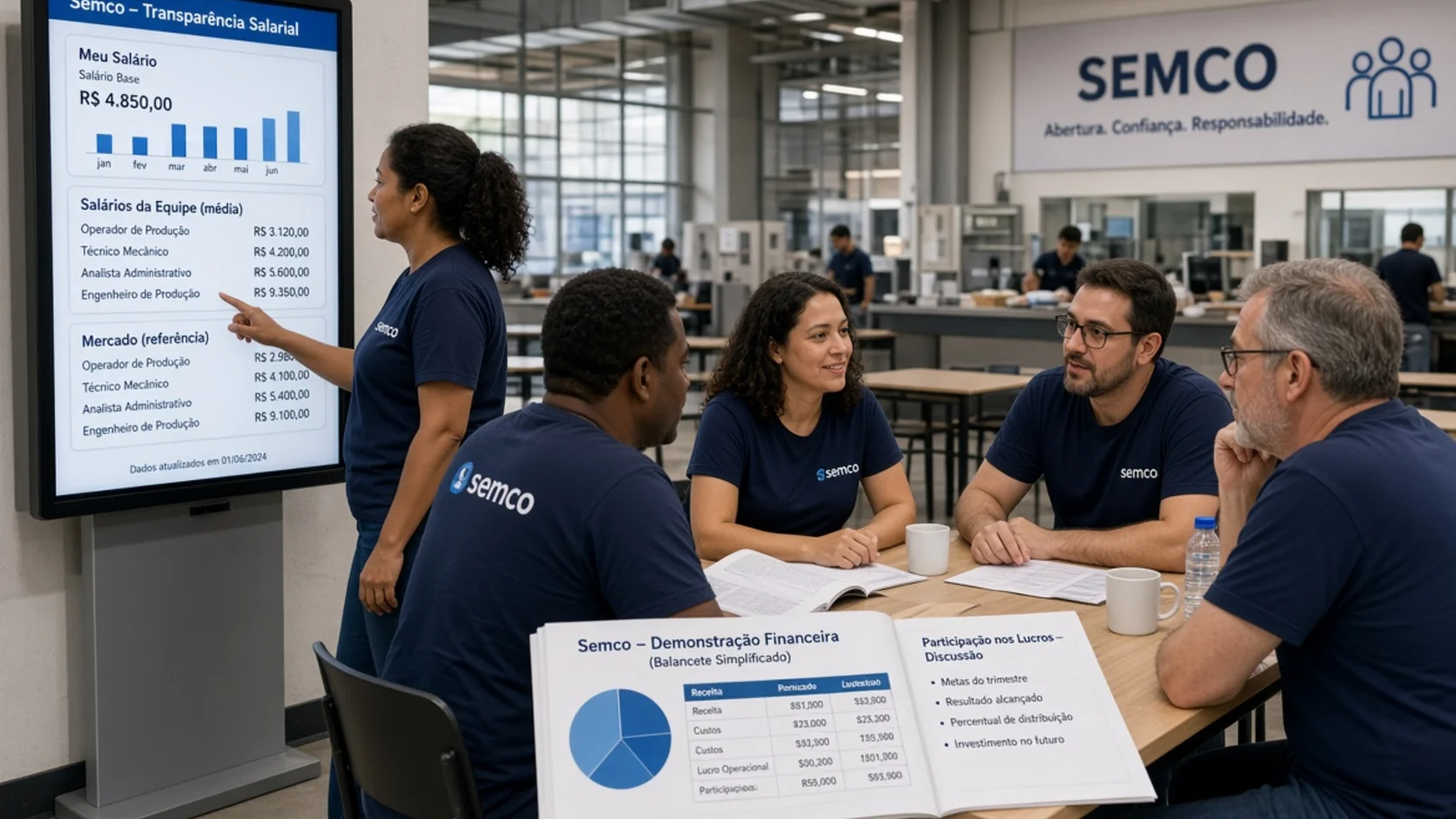
Openness, used as a control system. Employees at Semco could set their own salaries, using three pieces of information the company made available to everyone: what their colleagues earned, what similar jobs paid elsewhere, and what the company could afford2. Workers were taught to read the balance sheet, teams decided how to spend their share of the profits, and major decisions went to a companywide vote. When Semco stopped searching employees' bags at the factory gate, Semler said, losses went down.
What was the decision or moment after which nothing was the same?
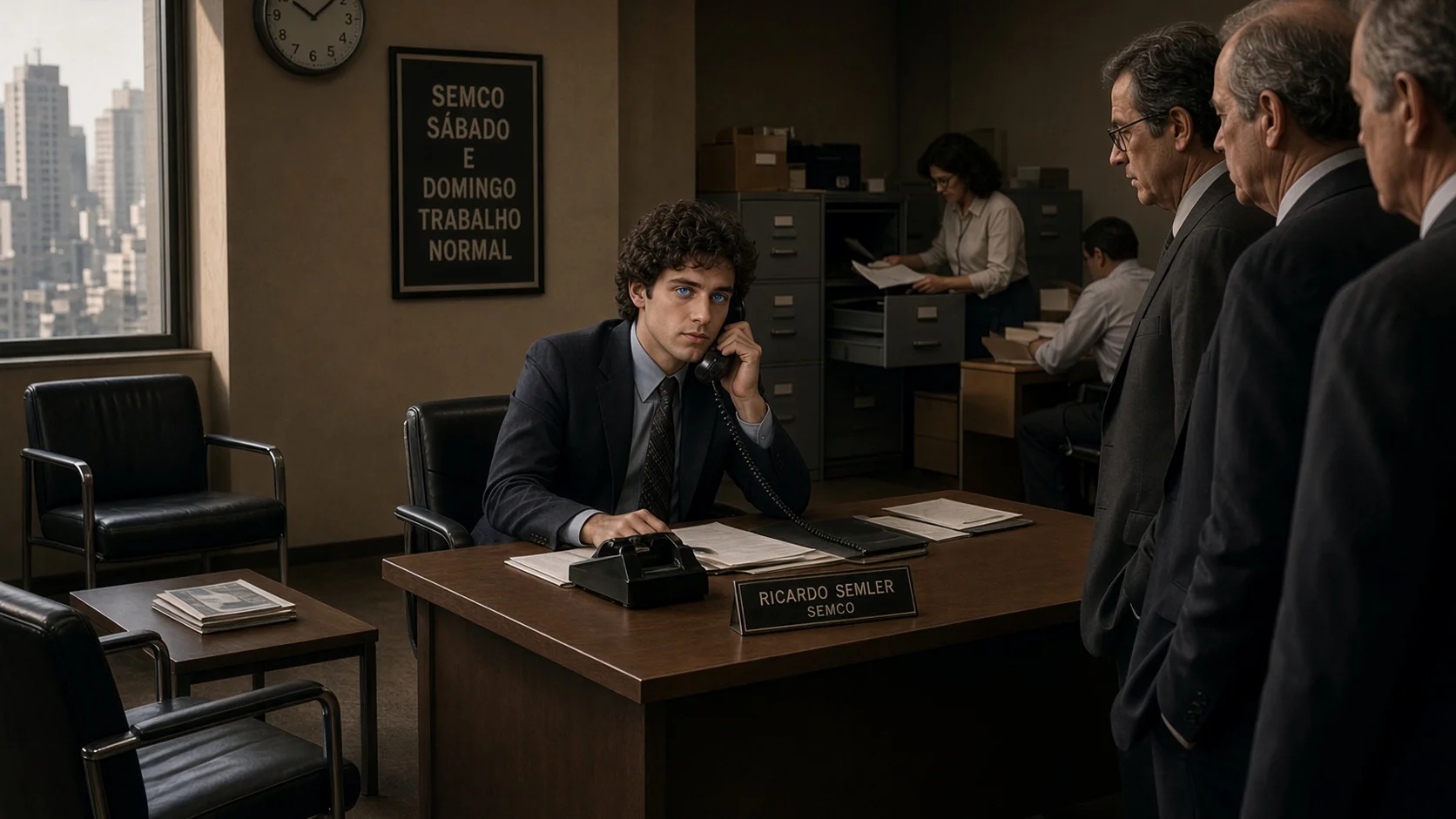
A Friday in 1980, while his father was traveling in Europe. Ricardo called in the company's top executives one by one, and by 6 p.m. he had dismissed about 60 percent of Semco's top management3, including the chief executive and the chief financial officer. The remaining staff spent the weekend going through paper filing cabinets to work out how the business actually ran. Semler later called the move rash: "I don't think I'd have the courage to do that today again."
What nearly killed it?
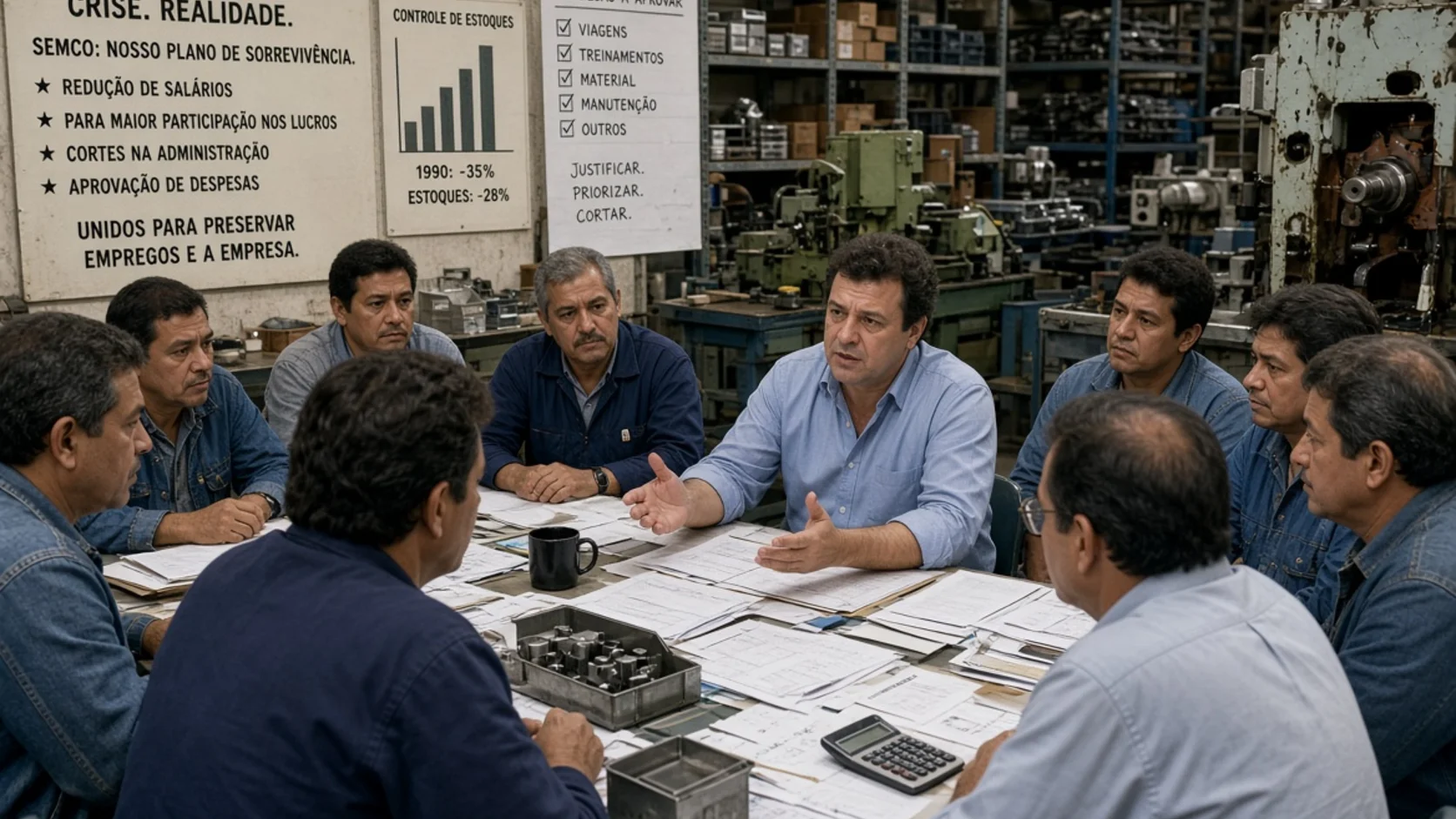
A government decree. In March 1990, Brazil's new president, Fernando Collor de Mello, froze much of the money in the country's bank accounts to fight hyperinflation, and the economy fell into a deep recession. Semco's workers responded with their own plan. They accepted pay cuts in exchange for raising their share of the profits to 39 percent, managers took a 40 percent cut, and employees gained the right to approve every expense the company made. Inventories fell 65 percent, delivery times shortened, and the defect rate dropped below 1 percent.
What happened that he couldn't have planned for?
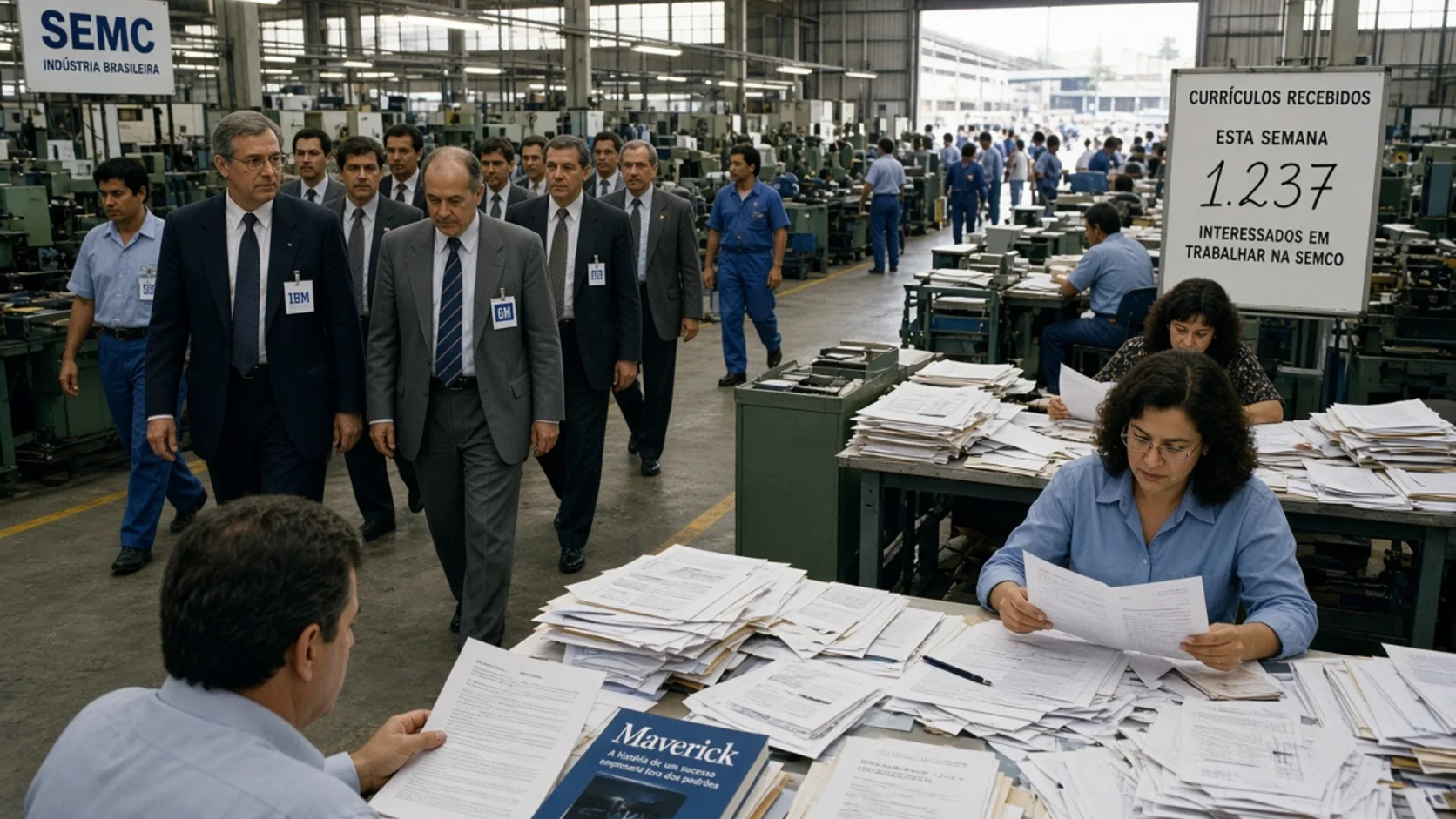
That other companies would line up to watch. His first book, Virando a Própria Mesa, became the best-selling nonfiction book in Brazil, and its English version, Maverick, became an international bestseller in 1993. That year a newspaper counted about 720 companies, including IBM, General Motors, Nestlé, and Dow Chemical, that had toured Semco to study its methods. The company was also flooded with job seekers4.

What showed that he was human after all?
He schedules time to think about dying. Many of his relatives, including his parents and grandparents, had melanoma, and after a scare of his own he started setting aside two days a week as if a doctor had given him a short prognosis. "On Mondays and Thursdays, I learn how to die," he said in a 2014 TED talk. "I call them my terminal days5." He keeps those days clear and spends them on whatever he'd want to do if time were running out, and he offered Semco's employees a version of the same idea: they could buy back their Wednesdays for 10 percent of their salary and spend them now, while they were young enough to enjoy them.
What was the change he brought about?
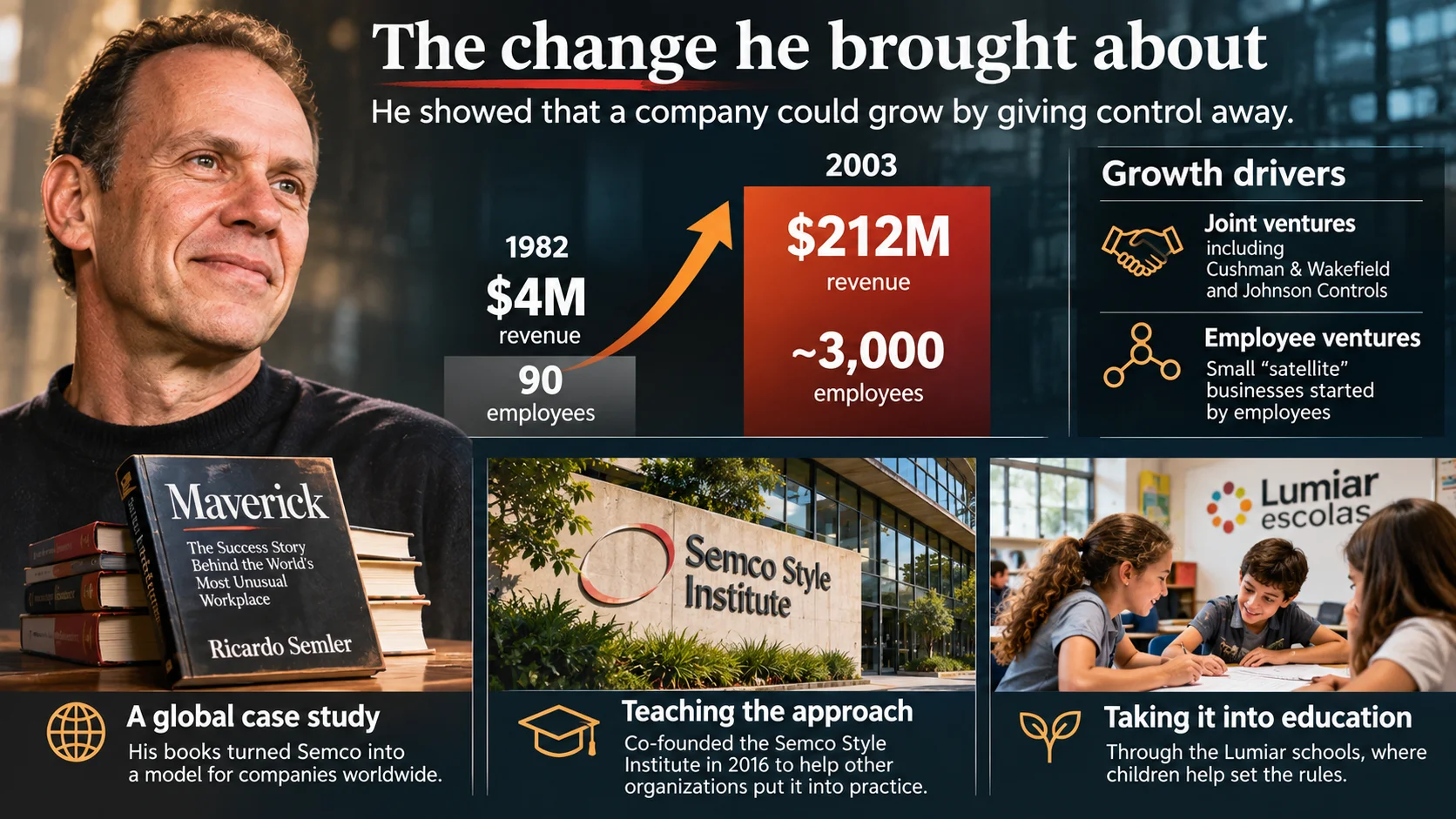
He showed that a company could grow by giving control away. Semco went from about $4 million in revenue and 90 employees in 1982 to about $212 million and roughly 3,000 employees in 2003, much of it through joint ventures with companies such as Cushman & Wakefield and Johnson Controls, and through small "satellite" businesses started by employees. His books turned the company into a case study around the world, he co-founded the Semco Style Institute in 2016 to teach the approach to other organizations, and he took the same ideas into education with the Lumiar schools6, where children help set the rules.

What did he believe that most reasonable people around him did not?
That a company doesn't need to know where its people are. Semco agreed on output with its employees and let them decide where and when to work. "We don't want to know how many holidays you're taking," he said. A salesperson who hit the week's target early could simply stop for the week7. To most managers of his generation, that kind of freedom looked like an invitation to abuse. Semler saw it as the condition for getting people's best work.

What did his trek cost him?
The benefit of the doubt. Almost everything known about how Semco's changes worked comes from Semler himself, in his books, articles, and talks. The historian Eleanor Glor has pointed out that there are few accounts from the workers who lived through them. And even admirers struggled to copy him. Executives who toured Semco often left wanting to try the ideas, Semler said, and then lost them in the pressure of everyday business.

What's the takeaway?
Ask why three times before you accept any rule. Semler's experiment started with a young man who nearly made himself sick trying to run a company the old way, and it worked because he kept asking what each rule was for. Some of what he found was radical, like self-set salaries and a vote on major decisions. Most of it was simpler: trust people with information, judge them on results, and give them back their time.
Timeline
-
1950s—Antonio Curt Semler builds Semco from a small machine shop into an industrial manufacturer.
-
1959—Ricardo Semler is born in São Paulo.
-
1980—His father hands him control of Semco; he dismisses about 60 percent of top management in a single day.
-
1982—Semco has about $4 million in revenue and 90 employees.
-
c. 1984—Diagnosed with an advanced case of stress at the Lahey Clinic in Boston.
-
1989—Publishes "Managing Without Managers" in the Harvard Business Review.
-
1990—Responds to the Collor Plan with a worker-designed agreement on pay, profit sharing, and spending; named Latin American Businessman of the Year by América Economia.
-
1993—Maverick is published in English.
-
1994—Named to Time magazine's Global 100 list of young leaders.
-
2003—Semco reaches about $212 million in revenue and 3,000 employees; publishes The Seven-Day Weekend.
-
2014—Gives the TED talk "How to run a company with (almost) no rules."
-
2016—Co-founds the Semco Style Institute.
Side notes
-
The ladder deal—One of his early acquisition attempts, a deal to buy a ladder company with little money, went so badly that his father paid a fine of about $200,000 to undo it. Learn more ↩
-
The cafeteria computer—Semler said the salary information was available on a computer in the company cafeteria, so anyone could check it. Learn more ↩
-
The Great Purge—That's what Semler called the day in Maverick. He met with about 15 top executives in all. Learn more) ↩
-
1,430 résumés—One engineering job drew 1,430 applications and took six months to fill. Semco had no personnel department, so employees took the résumés home to read them. Learn more ↩
-
Always clear—"Terminal Days are the two days a week in which my schedule is always completely clear," he told the podcaster Tim Ferriss. Learn more ↩
-
How Lumiar works—Each child has a tutor who looks after their well-being, and lessons can come from "masters," people with expertise and passion who may have no teaching background. Students of mixed ages meet in a weekly circle that makes the rules. Learn more ↩
-
Go to the beach—His example was a salesperson with a weekly quota. If they met it by Wednesday, they were told to "go to the beach and start again on Monday." Learn more ↩