
You do the responsible things. You work hard. You try to budget. You save where you can. And you check your balance, some of you religiously. After a recent direct deposit, today is one of the good days. The single number on your screen is higher than it's been in weeks. You should feel a sense of calm confidence, but you don't. Something is off. It's quietly nagging at you, but you can't articulate why.
You think: If my balance is positive, and that flight to Hawaii feels affordable, it probably is.
But, is it?
A bank balance measures quantity. It can't express commitment, priority, or time.
A bank balance is an incomplete number. In truth, it shows you less than it seems. It reports how much money is in the account at a certain moment in time. It doesn't report what that money must do before more arrives. It doesn't know that the house closing got delayed by a month. It doesn't know the car registration that just came in the mail is due on the 22nd. A bank balance measures quantity. It can't express commitment, priority, or time.
Commitment is what you've already promised the month. Priority is what must happen before anything else happens. Time is the gap between what's in the account now and what will be there two Fridays from now. A balance has no context for any of it.
This is the part that pulls the rug out from under you without warning. The tool you're using to decide, your bank, isn't built to answer questions like, "Can I really afford this?" and "How will this purchase affect my next two weeks until I get paid again?" The balance can only tell you that right now, in this account, there is this much money. The 40 small obligations threaded through the next two weeks have to live in your head.
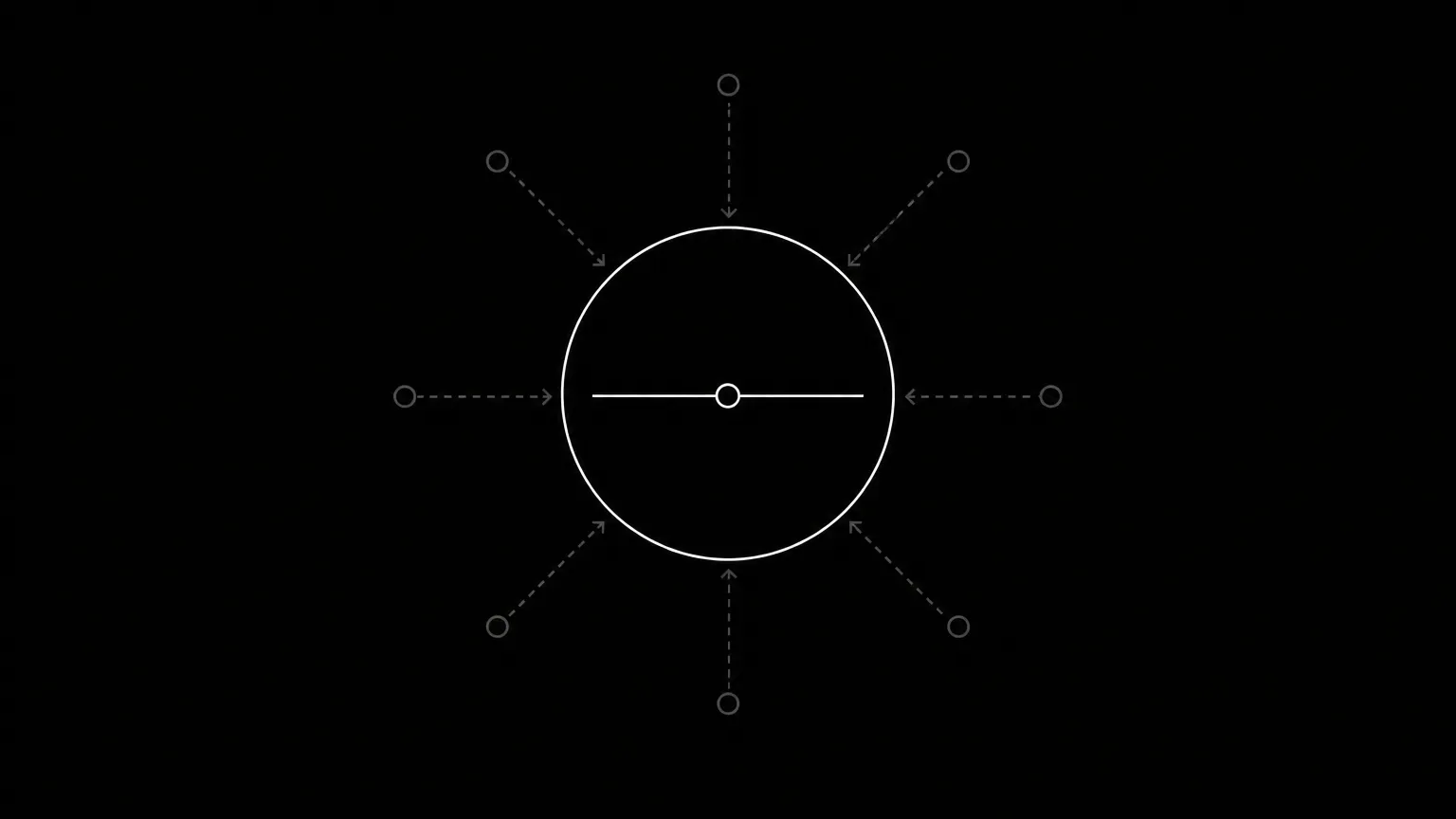
But your head isn't built to hold that ledger. Under uncertainty, your brain does something Daniel Kahneman and Shane Frederick described in 2002: it substitutes an easier question for the harder one. "Can I really afford this?" is hard. "Is my balance positive?" is easy. The substitution happens in a half-second, silently, and the answer only feels like an answer.
It's a reflex dressed up as a decision.
The usual answer to this is budgeting. The appeal is obvious. A budget supplies exactly what the balance won't: commitment, priority, time. But budgeting is a structure that doesn't hold. Instead of bending to the demands of life, it breaks. A budget describes what the money should do before, and what it did after the fact. But it has no power over what the money actually does. It handles the bookends, but can't write the book. The utilities dollars and the impulse-buy dollars are still the same dollars in the same account. The card doesn't ask the budget for permission. It asks the balance. So the substitution happens anyway, just with the added frustration that you paid a budgeting app for it.
A budget handles the bookends, but can’t write the book.
The cost of that substitution usually doesn't arrive as a sudden catastrophe. It arrives as a feeling. A chronic unease about money that persists even when the numbers look like they're in your favor. And it isn't confined to one income level. Obligations scale with the paycheck. The mortgage replaces the rent. The college fund joins the car loan. The quarterly tax payment lands the same week as a kid's birthday. As income grows, so does the number of things the balance has to hold at once. And the more layered those commitments become, the less a single number can account for all of them. The unease doesn't dissolve at higher income; it often grows with it. These aren't careless people. Millions of them open their bank app every morning. They find the same positive number. And still, somewhere underneath, they know the number isn't telling them what they need to know.
A bank balance can't show the whole picture, nor was it designed to. It's an incomplete number that was never equipped to tell you what you can afford. A tool that shows you a single number can't weigh the real question for you. So you toggle between your screen and your thoughts, trying to figure out how the mortgage, the groceries, and the birthday gift all fit inside the next two weeks. You're running a mental calculator because the tools you use can't make tradeoffs across everything competing for your money.
If you feel unsettled about your money despite doing everything right, the unease is a signal: your bank has reached the limit of what it was ever built to do. The gap is in the instrument, not in you. It's showing you only part of the picture. You deserve the full view.
Want proof? See for yourself. Open your banking app. Look at what it's actually showing you. And consider all that it can't see.
This has to change.
Sources.
- Kahneman, D., & Frederick, S. (2002). Representativeness revisited: Attribute substitution in intuitive judgment. In T. Gilovich, D. Griffin, & D. Kahneman (Eds.), Heuristics and biases: The psychology of intuitive judgment (pp. 49–81). Cambridge University Press. cambridge.org/core/books/abs/heuristics-and-biases/representativeness-revisited