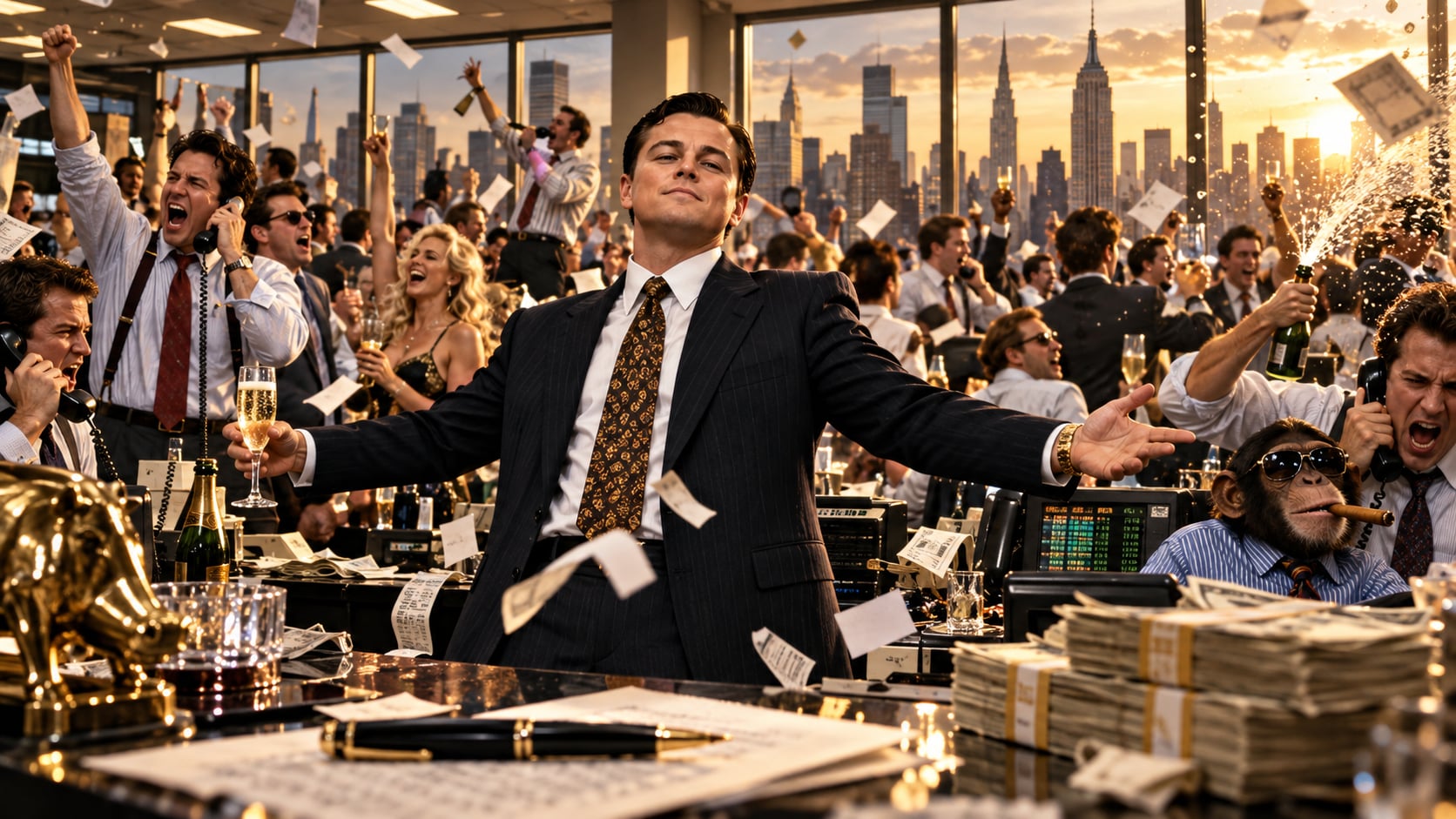
- Stratton Oakmont’s boiler-room fraud became one of the decade’s most quoted movies.
- Its persuasion machinery outlived prison—Belfort still licenses the same sales script today.
- The film exposing one fraud was itself financed by another: the 1MDB scandal.
Intro.
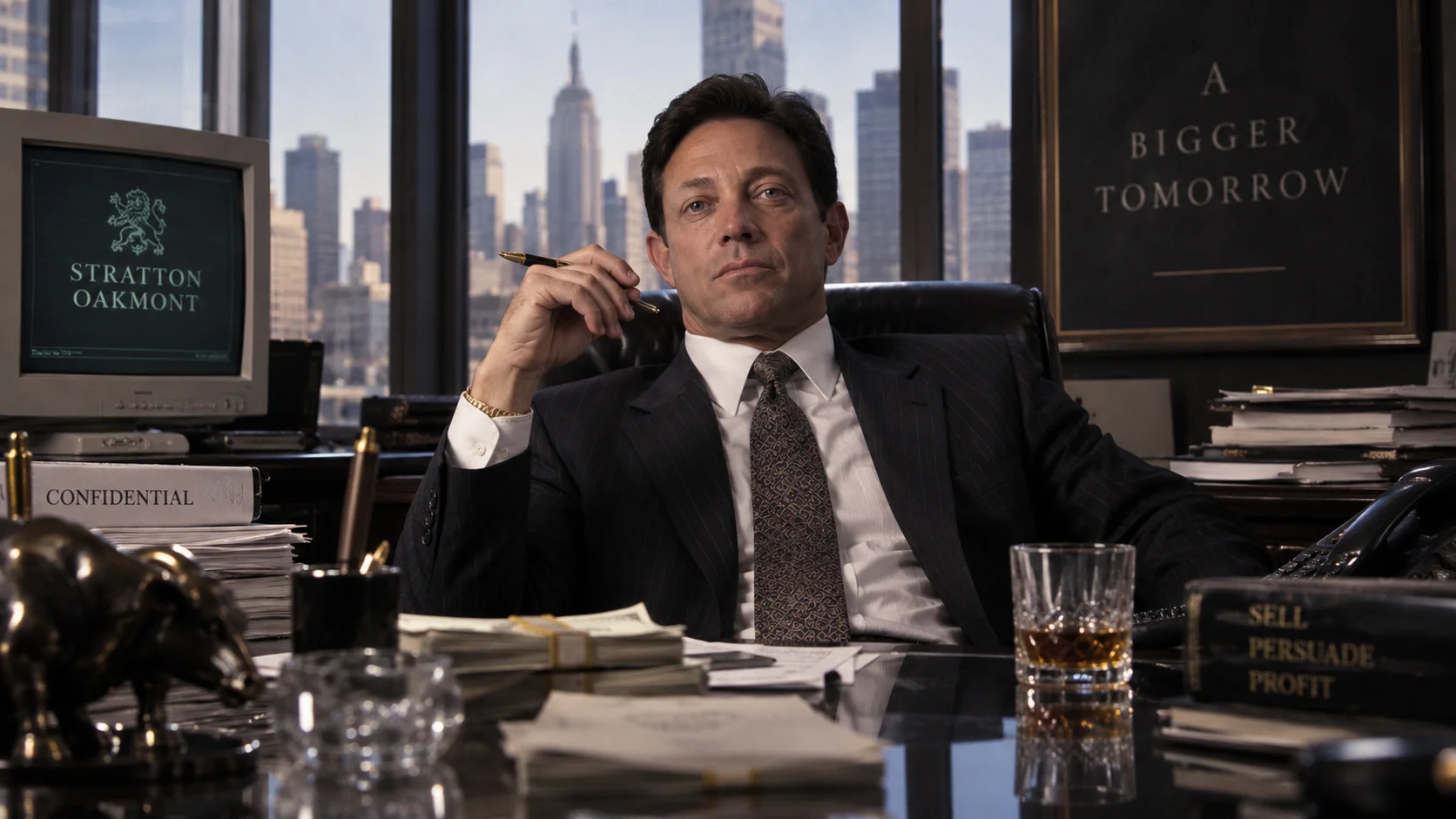
In April 2026, Jordan Belfort finished paying back the $110.4 million he was ordered to repay. It closed a loop more than two decades old: Stratton Oakmont collapsed in the mid-1990s, Belfort served 22 months, and thirteen years ago a movie turned the whole mess into the decade's most quoted party scene. The debt took decades to pay off. The film's version of him never had to.
Here's the plot.
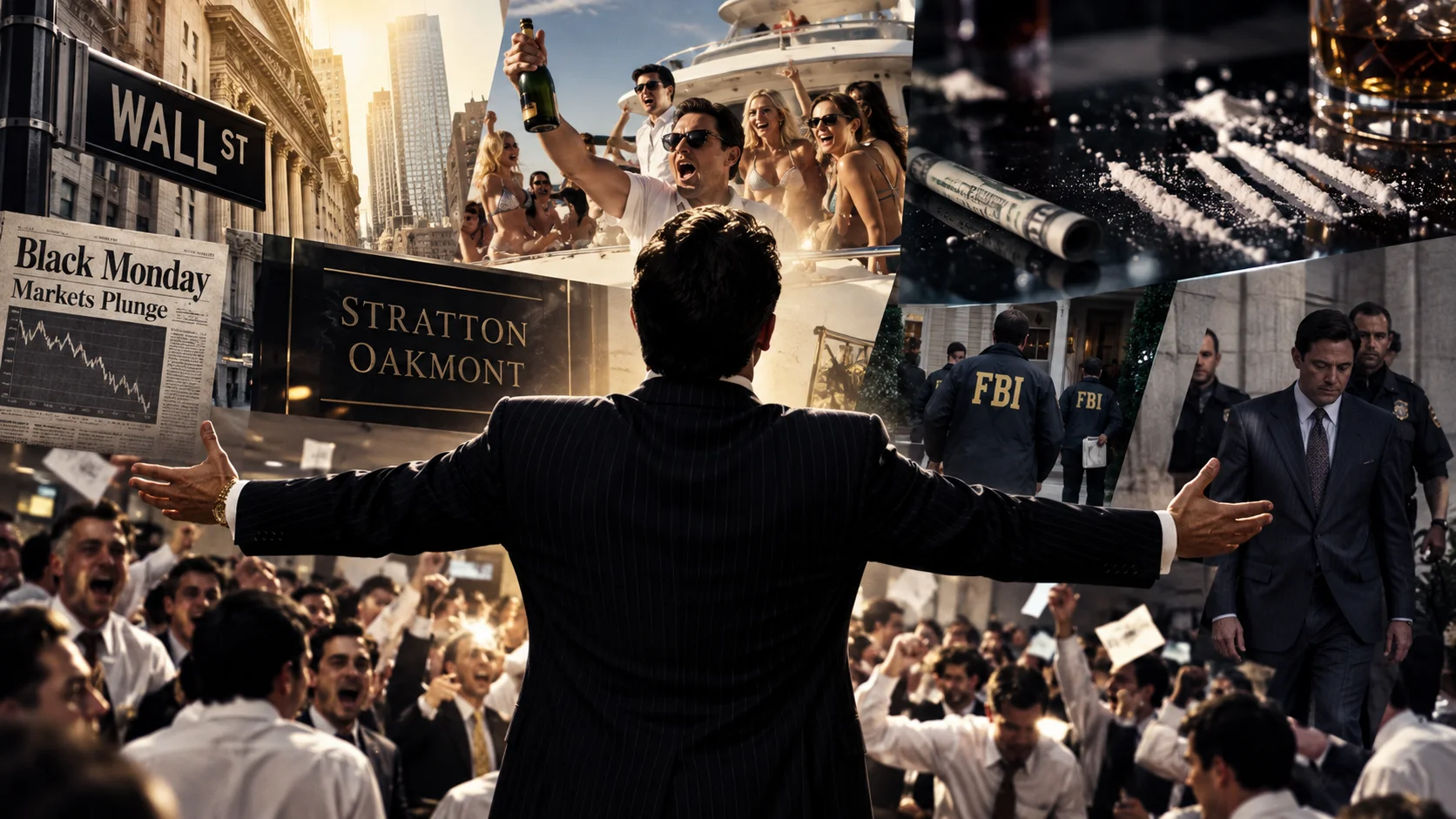
New York, late 1980s to mid-1990s. Jordan Belfort, fired from a Wall Street firm on Black Monday in 1987, builds Stratton Oakmont, a boiler-room brokerage that gets rich pumping worthless penny stocks onto unwitting investors, then dumping them before the price collapses. The wealth funds drugs, yachts, and excess; an FBI investigation eventually catches up, and Belfort cooperates, serving less than two years of a four-year sentence. The film has no real hero, only a narrator who never stops selling—to his brokers, his wife, and the audience.
Things you didn't know.
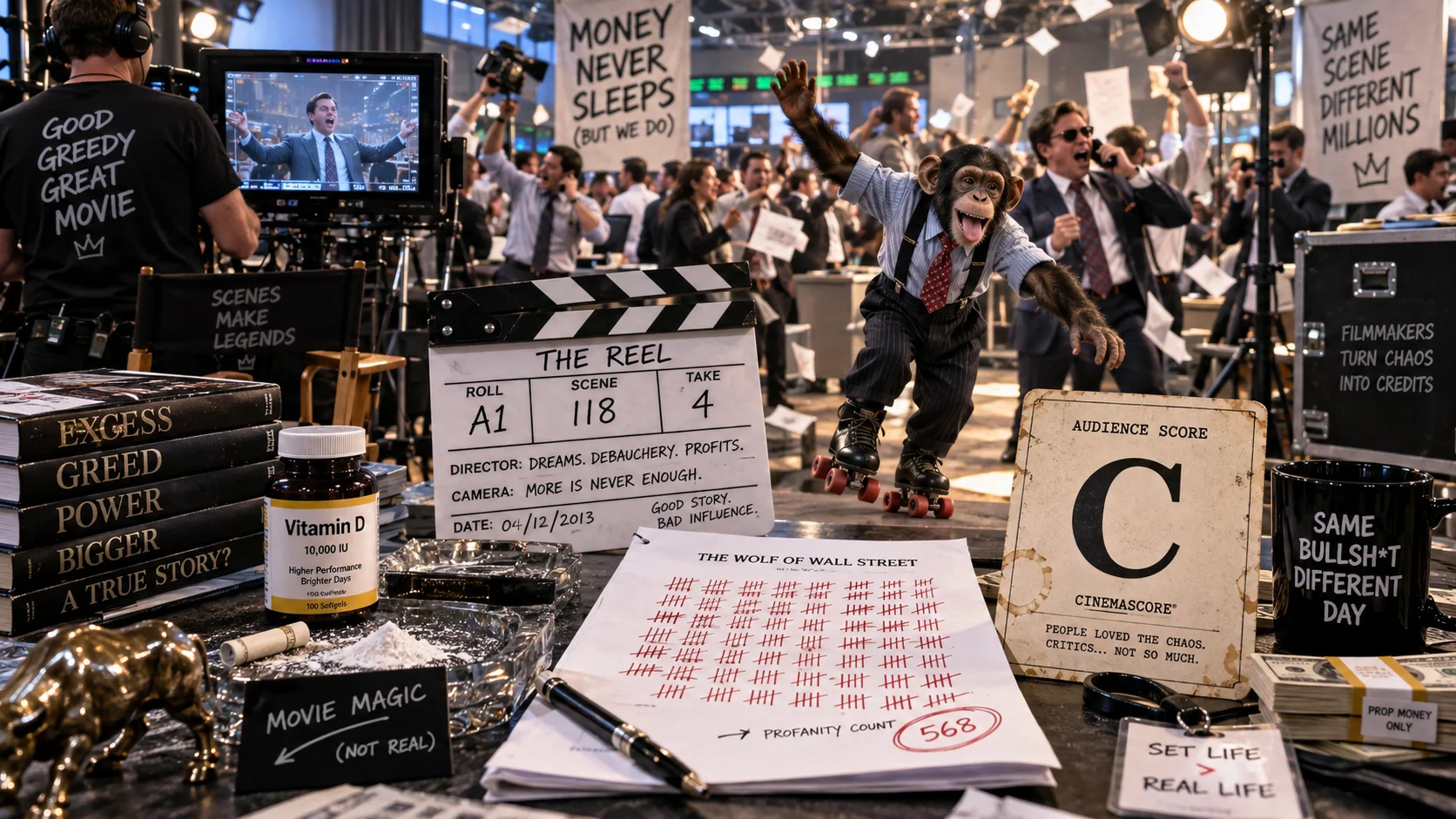
Jonah Hill was hospitalized for bronchitis after inhaling too much vitamin D powder, the on-set stand-in for cocaine. A trained chimpanzee named Chance learned to roller-skate in three weeks for one scene; animal-welfare groups later organized a boycott over its treatment. The film set a widely cited record for profanity in a major theatrical release—estimates range from 506 to 569 uses of the f-word—and still drew a rare "C" CinemaScore, the lowest of any wide release that week, from audiences unsettled by its refusal to moralize.
The director's gamble.
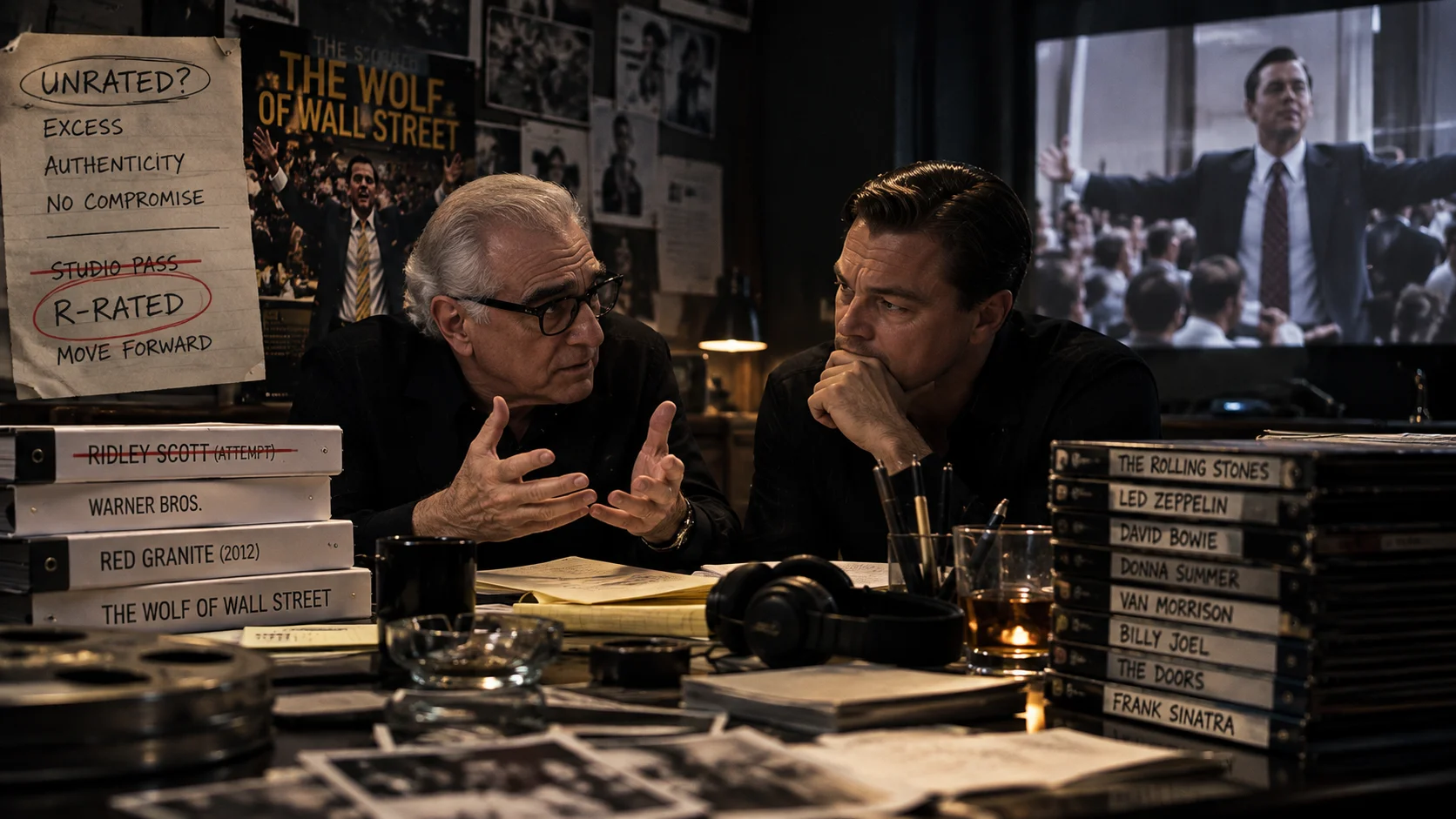
Martin Scorsese, working with Leonardo DiCaprio for the fifth time, inherited the project after Ridley Scott's earlier attempt collapsed. He and DiCaprio pushed for an unrated cut faithful to the book's excess; Warner Bros. balked, and the project sat for years until independent financier Red Granite Pictures agreed, in 2012, to back the R-rated version without those restrictions. Scorsese skipped an original score entirely, building the soundtrack instead from a curated song list overseen by executive music producer Robbie Robertson and music supervisor Randall Poster.
The cast, and the roads not taken.
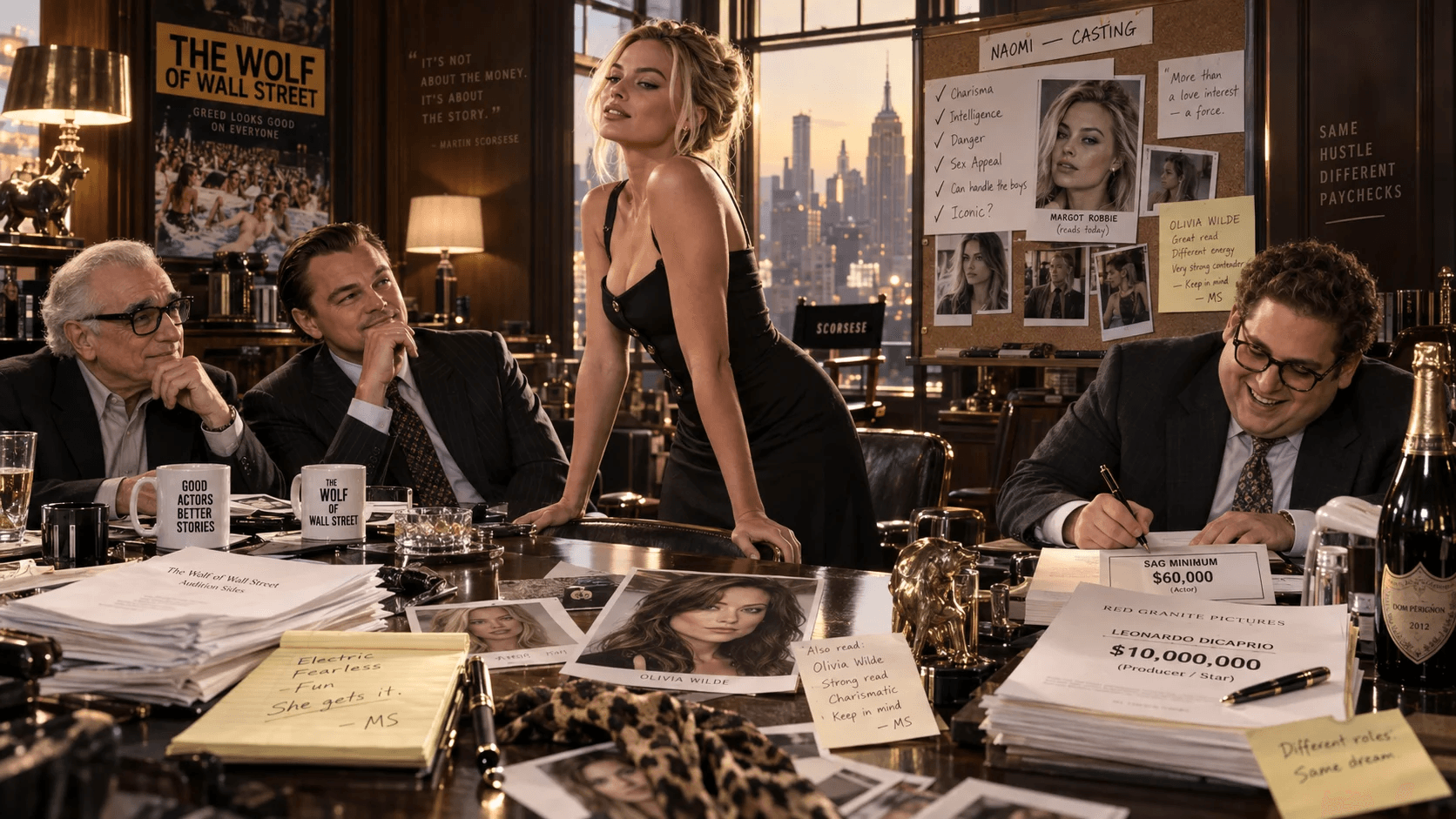
Margot Robbie won Naomi over more established names off an audition reportedly intense enough to convince Scorsese on the spot; Olivia Wilde also read for the part but was turned down as "too old," despite being a decade younger than DiCaprio. Jonah Hill took his role for scale—reportedly the SAG-AFTRA minimum, about $60,000—just to work with Scorsese, a fraction of DiCaprio's reported $10 million as star and producer.
Where it came from.
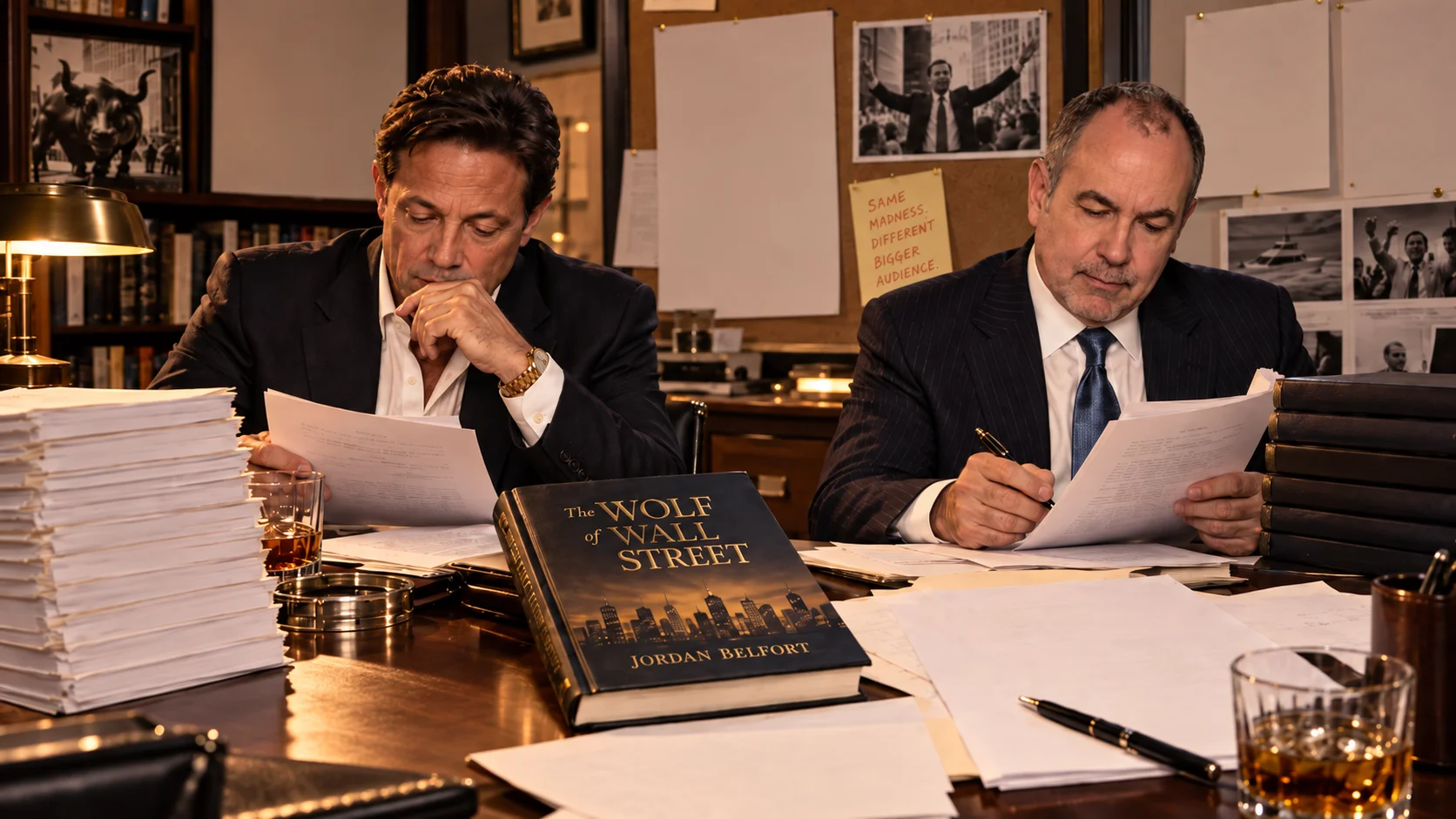
Everything traces back to Jordan Belfort's 2007 memoir, The Wolf of Wall Street, written after his release from prison. Terence Winter adapted the screenplay; DiCaprio and Warner Bros. optioned the book while Belfort was still finishing it, and the adaptation took more than five years and several false starts to reach the screen.
The tech behind the tale.
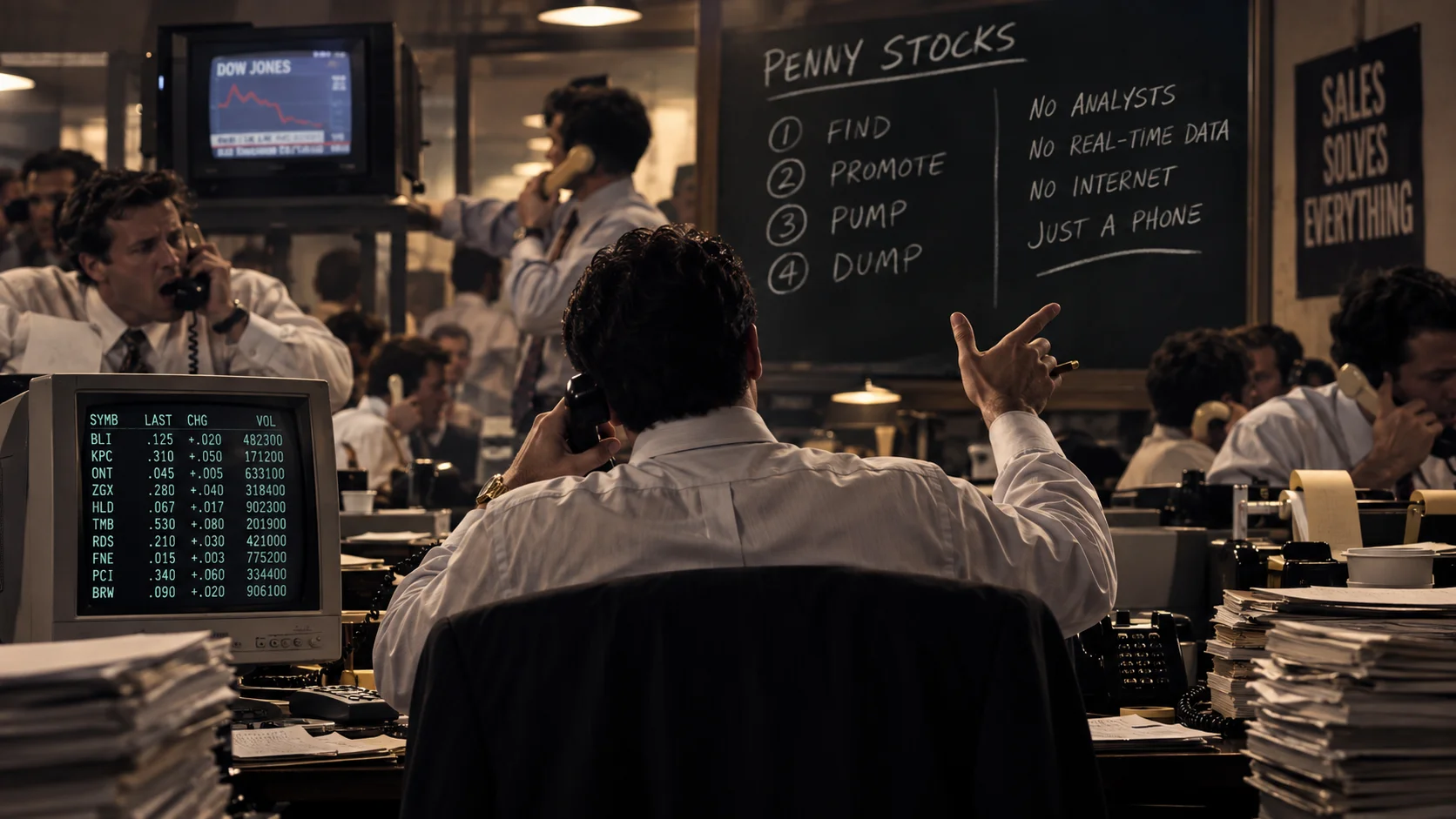
Stratton Oakmont's fraud ran on a specific gap in market infrastructure: in the pre-internet 1990s, thinly traded penny stocks had no independent, real-time price data available to retail buyers, so a broker's phone pitch was effectively the only information most of them ever got. That information vacuum, more than any single lie, is what let a scripted sales pitch move a stock price at scale. After prison, Belfort repackaged that same persuasion machinery into a legitimate product, the "Straight Line System," a sales methodology he still licenses and teaches at seminars worldwide.
The invisible hand.
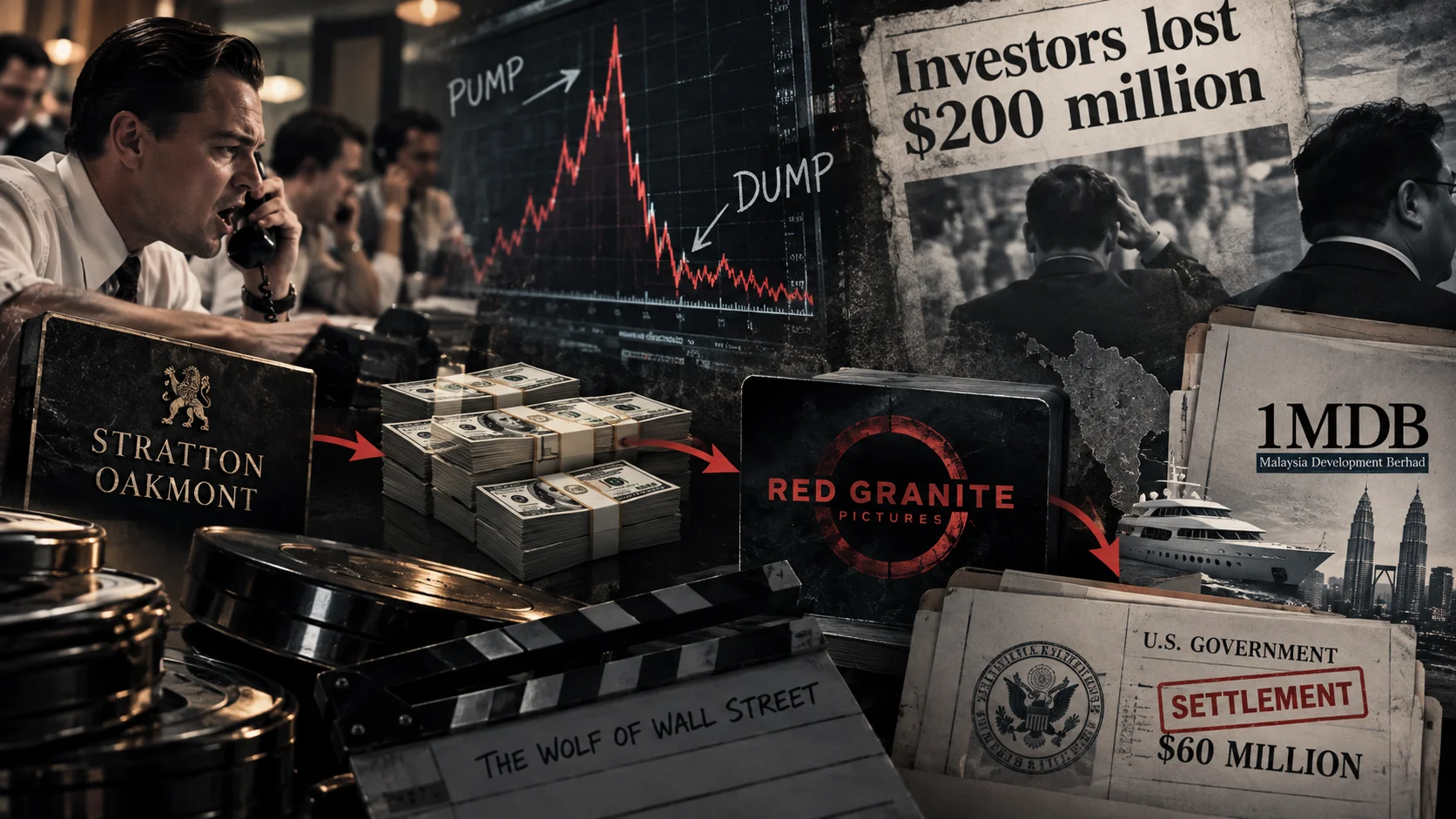
Stratton Oakmont ran a classic pump-and-dump: quietly take a position in a thinly traded stock, hype it hard by phone to retail buyers, then sell into the buying pressure that created. Investors lost an estimated $200 million. The stranger twist: producer Riza Aziz's Red Granite Pictures took a $9 million advance from a company tied to fugitive financier Jho Low, later revealed to be laundering money stolen from Malaysia's 1MDB sovereign wealth fund. Red Granite settled with the U.S. government for $60 million in 2018, without admitting wrongdoing—a film about fraud, financed in part by one.
By the numbers.
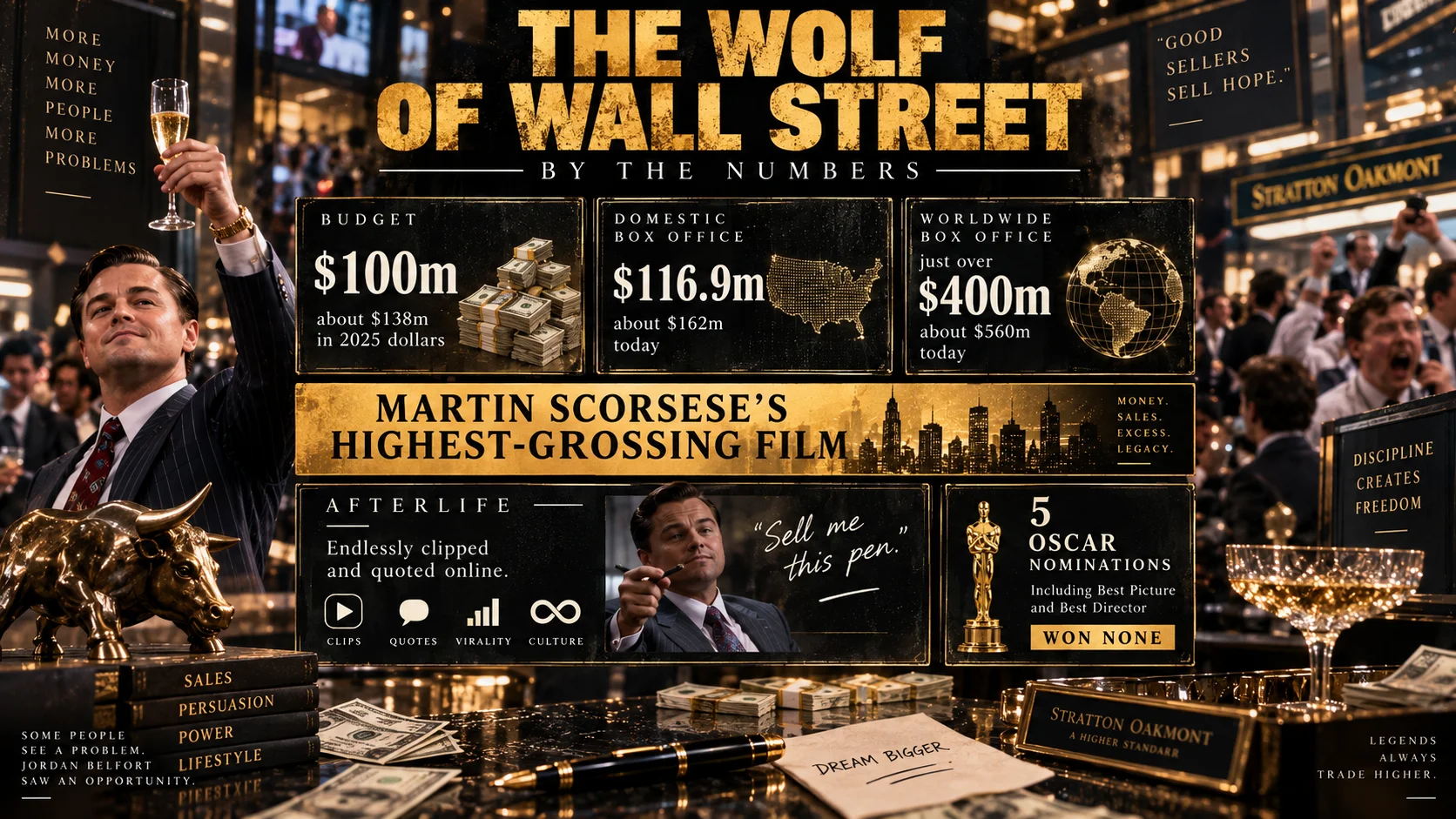
The Wolf of Wall Street cost about $100 million to make, roughly $138 million in 2025 dollars, and comfortably earned it back: $116.9 million domestically (about $162 million today) and just over $400 million worldwide (about $560 million today), making it Martin Scorsese's highest-grossing film. Its afterlife has been just as lucrative in a different currency: endlessly clipped and quoted online, it became one of the decade's most-referenced movies, "sell me this pen" and all. It earned five Oscar nominations, including Best Picture and Best Director, and won none.
Figures adjusted to 2025 dollars using BLS CPI (~1.38x).
Why it endures.
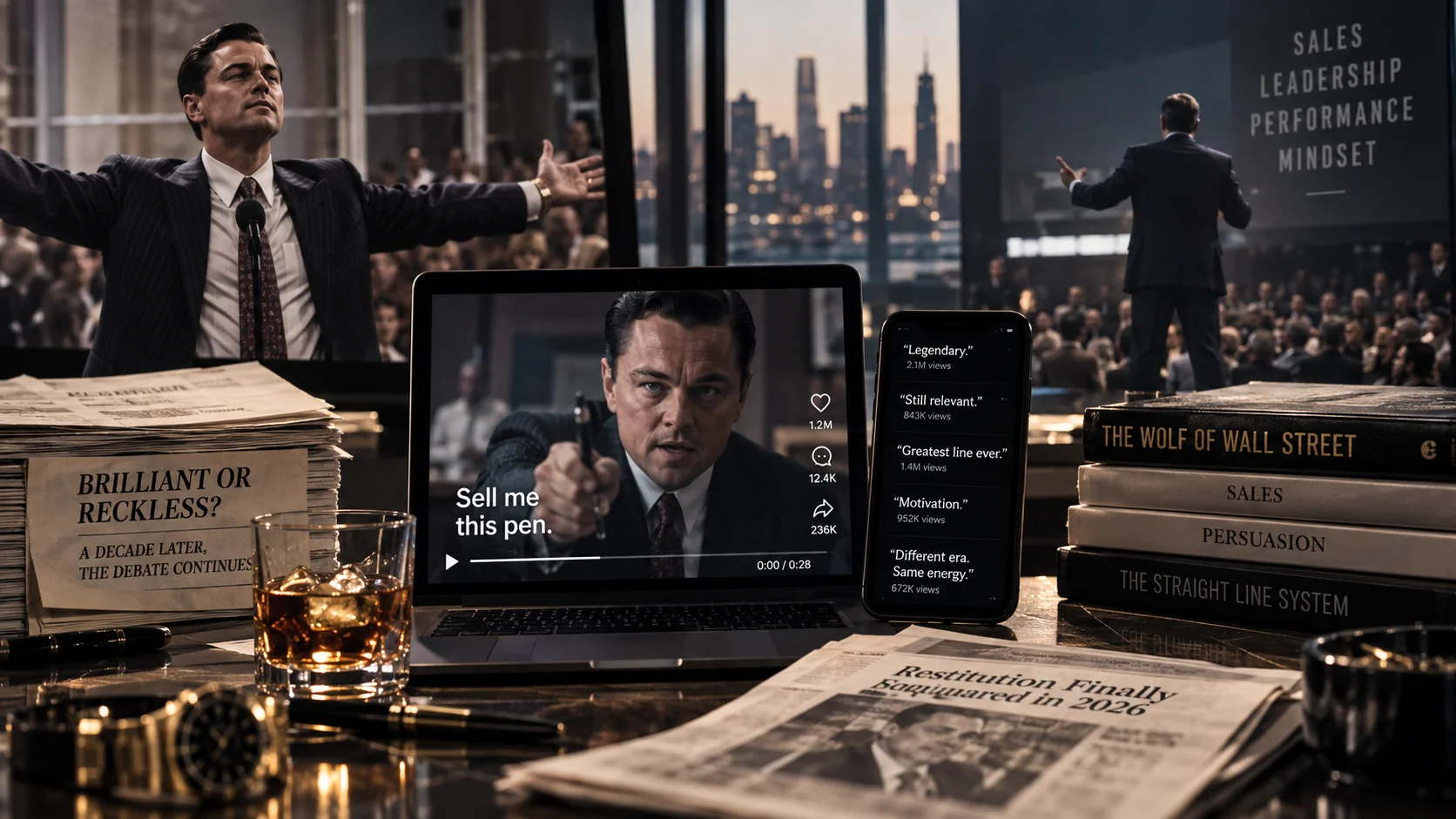
Critics split hard on the film at release, and never really stopped: some called it a dazzling indictment of greed, others accused it of glamorizing the fraud it depicts. That argument is the reason it never left circulation. A movie that refuses to moralize keeps getting re-litigated, clipped, and quoted by the exact subculture it was arguably mocking, and Belfort's own second act—paid speaker, licensed sales guru, restitution finally squared in 2026—reads like an epilogue Scorsese couldn't have scripted better. The pitch outlived the prison sentence. That was always the point.
