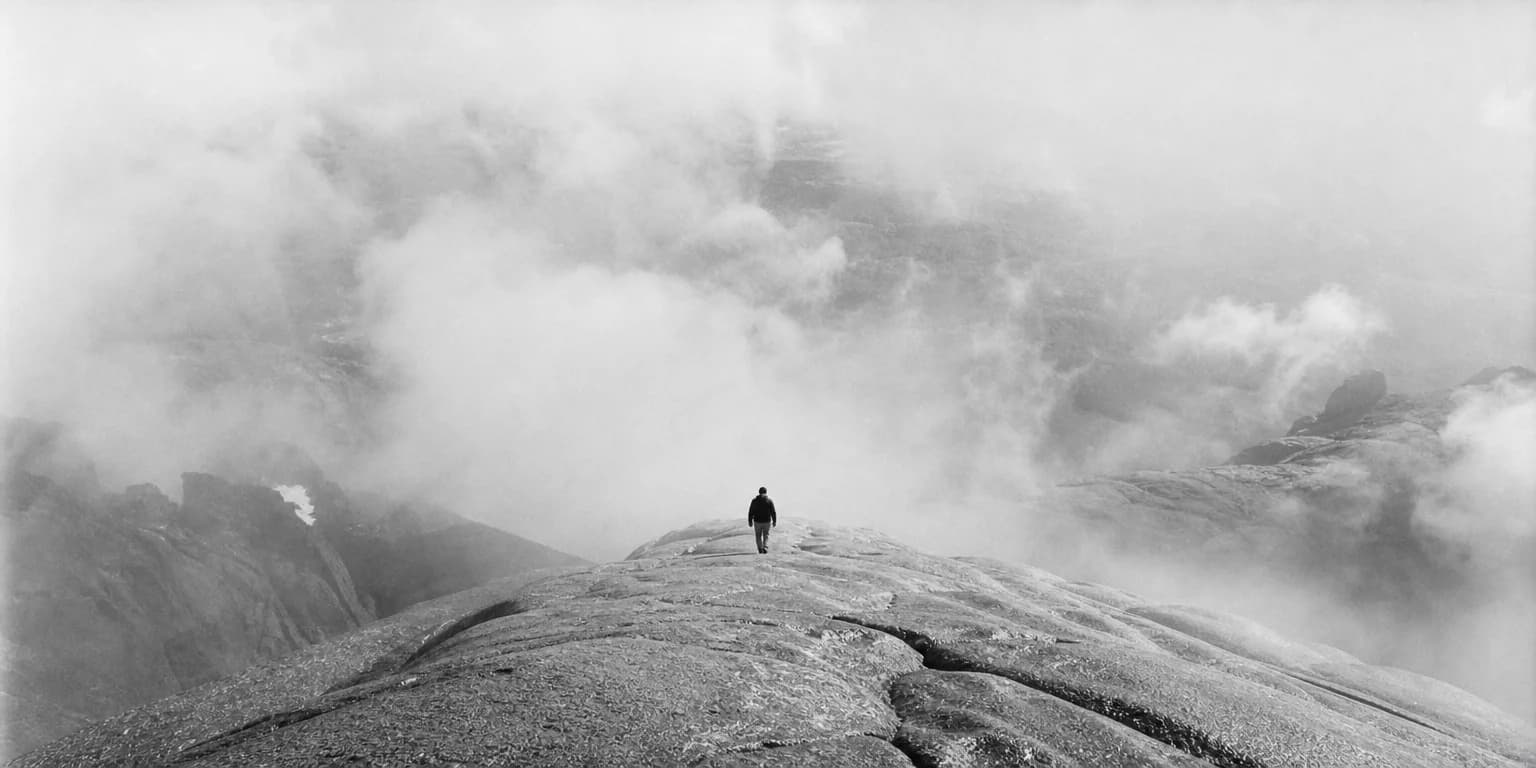
Yvon Chouinard forged his own climbing gear by hand, built it into Patagonia, and signed the whole company over to fight climate change.
Who are they—and what were they like before anyone cared?
Yvon Chouinard is the self-taught blacksmith and climber who founded Chouinard Equipment in 1957, then Patagonia. Before any of it, he was living mostly out of his car, climbing and surfing, with no company and no plan to start one.
What did their life look like before their trek began?
A falconry club he'd joined as a teenager, rappelling cliffs to check hawk nests, is how he found climbing in the first place; he made his first solo peak ascent, in Wyoming, at 16. For years afterward, that was the whole plan: climb, surf, get by.
What did they see that other people didn't?
That the pitons climbers depended on were quietly ruining the rock they climbed on. Everyone else kept hammering them in without a second thought. He treated the damage as a problem to solve, not a cost of doing business.
What problem were they obsessed enough to solve?
First, that nothing on the market matched what serious Yosemite climbing required. Later, once his own pitons dominated that market, a second problem surfaced: the repeated hammering was scarring the same granite cracks climbers depended on.
Why did this matter personally to them?
"I'm a craftsman who had a better idea of how to make things. It so happened people wanted them," he told Inc. magazine in 1992. He wasn't chasing a company. He was chasing gear worth trusting his life to.
What did they risk—and where did the first money come from?
By one account, he sold his early pitons for $1.50 apiece from the trunk of his car, then borrowed $820 from his parents to start forging carabiners too, out of a shop behind their house. No outside investors were involved; the risk, and the debt, were entirely his own.
What made the idea economically work?
Direct and self-funded from the start: he sold gear he'd already made and reinvested the proceeds rather than raising outside capital. When apparel overtook hardware in the early 1970s, the discipline carried over, durable gear meant to be replaced rarely, sold through the company's own catalog and stores, with a fixed share of sales tithed to environmental causes starting in 1986.
What was the decision or moment after which nothing was the same?
By 1970, steel pitons were Chouinard Equipment's best-selling product, reportedly around 70 percent of revenue, and he killed the line anyway. His 1972 catalog, co-written with partner Tom Frost, argued that pitons were scarring the rock and urged climbers toward removable aluminum chocks instead. He gave up his largest revenue source on principle, well ahead of any market pressure to do so.
What nearly killed it?
Twice, the business nearly came apart. Chouinard Equipment filed for Chapter 11 in 1989 after a product-liability dispute, and its assets went to employees, who built the remains into what's now Black Diamond Equipment. Then, in 1991, a recession froze credit and stalled sales at Patagonia itself, forcing roughly 120 layoffs in a single month. "We were on a suicide course," he said afterward. "We were exceeding our limits, financially and mentally."
What happened that they couldn't have planned for?
A road trip gave the company its name. In 1968, Chouinard and three friends, including Doug Tompkins, drove a van from California to the tip of South America to climb Mount Fitz Roy, surfing and skiing along the way. At the summit they planted a flag reading "Viva Los Fun Hogs." When Chouinard needed a name for his new clothing line a few years later, he took it from the region that had shown him.
What's the detail that makes this person suddenly human?
He once spent 72 hours in a New Mexico jail over a car-delivery dispute, with $10 between him and a friend, and turned 30 laid up in a snow cave in Patagonia for roughly a month, after driving an ice axe into his own knee.
What did they ultimately build or change?
A company worth roughly $3 billion, and then a different kind of ending: in September 2022, he transferred the whole thing to the Patagonia Purpose Trust and a nonprofit called the Holdfast Collective, so that essentially all future profit not reinvested in the business funds climate action and land conservation. "Earth is now our only shareholder," he said at the time.
What did they believe that most reasonable people around them did not?
That a company's most profitable product line was worth killing on principle, and that a business large enough to matter was worth giving away rather than keeping or passing down — positions most of his industry peers would have called financially irrational.
What did their trek cost them?
Two bankruptcies' worth of financial strain, an industry's skepticism after he walked away from his own best-selling product, and, in the end, an estimated $1.2 billion personal stake he chose to give up rather than keep.
What can an ambitious person steal from this story?
Success was never the summit for him; it was leverage. He built a business by hand because nothing on the market was worth trusting, killed his own best-selling product once it cost the rock more than it earned him, and gave the whole company away once it was large enough to matter, rather than pass it down or cash it out. Climbing something worthwhile always ends in a decision about what to do at the top. He answered it by walking back down empty-handed, on purpose.