
- Fired at 45 from the only firm he had ever worked for.
- Launched an index fund the industry dismissed as un-American and doomed to fail.
- Gave up the ownership stake that would have made him a billionaire.

Who was he—and what was he like before anyone cared?
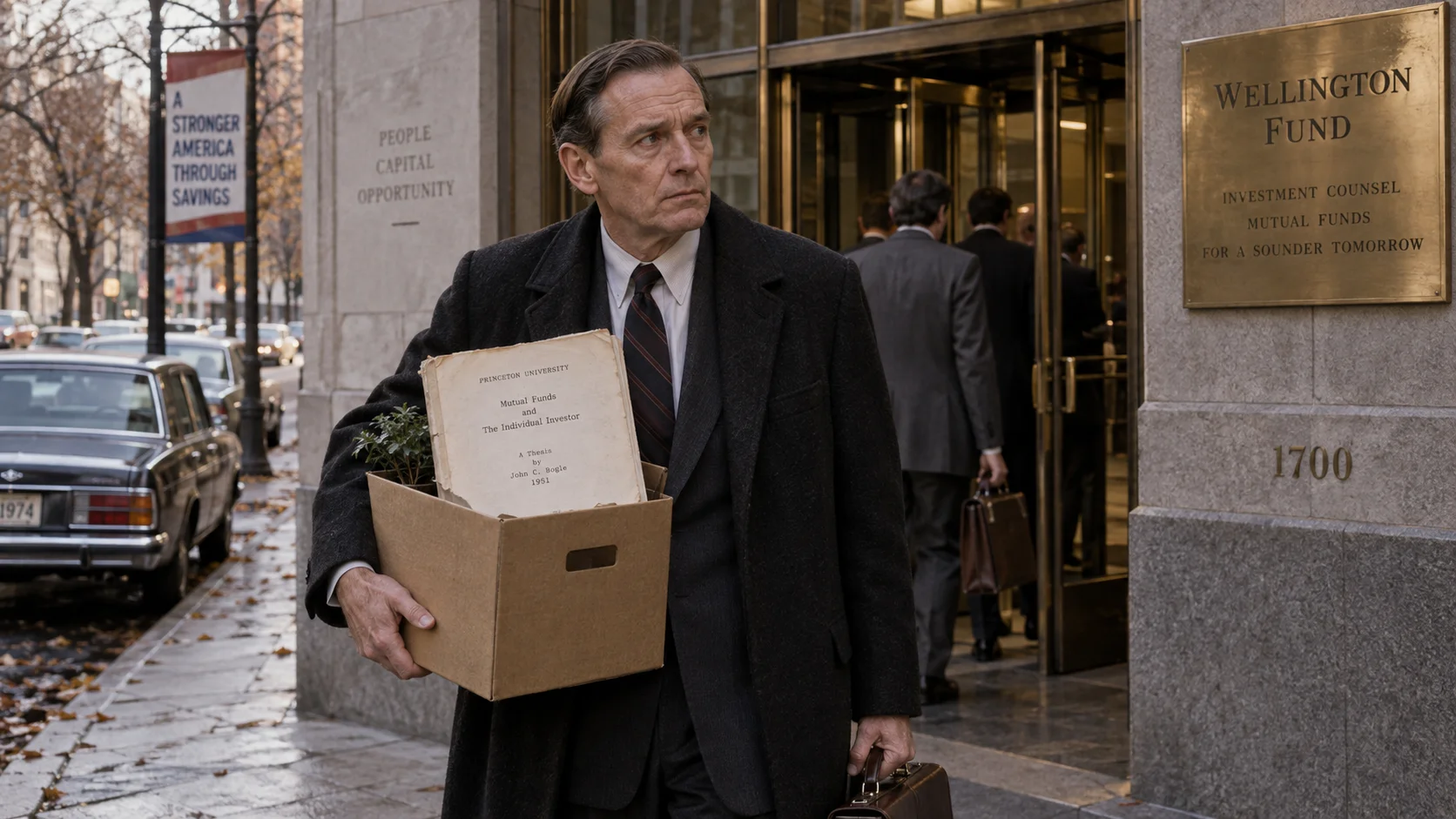
John Clifton Bogle was born May 8, 1929, in Montclair, New Jersey, with a twin brother, David. Before anyone had heard of him, he was a scholarship student at Princeton hunting for a thesis topic nobody had written on, and he picked the mutual fund industry because a recent Fortune article had left no academic study behind it. He had no family money and no capital — only a 130-page paper.

What did his life look like before his trek began?
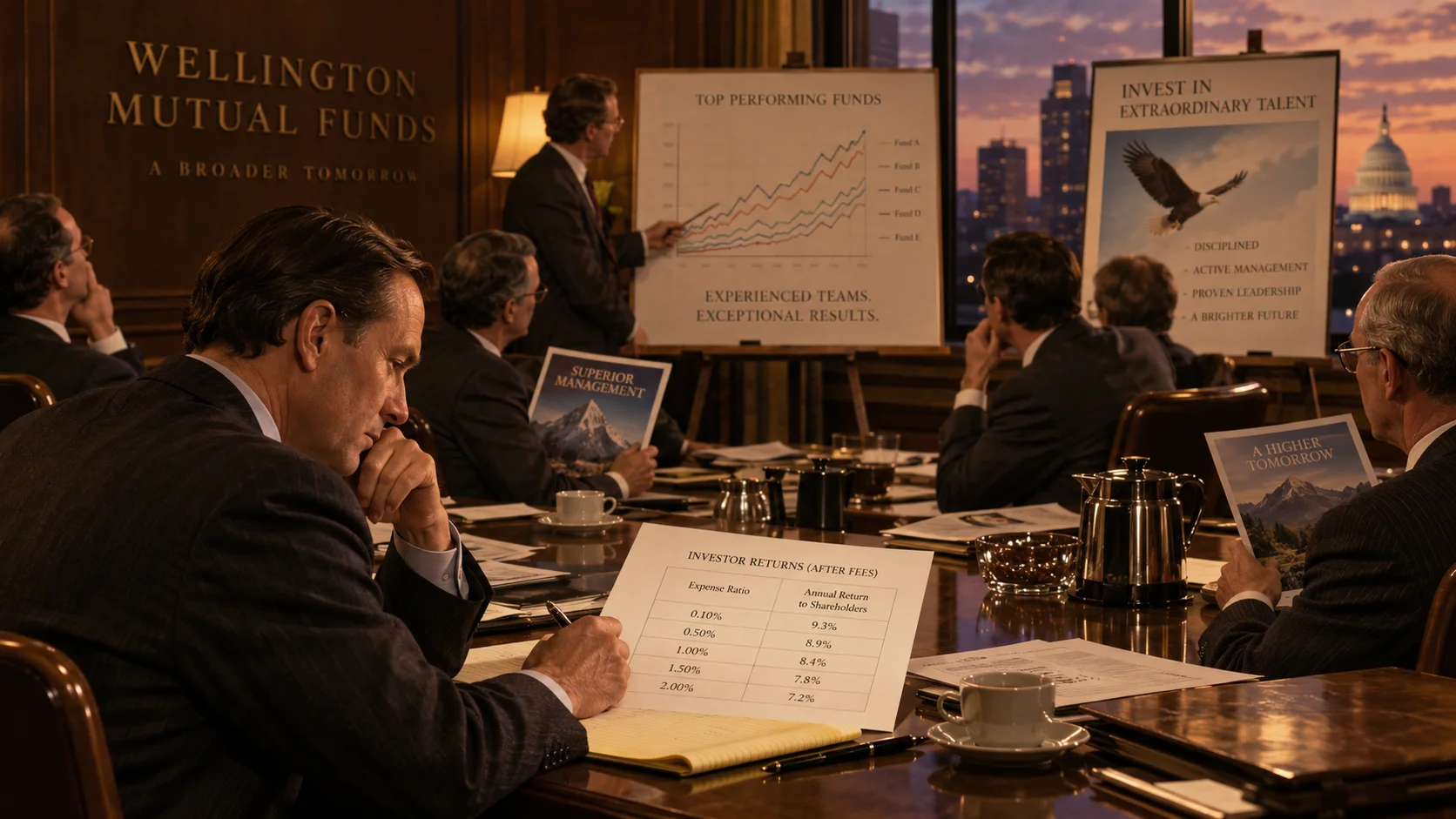
He worked his way through Princeton, and that thesis was the whole of his prospects. Finished in 1951, it argued that funds should serve their shareholders rather than their managers, and shouldn't claim to beat the market. It reached Walter L. Morgan, founder of the Wellington Fund1, who hired him on graduation.
What did he see that other people didn't?
That the cost of investing, not the skill of the investor, was the variable that reliably determined what a shareholder kept. The industry sold skill and charged for it; Bogle noticed the charge was the only part guaranteed to arrive. Economist Paul Samuelson's 1974 challenge to the industry—that professional managers rarely beat a simple index—became the argument Bogle later built into a fund. Most of the industry read the same case and did nothing.

What problem was he obsessed enough to solve?
How to give an ordinary investor the market's return without paying someone to try to beat it—and, harder, how to build a company that wouldn't eventually be pulled toward charging more. The second half is the part almost everyone skips: a low-cost fund inside a normal firm has shareholders who want the fee raised. Bogle's problem was structural, not financial.
Why did this matter personally to him?
He had argued it in writing at 22, then spent two decades inside a firm that did the opposite. The thesis wasn't a position he arrived at late. It was what he'd said before he had anything to lose by saying it, and the merger that got him fired was him departing from it. He later called that merger his biggest career mistake.

What did he risk—and where did the first money come from?
There was no first money, and that's the unusual part. Vanguard wasn't funded; it was carved out of the firm that had just dismissed him, as an administrative company owned by the funds themselves rather than by him. He put in no capital and took no equity, a founder's stake in an ordinary company this size would have made him one of the wealthiest men in finance.

What made the idea economically work?
Vanguard is owned by its member funds, which in turn are owned by fund shareholders, a structure the company still describes in exactly those terms. There's no outside owner to pay, so scale returns to shareholders as lower fees instead of leaving as profit. Fees Vanguard has cut more than 2,000 times since 1975.
What was the decision or moment after which nothing was the same?
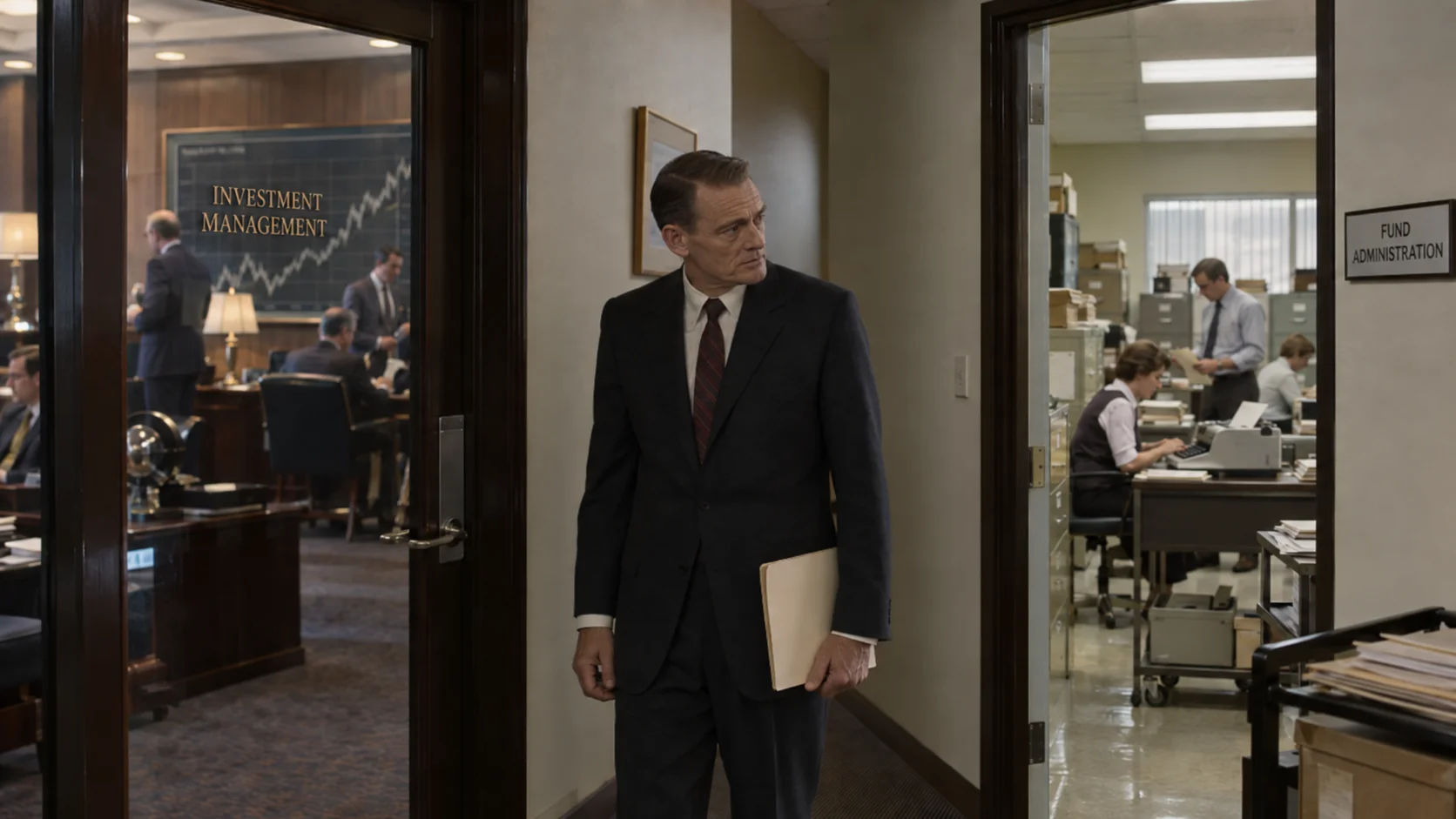
1974: he was dismissed from Wellington for approving a merger he later called extremely unwise, and the terms of the split left him running fund administration but barred from managing client money. Almost every account treats the firing as the setback and the index fund as the achievement. It's the other way round. Being barred from managing money is what left him nothing to sell except cost, and that restriction is what built the thing that outlasted him.
What nearly killed it?
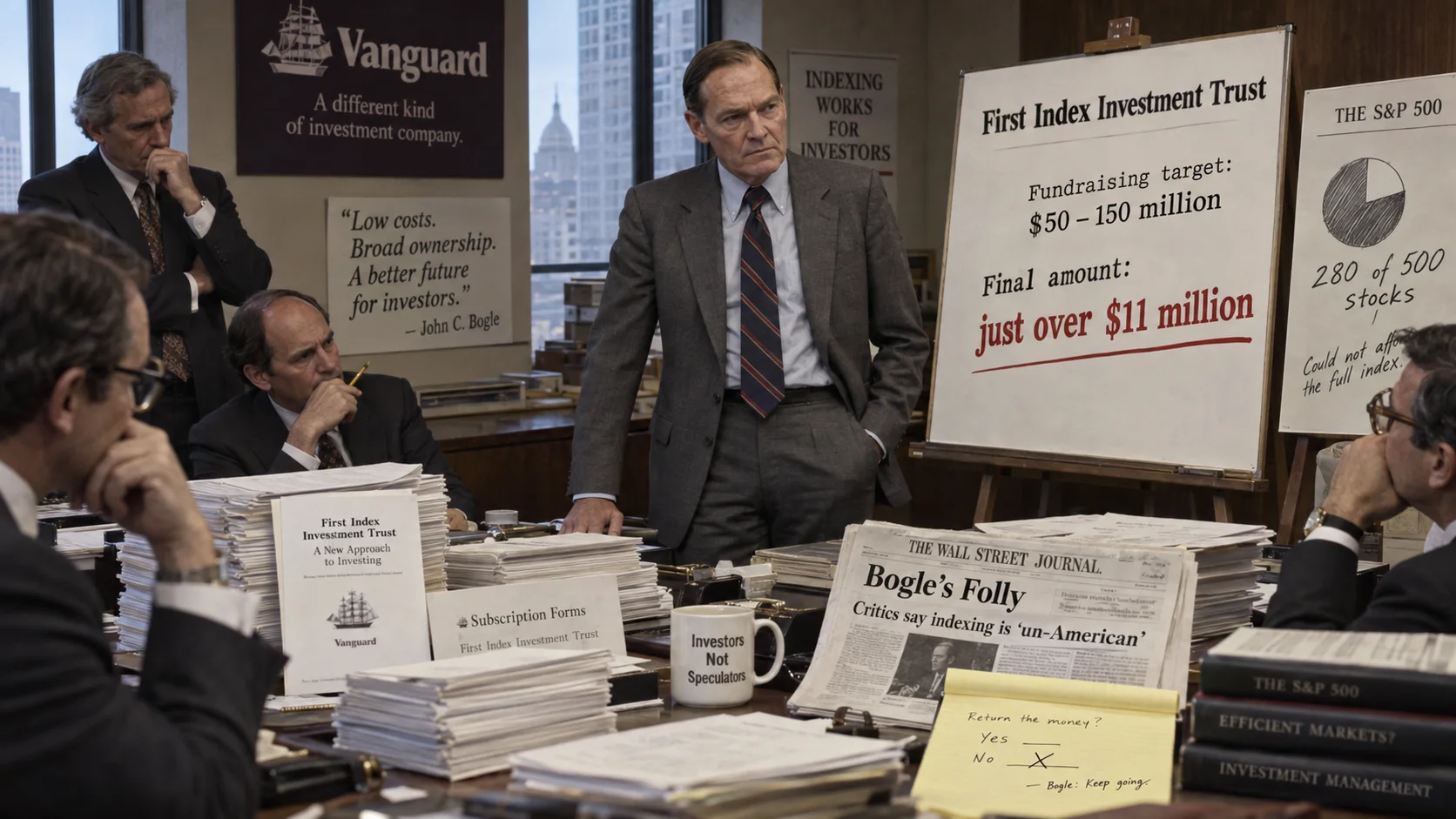
The first index fund was a failure on arrival. First Index Investment Trust sought $50–150 million and raised a little over $11 million. Bogle's own words were "an abject failure." It couldn't afford all 500 stocks in the index and bought 280. Underwriters proposed giving the money back; he refused. The industry called it Bogle's Folly and indexing un-American.
What happened that he couldn't have planned for?
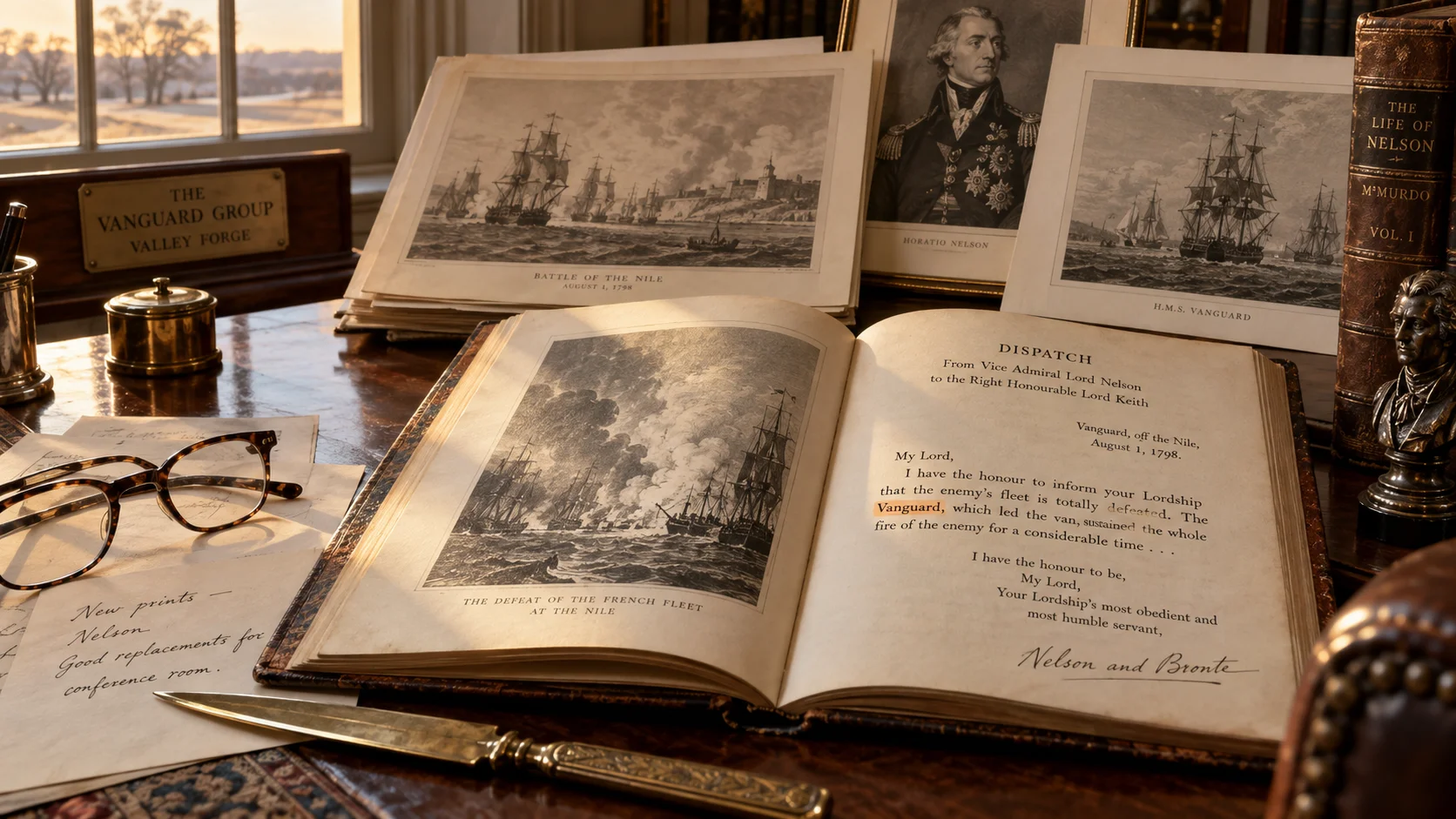
He needed a name that week, and it arrived by accident. In the late summer of 1974, a dealer in antique prints called on him at Valley Forge—grateful for the business, since Bogle had been buying prints to replace property lost in the Wellington split—and left him a book on naval history. Inside it, Bogle found Nelson's dispatch after the Battle of the Nile, and beneath the signature, the name of the ship it was written aboard: Vanguard2.

What's the detail that makes this person suddenly human?
His heart was failing from the start. He had his first cardiac arrest at 31, was diagnosed with arrhythmogenic right ventricular dysplasia3 at 38, and ran Vanguard for decades knowing what was coming. He received a heart transplant in 1996, at 66, and lived another twenty-three years, long enough to see the thing the industry had laughed at become the industry.

What did he ultimately build or change?
The company that owns itself on behalf of its customers, and the product that made cost the only competition. Vanguard's structure means it can't be sold, floated, or acquired, because there's no owner to sell it. The fund that raised $11 million in 1976 has descendants measured in the trillions. He also spent the rest of his life writing—more than a dozen books—arguing that none of it had been especially clever, just obvious.

What did he believe that most reasonable people around him did not?
That trying to beat the market was a service worth nothing, and that the correct response was to build a company structurally incapable of charging for it. Plenty of economists agreed with the first half; almost nobody did the second. "Don't look for the needle in the haystack. Just buy the haystack," he wrote4.

What did his trek cost him?
The obvious cost is money: roughly $80 million5 at death, against the tens of billions the same stake would have been worth in private hands. The less obvious one is a public firing at 45, for a mistake he never stopped naming as his own, followed by decades of arguing with an industry that had every commercial reason not to listen.

What can an ambitious person steal from this story?
He didn't win the argument by being right about it; he won by building an arrangement in which being wrong was expensive for him and cheap for everyone else. The thesis at 22 was a good idea, and good ideas are common. What's rare is giving up the ownership that would have let him abandon it later. If you believe something about how a business should treat the people it serves, the test isn't whether you say it, it's whether you make it structurally hard to stop.
Timeline
-
1929-05-08 — Born in Montclair, New Jersey, with a twin brother, David.
-
1951 — Finishes a 130-page Princeton thesis, The Economic Role of the Investment Company, arguing funds should serve shareholders rather than managers. It reaches Walter L. Morgan, who hires him at Wellington on graduation.
-
1955 — Made assistant to Morgan, and persuades the firm to launch a new fund.
-
c. 1960 (age 31) — First cardiac arrest.
-
c. 1967 (age 38) — Diagnosed with arrhythmogenic right ventricular dysplasia.
-
1970 — Replaces Morgan as chairman of Wellington's mutual funds.
-
1974 — Dismissed for approving a merger he later called extremely unwise and his biggest career mistake. The split leaves him running fund administration but barred from managing client money.
-
1974 — Vanguard is established, owned by its own funds rather than by him.
-
Late summer 1974 — A print dealer calls at Valley Forge and leaves a gift, a book on naval history. Inside it: Nelson's dispatch after the Nile, and the ship it was written aboard.
-
1974 — Paul Samuelson publishes "Challenge to Judgment," arguing that picking superior managers is largely futile. Bogle later calls him "in many respects my mentor."
-
1976-08-31 — First Index Investment Trust launches. It sought $50–150 million and raised a little over $11 million — Bogle: "an abject failure." It could afford 280 of the 500 stocks. The industry calls it Bogle's Folly and indexing un-American.
-
1976 — The underwriters propose returning the money. Bogle: "I said, hell no."
-
1996 — Heart transplant, at 66.
-
2007 — The Little Book of Common Sense Investing — the haystack line.
-
2019-01-16 — Dies in Bryn Mawr, Pennsylvania, worth about $80 million — not billions, by the structure he chose.
Side notes
-
Wellington Fund — Walter L. Morgan founded it in 1928, one of the first balanced mutual funds in the U.S.; the firm formally incorporated in 1933. Learn more ↩
-
HMS Vanguard — The ship flew Nelson's flag at the 1798 Battle of the Nile; Bogle found its name in a book on naval history a print dealer left him just after the firm's founding. Learn more ↩
-
Arrhythmogenic right ventricular dysplasia — An inherited heart disease that disrupts the connections between heart-muscle cells, causing irregular heartbeats and, in Bogle's case, a first cardiac arrest at 31. Learn more ↩
-
The Little Book of Common Sense Investing — Published in 2007, it's the fullest statement of the case he'd been making since his Princeton thesis, written for ordinary investors rather than economists. Learn more ↩
-
His $80 million — A fraction of the fortune a conventional ownership stake in the company he built would have made him. Learn more ↩
